


Somewhere in the city of Pataliputra — a metropolis sprawling along the Ganges in what is now Bihar, India — a mathematician pressed a small, clean circle into clay sometime around the fifth century CE. It was not a decoration. It was not a placeholder for the divine. It was a number: zero. And that humble circle, born in the intellectual hothouse of the Gupta Empire, would eventually make possible the binary code powering every computer on Earth.
A World Divided: Genius in the East, Fragmentation in the West

While scholars in Pataliputra were calculating the precise value of pi and mapping the movement of planets, Rome was coming apart at the seams. The Western Roman Empire collapsed in 476 CE. The Visigoths had sacked the Eternal City in 410 CE. Libraries were lost, roads crumbled, and Europe entered what historians call a period of deep fragmentation — centuries during which much of the classical knowledge Rome had inherited was either forgotten or barely preserved in isolated monasteries.
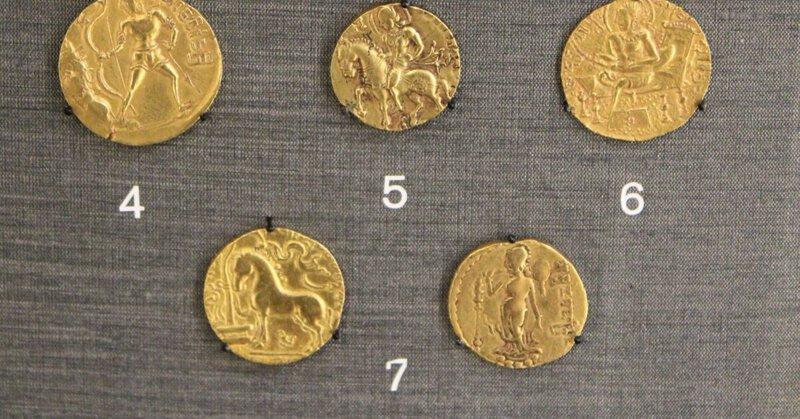
Meanwhile, the Gupta Empire was producing mathematicians, surgeons, poets, and astronomers at a pace that was, by any honest measure, remarkable. Flourishing from approximately 320 to 550 CE across northern and large parts of central and western India, the Gupta Empire was among the most intellectually productive civilizations on Earth during its era. And most Western readers have never heard of it.
That gap in popular knowledge is the subject of this article. Zero, chess, trigonometry, reconstructive surgery, Sanskrit literature, and a culture of notable religious tolerance: all of it flowered from one dynasty, in one relatively compressed window of history, while Europe was struggling to preserve what Greece and Rome had once known.
Who Were the Guptas? From Regional Family to Continental Power

The story begins modestly. The Gupta dynasty is believed to have originated as a prosperous family from either Magadha — the ancient kingdom centered on what is now Bihar in northeastern India — or Prayaga, in present-day eastern Uttar Pradesh. Whether they were merchants, minor nobles, or local administrators remains debated, but the picture that emerges is of a shrewd, ambitious family who recognized a historic opening and seized it decisively.
The dynasty was founded by Maharaja Sri Gupta, who established a foothold in the Magadha region. From that base, his successors transformed a regional power into an empire of continental scale. At its height, the Gupta dynasty commanded territory stretching from the Bay of Bengal in the east to the edges of the Hindu Kush in the northwest — a vast arc of geography that knitted together dozens of languages, religions, trade routes, and cultures under what was, by ancient imperial standards, a relatively decentralized administration.
Two figures loom large in the empire’s early expansion. Chandragupta I — not to be confused with the earlier Mauryan emperor Chandragupta Maurya — consolidated Gupta power through both military strength and a politically astute marriage alliance with the powerful Lichchhavi clan. His son Samudragupta turned that inheritance into something far grander, conducting military campaigns across the subcontinent with such documented success that he is sometimes called the “Napoleon of India” — a comparison that, if anything, flatters Napoleon. These were the empire-builders. But it was the next great ruler who transformed a dynasty into a civilization.
The Golden Age of India: What Made It Genuinely Golden

Chandragupta II — who ruled roughly from 380 to 415 CE and bore the title Vikramaditya — presided over what historians have come to call the Golden Age of India. The label is not mere romanticism. The Gupta age earned it through an extraordinary convergence: arts, science, literature, philosophy, and medicine all flourishing simultaneously, not in isolation, but in active dialogue with one another, supported by royal patronage and a cultural philosophy that treated knowledge as a civic virtue.
The material conditions for this flourishing were specific and real. Stable trade networks connected Gupta India to Rome, Persia, and China, channeling wealth into cities. Royal courts actively funded scholars. The great university at Nalanda — which rose to prominence during and immediately after the Gupta period — attracted students from across Asia. Intellectual achievement was not merely tolerated at court; it was celebrated.
The court of Chandragupta II at Pataliputra reportedly hosted the Navaratnas, the legendary “nine gems” — nine scholars of exceptional brilliance whose fields ranged from poetry to astronomy to medicine. Whether all nine existed simultaneously in precisely this form is debated by historians, but the tradition reflects something genuine: this was a court where intellectual eminence carried real prestige.
The timing is worth sitting with. This cultural apex — roughly 380 to 415 CE — coincides almost exactly with Rome being sacked by the Visigoths and Augustine of Hippo writing his meditations on a crumbling world. Two civilizations, at the same historical moment, on almost unimaginably different trajectories.
For context on how the empire connected to broader Eurasian trade networks, the University of Washington’s Silk Road exhibit on the Gupta dynasty offers useful geographical and commercial background.
Zero, Pi, and the Stars: The Scientific Revolution Nobody Taught You

No figure better represents the Gupta intellectual achievement than Aryabhata, the mathematician and astronomer who, around 499 CE, composed the Aryabhatiya — one of the most consequential scientific texts in human history. In it, he calculated the value of pi to four decimal places (3.1416), provided methods for computing square and cube roots, correctly explained that lunar eclipses result from Earth’s shadow falling on the Moon, and — writing centuries before Copernicus became famous for the same idea — articulated that the Earth rotates on its own axis.
He was writing this in Sanskrit, in northern India, while Europe was still operating on Roman numerals and a cosmology that placed a stationary Earth at the center of everything.
Then there is zero. The concept of zero as both a numeral and a positional placeholder — not merely a philosophical abstraction but a working computational tool — was developed within the Gupta mathematical tradition. This innovation was transmitted westward through Arab scholars, who built on it brilliantly, and eventually arrived in medieval Europe, where it revolutionized commerce, architecture, and science. The numerals we call “Arabic numerals” are, at their root, Indian in origin. The zero in every equation, every line of code, every financial transaction traces its ancestry to Gupta-era India.
A generation after Aryabhata, the mathematician Brahmagupta pushed further still, working out rules for arithmetic with negative numbers and formulating solutions to quadratic equations — problems that European mathematicians would not systematically tackle for roughly another thousand years. The word “algebra” itself comes from Arabic, but the mathematical thinking underlying it carries deep Indian roots.
Every time someone unlocks a smartphone, streams a video, or watches a rocket correct its trajectory in real time, they are relying on mathematical infrastructure whose foundations were laid in Gupta-era India. That is not hyperbole. That is the honest accounting of intellectual history.
Medicine, Chess, and the Arts: The Breadth of Everyday Genius

The scientific achievements alone would make the Gupta Empire remarkable. But the civilization’s reach extended into domains that touch daily life in ways most people never trace to their source.
Consider surgery. The Sushruta Samhita, a foundational medical text attributed to the ancient physician Sushruta, was refined and widely practiced during the Gupta period. It describes over 300 distinct surgical procedures, including a technique for nasal reconstruction — rhinoplasty — that is recognizable as the ancestor of modern plastic surgery. The text also catalogs surgical instruments, methods of wound care, and an understanding of human anatomy that was, in its era, extraordinarily advanced. When surgeons today reconstruct tissue damaged in accidents or disease, they work in a tradition with roots in Gupta-era India.
Consider chess. The game known as Chaturanga — Sanskrit for “four divisions,” referring to the infantry, cavalry, elephants, and chariots of an ancient Indian army — emerged in Gupta-era India as a strategic simulation played on a board of sixty-four squares. It spread to Sassanid Persia, where it became Chatrang, then to the Arab world as Shatranj, and eventually to medieval Europe, where it evolved into the chess we know today. The next time someone stares at a chessboard, they are looking at a game designed to model Gupta-era military organization.
And consider literature. The poet and playwright Kalidasa — associated by tradition with the court of Chandragupta II — wrote Sanskrit drama of such sophistication that when the German polymath Goethe encountered a translation of Shakuntala more than a thousand years after it was composed, he praised it with extraordinary admiration. Whether or not every detail of Goethe’s reported reaction is precisely documented, the essential point stands: here was a fifth-century Sanskrit play that could move one of Europe’s greatest literary minds. The literary standard of Gupta civilization was not provincial. It was world-class by any measure.
One more detail, almost too remarkable to believe: the Iron Pillar of Delhi, erected during the Gupta period, has stood in the open air for roughly 1,600 years — and it has not rusted. Materials scientists studied the pillar for decades before identifying a thin protective layer of iron hydrogen phosphate that forms on its surface, the result of the specific forging techniques used. The Gupta metallurgists who built it did not know the chemistry, but they achieved the result. It stands today in the courtyard of the Qutb complex in Delhi, an inadvertent monument to how deeply these craftspeople understood their materials.
Why Did It End — and Why Was It Forgotten?

No golden age lasts forever, and the Gupta Empire was no exception. Through the fifth and sixth centuries, the empire faced increasing pressure from the Hunas — a branch of the Central Asian nomadic confederation also known as the Hephthalites — who launched devastating raids into northwestern India. Simultaneously, internal succession disputes and the growing independence of regional governors steadily eroded central authority. By around 550 CE, the empire had fragmented beyond recovery, its northern territories contested or lost, its administrative cohesion dissolved.
The end was not sudden but gradual — a slow unraveling familiar to students of imperial history. What was lost in the process was not just political power but institutional knowledge, patronage networks, and the specific urban culture that had made Pataliputra a world center of learning.
The forgetting, however, is a different kind of story. European historiography spent centuries constructing a narrative of civilization that ran from ancient Greece to Rome to the Renaissance — a tidy arc that left little room for simultaneous innovation in India, China, or the Islamic world. Indian achievements were placed in footnotes, occasionally attributed to Greek influence, or simply not taught. The transmission irony is almost painful: much of what Gupta scholars discovered reached Europe only after being filtered through Arabic scholarship, which is why Europeans often credited Arab thinkers for ideas that were, at their root, Indian in origin.
It is also worth being honest about the limits of the Golden Age. The Gupta period was marked by rigid caste structures that constrained the lives of millions of people who were not scholars, poets, or members of the royal court. The intellectual achievements were real — but they were built on a social hierarchy that was deeply unequal. The era was genuinely golden; it was not equally golden for everyone within it.
For a balanced account of both the achievements and the social context of this period, the History Guild’s overview of the Gupta Empire is a strong starting point. Those who want to trace how the empire’s end shaped the centuries that followed will find the detailed breakdown of the Gupta Empire’s legacy and decline useful for that deeper accounting.
Why It Matters Now: Reclaiming a Missing Chapter of Human History
Understanding the Gupta Empire is not an exercise in national pride, or at least it should not be. It is about something more fundamental: having an accurate map of how human civilization actually progressed. Innovation did not flow in a single river from Athens to Rome to London to Silicon Valley. It erupted in multiple places simultaneously — in Pataliputra and Baghdad and Chang’an — and then traveled, often without its label intact, across borders and centuries.
The Gupta legacies are hiding in plain sight. The zero in your phone. The chess app on your tablet. The surgical techniques used in reconstructive medicine. The astronomical calculations embedded in GPS satellites, which depend on a positional number system that mathematicians in Gupta-era India helped make possible. These are not ancient curiosities. They are active infrastructure.
Scholars are still working. Archaeologists are still excavating Gupta-era sites. Historians are still translating texts. The full picture of what this civilization achieved — and what it thought, debated, doubted, and built — is still being assembled from fragments spread across libraries, ruins, and stone inscriptions. The story is genuinely not finished.
And so we return to Pataliputra, to that mathematician, to that small circle pressed into clay. He did not know he was building a foundation for digital computing. He did not know his idea would travel through Persia, through Baghdad, through medieval Spain, into the universities of Europe, into the pocket of every person alive today who carries a phone. He was simply trying to solve a problem — trying to express the concept of nothing, of absence, of the space between something and something else. He drew a circle. Some ideas are so powerful they travel forward through fifteen centuries and still run the world.

 English
 Arabic
 French
 Spanish
 Deutsch
 Turkish
 Dutch
Dutch
 Italiano
 Russian
 Romaian
 Portuguese (Brazil)
 Greek
Greek