


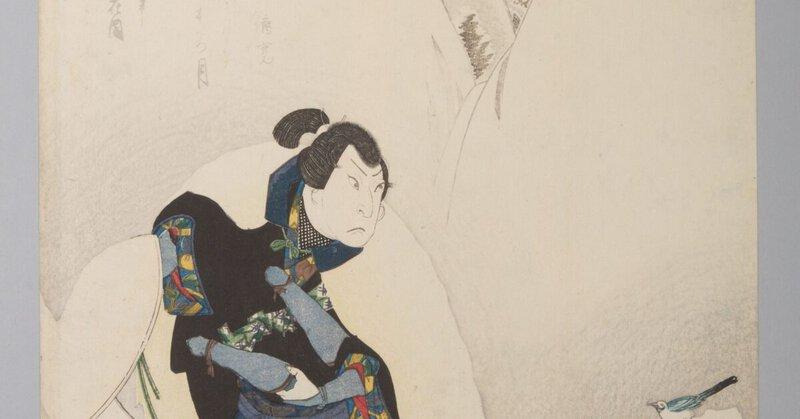
He stepped off the boat holding not a sword but a rough piece of wood — an oar he had carved into a makeshift blade during the crossing — and he was hours late. Across the narrow strip of beach on Ganryūjima island, Sasaki Kojiro, one of the most celebrated swordsmen in all of Japan, had been waiting in the April heat since dawn, fury building with every passing minute. That fury, Miyamoto Musashi almost certainly knew, would be the first wound he inflicted.
The Duel That Defined a Legend

The year was 1612. The confrontation on Ganryūjima had been arranged with all the formal weight that feudal Japan could muster — witnesses, officials, the reputations of entire lineages hanging in the salt air. Kojiro was famous for a lethal technique known as the “swallow’s tail cut,” a stroke so fast and precise that contemporaries considered it nearly unanswerable. He had every reason to feel confident. He had waited hours for a man who, by all appearances, had not bothered to take the morning seriously.
What followed lasted seconds. Musashi stepped onto the beach, reportedly still shaping the wooden blade in his hands. Kojiro drew his long sword and threw the scabbard into the sea — a gesture meaning he would not need it again. Musashi is said to have replied that Kojiro had already lost, because a man who discards his scabbard is a man who does not expect to survive. Then he closed the distance and struck. One of the most celebrated swordsmen in Japan fell on the sand, killed by a man holding a piece of carved wood.
The deliberate lateness was not arrogance — or not merely arrogance. It was psychological warfare executed with surgical precision, designed to destabilize an opponent whose technique had been honed to physical perfection but whose mental composure was another matter entirely. Understanding that gap between technical skill and total mastery is the key to understanding why Miyamoto Musashi occupies a singular place in the history of human combat. He reportedly walked away from a great many duels without a single defeat — a figure drawn from his own writings and from later chronicles that sits at the fascinating, contested border between documented history and living legend. Separating one from the other is, in many ways, part of what makes the story worth examining closely.
Born Into a World of War
Musashi was born around 1584, at one of the most violently unstable moments in Japanese history. The Sengoku period — a century-long era of near-constant civil war — had been reshaping the country through shifting clan alliances, collapsed loyalties, and almost uninterrupted battlefield violence. The samurai code, in this context, was not a romantic ideal but a daily survival mechanism. Into this world came a child who would grow up to be a swordsman, strategist, artist, and philosopher — a combination rare enough to be remarkable in any era.
The legend begins early. At around 13 years old, Musashi reportedly challenged and defeated an adult samurai named Arima Kihei in his first formal duel. The story carries the quality of myth, but it establishes the psychological profile that would define his entire career: a willingness to engage at moments and on terms that others would consider reckless, driven by a confidence that was itself a form of strategy.
By 1600, the teenage Musashi had moved beyond individual dueling. He was one of 160,000 warriors present at the Battle of Sekigahara — one of the largest and most consequential engagements in Japanese history, the confrontation that effectively ended the Sengoku period and cemented the Tokugawa shogunate’s dominance over Japan. Historians debate the specifics of his role, but this much is beyond serious dispute: Musashi experienced real battlefield violence at scale, not just the controlled ritual of formal single combat. That experience almost certainly shaped the unsentimental, strategic mind he would later commit to paper.
Two Swords, One Framework: The Fighting Style That Changed Everything

Most of the great swordsmanship schools of feudal Japan were engaged in a single consuming debate: how do you achieve the perfect single cut? They refined grip, stance, breath, and timing across generations to answer that question. Musashi looked at the same problem and asked something fundamentally different. Why use one hand when you have two?
He developed what became known as Niten Ichi-ryū — a school of swordsmanship built around wielding two blades simultaneously, a long katana in one hand and a shorter wakizashi in the other. The innovation was not simply physical. It was strategic disruption at its most elegant. Every opponent Musashi faced had trained their entire life to solve the problem of one sword. He handed them two problems at once, then watched them try to recalibrate in the critical seconds before the decisive moment arrived.
Contemporary accounts describe a fighter who was visually unlike anything his rivals had encountered: an unorthodox stance, a strange economy of movement, and an eerie composure that reportedly unsettled opponents before a single blow was exchanged. He frequently chose wooden practice swords — bokken — over live blades, a choice that was simultaneously practical and deeply psychological. Arriving to fight Japan’s finest swordsmen with practice weapons was a statement so theatrical it bordered on performance art, and it worked.
Niten Ichi-ryū did not die with Musashi. The school he founded survived for centuries and continues to be practiced in Japan today, a lineage of direct transmission stretching from a man who died in 1645 to living practitioners in the twenty-first century. Very few combat systems can claim that kind of continuity.
The Record: An Undefeated Career — What History Actually Supports

Intellectual honesty requires holding the famous record carefully. Claims about the precise number of duels Musashi fought and his undefeated record come primarily from Musashi himself. Near the end of his life, around 1643, he wrote The Book of Five Rings (Go Rin No Sho), a tactical and philosophical text in which he described his dueling history in his own words. That makes the account a first-person memoir — not an independently verified historical record. The distinction matters, and serious scholars of the period do not pretend otherwise.
What historians can say with greater confidence is that several individual duels are corroborated by contemporaneous records and samurai chronicles, including the Ganryūjima confrontation with Kojiro and his series of encounters with the Yoshioka school in Kyoto. National Geographic identifies Musashi as Japan’s most famous samurai — a status that rests in part on the fact that no surviving account from any rival school, any defeated opponent’s family, or any contemporary chronicle produces a credible record of his defeat. In a pre-journalism world without photographic evidence or court transcripts, the absence of a counter-story is itself a form of evidence. Imperfect evidence, but not nothing.
The specific numbers sometimes cited have hardened into cultural certainty in a way the underlying historical record may not fully support. Scholars examining Japan’s greatest swordsmen tend to treat Musashi’s record as a combination of documented achievement, plausible oral tradition, and the natural mythologizing that attaches to figures of genuine greatness across generations. That framing is probably the most accurate one available: a real man of extraordinary ability, whose documented record was remarkable enough that legend did not need to exaggerate drastically to become extraordinary.
The Rivals Who Tried — and Failed

The Yoshioka clan was Kyoto’s most prestigious swordsmanship school — the kind of institution whose reputation was woven into the social fabric of an entire city. When Musashi challenged and reportedly defeated multiple members of the Yoshioka family in succession, he was not just winning fights. He was dismantling a lineage’s honor in public, in a culture where honor was more valuable than property and far more dangerous to lose.
These were not informal confrontations. Formal duels in feudal Japan carried enormous political and social weight. A school that lost repeatedly to the same wandering swordsman faced questions about everything it had ever taught and everyone it had ever trained. The cascading damage to the Yoshioka reputation reportedly ended their dominance in Kyoto. It was the kind of victory that could not be undone by time or political maneuvering — once the story circulated, it circulated permanently.
The Ganryūjima duel remains the most documented and most discussed of Musashi’s career, partly because Kojiro’s reputation makes it the most dramatically legible. Among Japan’s most celebrated historical figures, Kojiro stands as the most formidable individual opponent Musashi ever faced — renowned across the country, technically exceptional, and possessing a signature technique that had defeated serious challengers before. That Musashi killed him with a wooden sword carved from boat timber is the detail that lodges in the memory and refuses to leave. It is too strange and too perfect not to have become legend — and yet just strange and perfect enough that one understands why careful historians approach it with measured caution.
By mid-career, Musashi’s compounding reputation may itself have become a weapon. In a culture where reputation functioned as armor, the man who had already dismantled the Yoshioka school and killed Sasaki Kojiro walked into every subsequent confrontation carrying a psychological burden his opponents had to absorb before the first movement was made. Some challengers, historical accounts suggest, reconsidered before the duel ever began.
The Philosopher’s Sword: The Book of Five Rings and Why It Endures

Late in his life, Musashi retreated to a cave called Reigandō in Kumamoto Prefecture and wrote The Book of Five Rings. He died in 1645, shortly after completing it — peacefully, which is a quietly extraordinary fact about a man who had spent six decades immersed in mortal danger. The text he left behind is not primarily a manual of sword techniques. It is a sustained meditation on mastery itself: how to understand any competitive field so completely that strategy becomes instinct, how to read an opponent’s intention in the moment before they act on it, and how to maintain composure when everything depends on the next half-second.
The five “rings” of the title correspond to the five books of the text — Earth, Water, Fire, Wind, and Void — each addressing a different dimension of strategy and mental discipline. The Earth chapter establishes foundational principles. The Water chapter discusses adaptability and fluid response. Fire covers the dynamics of direct engagement. Wind examines rival schools and their weaknesses. The Void, the final and shortest section, addresses the emptiness of mind that Musashi considered the highest state of readiness — a concept with clear roots in Zen Buddhist thought.
Japanese business leaders, military strategists, and martial artists have been reading The Book of Five Rings ever since its composition. That kind of longevity — nearly four centuries of continuous relevance — belongs to a very short list of texts from any culture. The question of what truly defines the greatest samurai inevitably returns to this: Musashi’s legacy is not simply a fighting record. It is an intellectual framework that outlasted the entire world that produced it.
Musashi Among Japan’s Greatest: How He Compares
Japan’s samurai tradition produced remarkable figures across every measure. Oda Nobunaga, who lived from 1534 to 1582, dramatically reshaped Japan’s political landscape through a combination of military innovation and ruthless consolidation — he was among the first commanders in Japan to deploy firearms systematically on the battlefield, and his campaigns came closer than any before to unifying the country. Tokugawa Ieyasu, who finally achieved that unification and established the shogunate that bore his name, belongs in any serious conversation about historical consequence. Takeda Shingen and Uesugi Kenshin, whose rivalry defined an era of Sengoku warfare, command deep respect within Japan as battlefield commanders of the highest order.
Musashi occupies a categorically different place in this pantheon. He was not the architect of nations. He held no political office, commanded no army, and controlled no territory. What he possessed instead was something rarer in the historical record: an undefeated career in individual combat sustained across decades, combined with a philosophical legacy that transformed his craft into something approaching a discipline of mind. He is the lone artist-warrior — the figure who needed no patron, no title, and no army to become the most recognizable name in the history of Japanese swordsmanship.
These are not competing claims. Nobunaga changed Japan. Ieyasu unified it. Musashi defined what it meant to master a sword — and then wrote down how he did it. Each form of greatness is real; they simply measure different things.
The Verdict: Why Musashi Stands Alone
By the specific measure of individual combat mastery sustained across a long career — which is to say, by the measure the word “samurai” most immediately evokes — Musashi’s record has no clear rival in documented Japanese history. Even accounting for legendary embellishment, even holding the precise dueling figures at a careful distance, no credible counter-narrative exists. No rival school produced a verified account of defeating him. No surviving chronicle from an opponent’s lineage contradicts his record in any substantive way. The absence of disproof is not the same as proof, but across nearly four centuries, the silence from the other side of the argument has been complete.
He was also, in a meaningful sense, more than a fighter. The decision to spend his final months in a cave writing a book about strategy — rather than seeking political patronage, securing a legacy through institutional affiliation, or simply resting — reveals a man who understood that the most durable form of victory is one that can be transmitted. The text he wrote in that cave is still in print. The school he founded still trains students. The duel on Ganryūjima is still retold.
He died in 1645, peacefully, having just finished writing a book about how to win. He had lived past 60 in an era when most men who fought as often as he did did not survive to 35. Whatever the precise mixture of fact and legend that surrounds his record, the image that endures is this: a man arriving late to the most important duel of his life, holding a piece of carved wood, completely unafraid. In the entire history of the samurai tradition — one of the most studied and most mythologized warrior cultures in human history — no story hits quite like that one.

 English
 Arabic
 French
 Spanish
 Portuguese
 Deutsch
 Turkish
 Dutch
Dutch
 Russian
 Romaian
 Portuguese (Brazil)
 Greek
Greek