


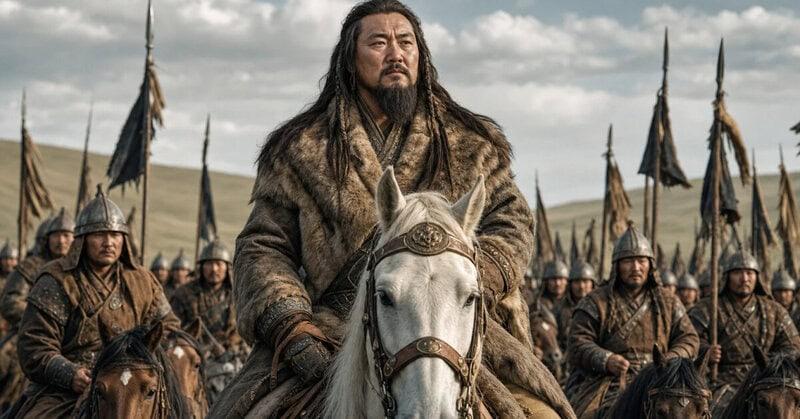
Most people, if asked to name the greatest empire in history, reach for Rome. A few might say Britain. Almost nobody says a nomad from the Mongolian steppe who couldn’t read — and yet Genghis Khan and his descendants built something so vast it makes Rome look like a city-state. Here, ranked by verified peak land area and examined for what each empire actually meant beyond the square mileage, are nine of the largest empires history has ever produced. The numbers alone are astonishing. The stories behind them are more so.
1. The British Empire — The Largest Empire in History by Total Land Area

By 1920, the British Empire covered roughly 13.7 million square miles — close to a quarter of the Earth’s entire land surface — making it the largest empire in history by total area when island territories, dominions, and colonial possessions are counted together. At its height it governed roughly 23% of the world’s population, from the wheat fields of Canada to the tea estates of Assam to the sheep stations of New Zealand — all under a single crown and, nominally, a single legal order. No other political entity in human history has simultaneously administered so much land and so many people.
Its legacy resists easy verdicts. The British Empire spread common law, railways, and the English language to every corner of the globe, but it did so alongside the transatlantic slave trade, the violent suppression of independence movements, and the systematic extraction of wealth from colonised peoples. The railways that crossed India, for instance, were engineered to move British goods outward, not to integrate Indian markets. The empire’s contradictions are built into the architecture of the modern world as surely as its roads — and understanding it clearly requires holding both sides of that ledger at once.
2. The Mongol Empire — The Largest Contiguous Land Empire Ever Built

In 1206, a man born into a minor Mongolian clan stood before a gathering of steppe tribes and was proclaimed Genghis Khan — Universal Ruler. Within 25 years he had forged the largest contiguous land empire the world has ever seen, stretching from the Pacific coast of China to the shores of the Caspian Sea. At its peak, the Mongol Empire covered roughly 9.3 million square miles of unbroken territory — a figure so large that any honest size comparison with other land empires borders on unfair. Rome, the empire everyone thinks of first, fits inside it several times over.
What makes the achievement stranger still is how it was done: no significant navy, no fixed capital for much of its early history, and an army that moved with a speed European knights could scarcely believe. The Mongol military system combined extreme mobility with sophisticated siege engineering, allowing it to defeat both nomadic rivals on the steppe and walled cities in China, Persia, and Eastern Europe. The empire that followed the conquest was more than carnage. The Mongol Peace — the Pax Mongolica — stitched Eurasia into a single corridor of trade and communication along which silk, spices, ideas, and, fatally, the bubonic plague all travelled faster than ever before. It remains the record-holder for the largest contiguous land-based empire in history, and that record is unlikely to be broken.
3. The Russian Empire — The Largest Empire to Occupy a Single Continuous Landmass at Its Peak

Where the British stitched together a patchwork of ocean-separated territories, Russia simply kept walking east. The Russian Empire’s expansion across Siberia was one of history’s great slow-motion land grabs — a relentless overland push, driven largely by Cossack pioneers and backed by the tsarist state, that took the better part of two centuries and delivered Moscow control over a band of territory stretching from the Baltic Sea to the Pacific Ocean and from the Arctic ice to the Afghan border. At its 19th-century peak it covered over 8.8 million square miles, placing it firmly among the largest empires in world history by any serious measure.
The sheer internal variety of what Russia had swallowed was staggering. By 1900 the empire contained over 125 distinct ethnic groups, operated across eleven time zones, and was governed by a tsarist bureaucracy that was simultaneously autocratic in its ambitions and chronically overstretched in its reach. The result was an empire that could project power to Central Asia and the Pacific but could not reliably feed its own peasantry or suppress internal dissent without mass violence. That tension — between immense territorial ambition and the administrative impossibility of actually governing it all — eventually buckled under the compounded pressure of the First World War and revolution in 1917, ending three centuries of Romanov rule in a matter of months.
4. The Qing Dynasty — The Empire That Doubled China’s Size

When Manchu warriors swept out of the northeast and established the Qing Dynasty in 1644, they inherited one of the most sophisticated administrative states on earth — and then dramatically expanded it. Over the following century, Qing emperors pushed into Mongolia, Tibet, Xinjiang, and Manchuria, nearly doubling the territory held by the preceding Ming dynasty and assembling an empire of roughly 5.7 million square miles by the mid-18th century. More remarkably, at its demographic peak the Qing ruled over 400 million people, representing approximately a third of the entire world’s population at the time — a proportion no other empire on this list approached.
Governing that diversity required genuine administrative ingenuity. Rather than imposing a uniform Chinese system on every conquered people, the Qing maintained separate administrative frameworks for Han Chinese, Mongols, Tibetans, and other groups — allowing the empire to function as a kind of layered federation held together by the authority of the throne rather than by cultural homogenisation. That balancing act held for over 250 years before the compounding pressures of Western imperialism, the devastating Taiping Rebellion, and the failures of late-Qing modernisation finally broke it apart in 1912, giving way to the Republic of China.
5. The Spanish Empire — The First Empire to Span Five Continents

In the space of a single generation, Spain pulled off something no empire before it had managed: it went genuinely global. When Hernán Cortés toppled the Aztec capital of Tenochtitlan in 1521 and Francisco Pizarro dismantled the Inca Empire a decade later, Spain found itself in possession of a colonial network that stretched across the Americas, parts of Africa, Asia, and Europe — the first empire in recorded history to operate simultaneously on five continents. The silver that poured out of the Andean mines at Potosí didn’t merely enrich Madrid; it circulated through European trade networks and funded wars, art, and commerce across the continent for two centuries, giving Spain an economic leverage no earlier empire had wielded over the broader world economy.
The human cost was catastrophic. Forced labour, land expropriation, and systematic violence against Indigenous peoples, combined with the devastating spread of Eurasian diseases to which Indigenous populations had no prior immunity, drove population collapses of up to 90% in some regions of Central and South America — one of the greatest demographic catastrophes in recorded history. The conquistadors arrived with horses, steel, and smallpox, and the civilisations they encountered never recovered their pre-contact scale. The silver economy Spain built on top of that destruction shaped global trade routes for generations.
6. The Achaemenid (Persian) Empire — The Ancient World’s First Superpower

More than five centuries before Caesar crossed the Rubicon, a Persian king named Cyrus the Great was already building something the ancient world had never seen. Founded around 550 BCE, the Achaemenid Empire stretched from the Balkans in the west to the Indus Valley in the east, encompassing an estimated 3.1 million square miles and connecting civilisations — Egyptian, Babylonian, Greek, and Indian — that had previously existed in largely separate orbits. It was, by the standards of its age, an almost incomprehensible administrative achievement, and it earns Achaemenid Persia a secure place among the largest empires in history.
Cyrus himself was unusual for a conqueror. Rather than enslaving defeated peoples or dismantling their religious institutions, he permitted them to keep their customs and gods — a policy of relative tolerance so striking that it earned him warm mention in the Hebrew Bible, where he is depicted as an instrument of divine will for permitting the Jewish exiles in Babylon to return to their homeland. His successor Darius I extended the model further, constructing a network of royal roads and a postal relay system that allowed information and goods to flow across the empire with a speed that predated the Roman postal service by centuries. The Achaemenids didn’t merely conquer the ancient world; they organised it.
7. The Roman Empire — The Empire Everyone Thinks of First
Rome’s reputation is immense, and to be fair, it earned it. At its territorial maximum in 117 AD under Emperor Trajan, Rome controlled the entire Mediterranean basin, much of Western Europe, and pushed its legions as far as Mesopotamia — a feat of military organisation and civil engineering that left the ancient world genuinely breathless. The word “imperial” itself derives from the Latin imperium. The Western concept of an empire — a single sovereign power administering diverse peoples under a universal law — was shaped decisively by the Roman model.
And yet by land area, Rome covered roughly 2 million square miles at its peak, which places it well outside the top five in any honest ranking of the largest empires by territory. That is a humbling number for a civilisation that considered itself the centre of the universe. What Rome lacked in raw acreage it more than compensated for in durability of influence. Its legal codes, its languages, its road networks, its architectural vocabulary, and its political ideas still visibly shape the modern world two thousand years later. No other empire on this list has left quite so deep an impression on the civilisation that came after it.
8. The Ottoman Empire — The Empire That Outlasted Almost Everyone
Longevity alone earns the Ottomans a place in any serious conversation about history’s most consequential empires. From 1299 to 1922 — six centuries spanning the invention of the printing press, the Protestant Reformation, the Industrial Revolution, and the First World War — the Ottoman state endured, controlling at various points southeastern Europe, the Middle East, and North Africa, and commanding the strategic waterways connecting the Mediterranean and Black Seas. At its 16th-century peak under Suleiman the Magnificent, it stretched across roughly 2 million square miles and presented such an existential perceived threat to Christian Europe that the phrase “Turk at the gates” had become shorthand for civilisational emergency.
The empire’s symbolic and administrative heart was Constantinople, seized from the Byzantine Empire in 1453 by Mehmed II and progressively renamed Istanbul — a city that had served as the eastern capital of Rome, then as the seat of Orthodox Christianity, and now became a centre of the Islamic caliphate and Ottoman cultural life. What made the Ottomans remarkable was not simply the territory they held but the institutional complexity they developed to hold it: a professional bureaucracy, a legal system blending Islamic and customary law, and a tradition of absorbing conquered elites into the imperial administration that allowed the empire to keep functioning long after weaker polities would have fragmented.
9. The Second French Colonial Empire — The Most Overlooked Giant
Ask someone to name the great colonial empires and they will say Britain, Spain, perhaps Portugal. France’s second colonial empire — built methodically after Napoleon’s defeat in 1815 and accelerated after the loss of Saint-Domingue to the Haitian Revolution of 1804 — rarely receives the attention it deserves. Yet by 1920 it covered over 4.7 million square miles, making it the second-largest colonial empire in the world at that moment, behind only Britain. Its reach extended from West and Central Africa to Indochina, from French Polynesia to the Caribbean, making France simultaneously a dominant continental European power and a genuinely global imperial presence operating across multiple oceans.
The contradictions at its core were as sharp as any empire’s, and arguably sharper than most. France exported the rhetoric of liberté, égalité, fraternité around the world while enforcing the Code de l’indigénat — a separate legal code applied in the colonies that stripped subjects of the very civic rights the French Republic celebrated at home. Algerian farmers, Vietnamese workers, and West African soldiers who fought for France in both World Wars did so under a system that explicitly denied them French citizenship and subjected them to summary punishment unavailable under French metropolitan law. It is perhaps that yawning gap between the idea France sold and the reality it constructed that makes its colonial empire so easy to overlook — and so necessary to examine.
From a stateless horseman on the Mongolian steppe to the map-spanning reach of the British Crown, the story of humanity’s largest empires is ultimately a story about ambition colliding with geography, administrative systems straining against the diversity they tried to contain, and the recurring human tendency to mistake size for permanence. Every empire on this list eventually learned that lesson — not by choice, but by collapse.

 English
 Arabic
 French
 Spanish
 Portuguese
 Deutsch
 Turkish
 Dutch
Dutch
 Italiano
 Russian
 Romaian
 Portuguese (Brazil)