


Zu Kamilov/Shutterstock
I'm half-Italian and passionate about the cuisine, but I've ended up at all too many mediocre Italian restaurants. I find few things more disappointing than ordering pasta or risotto — a dish that chefs use to judge the quality of a restaurant — that sounds delicious, only to realize I would have made it better myself at home. This has left me wondering whether there are any Italian restaurant red flags that show an eatery might be one to avoid.
I have my own thoughts and feelings about the matter, but I wanted to bring in the big guns, so I spoke to three experts who have extensive experience in Italian eateries. Angelo Caruso is the owner and chef of Angelo's Ristorante in Stoneham, MA; Michelle Durpetti is the third generation principal at Gene & Georgetti; Chef Tony Mantuano co-owns The Purple Pig with Cathy Mantuano, and previously worked at the award-winning Italian restaurant Spiaggia. Together, they have decades of experience in Italian cuisine and know what to look for and what to avoid.
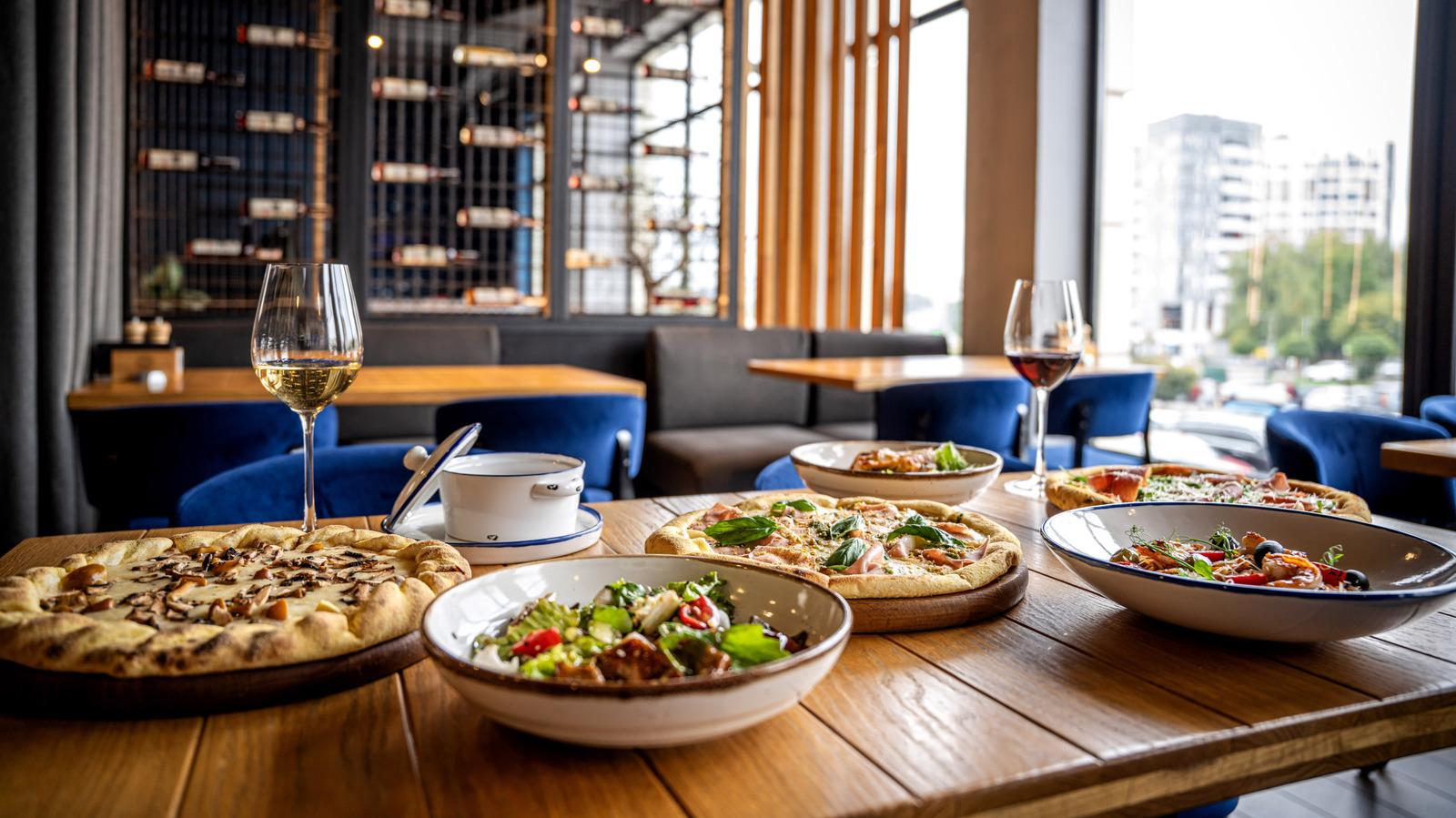
Some of these warning signs you can tell just from looking at the place, talking to the staff, or reading the menu. Others might require trying the food, but then you'll know it's a joint to avoid in the future rather than doubting yourself and thinking that you ordered the wrong dish or the kitchen was having an off day. Here are 12 red flags at an Italian restaurant to help you find a solid spot to eat.
1. Decor that looks like a Disney version of Italy
Fotografia Inc./Getty Images
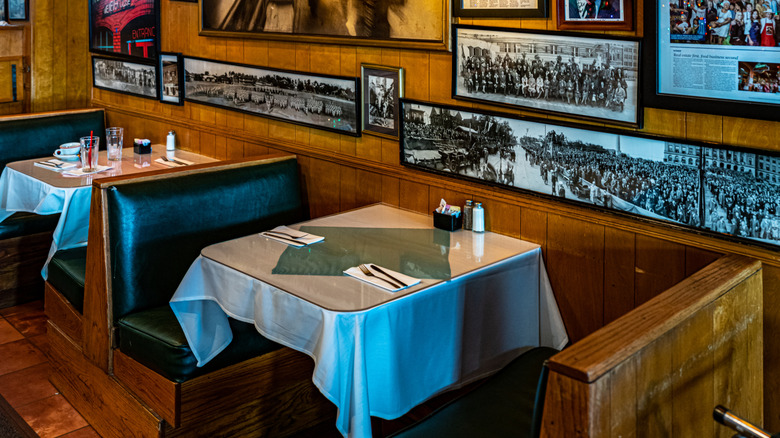
There is such a thing as a restaurant looking too Italian. If you walk in the door and it looks like a caricature of an Italian restaurant, that can be a red flag. We wouldn't necessarily reject a restaurant based on this alone if it seems great otherwise, but paired with any other issues, this is a sign you should look for another place to eat.
"Authenticity isn't about red-checkered tablecloths or old photos on the wall," says Michelle Durpetti of Gene & Georgetti. "The obsession with aesthetic is an American one, and if I'm being frank it's one that drives me a little bonkers because it tends to border on performative versus authentic," she adds. It's one thing if a restaurant tells its story through family photos, but when the walls are hung with stock photos of Frank Sinatra or snaps of Italian immigrants picked up at a thrift store, think twice about your choice of dinner spot.
It's fine if the place is simple. Not every restaurant owner is into decor. "What can give me pause is when the decor feels like a theme park version of Italy," notes Durpetti. "Anything that leans too hard into stereotypes can be a warning sign," Chef Tony Mantuano of The Purple Pig agrees. "If the room feels cheesy or overly themed, it can make you wonder what else is being treated that way."
2. A lack of warm hospitality

BearFotos/Shutterstock
Having spent a lot of time in Italy, visiting family and traveling, I can attest to how warm and welcoming Italians are on the whole. Head to a neighbourhood restaurant and you'll soon feel like part of the family. So, when an Italian restaurant lacks a sense of hospitality, it may be that it's missing the point, and this could translate to more than just the service.
Angelo Caruso, owner and chef of Angelo's Ristorante, expects a genuine sense of hospitality when he goes out to eat. "Great Italian dining is as much about gracious service as it is about excellent cooking," he says. Michelle Durpetti backs this up, noting that a lack of hospitality is a red flag. "Italian dining culture is built around generosity and warmth," she says. "Service doesn't need to be formal, in fact it should feel welcoming and knowledgeable in whatever level it finds itself."
A joint that truly cares is not only going to make great food but will ensure the customer experience is seamless from start to finish. "A good Italian restaurant makes you feel cared for from the moment you walk in until the moment you leave," says Tony Mantuano. "You can usually feel pretty quickly whether the place understands that Italian dining is about much more than what's on the plate."
3. An enormous menu

Dejan Marjanovic/Getty Images
If you get to your table and the menu looks more like a novel than something with dinner options, that's cause for concern. Some of the best Italian restaurants I've been to had menus that fit on one sheet of A4. In fact, the best pasta I've ever had outside of my nonna's house came from a tiny restaurant in Cagliari with just three options written up on a chalkboard. Large menus aren't just unnecessary, they can be a sign of bigger issues.
"A very large menu is almost always a red flag," says Tony Mantuano. "It usually means the kitchen is trying to be everything to everyone, which is also not very Italian." Even excellent chefs will struggle to execute a very large menu well. It can also mean that restaurants rely on frozen ingredients or reheat components because it's tricky to make so many dishes from scratch.
It's much better to focus on making a handful of dishes brilliantly with the best ingredients. "A smaller menu often means greater attention to freshness, consistency, and preparation," says Michelle Durpetti. However, she notes that there can be reasons why restaurants have bigger menus, such as needing to appeal to a wider range of people in a tough market. "Honestly, operating a restaurant these days is hard, so I am not judging," she remarks. So, don't always write off a large menu, but do consider it alongside other factors.
4. Dishes spelled or pronounced incorrectly

Filippobacci/Getty Images
When scanning the menu, you might see an obvious red flag: dishes spelled incorrectly. While you certainly don't have to be great at spelling to be a good cook, that lack of care and attention to detail isn't a good sign. Plus, it could mean the owners don't know much about Italian cuisine.
Angelo Caruso notes that Italian dishes or ingredients with obvious spelling errors on the menu are a warning sign. Tony Mantuano notes that correct spelling is important because it demonstrates the staff is attentive and knowledgeable about the material. It's not about being perfect, but rather about showing respect for the cuisine.
"Staff mispronouncing Italian ingredients or dishes can also be telling," says Mantuano. "No one needs to be perfect, but there should be enough training and respect for the culture that the team can speak about the menu with care." Not even bothering to give staff some training on the menu can be a red flag.
5. Staff that aren't knowledgeable about the menu

Fizkes/Getty Images
When you ask staff about the menu, they should be able to answer most questions. They might need to check with the chef for something particularly niche or specific, but an average question shouldn't be a problem. This is a sign a restaurant cares enough to train its employees well, and that they're interested and engaged, which reflects a good work culture. But, when questions are received with a blank stare, it's a red flag that suggests other areas might be neglected.
"Staff should be able to explain dishes, ingredients, and wine selections confidently," says Angelo Caruso. "If they can't, that's often a concern," he adds, and Michelle Durpetti agrees. Being able to ask questions and receive helpful answers is part of a good dining experience, sure, but it's more than that. If nobody cares enough to offer training and employees on the floor know nothing about the menu, it would be fair to assume that lack of care might extend to the cooking.
We're not suggesting that you quiz your waiter just to see if they can keep up, but never be afraid to ask polite questions about dishes and ingredients. And if the answers aren't forthcoming, it might be best to look for another dining spot.
6. Overreliance on cream or other heavy ingredients
Natalia Deriabina/Shutterstock
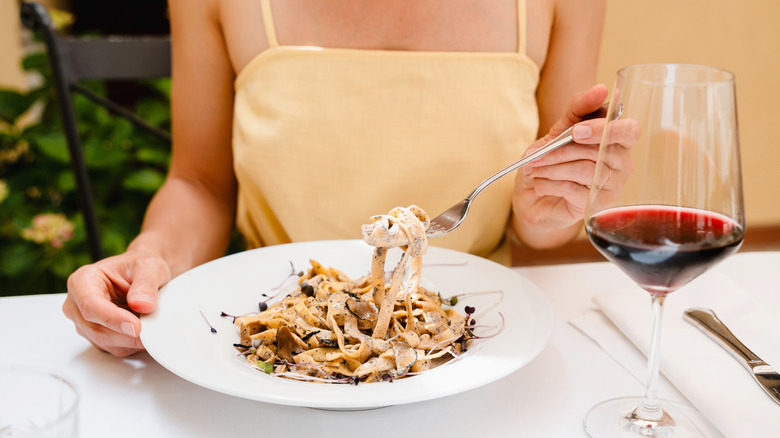
One of the mistakes people make at an Italian restaurant is opting for heavy, creamy dishes. These aren't always the best and, in fact, having too many dishes of this kind on the menu can be a red flag. Heavy ingredients go against the classic Italian simplicity that makes the cuisine so brilliant.
"I also become skeptical when every pasta is finished with a heavy cream sauce, or when ingredients like truffle oil and garlic butter appear on nearly every dish," Angelo Caruso remarks. "These flavors are often used to mask a lack of balance or quality." There's nothing wrong with enjoying richness and creaminess, but these aren't usually a result of cream in Italian cooking. For instance, carbonara is made creamy with egg, while an authentic Alfredo is an emulsification of hard cheese, butter, and pasta cooking water.
"What gives me pause is when a menu relies on excess rather than quality," adds Michelle Durpetti. "Giant portions for the sake of it, unnecessary ingredients, or dishes loaded with toppings can sometimes suggest that the focus is on spectacle rather than flavor," she remarks. It's a better sign to see dishes executed well with some restraint than ones that are laden with cream or covered in cheese, which can be used to mask mediocre cooking.
7. No mention of high-quality Italian staples on the menu
PH888/Shutterstock
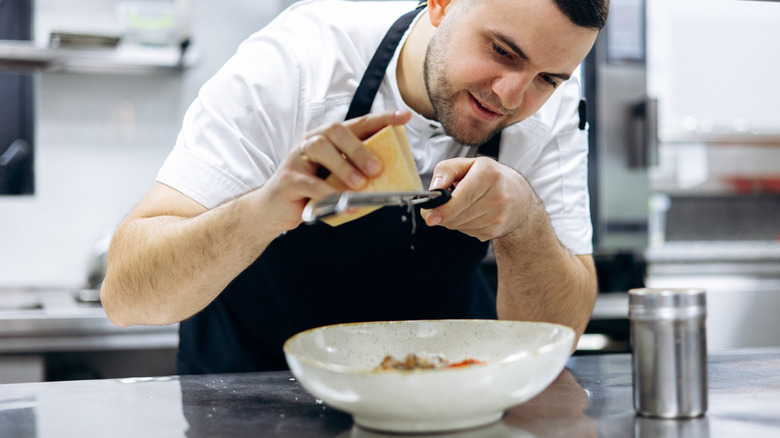
Quality Italian cuisine is all about the ingredients. The food doesn't need to be rich, but each component should be carefully selected. When there's no mention of high-quality Italian staples on a menu, that means they're probably not being used, which you will notice in the finished dish.
"If a restaurant claims authenticity but never mentions high-quality staples such as imported olive oil, Parmigiano Reggiano, or San Marzano tomatoes, that can be telling," says Angelo Caruso. These are expensive, premium ingredients, so restaurants shout about them on their menu — unless they're not being used.
Caruso adds, "Fresh, well-prepared pasta, outstanding olive oil, cheeses, cured meats, and produce all make a difference." Ultimately, you will taste it in the cooking when a restaurant cuts corners on these ingredients. It's not a case of being snobby about ingredients but being honest about the fact that they matter.
8. A menu that doesn't reflect the seasons
Alessio Orru/Shutterstock
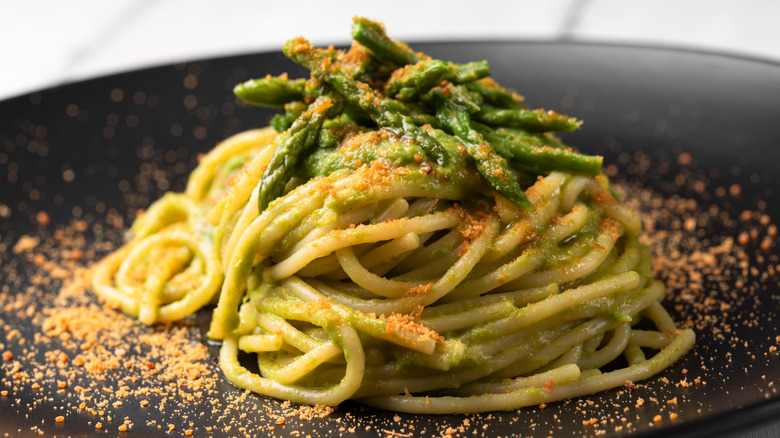
If you go to an Italian restaurant that has the same dishes on the menu, regardless of the season, you should run in the opposite direction. Seasonal eating is so important in Italian cuisine, but it's not just tradition. Produce tastes better in season, so it should be a no-brainer to use it while it's at its best.
Part of what authenticity means at Italian restaurants is eating seasonally. This philosophy is central, according to Tony Mantuano. "Italians have always cooked from what is available, abundant, and at its best," he tells us. "When a certain ingredient is in season in Italy, you may see it on menus everywhere — artichokes, porcini, puntarelle, white truffles." The chef's job is to follow the ingredients.
Angelo Caruso notes, "Traditional Italian cuisine is built around using ingredients when they are at their peak." In spring, that's ingredients like asparagus, peas, and morels. In summer, it's basil, zucchini flowers, and tomatoes. Autumn delights include porcini mushrooms, pumpkin, and chestnuts. Winter has citrus and radicchio, among other great offerings.
Yes, seasonal food is fresher and better for the environment, but it can also be a sign of care and attention in the kitchen. "When I see a restaurant embracing what's best right now rather than serving the same dishes year-round, it tells me the kitchen is engaged and paying attention and has passion," says Michelle Durpetti.
9. A lack of any regional influences
Alessio Orru/Shutterstock
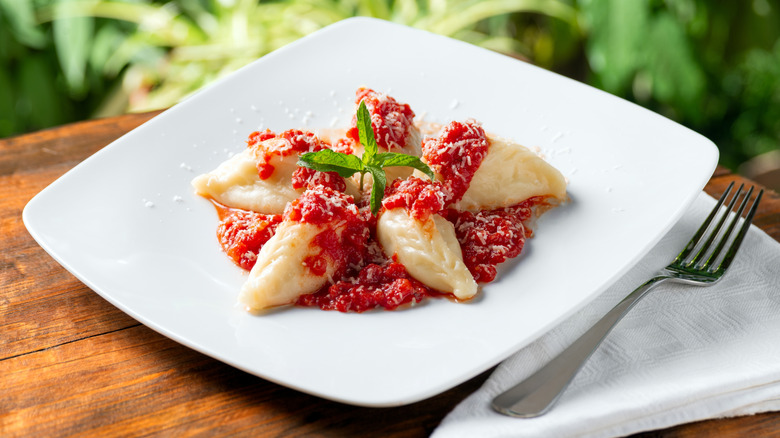
Italy wasn't a country until 1861. Before that, it was made up of autonomous regions. So, when you look at Italian cuisine as a monolith, you're ignoring this part of the area's history. In the U.S., Italian cuisine is often considered generically Italian, but this isn't a great sign. If you don't see any regional influences on a menu, you might not be in for a particularly exciting meal.
Michelle Durpetti loves seeing regional specificity on an Italian restaurant menu. "Instead of simply saying Italian, are they showcasing dishes from Tuscany, Emilia-Romagna, Sicily, Piemonte, or Campania?" she asks. "Italy isn't one cuisine, it's dozens of regional cuisines," she adds.
When you look at regional dishes, that's when things tend to get more interesting. Or, at least, it's when you stop seeing the same dishes over and over again. For instance, where my family is from in Sardinia, there's a type of regional stuffed pasta called culurgiones, which is often filled with potato, mint, and pecorino. Or, if you head to Liguria in northwest Italy, you'll find a chickpea flour pancake called farinata sold on street corners everywhere.
There's so much more to Italian food than many people think, and ignoring the wealth of regional dishes is a restaurant red flag. Even if just a couple of dishes on the menu are heavily regionally inspired, you'll get so much more variation.
10. Questionable pasta dishes
Stockyimages/Getty Images
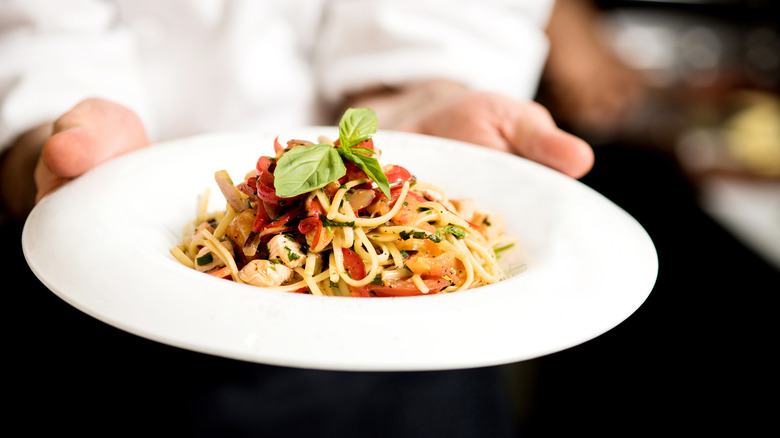
There are many ways that pasta dishes can throw up a red flag in Italian restaurants. Some of these you can notice before you even take a bite, whereas others you'll need to try before they become apparent.
Take a glance at the menu and anyone with a little knowledge in the area will be able to tell if there's a problem with the kinds of pasta shapes that are paired with each sauce. Angelo Caruso makes a point of paying attention to this detail. For instance, larger shapes should be paired with more robust sauces, while twisted shapes should be served with sauces that cling to those curves. Michelle Durpetti notes that when you can choose any shape to go with any sauce, that's a red flag. "Certain sauces belong with certain pastas because they were developed together over generations," she says. "Thoughtful pairings tell me a restaurant understands the craft and celebrates pasta as life versus just a section in a menu."
Overcooked pasta is another huge red flag, according to our experts. You should never have to ask for pasta cooked al dente at an Italian restaurant, as this should be the default, so when a place falls down on this, it doesn't bode well. "Pasta needs to be cooked properly, finished in the sauce and served at the right moment," Tony Mantuano explains and adds, "The sauce and pasta should be married together, not sitting separately on the plate like strangers." The pasta also shouldn't be overwhelmed by the sauce; ratios are important.
11. Overly complicated dishes
Kwan Kajornsiri/Shutterstock
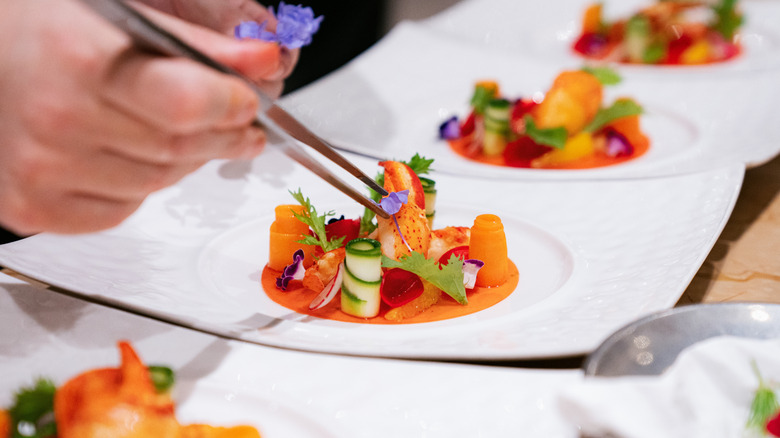
Some of the dishes to avoid at an Italian restaurant are the overly complicated ones. This is because Italian cooking should be about simplicity. Even when you're eating out, the focus should be on solid dishes executed well, not on making food complicated or unnecessarily fancy. This isn't the same thing as being boring. Far from it, in fact. My uncle's sandwiches, made with roasted vegetables, olive oil, and fresh basil knock my socks off every time, and they're far from complicated.
"Some of the greatest Italian dishes in the world have five or six ingredients," says Michelle Durpetti. Take Caprese salad, for instance; that's just tomatoes, basil, and mozzarella with a drizzle of olive oil, but it's one of the most delicious dishes there is. "When a menu relies on quality products rather than excessive garnishes and complicated descriptions, that's usually a very good sign," she adds.
We're not saying that complexity is bad just because of tradition. Complex preparations can be used to disguise mediocre cooking. "Italian cooking often looks simple, which means there's nowhere to hide," Durpetti explains. "If the ingredients, seasoning, or execution aren't right, you'll notice immediately." So, restaurants that avoid simple dishes could be a sign of a bigger issue.
With her wide experience, Durpetti notes, "I've learned that the best Italian restaurants aren't trying to impress you with complexity." You'll often find the most delicious dishes aren't the ones that sound most exciting on the page.
12. Ignoring tradition or hopping on trends
Julyprokopiv/Getty Images
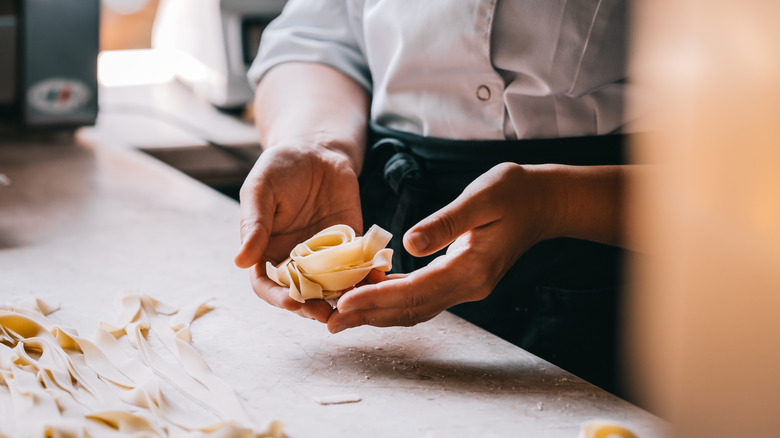
There's room for creativity in Italian cooking. If you asked 100 Italian families to make a ragu, no two would do it exactly the same. But, an Italian restaurant totally ignoring tradition is a red flag. Hopping on the latest trends rather than sticking to the kinds of foods the chefs love making is also a bad sign.
Angelo Caruso shares, "I also look for respect for regional traditions while still allowing room for thoughtful creativity." But, a restaurant putting its own spin on things can go too far. Tony Mantuano notes, "'Our version of carbonara' is usually where things go wrong; adding an egg to something does not make it carbonara." It's not a good thing to see too many obvious breaks from tradition on an Italian restaurant menu.
"Another concern is a menu that chases trends rather than focusing on timeless techniques, ingredient quality, and strong culinary fundamentals," says Caruso. The focus should be on great cooking, not following the latest TikTok trend to bring customers through the door.

 Arabic
 French
 Spanish
 Portuguese
 Deutsch
 Turkish
 Dutch
Dutch
 Italiano
 Russian
 Romaian
 Portuguese (Brazil)
 Greek
Greek