


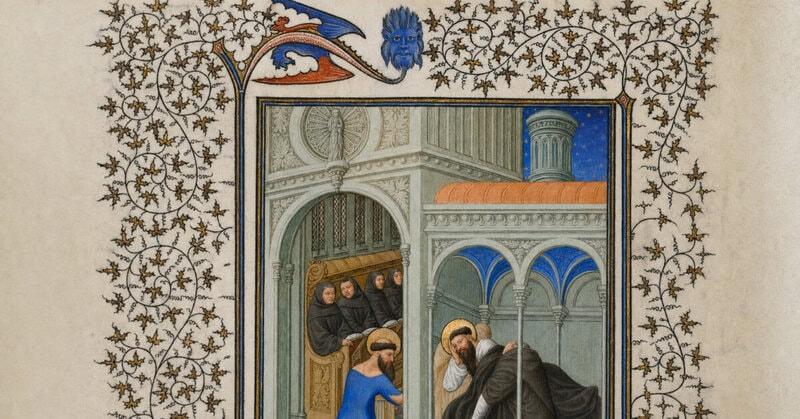
In the autumn of 1347, ships from Genoa docked at the port of Messina in Sicily carrying something no harbormaster’s manifest could account for: most of the crew were already dead, slumped at their oars, and the men still alive were covered in black, weeping swellings the size of eggs clustered in their groins and armpits. The smell reached the dock before the gangplanks did. Sicilian authorities ordered the fleet back out to sea immediately — but it was already too late, and within weeks a catastrophe had begun that would kill somewhere between a third and half of every living person in Europe.
What the 2010 Film Black Death Actually Shows — and What It Is Really About
Christopher Smith’s 2010 film Black Death gets two things right immediately: the year and the place. Set in 1348 in plague-ravaged England, it follows a young monk named Osmund who is recruited by a hardened mercenary knight named Ulric to guide a band of soldiers through the dying countryside. Their mission, framed with the full authority of the Church, is to investigate a village rumored to be completely untouched by the pestilence — and a woman within it said to possess the power to raise the dead.
What Smith and screenwriter Dario Poloni have made is not really a plague movie. It is a film about faith: about the violent collision between medieval Christian orthodoxy and whatever older, stranger belief system the mysterious village has organized itself around. That is a legitimate dramatic engine, and the film uses it well enough that critics on Rotten Tomatoes praised its atmosphere and moral ambiguity at length. But using the Black Death as atmosphere — muddy roads, flagellants whipping themselves bloody in open fields, cartloads of corpses trundling through fog — means the backdrop is doing the work that the story should be doing. The real Black Death was more terrifying, more biologically strange, and ultimately more historically consequential than any morality play staged inside it, and almost no film has ever seriously reckoned with what it actually was.
What Actually Caused the Black Death — and Why It Moved So Fast

The pathogen responsible was Yersinia pestis, a bacterium. The traditional account — one that most plague films implicitly endorse by populating their frames with scurrying rats — holds that infected fleas living on black rats were the primary vector, jumping to humans when the rat host died. Recent epidemiological research has complicated this picture considerably. Some researchers now argue that human body lice and human fleas may have been more significant in spreading the disease during its most explosive phases, particularly in colder northern climates where rat populations were less dense. The rats, in other words, may be partly cinematic mythology layered over a more complicated and more human transmission story.
Yersinia pestis manifested in three distinct clinical forms, and understanding all three matters for understanding why the medieval world had no effective defense against it. Bubonic plague — the swollen, agonizing lymph nodes called buboes that gave the disease its common name — was the most recognizable form, and while terrible, it was not invariably fatal. Septicemic plague, in which the bacteria overwhelmed the bloodstream directly, was almost always fatal within hours and produced the blackened skin tissue that gave the pandemic its enduring name. But it was the pneumonic form that made containment essentially impossible: spread person to person through respiratory droplets, it could kill within a single day. A person could eat breakfast feeling healthy and be dead before nightfall. That pace of death would read as implausible on a modern screen, which may be one reason filmmakers consistently avoid depicting it accurately.
From its Sicilian landfall in 1347, the plague swept through France, Spain, and England by 1348, traveling along trade routes, river valleys, and pilgrim roads at an estimated rate of two to five miles per day. Medieval medicine offered no useful framework for understanding contagion as a biological process. Physicians attributed the epidemic variously to miasma — poisoned or corrupt air — to catastrophic planetary alignments, or to divine punishment for collective human sin. Interventions ranged from ineffective herbal remedies to the burning of aromatic wood to purge bad air. None of it made any meaningful difference, and none of the people attempting these remedies were foolish; they were working within the only intellectual framework available to them, and that framework simply had no room for an invisible, transmissible bacterium.
The World Osmund Would Actually Have Walked Through

By the summer of 1348, the plague had crossed the English Channel. By winter, it had reached London. By 1349, it was tearing through the north of England — meaning the film’s setting is historically precise in a way the film itself never fully exploits. The England that Osmund and Ulric ride through should have been not merely gloomy but structurally unraveling. Grain went unharvested because there were no surviving laborers to cut it. Livestock wandered untended on open roads. The basic social contract of feudal agriculture — peasants work the land, lords protect them, the Church explains why — had been catastrophically disrupted by a mortality rate that respected none of those arrangements.
England lost an estimated forty to sixty percent of its population between 1348 and 1350. Contemporary chronicles describe something close to civilizational bewilderment: people genuinely did not understand why some individuals survived and others did not, why some villages were devastated while others were seemingly spared, why prayer and penance and flight all failed with approximately equal frequency. That radical uncertainty produced the paranoia and scapegoating that Black Death gestures toward — flagellant movements, the persecution of Jewish communities falsely accused of poisoning wells — but the film touches these phenomena only lightly, using them as period color rather than exploring what they reveal about human psychology under existential pressure.
The long-term consequences of that demographic catastrophe were transformative in ways no plague film has ever seriously dramatized. The labor shortage created by mass death gave surviving peasants unprecedented bargaining power over the lords who needed their work. Serfdom in England did not end in a single legislative moment; it eroded across the following century, accelerated by the blunt arithmetic that dead serfs cannot till fields and living ones can demand better terms. The conditions that helped make the Renaissance possible — the loosening of rigid social hierarchies, the slow accumulation of wealth among a broader population, the growing distrust of institutions that had failed so visibly and so catastrophically — were seeded in part by what the plague left behind.
The Immune Village: Myth, Misreading, or Medical Reality?

The central conceit of Black Death — a village somehow untouched by the plague — is not pure fantasy. Historical records do describe communities that appeared to escape, and the most famous English example is the village of Eyam in Derbyshire, which famously quarantined itself to contain an outbreak and prevent spread to neighboring communities. Eyam’s story, however, belongs to the plague of 1665-66, not to 1348. The broader question of whether some communities or individuals were genuinely more resistant turns out to have a partial biological answer that is considerably more interesting than any supernatural explanation a screenplay might offer.
Modern genetic research has identified variants of the CCR5 gene — particularly a mutation called CCR5-delta32 — that appear to confer measurable resistance to bubonic plague. Population studies suggest the Black Death may have actively selected for this mutation among European survivors, meaning the pandemic was, among its many other consequences, a brutal and unintentional genetic filtering event. Some communities were also spared through geographic isolation, through seasonal timing that interrupted the flea’s life cycle, or simply through the random and uneven way the disease advanced in successive waves. The film’s premise is therefore historically plausible even if its supernatural resolution is not — and the real biological explanation is more remarkable than anything the screenplay delivers, because it points toward the slow, accidental story of how humanity began to adapt, at the genetic level, to Yersinia pestis over the centuries that followed.
Where Plague Cinema Goes Wrong — and the One Thing Black Death Gets Right
The visual grammar of plague cinema is almost entirely fixed. Torchlight. Mud. Robed penitents. Carts of bodies. Black Death deploys every element of this grammar with genuine craft — Smith is a skilled director, and the film is genuinely unsettling in its refusal to offer comfort — but the grammar itself is the problem. It aestheticizes the Black Death into a medieval mood rather than forcing the viewer to confront what the pandemic actually was. The pneumonic form alone, with its capacity to kill between sunrise and sunset, would demand a completely different kind of filmmaking: something faster, more disorienting, closer in spirit to a thriller than a slow Gothic procession through candlelit moral ambiguity.
The most significant historical distortion in plague cinema is rarely any single factual error. It is the implicit suggestion that the Black Death was experienced as a slow, ambient, atmospheric horror — the world gradually darkening, bodies accumulating at a pace that left room for philosophical reflection. In reality, the speed of pneumonic transmission meant that communities could be functionally destroyed within days. The horror was not ambient. It was sudden, and it made no narrative sense to the people living through it, because no available system of meaning could contain or explain what was happening to them.
What Black Death does capture, and captures surprisingly well, is the theological chaos of the period. Medieval people genuinely interpreted the pandemic as divine judgment, and the collision between institutional Church authority — which had no explanation and no remedy — and desperate local folk religion is historically grounded in ways the film handles with more care than it is usually credited for. The Church emerged from the Black Death with its credibility badly damaged, a crack in institutional authority that would continue to widen across the following two centuries toward the Reformation. The film’s refusal to offer a clean moral resolution — we never definitively learn whether the village’s immunity is supernatural or not — accidentally mirrors the genuine historical experience of surviving a catastrophe that no available framework of meaning could adequately explain or contain.
Why the Real Black Death Still Matters

The Black Death was not a single event with a beginning, a middle, and an end. It was the opening wave of what historians call the Second Plague Pandemic, which returned to Europe in successive outbreaks for nearly four centuries. The world of 1348 did not survive the plague and move on intact. It learned — imperfectly, incrementally, at enormous human cost — to live inside a world where plague was always a possibility, reshaping medicine, theology, social structure, and eventually human biology itself in the process.
If you want to watch Black Death as a moody, intelligent horror film about faith and moral compromise, it is available on Netflix and genuinely rewards that viewing on its own terms. If you want to own it and revisit the way Smith’s direction builds atmosphere across multiple viewings, the Blu-ray release holds up well. What the film cannot give you is the real Black Death — the bacterium that arrived smelling of death before it was even visible, that killed in hours rather than days, that left a continent so demographically shattered that the survivors inadvertently built a different world on the bones of the old one. That story is more terrifying, more scientifically strange, and ultimately more instructive than anything a morality play can hold. It is waiting for a filmmaker willing to stage not the mood of the plague, but the plague itself — in all its biological speed, its social chaos, and its long, transformative aftermath.

 English
 Arabic
 French
 Spanish
 Portuguese
 Deutsch
 Turkish
 Dutch
Dutch
 Italiano
 Russian
 Romaian
 Greek
Greek