


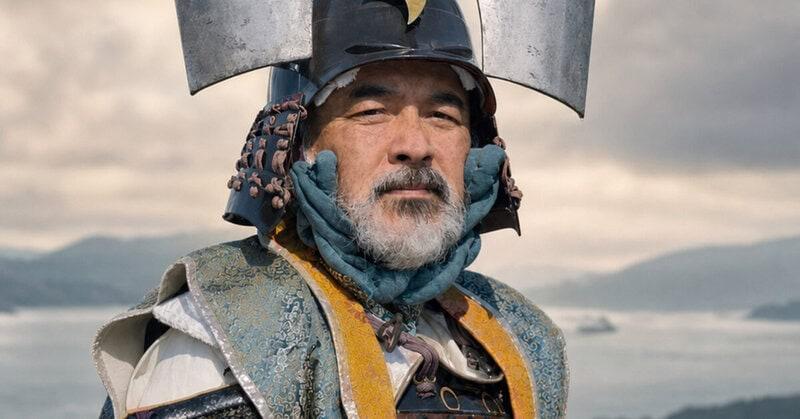
In October 1274, a Mongol fleet carrying tens of thousands of soldiers appeared on the horizon off a small Japanese island — and the outnumbered samurai garrison waiting on the shore had no idea that the world they knew was about to change forever. Ghost of Tsushima, the 2020 action epic from Sucker Punch Productions, didn’t invent that collision. It inherited it from history — and the real story is, if anything, more extraordinary than the game lets on.
The Island in the Game Is a Real Place, Caught Between Two Worlds

Tsushima is a genuine Japanese island suspended in the Korea Strait, roughly 50 miles from the Korean Peninsula and about 80 miles from the southern Japanese island of Kyushu. That position — too close to the continent for comfort, too far from the mainland for easy rescue — made it a frontier in every sense: culturally, strategically, and psychologically. For centuries it existed in the space between two civilizations, absorbing trade, tension, and eventually invasion.
Its exposed geography made Tsushima the inevitable first target of any force sailing from the Asian mainland toward Japan, exactly as the game depicts. Sucker Punch modeled the game’s landscape on real terrain, and that decision pays off in a way that pure fantasy rarely achieves — the island feels lived-in and precarious because it was, and is, both of those things.
The Year 1274 Is Not Fiction — It Was the Mongol Empire’s First Attempt to Conquer Japan

Kublai Khan, ruler of the largest contiguous land empire in human history, launched a naval invasion force estimated at somewhere between 15,000 and 40,000 soldiers aboard roughly 900 vessels in October 1274 — one of the largest amphibious operations the medieval world had ever seen. The target was Japan, a nation that had refused to submit to Mongol diplomacy, and the route ran directly through Tsushima. Ghost of Tsushima locks its entire story to that exact year, meaning every skirmish the player fights is set against the backdrop of a documented historical catastrophe, not invented lore.
Japanese historical sources refer to the broader conflict as the Battle of Bun’ei, and it marks the moment the island nation first confronted a military threat of genuinely existential scale. When players step into Jin Sakai’s sandals and look out at a bay dark with enemy ships, they are looking at something that terrified real people in a real year — and that historical weight gives the game’s fiction an unusual gravity.
Tsushima’s Real Defenders Were Vastly Outnumbered and Quickly Overwhelmed

Historical records indicate the samurai garrison defending Tsushima when the Mongol fleet arrived numbered only around 80 to 100 warriors. The island’s governor, Sō Sukekuni, reportedly led a desperate mounted charge against the beachhead and was killed — a gesture that was brave by any measure and strategically futile by every one. The real Tsushima fell within days, giving the invaders a staging point before they pressed on toward the Japanese mainland at Kyushu.
The game’s fictional Jin Sakai inherits this atmosphere of hopelessness and transforms it into the engine of his character arc. But the hopelessness itself is not invented. The men who actually stood on that beach in 1274 faced those odds with no storm yet promised and no protagonist’s plot armor — which makes the historical record, quietly, the more harrowing of the two stories.
Mongol Tactics Were Genuinely Foreign and Shocking to Samurai Warriors

Japanese samurai of the 13th century fought according to ritualized conventions — warriors identified their lineage aloud before combat, individual duels were the expected form of engagement, and honor was bound up in the very choreography of battle. The Mongols ignored all of it. They advanced in coordinated mass formations, used explosive projectiles and arrows unfamiliar to Japanese defenders, and treated the elaborate customs of their opponents as irrelevant noise. Historical accounts describe the psychological shock as significant — the invaders didn’t just outfight the samurai, they seemed to be playing an entirely different game.
This is the historical reality that Jin Sakai’s arc in Ghost of Tsushima dramatizes. His drift toward stealth, ambush, and deception isn’t simply a gameplay mechanic — it mirrors the genuine cultural rupture samurai experienced when a code built for one kind of warfare met an enemy that recognized none of its rules. The 1274 invasion was, among other things, a collision between two completely different philosophies of violence.
The ‘Way of the Ghost’ Reflects a Real Historical Debate About Samurai Honor Versus Survival

In the game, Jin’s shift toward stealth and psychological warfare is treated as a moral crisis rather than a simple power upgrade. His own allies question him. His identity as a samurai fractures under the pressure of doing what works rather than what tradition demands, and the game is careful to make that fracture painful. This isn’t melodrama for its own sake — it’s a recognizable version of the debate that the actual 1274 invasion forced on Japan’s warrior class.
Historians note that the Mongol invasions of Japan ultimately contributed to real changes in armor design, group fighting formations, and coastal fortification strategy — the samurai world adapted, even if it was reluctant to admit it. Ghost of Tsushima uses one fictional man’s internal conflict to dramatize a genuine historical tension that played out across an entire culture: how do you preserve who you are when survival demands you become someone else?
Sucker Punch Productions Built the Game Around Meticulous Period Research

The studio consulted historians and specialists in Japanese culture throughout development, studying 13th-century samurai armor, vernacular architecture, social hierarchies, and the texture of daily life in feudal Japan. The result is a game world that earns its atmosphere — not through fantasy embellishment, but through the kind of accumulated detail that makes a place feel inhabited rather than decorated. Art direction drew heavily on the visual vocabulary of classic samurai cinema, particularly the films of Akira Kurosawa, rather than reaching for the stylized exoticism that Western takes on feudal Japan sometimes default to.
That Kurosawa influence was acknowledged directly: the Ghost of Tsushima Director’s Cut ships with a dedicated Kurosawa Mode — a black-and-white film grain filter paired with Japanese-language audio — offered as a playable homage to the director who did more than almost anyone to shape the world’s image of the samurai. It is a graceful gesture, and a confident one, from a studio willing to invite the comparison.
A Real Typhoon — One of the First Recorded ‘Divine Winds’ — Ended the 1274 Invasion

After the Mongols moved from Tsushima toward Hakata Bay on Kyushu, a severe storm struck the fleet, destroying or damaging a significant number of ships and forcing a withdrawal before the campaign could press further inland. Japan had not been conquered. Japanese sources interpreted this meteorological salvation in spiritual terms, calling such storms kamikaze — “divine winds” — a word that entered the historical, and eventually the tragic modern, record from events like this one. The 1274 storm is among the earliest documented instances of that interpretation taking hold.
Ghost of Tsushima’s story focuses on the island defense in the opening days of the invasion, before that larger naval campaign unfolds — a dramatically sound choice that keeps the scope human and immediate. But understanding the full arc of the real invasion is essential context: the battle the game depicts was the opening act of a crisis that Japan survived only because of a storm no general on either side could have predicted or planned for.
The Studio’s Background Made the Historical Pivot Genuinely Surprising
Before 2020, Sucker Punch was best known for the Infamous superhero series and the cheerfully cartoonish Sly Cooper franchise — games built on exaggerated powers, comic-book aesthetics, and anthropomorphic raccoon thieves. Ghost of Tsushima was a dramatic change of register: grounded feudal Japan, motion-capture performances aimed at emotional realism, and a narrative architecture built on documented historical events rather than invented mythology. The tonal distance between Sly Cooper and Jin Sakai is difficult to overstate.
Published by Sony Interactive Entertainment in July 2020, the game became one of the best-reviewed PlayStation 4 exclusives of its generation, praised specifically for its world-building authenticity and its willingness to take history seriously as a storytelling foundation. Critics and audiences responded to something that felt genuinely crafted rather than assembled — a rare outcome for a big-budget open-world game, and a vindication of the studio’s unlikely pivot.
Japan Honored the Game in an Unusual Way — With an Official Award from Tsushima City Itself

In 2020, the mayor of Tsushima City granted Sucker Punch Productions an official letter of appreciation, recognizing the game for raising global awareness of the island and its history. It was an extraordinary acknowledgment — a local government formally thanking a video game studio in Washington State for putting their home on the map for an international audience. The game sparked a measurable surge of interest in visiting Tsushima, with tourism inquiries rising sharply after release, making it a rare case of interactive entertainment driving real-world cultural heritage attention.
Perhaps most telling was the reception in Japan itself: Japanese players embraced the game with particular enthusiasm, responding to a level of care and cultural specificity they had not necessarily expected from a Western studio. Reviewers who came to it as an escape found something more durable — a game that treated its historical subject with enough respect that the people with the deepest stake in that history embraced it as their own.
The Mongol invasion of Japan in 1274 was a genuine turning point — a moment when an island nation confronted existential threat and, partly through luck and partly through adaptation, survived it. Ghost of Tsushima didn’t invent that crisis; it illuminated it, and in doing so reminded millions of players that the most gripping stories are often the ones that actually happened.

 English
 French
 Spanish
 Portuguese
 Deutsch
 Turkish
 Dutch
Dutch
 Italiano
 Russian
 Romaian
 Portuguese (Brazil)
 Greek
Greek