


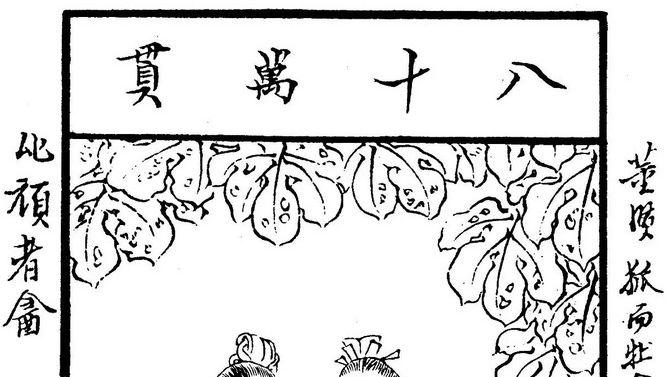
Sometime around 1 BCE, the Han Emperor Ai woke before his favorite companion, a young official named Dong Xian, who had fallen asleep draped across the emperor’s robe. Rather than disturb him, the emperor drew a small knife and cut away his own sleeve, rising quietly from the bed so the man he loved could sleep on undisturbed. That gesture — impulsive, tender, wordless — was recorded in the official dynastic history, and it would echo through Chinese literature for two thousand years.
The Emperor Who Cut His Sleeve
The story of Emperor Ai and Dong Xian is not a footnote. It became the origin of one of the most enduring phrases in the Chinese literary tradition: duàn xiù zhī pǐ (断袖之癖), “the passion of the cut sleeve.” For centuries afterward, poets, novelists, and ordinary writers used those three characters as a graceful, widely recognized shorthand for male same-sex love. The phrase required no explanation. Every educated reader knew exactly what it meant.
This single recorded moment reorients a great deal. While medieval European courts were still more than a millennium away from drafting capital laws against sodomy, imperial China had already developed a tender literary vocabulary — a whole constellation of named metaphors — for love between men. The cut sleeve. The bitten peach. The southern custom. These were not whispered euphemisms for a hidden practice. They were the language of court records, classical poetry, and widely read fiction.
The second famous metaphor is older still. Duke Ling of Wei and his favorite, Mizi Xia, appear in texts from the Warring States period (475-221 BCE). On a walk through an orchard, Mizi Xia bit into a peach, found it delicious, and offered the remainder to the duke — an intimate, spontaneous gesture the duke received with open delight. “He loves me so much he forgets his own appetite,” the duke reportedly said. The half-eaten peach (yú táo, 余桃) entered the classical lexicon as another poetic name for same-sex devotion, centuries before the common era began.
What Ordinary Life Looked Like in Han Dynasty China

The Han dynasty (206 BCE-220 CE) left behind a remarkably candid historical record on this subject. Scholarship examining Han dynasty sexuality argues that for educated men of that era, attraction to both women and men was so unremarkable it barely warranted comment. Bisexuality, in this reading, was simply the ambient reality of elite male life — not a category requiring a label or a defense.
Confucian society cared deeply about producing heirs and honoring family obligations, and those duties were taken seriously. But the historical record suggests that same-sex affection and familial duty occupied largely separate domains in the minds of Han-era Chinese. A man could love a male companion with genuine depth and still fulfill his obligations to his lineage. The two were not experienced as contradictions requiring resolution.
Historians have counted at least ten Han emperors recorded in the official dynastic histories as having male favorites — beloved companions who sometimes rose to extraordinary political influence. Dong Xian himself was eventually appointed to one of the highest offices in the imperial government. These were not private scandals suppressed in the margins of history. They were documented in the Han Shu, the official history compiled by the scholar Ban Gu, written with the same matter-of-fact tone used to describe military campaigns and grain harvests.
A Vocabulary of Love: How China Named What Europe Would Later Punish

What makes the Chinese historical tradition so striking is not just the practice but the naming. The history of homosexuality in China is distinguished by a vocabulary of cultural acknowledgment: “cut sleeve,” “bitten peach,” and nán fēng (南风), “the southern custom” or “southern wind,” a term associated especially with Fujian province, where male same-sex relationships were documented as a visible regional practice. These were not the terms of a hidden subculture. They were the established vocabulary of a recognized human experience.
Literary works from the Han through the Tang dynasty (618-907 CE) reference male love in poetry and prose without moral condemnation, treating it as one register of human feeling among many. Tang poets wrote about male beauty with the same lush attention they gave to landscapes and wine. The emotional texture is unmistakable — longing, devotion, jealousy, loss — and none of it is framed as transgression.
The contrast with European chronology is stark. England’s Buggery Act, which criminalized sodomy on pain of death, was passed in 1533 CE — roughly fifteen hundred years after Han emperors were openly celebrating their male companions in official court records. To have a named, recognized tradition is historically significant in a way that private tolerance is not. It means same-sex relationships in ancient and imperial China existed within a framework of cultural acknowledgment, not merely the silent mercy of individuals who chose not to look too closely.
Tolerance, Indifference, or Full Acceptance? The Nuance Historians Argue Over

It would be a mistake to read this history as a golden age of queer liberation. Peer-reviewed scholarship on homosexuality in pre-modern China concludes that same-sex relationships were widespread, recognized, and fairly tolerated — but not entirely accepted across all social contexts. That last clause matters. Tolerance and full acceptance are different things, and collapsing them flattens a complicated past into a usable myth.
Scholar Bret Hinsch, whose book Passions of the Cut Sleeve (1990) remains one of the most systematic examinations of the subject, argues that acceptance was particularly broad in the centuries following the Han dynasty, though this claim has been disputed by other historians. What was casually tolerated in a Tang dynasty pleasure district might have been viewed very differently in a Song dynasty provincial household.
According to historical guides to queer China, attitudes shifted dynasty by dynasty, but throughout ancient China, homosexual relationships were often treated with indifference. The relatively open Tang gave way to the more moralistic Song dynasty (960-1279 CE), when Neo-Confucian thinkers began subjecting desire to stricter philosophical scrutiny. The honest picture is this: ancient and imperial China was not a pre-modern queer utopia. But it was also not a society that organized systematic legal violence around same-sex behavior in the way that early modern Europe did. That difference is real, and it matters.
Beyond the Court: Monks, Merchants, and the Southern Custom

The story widens considerably when you look beyond the emperor’s bedchamber. By the Ming dynasty (1368-1644 CE), sources document male same-sex relationships among Buddhist monks, traveling merchants, and in the theatrical world, where male actors who specialized in female roles created complex erotic cultures around performance and gender presentation. These were not elite privileges trickling down from the court. They were social realities that crossed class lines.
The “southern custom” label — applied with particular frequency to Fujian province — suggests not just regional variation but something approaching open community practice. Contemporary observers, some of them disapproving, wrote about same-sex relationships in the south as a conspicuous local custom, not a rare aberration. Their disapproval is itself evidence: polemics are not written against things that do not visibly exist.
The late Ming period also produced extended fictional treatments of male love with genuine emotional ambition. Works such as Bian er Chai (variously translated as A Hairpin Beneath the Cap) feature romantic relationships between men developed across multiple chapters, with the full emotional repertoire of devotion and grief, read by a broad literate audience. This was not underground literature circulated in secret. It was part of a flourishing commercial fiction market. The fact that such stories could be written, published, sold, and openly read indicates something important about the cultural space available for same-sex love in Ming China.
Where It Shifted: The Qing Dynasty and the Arrival of Western Frameworks

The shift, when it came, was real and consequential. The Qing dynasty (1644-1912 CE) introduced the first explicit legal codes targeting male same-sex acts — a meaningful departure from earlier dynasties that had largely left such behavior outside the scope of law. These legal changes reflected stricter Confucian moral frameworks that Qing rulers promoted as part of broader social consolidation.
But the story of how same-sex relationships came to be stigmatized in China is not simply an internal Confucian development. The 19th and early 20th centuries brought Western colonial contact and, with it, the importation of European medical and legal frameworks that classified homosexuality as pathology and deviance. Chinese reformers, eager to modernize along Western lines, sometimes absorbed these frameworks — with the result that a culture which had never organized systematic legal prohibition around same-sex behavior found itself adopting the language of disorder and perversion from abroad.
This timeline matters enormously. The criminalization and stigma that some people associate with “traditional” Chinese attitudes toward homosexuality are, in strict historical terms, relatively recent — and significantly shaped by external influence. The deeper tradition, the one stretching back through Ming fiction and Tang poetry and Han dynasty court records all the way to Mizi Xia’s bitten peach, points in a genuinely different direction.
Why This History Matters Now
Arguments that homosexuality is a Western import into Asia — a claim still made in political debates across the region — dissolve against this evidence. China had a named, documented, literary tradition of male same-sex love centuries before sustained Western contact reshaped its legal and moral vocabulary. The terminology, the stories, the court records, the regional customs, the commercial fiction: none of it required Western influence to exist, because it predates that influence by more than a millennium.
The LGBTQ history of the ancient world is still being recovered from archives that Western scholarship was slow to take seriously. Chinese historical sources — court records, classical poetry, legal texts, and commercial fiction — constitute a rich and still-underexplored archive. The work of scholars such as Bret Hinsch and others who have followed represents a beginning, not a conclusion, and the field continues to develop.
Understanding this history carries genuine weight in the present. In China today, same-sex relationships occupy a legally ambiguous and publicly contested space. The government removed homosexuality from its official list of mental disorders in 1990 but has never extended legal recognition to same-sex partnerships. Cultural and political pressure fluctuates considerably. In that context, the historical record is not merely academic. It is a counter-argument, grounded in evidence, against the claim that acceptance of same-sex love is alien to Chinese civilization.
And at the center of it all remains that quiet scene from the first century BCE: an emperor with a small knife in his hand, cutting away his own sleeve in the early morning light so that the person sleeping beside him would not be disturbed. It is a small human moment, preserved in the official record for two thousand years — evidence that the desire to honor a beloved was neither new nor foreign, and that tenderness, across every dynasty and every century, has always found a way to name itself.

 English
 French
 Spanish
 Portuguese
 Deutsch
 Turkish
 Dutch
Dutch
 Italiano
 Russian
 Romaian
 Portuguese (Brazil)
 Greek
Greek