


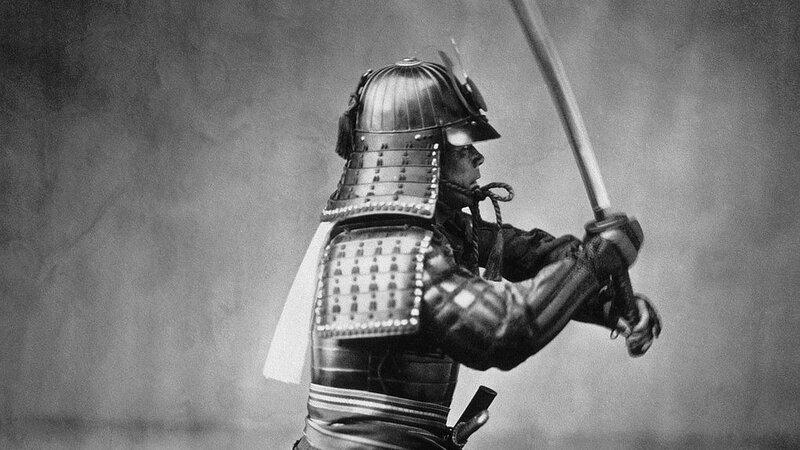
Picture a samurai at his desk, brush in hand, hunched over a land-tenure dispute between two farming villages — not a battlefield in sight. For most of the nearly seven centuries that feudal Japan endured, this was the truest portrait of a warrior class that history has dressed up in far more dramatic armor than it usually wore.
683 Years of Shogunal Rule — Japan’s Longest-Running Power Structure

In 1185, a military commander named Minamoto no Yoritomo established what his contemporaries called a bakufu — literally a “tent government,” the kind of field headquarters a general might pitch between campaigns. The only difference was that this one never folded. From that founding moment until the Meiji Restoration of 1868, a shogun governed Japan with only a three-year exception for roughly 683 years. To put that in perspective, the Roman Empire’s western half lasted fewer than five centuries, and most European royal dynasties collapsed long before reaching such an age.
The very word bakufu tells the story: what began as a warrior’s temporary wartime apparatus calcified into one of the most durable governing institutions the world has ever seen. Britannica’s account of medieval Japan traces how the Kamakura shogunate planted the seed of a political structure that successive ruling clans would inherit, reshape, and ultimately hand down across more than six hundred years of Japanese history.
The Samurai’s Day Job: Tax Collector, Record-Keeper, Estate Manager

Strip away the cinema and the mythology and the samurai’s daily life looks considerably less cinematic. Warrior-landlords in medieval Japan spent the bulk of their working lives managing agricultural estates, collecting rents from tenant farmers, and arbitrating the kind of tedious land disputes that fill archive boxes rather than epic poems. Britannica’s account of Kamakura-era samurai places them squarely on their holdings, overseeing crop yields and resolving boundary quarrels — roles that would be recognizable to any provincial civil servant.
The sword was real, and every samurai wore one, but it functioned more as a badge of rank than a daily instrument of violence. The brush and the ledger were the actual tools that kept a samurai’s household solvent and his lord satisfied. Examining Japan’s history era by era makes clear that governance, not combat, was the engine running beneath the warrior class’s gleaming exterior.
Three Distinct Feudal Eras, Each with Its Own Character
When people say “feudal Japan,” they are quietly collapsing three very different worlds into one. Historians identify three named periods within the feudal age proper: the Kamakura (1185-1333), the Muromachi (1336-1573), and the Azuchi-Momoyama (1573-1603), followed by the Edo period (1603-1868) under the Tokugawa shoguns. Each brought a different dominant clan to power, shifted the seat of authority to a different city, and struck a different bargain among the emperor, the shogun, and the regional lords who actually controlled the land and the men on it.
The differences between these eras matter enormously for anyone trying to understand samurai myth versus reality. A mounted warrior fighting for survival during the turmoil of the Kamakura period would have been nearly unrecognizable to a Confucian-educated, stipend-drawing administrator of the later Edo era. Treating “feudal Japan” as a single costume is like calling medieval England and Victorian England the same country simply because both had kings.
The Kamakura Feudal System: A Work in Progress for Decades

When Yoritomo established his bakufu in 1185, nobody handed him a rulebook. Scholars describe the feudal system that emerged in those early decades as half-formed and actively contested. Land tenure arrangements were murky, loyalty obligations between lords and retainers were still being negotiated, and the exact authority of the new warrior governors placed across the provinces was a matter of ongoing argument rather than settled law.
Far from the iron pyramid of samurai mythology — shogun at the apex, obedient warriors arrayed in perfect ranks below — early feudal Japan was a political experiment whose rules were being written and rewritten in real time throughout the thirteenth century. The rigid hierarchy that later generations would take for granted had to be built, clause by clause, out of improvised agreements and hard-won precedents. Order was not a samurai inheritance; it was a samurai achievement.
265 Years of Peace Under the Tokugawa — and the Samurai Who Had No Wars to Fight

In 1603, Tokugawa Ieyasu consolidated power and inaugurated the Edo period, ushering in roughly 265 years of domestic peace — a stretch longer than the entire history of the United States from independence to the present day. For the samurai class, this was a profound existential puzzle. The hereditary warriors who had justified their privileges through martial service now found themselves in a society with almost nothing to fight. A samurai born in 1700 might live his entire life — as might his father and grandfather before him — without ever drawing his sword in anger.
What filled that void was administration. Entire generations of warriors became salaried government functionaries, attending to Confucian philosophy, maintaining domain records, and performing elaborate ceremonial duties that kept the social machinery running. The warrior was still there in name and dress; the war had simply departed and left him at his desk.
The Meticulously Rigid Edo Class System That Defined — and Trapped — Samurai Identity

The Tokugawa peace was enforced not only by political power but by a social architecture of extraordinary precision. Edo society was sorted into four recognized tiers — samurai, farmers, artisans, and merchants — in a hierarchy that historians describe as “meticulously constructed and rigidly enforced.” A samurai’s rank was hereditary, announced by specific dress codes, and governed by behavioral expectations that shaped every public interaction — from the way he bowed to the route he walked through the city.
But this rigid identity also functioned as a cage. Because samurai were legally barred from engaging in trade or most forms of manual labor, they depended entirely on stipends paid by their lords. As peaceful decades accumulated and those stipends quietly eroded in real purchasing power, many samurai families found themselves maintaining the outward trappings of status — the correct clothing, the correct sword — while quietly struggling to afford dinner. The class system had made them lords of a social order they could no longer comfortably afford to inhabit.
The Sword as Status Symbol, Not Standard Equipment

The daisho — the paired long and short swords that have become the iconic image of the samurai — spent most of the Edo period doing something rather undramatic: hanging at a man’s hip as a signal to everyone around him that he outranked them. Because actual sword fights were rare events across two and a half centuries of domestic peace, many blades became heirloom objects, painstakingly polished and ceremonially displayed rather than practically wielded. The craft of swordsmanship survived, but increasingly as a formalized art practiced in schools, its spiritual and aesthetic dimensions amplified precisely because its violent application had become so improbable.
Merchants and farmers were legally prohibited from wearing swords, which meant that every time a samurai walked through a market or a crowd, the weapon at his side was broadcasting his position in the hierarchy without a single word being spoken. The blade was a credential, not a threat — a visible permit to occupy the top of a social order that everyone was required to acknowledge.
Samurai Literacy and the Brush as a Weapon of Governance

By the time the Edo period was in full stride, an illiterate samurai was not merely an embarrassment — he was professionally useless. The administrative demands of running a domain required men who could read classical texts, draft official correspondence, engage with Confucian ethical arguments, and maintain coherent bureaucratic records. To meet this need, domains established schools called hankō where samurai sons studied classical literature and statecraft alongside basic martial training. A young man who graduated from such a school was, above all else, a trained government employee who happened to know how to handle a sword.
This dual curriculum — the “way of the brush and the way of the sword” — was not a contradiction. It was an honest admission, embedded in feudal Japan’s educational philosophy, that the ruling class had been engineered for governance first and warfare second. The sword gave the samurai his identity; the brush gave him his actual job.
The Rōnin Problem: What Happens When Bureaucrat-Warriors Lose Their Office

A rōnin was a samurai without a lord — and the Edo period manufactured them in troubling numbers. As the Tokugawa shogunate consolidated its grip and reduced the number of domains requiring large armed retinues, thousands of warriors found themselves cast loose without stipends, without employers, and without any socially acceptable way to earn a living. The same class system that had defined their dignity now barred them from the trades and labor that might have sustained them. Many drifted into poverty; some crossed into crime; those fortunate enough to have received a proper hankō education sometimes reinvented themselves as teachers, scholars, or writers.
The famous 47 Rōnin incident of 1703 — in which a group of masterless samurai avenged their lord’s death in a meticulously planned act of loyalty — gripped Edo society and has echoed through Japanese culture ever since. It captivated precisely because it was so extraordinary. For most rōnin, there was no dramatic vendetta, no redemptive sacrifice, no kabuki play waiting to be written about their fate. There was only the slow, unglamorous hardship of a bureaucrat who had lost his office and could find no other door open to him.
Why the Gap Between Myth and Reality Still Matters

The persistent image of the samurai as an ever-battle-ready warrior persists in film, fiction, and popular history because it is a compelling story. But the more accurate picture — of administrators who wore swords to meetings, scholars who studied Confucius between sword drills, and hereditary warriors who outlived the wars that had once justified their existence — is a more instructive one.
Understanding feudal Japan on its own terms, rather than through the lens of later romanticization, reveals something genuinely surprising: that one of history’s most celebrated martial cultures spent the majority of its existence perfecting the arts of peace. The samurai’s greatest achievement was not the sword stroke but the durable governing apparatus he built, maintained, and ultimately could not outlive. That is a story worth knowing as clearly as the legend it tends to displace.

 English
 Arabic
 French
 Spanish
 Deutsch
 Turkish
 Dutch
Dutch
 Italiano
 Russian
 Romaian
 Portuguese (Brazil)
 Greek
Greek