


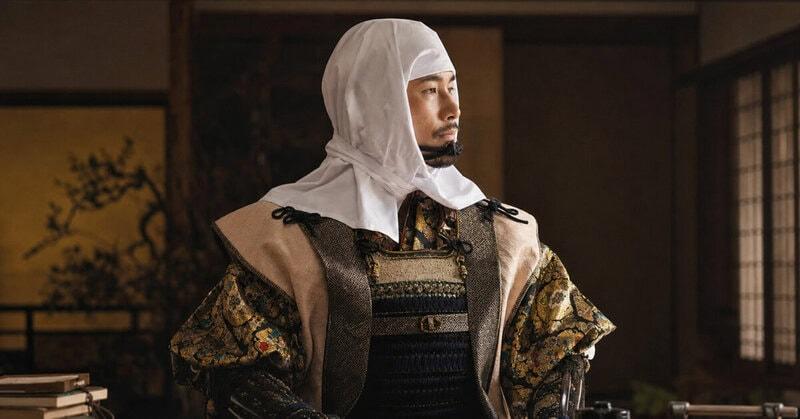
Sometime around 1716, an aging former samurai named Yamamoto Tsunetomo sat in retirement and began dictating his thoughts on what it truly meant to be a warrior. He had never fought a battle. The great wars of Japan were a century behind him, buried under the long, prosperous quiet of the Tokugawa peace. Yet the words he produced — collected in a text called the Hagakure — would help shape the world’s enduring image of the samurai as a death-obsessed, honor-driven figure who valued loyalty above survival. The irony runs deep: the samurai code that the world knows best was written by a man nostalgic for a war he had never seen, in an era when samurai had become, for all practical purposes, civil servants with swords they rarely drew.
What “Feudal Japan” Actually Means — and When It Was

Before examining what feudal Japan looked like from the inside, it helps to define the term. Historians typically use “feudal Japan” to describe the period from roughly the late 12th century through the mid-19th century — spanning the Kamakura (1185-1333), Muromachi (1336-1573), Azuchi-Momoyama (1573-1600), and Edo (1603-1868) periods. What united these centuries was a system of decentralized military governance in which political authority flowed through relationships between lords and armed vassals, underpinned by land and loyalty rather than by a single centralized bureaucracy. The system evolved dramatically across those seven centuries, but the basic architecture of warrior rule persisted until the Meiji Restoration dismantled it in 1868.
That long span is worth keeping in mind, because one of the most common errors in popular accounts of feudal Japan is to flatten it — treating the austere battlefield culture of the Kamakura period and the refined, peaceable bureaucratic world of the Edo period as if they were the same thing. They were not. The samurai who presented severed heads for land grants in the 13th century and the samurai who reviewed rice yield records in the 18th century both wore two swords, but they inhabited worlds that would have been mutually unrecognizable.
Blood, Land, and Loyalty: The Pragmatic Origins of the Samurai Class

To understand how the samurai began, you need to start not with philosophy but with a transaction. Japan’s medieval period gave birth to the warrior class through a blunt exchange of land for military service. The Kamakura shogunate, Japan’s first military government, rested its authority not on spiritual ideals but on the lord-vassal bond: grants of land management rights given in return for loyalty and fighting capability. It was feudalism in the most pragmatic sense — you fight for me, I feed your family. Honor was whatever kept that deal intact.
The early samurai were not philosopher-warriors sculpted by a refined ethical system. They were, in many cases, horse archers and estate managers — farmers who had been militarized by powerful warlords, whose working code amounted to something closer to: win, protect the clan, don’t lose the lord’s land. Chronicles from the Kamakura period describe samurai haggling aggressively over battlefield rewards, presenting severed heads in exchange for land grants, switching allegiance when a better deal materialized, and pursuing disputes through the courts with the enthusiasm of litigators. These were not men communing with a higher spiritual calling. They were men doing a dangerous, often unglamorous job in a violent economy.
The social structure supporting that economy was sharply hierarchical. At the apex sat the emperor and the imperial court — largely ceremonial in practice — followed by the shogun, the great regional lords (daimyo), and their samurai retainers. Below them were farmers, artisans, and merchants, with an outcast class occupying the margins of the official order. This layered social order was not static — it shifted with each change of military regime — but its basic shape persisted across the feudal centuries.
The Sengoku Crucible: A Century of War That Proved Survival Beats Honor

If any period should have produced a genuine warrior philosophy forged in fire, it was the Sengoku era — the “Warring States” period of the 15th and 16th centuries, when Japan tore itself apart in roughly a century of civil conflict so brutal and so fluid that almost nothing was certain except that certainty itself was dangerous. Warlords rose and collapsed inside a generation. Alliances were made and dissolved at strategic convenience. Treachery was not an aberration; it was a recognized tool, widely understood and frequently deployed.
Oda Nobunaga, the era’s most consequential figure, exemplifies the gap between Sengoku reality and later Bushido legend. He did not win through noble adherence to a warrior’s code. He won through gunpowder — adopting firearms introduced by Portuguese traders in 1543 with a speed and tactical creativity that shocked his rivals — and through a cold willingness to do what his enemies found unthinkable, including the destruction of religious communities that stood in his political way. Nobunaga was brilliant, ruthless, and entirely unsentimental. The romanticized samurai of later literature would have been nearly unrecognizable to him.
Across the Sengoku period, lords built elaborate hostage systems and spy networks precisely because internalized loyalty could not be trusted to hold on its own. A vassal’s family member residing at the lord’s castle was not a gesture of goodwill — it was a guarantee. Real feudal Japan ran on leverage, not on the beautiful abstractions that later writers would project backward onto it.
Freeze Frame: When the Wars Stopped and Samurai Became Bureaucrats

Then, with startling abruptness by historical standards, the killing largely stopped. Tokugawa Ieyasu consolidated power following his victory at the Battle of Sekigahara in 1600 and was formally appointed shogun in 1603, inaugurating a peace so thorough and so lasting that it would hold for roughly two and a half centuries. The Edo period, stretching from 1603 to 1868, transformed Japan — and it transformed the samurai in ways nobody had planned for.
The rigid Edo social hierarchy placed samurai formally at the apex of commoner society, above farmers, artisans, and merchants. But the military function that had justified that position had essentially evaporated. Generations of samurai were born, lived, and died without ever using their swords in actual combat. They became administrators, tax collectors, and bureaucratic managers of a highly organized state. A samurai in 1750 was statistically far more likely to be reviewing rice yield records or teaching calligraphy than preparing for battle.
Many samurai families fell into quiet debt, borrowing money from the merchants who sat formally far below them in the official hierarchy but who had accumulated most of the era’s real wealth. This social irony — the warrior class dependent on the class it officially outranked — was one the rigid hierarchy could not elegantly resolve. An entire hereditary class, defined by its capacity for violence, suddenly had no violence to perform. The question hanging in the air of countless Edo-period writing rooms was pointed: what does a warrior class mean when there is no war?
Inventing Bushido: The Code Written in Peacetime

The answer, it turned out, was literature — and selective memory. The word “Bushido,” meaning roughly “the way of the warrior,” was not a term that medieval samurai used casually to describe their daily ethical framework. It solidified as a formal, named concept during the Edo period, produced by scholars and retired warrior-class writers who were looking backward at an age they had not lived through and finding in it a mirror of everything they wished their own quieter lives contained.
The Hagakure, dictated by Yamamoto Tsunetomo around 1716, is perhaps the most revealing artifact of this process. Its famous insistence that “the way of the samurai is found in death” — the idea that a warrior must live as though already dead, freeing him for total commitment to his lord — sounds like battlefield wisdom hammered out under fire. It was, in fact, the meditation of a man in peaceful retirement, mourning an era of heroic intensity he had inherited only as mythology. He was writing grief dressed as philosophy, and he was doing so decades after the last significant domestic military conflict Japan had seen.
The process of codifying and exporting this mythology continued when Japan opened to the Western world. Nitobe Inazo’s Bushido: The Soul of Japan, published in 1900, carried the samurai code to an international audience — but it was written in English, aimed explicitly at Western readers, and composed more than three centuries after the Sengoku period had ended. Historians have noted that Nitobe’s Bushido drew substantially from European chivalric traditions, Confucian ethics, and Buddhist thought, weaving them into a hybrid ideology that made Japanese warrior culture legible and sympathetic to a Western readership. It was a brilliant act of cultural translation. It was not, in any strict sense, a faithful record of how medieval Japanese warriors actually lived or thought.
What Feudal Japan’s Daily Life Actually Looked Like

Beneath the samurai’s long identity crisis, the texture of everyday life in feudal Japan was shaped by forces that had little to do with warrior codes. The overwhelming majority of the population farmed rice, organized their labor through village communal systems, and marked the year through seasonal agricultural festivals and Buddhist or Shinto observances. For most ordinary people, an encounter with a samurai meant an encounter with tax authority — a bureaucratic presence, not a romantic one.
The built world of feudal Japan tells a similarly complicated story. The temple of Byōdō-in, constructed in 1053 in Uji and designated a UNESCO World Heritage Site, is one of the period’s most breathtaking surviving monuments — but it is a monument not to warrior values, rather to aristocratic Buddhist elegance, designed to evoke the Pure Land paradise for a courtly class that prized refinement and literary sensibility. Military culture and courtly culture coexisted throughout the feudal centuries, often within the same individual, and the creative tension between them produced much of Japan’s greatest art, poetry, and theater. The samurai were never only warriors, even when the wars were real.
Merchants, officially ranked near the bottom of the Edo social order, quietly became the period’s economic engine. They funded samurai households, patronized the arts, and built a sophisticated urban commercial culture in cities like Edo (present-day Tokyo) and Osaka. The hierarchy said they were beneath notice. The ledgers told a different story — one of growing urban wealth, popular literature, kabuki theater, and woodblock print art that reflected a society far more dynamic and layered than its official rankings suggested.
Why the Myth Matters — and Why the Truth Is Richer
The consequences of the Bushido myth were not merely academic. In the early 20th century, Japanese militarists reached back for this invented tradition and used it to demand absolute, self-annihilating loyalty from modern soldiers fighting an industrial war. The code that had been assembled from nostalgia, Confucian borrowings, and Western chivalric concepts was repackaged as ancient, essential, and non-negotiable. Scholars of nationalism recognize the pattern: modern anxieties projected backward onto a purified, heroic past that never quite existed in the form being claimed — what the historian Eric Hobsbawm termed “invented tradition.” Japan was not the only country to do this, but it pursued the project with particular thoroughness, and the human costs in the 20th century were devastating.
Understanding this history matters for anyone trying to make sense of how Japan developed across these centuries. The real story of Japan’s feudal period is, if anything, more interesting than the myth. It is the story of a warrior class that survived for roughly seven centuries not through rigid adherence to a single timeless code but through relentless adaptation — shifting from battlefield violence to estate management to bureaucratic governance, absorbing Confucianism, Buddhism, poetry, tea ceremony, and Neo-Confucian philosophy along the way, and finally, when the fighting was definitively over, doing what human communities across cultures have always done when their defining purpose becomes unclear: they told a better story about themselves.
The samurai’s most enduring skill, it turns out, may not have been swordsmanship. It was narrative. They made the world — including themselves — believe in a version of the warrior’s life that was written not on battlefields, but at quiet writing desks, in the long and peaceful years when the swords had nowhere left to go. Knowing that does not diminish what feudal Japan was. It makes the whole, complicated story considerably more human.

 English
 Arabic
 French
 Spanish
 Deutsch
 Turkish
 Dutch
Dutch
 Italiano
 Russian
 Romaian
 Portuguese (Brazil)
 Greek
Greek