


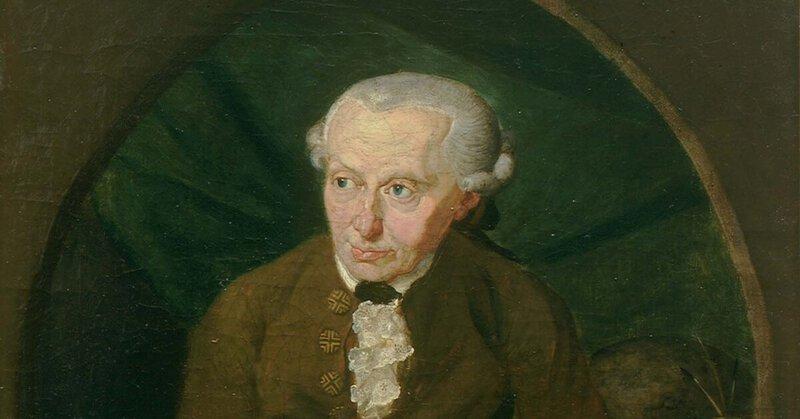
Immanuel Kant never climbed a mountain, crossed a sea, or strayed more than a few dozen miles from the city where he was born — yet the universe of ideas he mapped across eight decades still shapes how we think about knowledge, morality, beauty, and what it means to be free. These ten facts trace the life behind the legend, from a threadbare childhood in a Prussian port town to a tercentenary celebrated on every continent.
1. The Afternoon Walk So Reliable It Served as a Living Clock

Every afternoon at precisely 3:30, a small, slight figure emerged from a house on a quiet street in Königsberg and turned toward Linden Alley. The figure was Immanuel Kant, and for decades this ritual almost never varied. Neighbors along the route reportedly set their household clocks by the sight of him passing — a detail affectionate enough to have been preserved by friends and early biographers, most notably Kant’s contemporary Ludwig Ernst Borowski.
The walk was not a leisurely stroll but a philosophical discipline in itself. Kant insisted on walking alone and in silence, convinced that conversation would force him to breathe through his mouth and expose his lungs to harm. That fastidious logic says a great deal about a man who would later argue that reason, rigorously applied, could govern everything from metaphysics to morality. The routine also served a practical purpose: uninterrupted movement was, for Kant, the condition under which sustained abstract thought became possible. Many of the arguments refined in his study were first turned over on that quiet stretch of road.
2. The One Book That Made Him Miss His Walk

In 1762, Jean-Jacques Rousseau published Émile, or On Education, and when a copy reached Königsberg, Kant was so absorbed by it that he skipped his afternoon walk for several consecutive days — the only recorded interruption to a routine he had maintained for years. It is the kind of detail that makes a philosopher suddenly human: a man so gripped by an argument about childhood and human nature that he forgot his own ironclad rules.
The encounter left a permanent mark. Kant hung a portrait of Rousseau as the sole decoration in his otherwise spare study — an austere room whose single ornament spoke volumes about intellectual debt. Rousseau’s insistence that human beings possess a natural goodness corrupted by civilization challenged Kant’s earlier, more detached rationalism and pushed him toward a philosophy in which ordinary human dignity, not aristocratic learning, became the foundation of moral life. Without Rousseau, the ethics of the later Critiques would very likely have looked quite different.
3. A Name Change Hidden in Plain Sight
The philosopher who would one day rewrite the rules of Western thought began life under a slightly different name. He was baptized Emanuel Kant, the spelling favored by his devout Pietist family. Sometime during his years as a young scholar, he quietly adopted the spelling Immanuel — the Hebrew form, meaning “God is with us” — almost certainly to signal a growing affinity with classical learning and the humanist tradition that prized original-language sources over their vernacular adaptations.
It is a tiny alteration, easy to overlook in a biography full of towering ideas, yet it rewards attention. The deliberate move from a German vernacular spelling to a Hebrew scriptural one hints at the same instinct for careful self-construction that would later produce the meticulous architecture of the three Critiques. Even his name, it turns out, was something Kant revised until it was exactly right.
4. Born and Buried in the Same City He Almost Never Left

Kant was born on 22 April 1724 in Königsberg, in the Kingdom of Prussia, and he died there on 12 February 1804, having spent virtually his entire 79 years within the city’s limits. He declined prestigious academic posts elsewhere and politely refused invitations to travel, arguing — with characteristic practicality — that Königsberg’s bustling status as a Baltic trading hub gave him all the window onto human variety that a philosopher could need. Ships from across Europe docked there; merchants, sailors, and diplomats passed through; the world, in a sense, came to him.
The city has since changed its name and its flag. Today it is Kaliningrad, a Russian exclave on the Baltic, and the tomb Kant occupies beside the restored cathedral is among its most visited landmarks — a quiet irony that the man who never left is now commemorated in a place that no longer bears the name he knew. For readers curious about the full arc of his life, that tomb is as evocative a starting point as any.
5. Eleven Years of Silence Before His Most Famous Book

After a productive burst of early publications on science, metaphysics, and cosmology, Kant fell almost entirely quiet. From 1770 to 1781 — a stretch scholars sometimes call his “silent decade,” though it ran closer to eleven years — he published almost nothing of consequence. Contemporaries wondered what had become of him. What was actually happening was something far more demanding than ordinary writer’s block: Kant was dismantling and rebuilding the entire framework of human knowledge from the ground up.
The result was the Critique of Pure Reason, published in 1781 and immediately recognized as one of the most consequential books in the history of Western philosophy. Its central claim — that the human mind actively structures experience rather than passively receiving it, imposing categories such as space, time, and causality onto the raw data of the senses — amounted to what Kant himself compared to a Copernican revolution: instead of the mind orbiting reality, reality as we know it orbits the mind. The Stanford Encyclopedia of Philosophy remains one of the finest scholarly guides to unpacking what that shift actually means and why it proved so difficult for Kant’s contemporaries — and ours — to fully absorb.
6. Three Critiques That Reshaped Philosophy’s Entire Map
The Critique of Pure Reason was not the end of Kant’s project but its opening move. He followed it with the Critique of Practical Reason in 1788, which turned from questions of what we can know to questions of how we ought to act, grounding morality in pure reason rather than sentiment or divine command. Then came the Critique of Judgment in 1790, which examined our experience of beauty, sublimity, and apparent purposiveness in nature — and attempted to bridge the chasm the first two Critiques had opened between the natural world and the moral one.
Three books, nine years, three of the largest questions a human being can ask — and one aging professor in Königsberg answering all of them. Philosophers speak of the trilogy as the hinge between early modern thought and everything that came after. German Idealism — Fichte, Schelling, Hegel — grew directly out of wrestling with these texts, and contemporary analytic philosophy still argues with them. Anyone approaching Kant for the first time will find that understanding what to read before the Critiques saves weeks of bewilderment; the books reward preparation as few others do.
7. The Moral Law He Believed Bound Every Rational Being in the Universe
At the heart of Kant’s ethics lies a single, austere idea: act only according to a principle you could consistently will every rational being to follow. He called this the categorical imperative, distinguishing it sharply from “hypothetical” imperatives that bind us only if we happen to want a particular outcome. The categorical imperative, by contrast, makes no appeal to desire, consequence, or custom — it commands unconditionally, because it is grounded in reason alone.
Kant formulated the imperative in several related ways. The most famous instructs us never to treat a rational person merely as a means to our own ends but always also as an end in themselves. That formulation — that every rational being possesses an inherent dignity which may not be violated for another’s benefit — underpins modern frameworks of universal human rights in ways that scholars of law and political philosophy are still tracing. The categorical imperative remains one of the most discussed, challenged, and applied frameworks in ethics today, a tribute to how much Kant packed into what looks, on the surface, like a single clean sentence. The Internet Encyclopedia of Philosophy provides a clear account of how its different formulations relate to one another.
8. A Childhood So Poor He Wore the Same Coat for Years

The philosopher of universal reason began life with very particular disadvantages. Kant was the fourth of nine children born to a saddler and his wife in the poorer quarters of Königsberg, and the family knew genuine, grinding poverty. His parents were devout Pietists — members of a Lutheran reform movement that prized plain living, inner moral seriousness, and personal conscience over external ceremony. He would later describe his mother with deep affection, crediting her patient instruction with awakening his curiosity about the natural world and instilling in him the habit of honest self-examination.
What rescued him from a life at the workbench was the sharp eye of a clergyman and schoolmaster. Franz Albert Schultz recognized the boy’s extraordinary intellect and secured him a place at the Collegium Fridericianum, an education Kant’s family could never have afforded unaided. It is one of the more poignant facts in his biography that the man who eventually argued for the universal dignity of every rational being owed his own intellectual development to a single act of patronage at precisely the right moment in a poor child’s life.
9. The Enlightenment’s Defining Question — Answered in a Newspaper Essay

In 1784, the Berlinische Monatsschrift posed a deceptively simple question to its readers: “What is Enlightenment?” Kant responded with a short essay that has never really gone out of print. His answer compressed the spirit of an entire age into two Latin words — Sapere aude, “Dare to know” — which he glossed as the courage to use one’s own reason without being guided by another. It was a rebuke to intellectual laziness disguised as humility, a call to think for oneself dressed up as a philosophical definition.
The essay is now considered a cornerstone of Kant’s broader philosophical vision and a founding statement of what intellectual autonomy actually requires. Kant was careful to distinguish between the “public” use of reason — the free exercise of thought before a reading audience — and its “private” use within the constraints of a professional or civic role. The distinction allowed him to argue that Enlightenment was compatible with social order while insisting that no authority had the right to demand permanent, unexamined obedience. That the argument appeared in a periodical rather than a learned journal was fitting: Kant believed Enlightenment was not an achievement reserved for scholars but a civic posture available to anyone willing to accept the discomfort of thinking without a guardian.
10. A 300-Year Legacy Marked on the Exact Date He Was Born

On 22 April 2024, exactly three centuries after a saddler’s son entered the world in Königsberg, institutions across Europe and beyond held conferences, public lectures, and commemorations in Kant’s honor. What made the anniversary notable was its breadth: philosophers from analytic and continental traditions — schools that spent much of the twentieth century talking past each other — gathered to take stock of a shared inheritance. Epistemology, ethics, aesthetics, political theory, the philosophy of science: the agenda of any serious Kant tercentenary is, almost by definition, a map of philosophy itself.
His standing as the central figure in modern philosophy — the thinker who synthesized the rationalism of Descartes and Leibniz with the empiricism of Hume and Locke and emerged with something neither tradition could have produced alone — remains virtually unchallenged after three hundred years. Readers who want to follow that inheritance from its source will find the Online Library of Liberty’s Kant collection a reliable place to encounter his own words, in translation, without paywalls. That durability belongs not to fashion but to foundations — the kind laid by someone who understood that the most radical act of exploration is sometimes the decision to stay exactly where you are and think.
From a borrowed coat in a poor Prussian household to a tomb visited by travelers in a city that now speaks another language, Kant’s life is proof that the most consequential journeys do not always require leaving home — only the willingness, as he put it himself, to dare to think.

 English
 Arabic
 French
 Spanish
 Portuguese
 Deutsch
 Turkish
 Dutch
Dutch
 Italiano
 Russian
 Portuguese (Brazil)
 Greek
Greek