


Sakai000/Getty Images
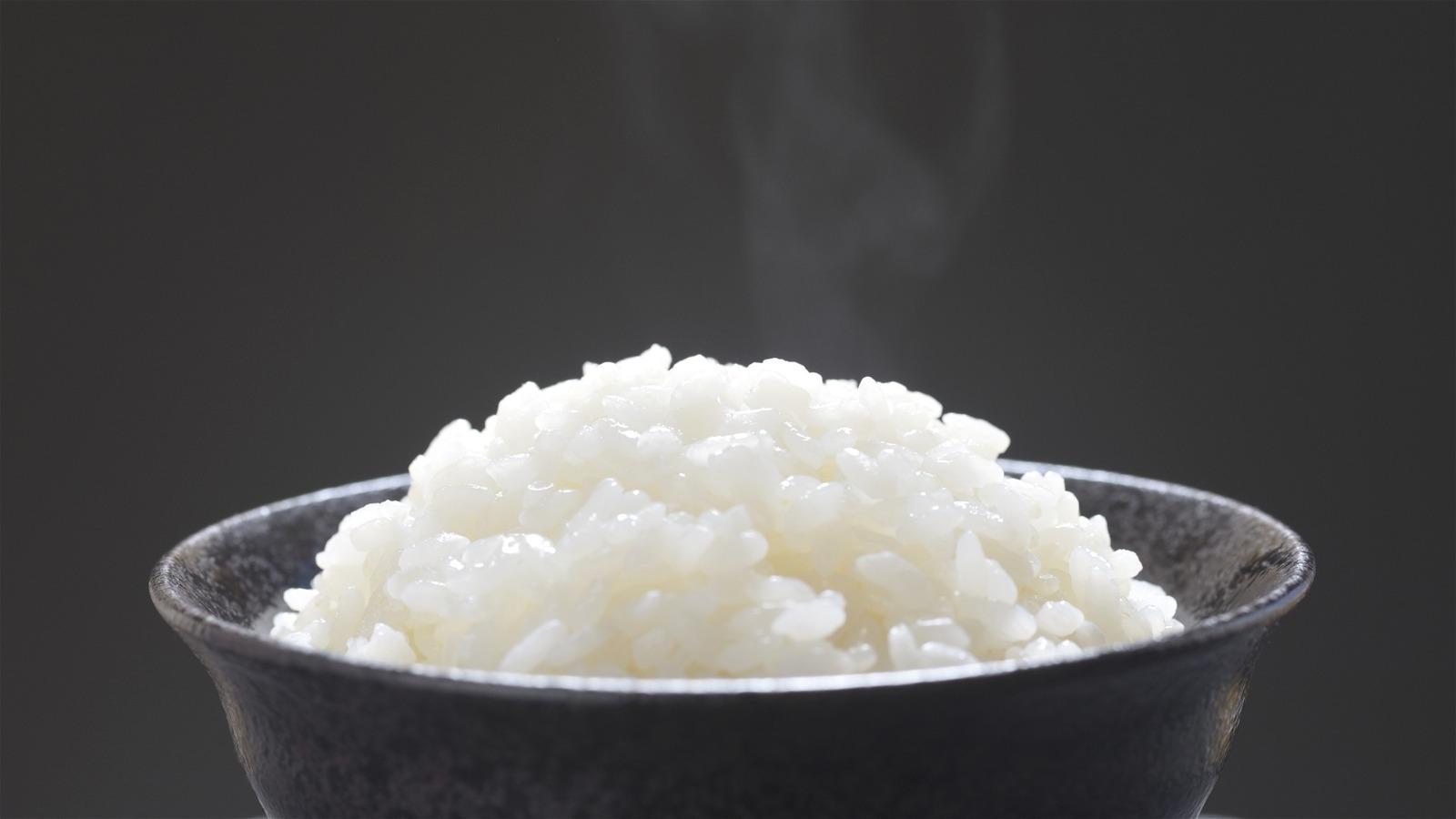
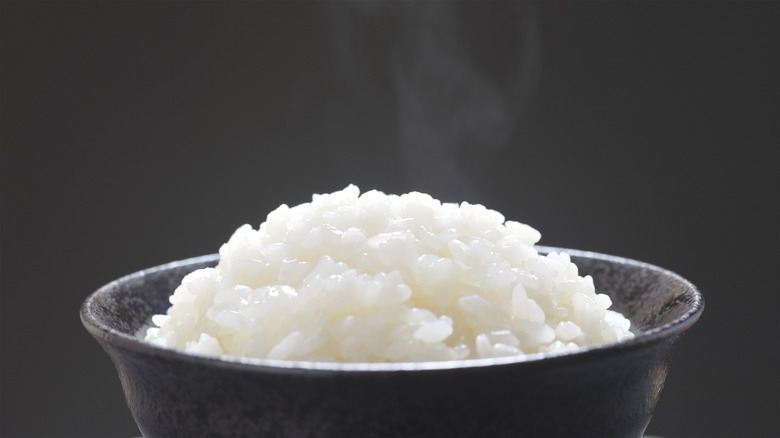
Rice can be pretty tricky to cook, and this is coming from someone who's made it regularly for the past 25 or so years. Different types of rice call for different amounts of water and cook times, and while using a rice cooker takes a lot of guesswork out of the equation, older machines can still mess up, leaving you with a lump of inedible mush and, in my case, my Filipino card revoked. Cooking rice on the stove keeps you more engaged and, in turn, makes it easier to keep an eye on its progress, which is why I do it this way if I have the time. It helps me catch undercooked rice before it reaches the point of no return, allowing me to remedy it on the go.
The thing about undercooked rice is that it can look very different depending on which stage of cooking it prematurely stopped at, and the type it is. For example, undercooked glutinous rice naturally still looks stickier than longer-shaped grains that might look visibly harder when undercooked. That said, I've personally still had to deal with a few signs common enough among multiple rice types.
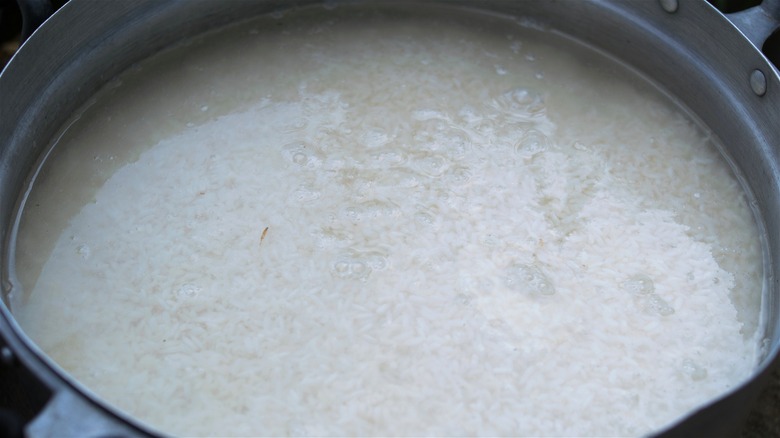
There's still water in the pot
Golfbress/Getty Images
One of the biggest misunderstandings people have about rice is that all types are best cooked by boiling, so the idea is to cook it in a lot of water and drain the pot when it's done. While this is true for some long-grain types like basmati, what actually cooks shorter-grain rice more effectively is steam. The goal is to use just enough water to steam the grains, allowing them to absorb the optimum amount of moisture, and letting the excess slowly evaporate away as it cooks, which is why the "two parts water, one part rice" rule isn't always right. If you've measured properly, you shouldn't have any water left in the pot when the rice is done.
The easiest way to fix this is to test the rice, and if it is undercooked, replace the lid to continue cooking it. If you think you've used too much water, I advise against pouring anything out at this point because reducing the amount of water might end up giving the rice too little moisture to work with. Instead, check the rice for doneness every few minutes, making sure not to disturb it too much. Stirring it will loosen some of the starch on the surface of the rice, making the water cloudy and gumming up your results.
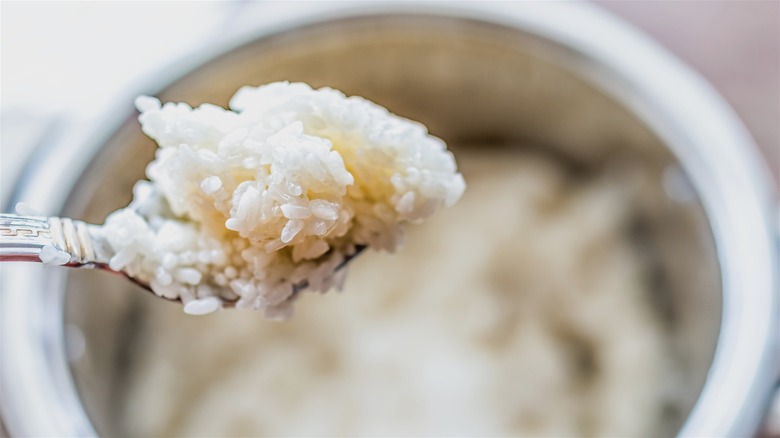
The rice looks dry and hard instead of fluffy
Kristi Blokhin/Shutterstock
If the grains still look tough on the outside, then the rice hasn't cooked long enough to absorb any moisture from the steam. Depending on the type used, the rice can also look smooth and polished, or rough and textured, or straight-up chalky. If they haven't tenderized enough, they might have a sort of snap if you try to cut them in half.
To fix this, all you really need to do is rehydrate your undercooked rice. If there isn't any water left inside the pot, add a little less than what you started with — you don't want to overhydrate it, either. Put the lid back on and let the steam work its magic. You might be tempted to check your rice every now and then to make sure it's cooking correctly, but try to limit the number of times you remove the lid. Doing so lets more of the steam escape, which means your rice might end up not getting enough moisture yet again.
The rice looks mushy and sticky on the outside, but firm on the inside
On the flip side, undercooked rice can look mushy on the outside, too. While this is often the result of using too much water, it can also happen when you stop cooking rice too soon, trapping excess moisture — in the form of water and steam — with the grains. Combined with the residual heat from cooking, loosened starch in the pot will absorb all of this excess moisture and turn your rice gummy on the outside. When you bite into it, however, you'll get a crunch from the undercooked cores of the grains.
When this happens, gently spread the rice onto a flat tray to let the excess steam escape. Once it's cooled down, the outer layers should firm up a little. You can then put the rice back into the pot, add a few splashes of water, and then try to re-cook it until the grains are tender from the inside out. You might not get perfectly fluffy rice from doing this, but you'll at least have brought it to an edible place. If you want to speed up the process of fixing your mushy rice, you can also try rinsing the loose starch off and then popping the grains into the oven for a few minutes to dry them out.
It feels gritty in the mouth
Kaorinne/Getty Images
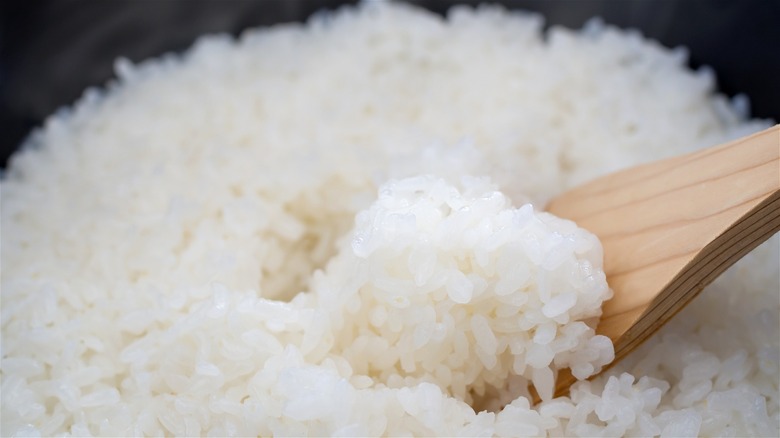
If the rice looks fine but feels a little sandy when you chew it, that means it's just barely undercooked. The grittiness comes from a tiny amount of hard, uncooked starch at the center of the grains that didn't have time to absorb enough moisture. This one's a little trickier to address since your rice stopped just short of the finish line. All you need is the smallest amount of moisture to reach those last few uncooked bits, but it's genuinely hard to tell how much water will achieve that.
Personally, what I do is pop the rice back into the pot, add a splash of water, and mix it so that it coats the grains. I bring the heat up enough to make the water steam, and then let it cook uncovered for about a minute, stirring constantly so that any excess moisture can escape. From there, it's a matter of testing the rice and repeating each step until I end up with something usable. It's such a labor-intensive process, though, that it's often better to just cook up a new batch and use the undercooked rice for another dish, like a porridge or rice pudding.

 English
 Arabic
 French
 Spanish
 Portuguese
 Turkish
 Dutch
Dutch
 Italiano
 Russian
 Romaian
 Portuguese (Brazil)
 Greek
Greek