


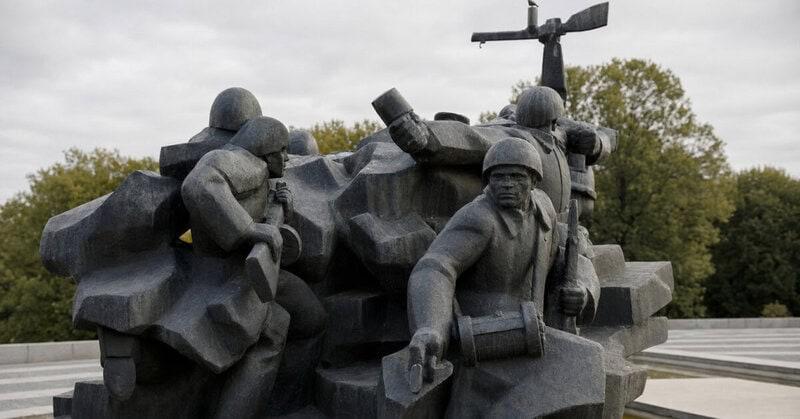
When Russian tanks rolled toward Kyiv in the early hours of February 24, 2022, many in the West treated it as a sudden shock — a war that arrived without warning. But for Ukrainians, nothing about it was sudden. The conflict they were living through had roots stretching back centuries, and the most recent chapter had already been burning for eight years before the world finally paid attention.
The War Didn’t Start in 2022 — It Started in 2014

The date most people associate with the Ukraine war is February 2022, but the Russo-Ukrainian war formally began in February 2014 — meaning Russia had already been waging conflict against Ukraine for nearly eight years before its full-scale invasion launched. The trigger was Ukraine’s Revolution of Dignity, a mass popular uprising that swept a Kremlin-aligned president from power and set the country on a deliberate path toward Europe and the West. Moscow could not tolerate it.
Russia’s response was swift and military. Within weeks, it backed armed separatists in the eastern Donbas region, igniting a slow-burn war that ground on while much of the world looked elsewhere. By the time 2022 arrived, thousands of Ukrainians had already died on that front — a fact that gave the full-scale invasion a grim, premeditated quality that history will not easily forget.
Crimea Was Annexed First — A Dress Rehearsal for 2022

Even before the separatist conflict in the east took hold, Russia had made its boldest opening move: the occupation and formal annexation of Crimea, a Ukrainian peninsula Moscow had coveted since the Soviet collapse. The annexation was completed within weeks of the 2014 revolution, shattering post-Cold War norms and marking the first forcible seizure of European territory since World War II — a distinction that carried enormous historical weight and received, ultimately, an inadequate international response.
Crimea handed Russia a strategic foothold in the Black Sea and, perhaps more dangerously, a working template. The playbook — swift military action, local proxies, a rushed and internationally contested referendum — was one Moscow would attempt to reproduce on a far larger scale in 2022. The dress rehearsal had gone well enough. The main performance would be far bloodier.
February 24, 2022 — The Date That Changed Everything

In the pre-dawn darkness of February 24, 2022, Russian forces crossed into Ukraine from multiple directions simultaneously, sending armored columns toward Kyiv with the Kremlin’s expectation that the capital would fall within days. According to the United Nations, the security situation deteriorated rapidly, triggering displacement on a scale Europe had not seen since 1945. Millions of Ukrainians fled west — on foot, by car, crammed into trains — in the largest refugee crisis the continent had witnessed in more than seven decades.
The swift victory Russia anticipated never came. Ukrainian resistance held the capital’s approaches, and within weeks the offensive on Kyiv was repelled — a military embarrassment that forced Russia to redraw its strategy entirely. What the Kremlin had framed as a short, decisive operation was already revealing itself as something far more stubborn and costly than Moscow had publicly acknowledged.
The Deadliest War on European Soil in More Than 70 Years
The numbers, even when incomplete and contested, are staggering. Reuters and other major international outlets have described the conflict as the deadliest war on European soil in more than 70 years — a grim distinction that places it above the Balkan wars of the 1990s and above anything the continent has endured in living memory. Casualties on both sides have run into the hundreds of thousands, and civilian deaths have been documented not only in front-line cities but in apartment blocks, villages, and along the evacuation corridors civilians used trying to escape.
The scale forces an uncomfortable reckoning. Europe had spent decades telling itself that large-scale industrial warfare was a horror archived in museums and memorial days. The war in Ukraine has dismantled that reassurance with devastating thoroughness, restoring a kind of violence to the continent that an entire generation had been raised to believe was gone forever.
Strikes on Civilians and Cultural Heritage

Russian missile and drone strikes across Ukraine have killed civilians and damaged irreplaceable cultural landmarks — attacks that BBC reporting has documented extensively, including strikes that killed civilians and set a historic cathedral in Kyiv ablaze. Images of burning heritage structures traveled around the world, carrying a meaning far beyond physical damage. Targeting sacred cultural landmarks sent an unmistakable signal: this was not merely a campaign against Ukrainian military capacity, but against Ukrainian identity itself. Culture, faith, and collective memory were targets alongside radar installations and fuel depots.
These attacks echoed a centuries-long pattern. Russian imperial policy and, later, Soviet policy both worked systematically to suppress the Ukrainian language, curtail the Ukrainian church, and erase or subsume a distinct Ukrainian national memory. In that long context, strikes on heritage sites were legible as part of a tradition of cultural erasure that Ukrainians have spent generations resisting.
The Holodomor Shadow — Starvation as a Weapon of Control
To understand why Ukrainians fight with the ferocity they do, history offers a brutal and essential reference point: the Holodomor of 1932-33. Soviet authorities engineered a famine across Ukraine that killed millions, seizing grain from villages, blocking starving peasants from leaving to find food, and blacklisting entire communities that failed to meet impossible quotas. It was a deliberate, bureaucratically organized campaign of mass death, and many countries and international bodies have since recognized it as genocide. The word Holodomor itself means “death by hunger” in Ukrainian — a language the Soviet state simultaneously tried to suppress.
For Ukrainians, the Holodomor is not a distant historical event safely contained in textbooks. It is family memory — grandparents and great-grandparents, named and mourned. That generational wound shapes how the current war is understood: not as a border dispute between comparable powers, but as the latest chapter in an existential struggle that has already cost Ukraine unimaginable losses. The stakes, viewed through that lens, could not feel more personal or more absolute.
Global Shockwaves — Food, Fuel, and Economic Insecurity Worldwide

The consequences of the war have not stopped at Ukraine’s borders. Ukraine and Russia together account for a significant share of the world’s wheat exports; when the war disrupted those supply lines, food prices spiked to crisis levels across Africa, the Middle East, and parts of Asia — regions that had no role in the conflict and no ability to shield themselves from its consequences. The New York Times has reported extensively on how the conflict has fueled economic insecurity far beyond the battlefield.
Energy markets convulsed with equal force. Europe, heavily dependent on Russian natural gas, scrambled to find alternatives — accelerating investment in liquefied natural gas infrastructure, renewables, and interconnected pipelines, while households across the continent absorbed sharply higher energy bills through multiple winters. The war reshaped alliances, rewrote energy infrastructure plans, and demonstrated in the starkest possible terms how deeply a conflict in one corner of Europe can reach into daily life on every inhabited continent.
Russia’s Strategic Miscalculations — NATO Expands, Isolation Deepens

Among the many things the Kremlin miscalculated was the West’s willingness to respond with sustained economic and political force. Western governments imposed sweeping sanctions targeting Russian banks, state enterprises, and energy exports. Hundreds of multinational companies withdrew from the Russian market, leaving gaps that domestic industry has struggled to fill. The longer-term effect has been an accelerated unwinding of decades of post-Soviet economic integration.
NATO, which Moscow had long portrayed as a decaying and divided alliance, emerged from the crisis more united and more expansive than at any point since the Cold War’s end. Finland and Sweden — two nations with deep traditions of military non-alignment — applied for and received NATO membership, dramatically extending the alliance’s northern flank. It was, by any strategic measure, the opposite of what Russia’s invasion was designed to achieve.
Day 1,581 and Counting — Ukraine’s Patience Has Limits

More than four years into the full-scale invasion, Ukraine remained on the front lines and its leadership was sending pointed signals to the world. Kyiv warned that any peace offer on the table could expire, with officials stating plainly that “our patience is not endless.” It was a phrase that captured two things simultaneously: the profound exhaustion of a nation at war since 2014, and its absolute refusal to accept terms that would reward the aggressor with territorial gains or impunity.
The milestone made something undeniable that the Kremlin’s early rhetoric had tried to obscure. What Russia announced as a brief “special military operation” — language designed to minimize and reassure a domestic audience — had become a grinding, years-long conflict absorbing catastrophic losses on both sides with no clear resolution in sight. Ukraine was still there. Still fighting. Still counting the days.
The war in Ukraine did not emerge from nowhere in 2022, and it cannot be understood without the centuries of resistance, survival, and loss that preceded it — from the Holodomor’s engineered famine to the strikes on cultural landmarks to the trenches of the Donbas. What that history demonstrates, with painful consistency, is that Ukraine has endured determined attempts at domination before. Each time, it has found a way to remain. For the latest developments as the conflict continues, authoritative international coverage remains essential reading.

 English
 Arabic
 French
 Spanish
 Portuguese
 Deutsch
 Turkish
 Dutch
Dutch
 Italiano
 Russian
 Portuguese (Brazil)
 Greek
Greek