


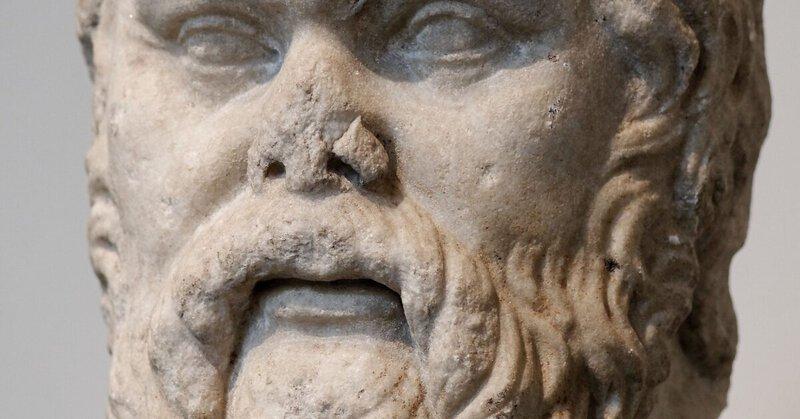
He is arguably the most famous philosopher who ever lived — and yet not a single word survives in his own handwriting. Everything the world believes it knows about Socrates arrives secondhand, filtered through disciples, rivals, and comedians who often contradicted one another so completely that historians still argue about who — or what — the man actually was. That paradox is not a footnote to his legacy; it is the central fact of it.
The Philosopher Who Left No Writings

Walk into any university library and you can pull Plato’s dialogues off the shelf, read Aristotle’s treatises in their original structure, and trace the written output of thinkers across two and a half millennia of Western philosophy. Socrates stands apart from all of them. Unlike virtually every other major thinker we study, he left behind no texts, no letters, no notes — nothing composed in his own hand. For a figure so central to the entire Western tradition, that silence is almost shocking.
The consequences ripple outward in every direction. Historians call this the Socratic problem — the fundamental challenge of reconstructing a real person entirely from secondhand, often contradictory accounts. Every claim about his ideas, his personality, his arguments, and even his physical habits is filtered through the minds of people who each had their own agendas, their own axes to grind, and their own images of the man they wanted the world to remember.
His apparent reason for refusing to write was itself philosophical. Plato’s dialogue Phaedrus records Socrates arguing that the written word is a poor substitute for living conversation — that a text cannot answer questions, defend itself, or adapt to the needs of its reader. Whether that argument was genuinely his own or a position Plato attributed to him is, fittingly, something we cannot verify. The silence was principled, but we have only other people’s word for that too.
Three Sources, Three Completely Different Men

Three writers dominate what we know about Socrates, and they might as well have been describing three different people. Plato, his most famous student, portrayed Socrates as a near-mystical genius who probed the deepest questions of justice, beauty, and the immortal soul — a man so philosophically towering that merely conversing with him could change a life. Xenophon, a soldier and writer who also knew Socrates personally, depicted a far more practical, conventional figure: one concerned with everyday ethics, self-discipline, and household management rather than transcendent Forms.
Then there is Aristophanes, the comic playwright, who lampooned Socrates in his 423 BCE play The Clouds as a buffoonish pseudo-scientist dangling from a basket in the sky and teaching young men to cheat their fathers with clever arguments. This caricature almost certainly helped poison Athenian public opinion against him — and it was written and performed more than two decades before his trial. Three witnesses, three cities’ worth of distance between their portraits, and no defendant left to speak for himself.
A fourth, lesser-known source deserves mention: Antisthenes, a student of Socrates who founded the Cynic school of philosophy, left fragments that emphasize Socrates’ toughness, poverty, and indifference to physical comfort. Each source bends the portrait toward its own intellectual priorities, which is precisely why the puzzle refuses to resolve.
A Craftsman’s Son Born at Athens’ Zenith

Socrates was born around 469/470 BCE in Athens, the son of Sophronicus, a sculptor, and Phaenarete, a midwife — a detail his admirers would later find irresistible as a metaphor. His birth coincided almost exactly with the height of Athenian power and confidence in the aftermath of the Persian Wars. The Parthenon was rising on the Acropolis. Pericles was steering the city toward its democratic and cultural zenith. It was, by any measure, an extraordinary moment to be born in an extraordinary place.
He grew up receiving the standard Athenian education given to the sons of citizens: music, gymnastics, and grammar. Ancient sources suggest he may have worked as a stonemason alongside his father in early life, and there is a later tradition — probably unreliable — that he trained briefly under the philosopher Archelaus. Nothing in his origins marked him out as destined for philosophical immortality. He was a craftsman’s child in a city of craftsmen, shaped by the same curriculum as thousands of his contemporaries. That makes the intellectual revolution he apparently ignited all the more striking.
He also served as a soldier on at least three occasions — at Potidaea, Delium, and Amphipolis — earning a reputation for physical endurance and calm under pressure. Accounts from Plato’s Symposium describe him standing motionless in thought for an entire night during the Potidaea campaign, indifferent to cold that had driven other soldiers inside. Whether that story is literally true or emblematic, it belongs to a consistent portrait of unusual self-command.
The Socratic Method: Midwifery as Philosophy

According to Plato, Socrates once described himself as a midwife of ideas. He did not claim to plant knowledge in people; instead, he helped them give birth to truths already latent inside them — truths they carried without knowing it. The image is vivid and human, a deliberate nod to his mother Phaenarete’s profession, and it captures something real about the technique he apparently used: relentless questioning designed to expose hidden assumptions, collapse false certainties, and force his interlocutors to think harder than they ever had before.
That technique became known as the Socratic method, and it remains a cornerstone of education, law, and critical reasoning today. Law schools use it systematically. Medical training programs have adapted it. The method’s core insight — that productive thinking begins not with answers but with better questions — has proven durable enough to outlast virtually every specific doctrine Socrates is associated with.
The irony is inescapable. We know this midwifery metaphor only because Plato wrote it down. Whether Socrates actually used that image, or whether it was a tribute Plato constructed to honor his teacher, is something we cannot verify without a single line written in Socrates’ own voice.
‘I Know That I Know Nothing’ — and the Problem With That Quote

The idea that Socrates professed his own ignorance — that he declared himself wiser than other men only because he alone understood how little he knew — is perhaps the most quoted philosophical position in popular culture. It comes entirely from Plato’s Apology, his account of Socrates’ defense speech at trial. In that text, Socrates explains how the Oracle at Delphi called him the wisest of men, and how he interpreted that baffling verdict: others thought they knew things they did not; he at least knew that he didn’t know.
It is worth noting that the famous phrasing “I know that I know nothing” does not appear verbatim in Plato’s Greek. It is a later distillation — a paraphrase that captures the spirit of a more nuanced argument Plato puts in Socrates’ mouth. Xenophon’s Socrates, meanwhile, is a considerably more confident and didactic figure, far less inclined to shrug and confess ignorance, far more willing to deliver practical moral instruction. Whether radical intellectual humility was Socrates’ genuine philosophical position or a rhetorical stance that Plato found compelling and chose to amplify is a question scholars continue to debate. Without a single line in Socrates’ own voice, the question cannot be settled.
A One-Day Trial, 500 Jurors, and a Death Sentence

In 399 BCE, at roughly seventy years old, Socrates stood before an Athenian court charged with two offenses: impiety toward the gods of the city and corrupting the minds of its youth. Athenian courts moved with a speed that would stun any modern legal observer. The entire proceeding — accusations, defense, deliberation, and verdict — was completed within a single day. Five hundred citizens served as jurors, and when the votes were counted, the verdict was guilty. The margin was relatively narrow: ancient sources suggest 280 votes to 220.
The penalty phase offered Socrates an opportunity to propose an alternative punishment. According to Plato, he initially suggested the city owe him free meals for life — the honor granted to Olympic champions — before settling on a modest fine. The jury, apparently further provoked, voted for death by a larger margin than had voted for guilt. The sentence was carried out by drinking hemlock, a poison that causes slow, progressive paralysis ascending from the extremities.
He is considered the first philosopher on record to be executed specifically for his philosophical activities — a distinction that cast a long shadow over every thinker who came after him. Plato, watching from the city he would eventually reshape intellectually, never forgot what Athens had done to his teacher.
The Political Subtext Behind ‘Corrupting the Youth’

The charges against Socrates look different once you know who some of his closest associates had become. Alcibiades, one of his most celebrated young followers, had defected to Sparta during the Peloponnesian War and caused catastrophic damage to Athenian military interests. Critias, another figure in Socrates’ circle, had led the brutal oligarchic junta known as the Thirty Tyrants, who terrorized Athens after its defeat in 404 BCE. The city had just endured military catastrophe and political horror, and the wounds were raw.
A formal amnesty passed after the restoration of democracy technically prevented prosecutors from citing political crimes directly. So “corrupting the youth” became the available legal instrument — a charge flexible enough to encompass a generation’s worth of dangerous associations without naming them outright. The principal accuser, Anytus, was a democratic politician with direct grievances against the oligarchic period; his motivations were almost certainly as political as they were moral.
That political subtext colors every account of the trial written afterward, including Plato’s Apology, which was composed by a man who had every reason to cast Socrates as a martyr and Athens as a mob. Xenophon’s account, written independently, reaches broadly similar conclusions, which gives the broad outline of events somewhat more credibility — though both authors were partisans, not neutral observers.
Plato’s Portrait of Socrates Shifted Dramatically Over Time

If Plato were a consistent and reliable witness, his dialogues might at least offer a stable portrait of Socrates to work from. But scholars who have spent careers studying the texts have identified a troubling evolution: the Socrates who appears in the early dialogues is not quite the same man who appears in the middle and late ones. In the early works — Euthyphro, Apology, Crito, Meno — Socrates asks questions, exposes contradictions, and arrives at no firm conclusions, leaving everyone, including the reader, productively at sea.
By the middle dialogues, including The Republic and Phaedo, this same character confidently expounds the Theory of Forms and elaborates the immortality of the soul — positions so developed and systematic that they feel like an entirely different philosophical project. Most scholars now believe the later, more doctrinaire Socrates reflects Plato’s own mature philosophy rather than the historical man. Plato, in other words, appears to have quietly replaced his real teacher with a fictional mouthpiece over the course of his career — making even our richest and most detailed source a document as much about Plato as about Socrates.
This scholarly consensus — sometimes called the “developmentalist” position — is not universally accepted. Some philosophers argue that Plato’s Socrates is consistent throughout and that apparent contradictions reflect the complexity of a real thinker rather than an author’s evolving agenda. The debate has not been resolved, and the texts themselves cannot resolve it.
Hero and Villain in the Same City, on the Same Morning

In his own lifetime, Socrates attracted devoted young followers who trailed him through the agora, imitated his questioning style, and treated conversations with him as a kind of intellectual awakening. He also attracted bitter enemies who saw him as a sophist, a troublemaker, and a corrupter of the social fabric — precisely the charge the jury eventually formalized. Both reactions were happening simultaneously, in the same city, among people who could walk past him in the marketplace on any given morning.
That contradiction is baked into the historical sources themselves: Plato’s reverence and Aristophanes’ mockery were produced by people who inhabited the same streets and presumably encountered the same man. The gap between their portraits is so vast that some scholars have argued no single historical figure could fully account for both — that the real Socrates, whoever he was, may be permanently beyond our reach.
What we have instead is a collection of arguments about him. Those arguments shaped Plato, who shaped Western philosophy. They shaped the Stoics, who built an entire ethics on the idea that virtue is the only true good — a proposition they traced back to Socrates. They shaped Enlightenment rationalism, modern legal pedagogy, and the practice of therapy, which Socrates’ interlocutors sometimes described their conversations with him as resembling. More than two thousand years after a cup of hemlock ended his life, Socrates remains the philosopher we know least and argue about most — a figure so thoroughly reconstructed by others that the reconstruction itself has become one of the enduring puzzles of intellectual history.

 English
 French
 Spanish
 Portuguese
 Deutsch
 Turkish
 Dutch
Dutch
 Italiano
 Russian
 Romaian
 Portuguese (Brazil)
 Greek
Greek