


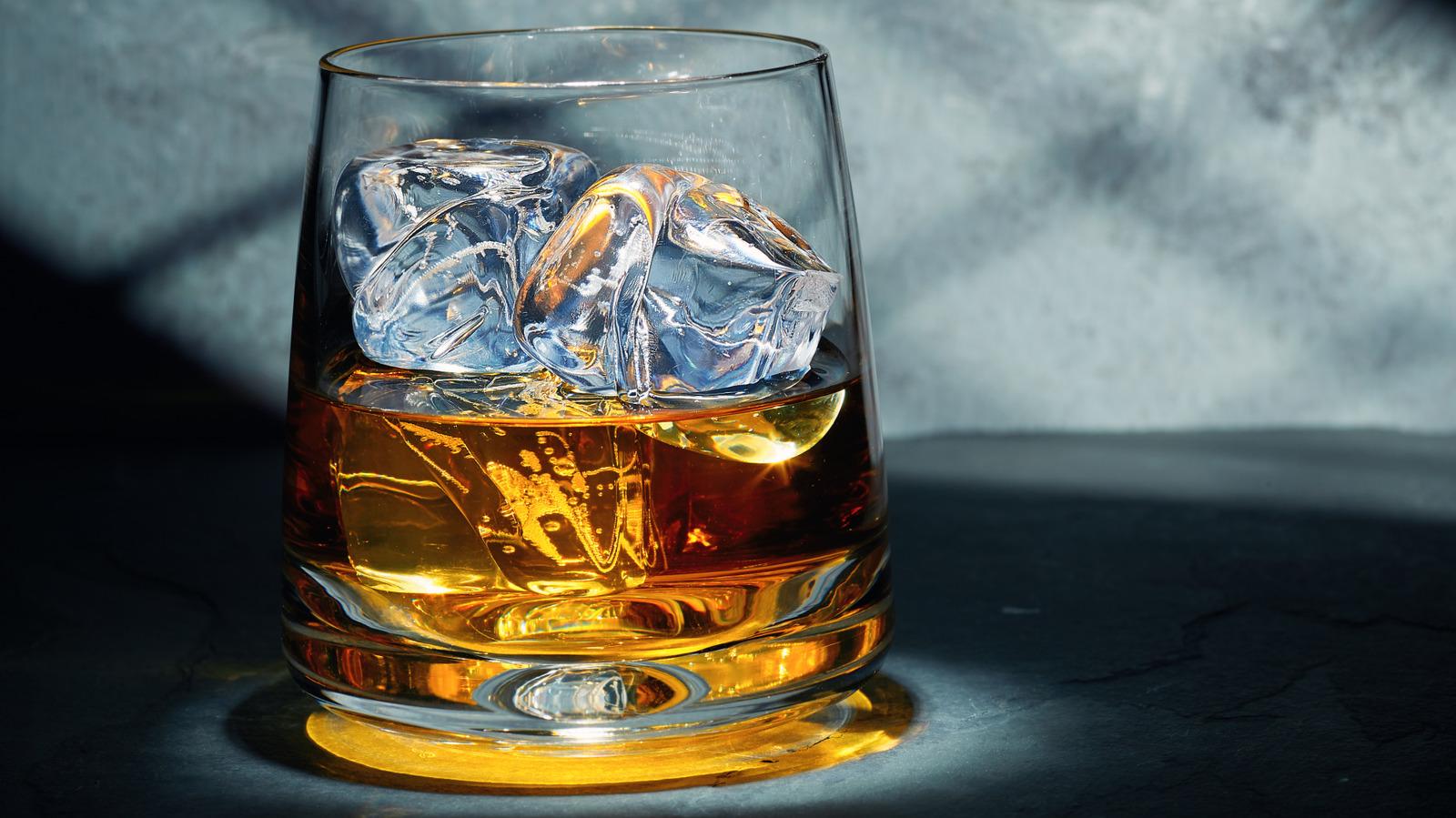
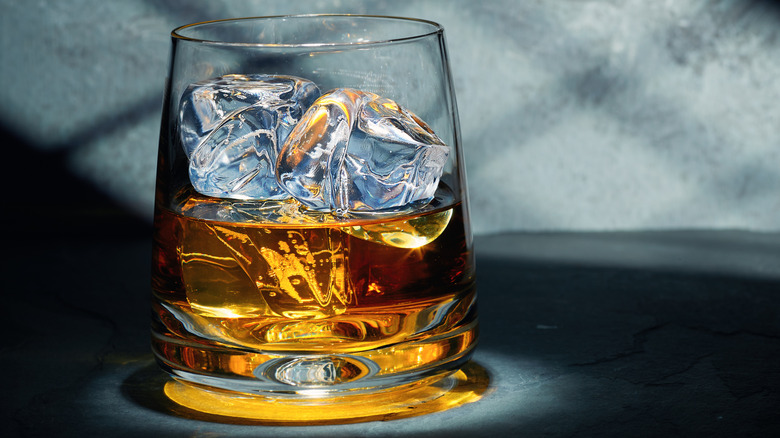
Lucentius/Getty Images
We may receive a commission on purchases made from links.
If you've ever found yourself standing in front of a shelf full of bourbons, wondering which one is worth buying, we're about to come to your rescue. This quintessential American whiskey is beloved across the nation, and beyond, but every bottle is different. Sometimes sweet and smooth, other times spicy and dry, it can be tough to pick a good bourbon when you're not sure what to look for.
First off, it's wise to abandon the idea that there's just one way that a bourbon can be good. A lot of it comes down to preference, which is why you might be recommended a bottle by a friend only to find out you don't like it. However, it's certainly possible to find bourbon you love, and once you know what to look for, that will become easier and easier.
I'm a bourbon fan and a former bartender, but I didn't want this article to rely on my opinion alone. I also spoke to four drinks experts about how to choose bourbon. Alejandro Ibanez is the bar manager at Dilworth Tasting Room in Charlotte, North Carolina. Whitney Rye is the founder of The Parlor Room in Bardstown, Kentucky and the host of "The Mash Bill" podcast. Jennifer Brian is the author of "Classic Cocktail Revival" and the co-founder and owner of Make and Muddle mixers. Chris Tunstall is a former bartender and co-founder of barware company A Bar Above. With our experts' extensive experience, we'll help you learn how to pick the best bourbon for you.
Consider the age of the bourbon
Try Media/Getty Images
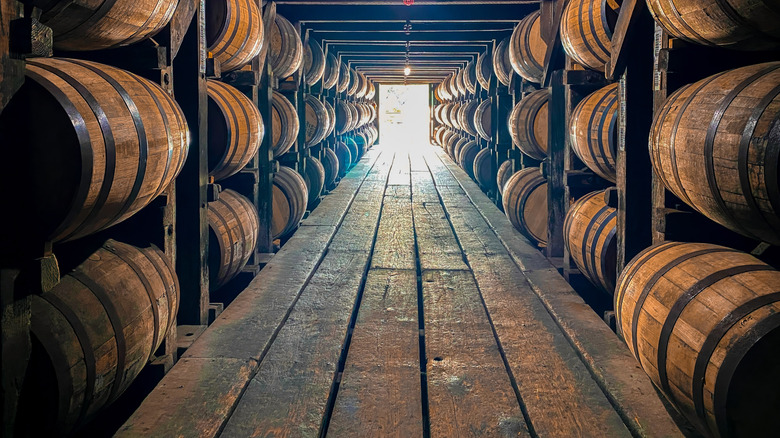
You might be wondering if bourbon gets better with age. It's not as simple as older equals better, but you should at least consider the age of a bourbon before buying it. Some aging is essential, but whether or not you want to go beyond this depends on what you like and what you need from a bottle.
"Age absolutely matters in bourbon, but it is not the only thing that matters," says Whitney Rye of The Parlor Room and "The Mash Bill" podcast. "A younger bourbon can be bright, grain-forward, lively, and sometimes a little sharper around the edges." If you want something that's fresh and a bit zippy, younger bourbons are the way to go. They can have some sweetness from the grains, fresh oak notes, and sweet spice flavors.
"As bourbon ages, the barrel has more time to influence the whiskey," Rye notes. She explains that this brings a host of deeper, richer flavors, such as caramel, vanilla, leather, tobacco, dark fruit, and toasted oak. However, older isn't always better. "Bourbon can absolutely be over-oaked if it spends too much time in the barrel, especially in Kentucky where the seasons push whiskey in and out of the wood so dramatically," she adds. The oldest bourbons can be very heavy and don't appeal to all tastes.
However, even young bourbon is somewhat aged. For something to be labeled "straight bourbon" it must be aged at least two years, and most young bourbons are between 2 and 4 years old. A well-aged bourbon is usually between 8 and 12 years old, and some are aged far longer than this.
Look at the proof of the bottle
Alexi Rosenfeld/Getty Images
The proof of bourbon makes a difference to how it drinks and what you might use it for. It's worth understanding a little about this, as looking at the proof can tell you information you'd otherwise miss.
"Proof tells you how much alcohol is in the bourbon, but it does not automatically tell you whether it will drink hot," Whitney Rye tells us. "Some high-proof bourbons are beautifully balanced and drink softer than expected, while some lower-proof bourbons can feel thin or sharp," she says. In order to be labeled bourbon, it needs to be at least 80 proof, which is the same as 40% ABV. This is a pretty typical proof and gives you a versatile bottle that's suitable for cocktails or drinking neat.
But, you'll also find higher proof bourbons of 100 plus. These tend to have more intense flavors, but this doesn't necessarily mean they're harsher. "For newer bourbon drinkers, I usually recommend starting around 90 to 100 proof," Rye says. "That range often gives you enough flavor and structure without overwhelming your palate."
As a bartender, Alejandro Ibanez of Dilworth Tasting Room enjoys using higher proof bourbons in cocktails, because it's a chance to lean into those bold flavors. For example, a "Manhattan cocktail with a high proof and a heavy, rich fortified red wine, can result in a delicious caramel concoction," he says. However, he notes that, usually, high proof bourbon is sipped neat with a large ice cube or a small splash of water.
Learn about the mash bill of bourbon
Irik Bikmukhametov/Getty Images
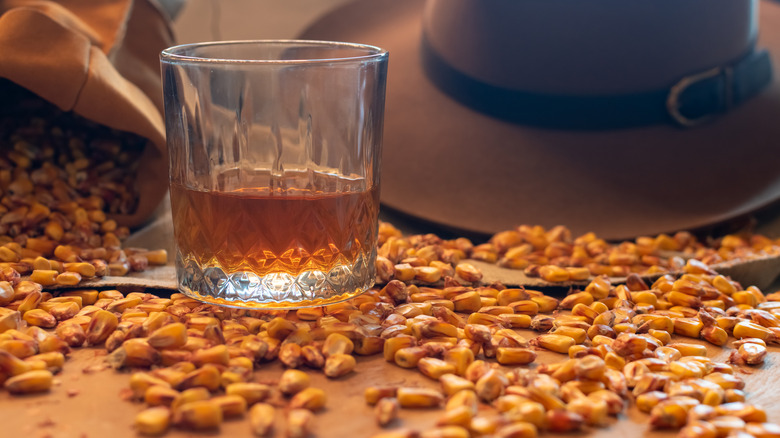
The mash bill of bourbon doesn't mean you're about to get charged for anything. Rather, it's a list of all the grains in the drink by percent. It's something you should pay attention to, because the quantity of each grain makes a difference to how the drink tastes.
"For bourbon, it is always going to contain at least 51% corn, which is federally regulated to be considered bourbon," says Make & Muddle co-founder Jennifer Brian. Aside from that, rye, malted barley, and wheat are the other common grains you'll find in the bottle. "It is ultimately up to the master distiller to land on the right mash bill for their bourbon," Brian notes.
A quick look at the mash bill can tell you a lot about how the bourbon might taste. It's not the only factor that goes into how it turns out, but it plays a significant role. "Corn is always going to give us that sweet, long finish flavor along with an unctuous mouthfeel," Brian explains. Rye, on the other hand, has a spicier flavor and brings peppery notes, while malted barley brings nuttiness and cereal notes. "Wheat smooths out bourbon's edges, can contribute the fresh green notes to bourbon, and delivers a lovely finish," notes Brian. Pay attention, and with time you'll learn what kinds of grain ratios you like to see on a mash bill.
Understand the various types of bourbon
Sean Gallup/Getty Images
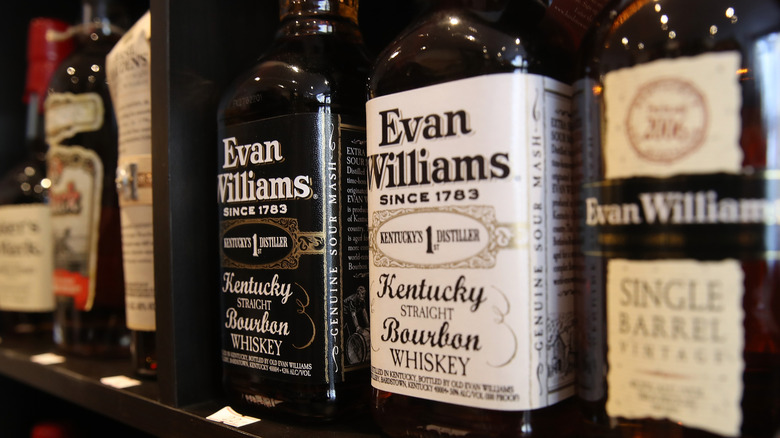
Once you understand more about the various types of bourbon, it will be easier to pick one you love. As with many factors relating to bourbon, there isn't one superior type. Sure, the kind of bourbon can sometimes be an indicator of quality, but it also just tells you something about how it might taste. In this, there isn't a single right or wrong thing to look for, but you will likely have a preference.
High-corn bourbon tends to contain around 60-70% corn, which makes it sweeter than average, while high-rye bourbon has 20-35% rye and is bold and spicy. Wheated bourbon doesn't contain rye at all, using wheat in its place, which makes it soft and mellow, often boasting notes of vanilla and caramel. "If you tend to like sweeter flavors, look for a wheated bourbon," suggests A Bar Above's Chris Tunstall. "If you enjoy a little spice, try a high-rye bourbon," he adds.
Straight bourbon must have no added colors or flavors and has to be aged a minimum of two years. If under 4 years old, the exact age must be listed. A barrel-proof bourbon is one that has been bottled straight from the barrel without water added, so it's generally higher proof and bolder. "If you enjoy bolder flavor, barrel proof or cask strength bourbons can be incredible, but they are usually best approached slowly," says Whitney Rye.
Know the difference between single barrel and blended
Alexi Rosenfeld/Getty Images
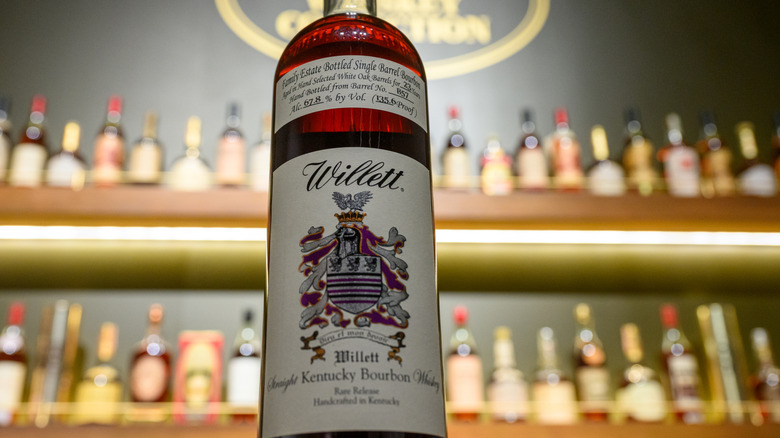
Looking at the label is a great way to learn more about a bottle of bourbon, but if you don't understand the terminology, it won't tell you much. A lot of bourbon is blended, which may or may not be listed on the bottle. But, you'll also come across single barrel bourbon, as well as straight and small batch.
"Blended bourbons are multiple barrels of bourbon blended together to create a consistent flavor profile," Jennifer Brian explains. Single barrel, on the other hand, is a bourbon that literally comes from one barrel. Straight whiskey, as we've noted, must meet certain regulations, but it can be a blend, as long as all barrels come from the same state. If straight bourbons from different areas are blended, they have to be labelled as a blended straight bourbon. And then there's small batch, it "means a limited number of barrels were blended together," Whitney Rye tells us.
A common bourbon myth is that blended bottles are bad, but both blended and single barrel bottles vary in quality. Creating blended bourbons helps with consistency because "even if multiple barrels of bourbon have the same mash bill, it doesn't mean that they are going to taste the same," says Brian. Single barrel "can show a lot of personality, because every barrel ages a little differently depending on where it sat in the warehouse, how it interacted with the wood, and how the environment shaped it over time," says Rye, but this does mean you should be less sure of what to expect.
Look out for bourbon that's bottled-in-bond
The Image Party/Shutterstock
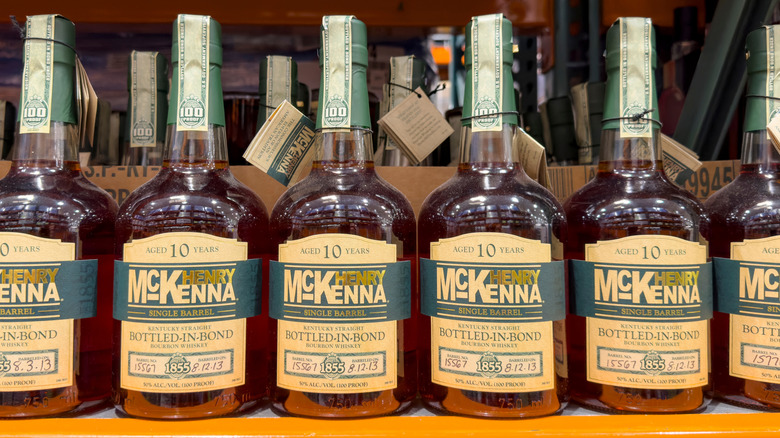
You might see the label "bottled-in-bond" on a bottle of bourbon and wonder what it means. While you can find plenty of great bourbons that aren't bottled-in-bond, it's a good place to start when you're not sure how to choose a quality bottle. What makes bonded whiskey special (it's a designation that can be applied to all whiskeys, not just bourbon) is that it assures a level of quality control.
Bottled-in-bond isn't a new thing. In the late 1800s, whiskey quality could vary widely. Unscrupulous sellers diluted whiskey, added coloring, flavorings, tobacco juice, caramel, or even dangerous chemicals. Consumers had little way of knowing what they were buying. There was a push for reform to stop this, and the result was the Bottled-in-Bond Act of 1897, which effectively provided a seal of approval to show that the spirit was what it was claiming to be.
"Bottled-in-bond can be a great indicator because it has specific requirements: one distilling season, one distiller, one distillery, at least 4 years old, and bottled at 100 proof," Whitney Rye tells us. "That does not mean every bottled-in-bond bourbon will be your favorite, but it does give you a helpful baseline." In order for bourbon to be considered bottled-in-bond, it must reach a certain level of quality and there's a level of care that has gone into its production.
Consider your price point, but know expensive isn't always better
Sergeyryzhov/Getty Images
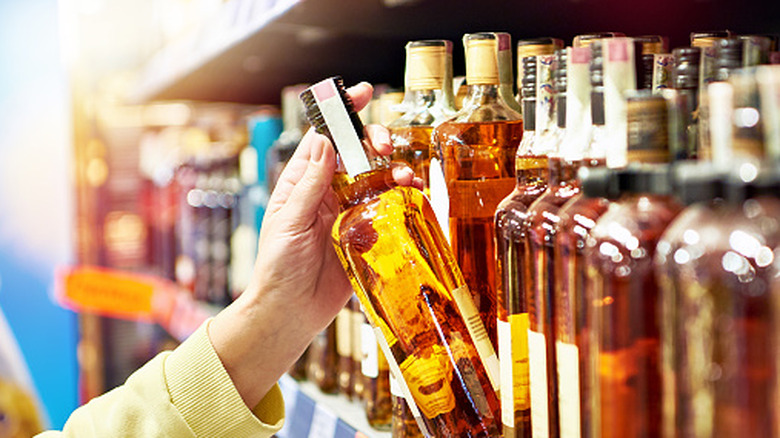
It's a good idea to have a rough idea of your budget when picking out bourbon. However, don't think that means you have to spend loads, as you can find good, affordable bottles out there. We've ranked some of the most expensive bourbons in the world, but it's not always objectively better. In fact, some super pricey bottles are more for collecting than for drinking.
"Some of my favorite bourbons sit comfortably in the $30 to $50 range, like Four Roses, Buffalo Trace, and Maker's Mark," says Chris Tunstall. "In fact, that's often where I recommend people start when first discovering bourbon because there are so many excellent, affordable options available." He notes that the price is a reflection of factors such as the rarity, age, and collector demand, but this doesn't necessarily equal quality. Bourbon can be expensive because it tastes amazing, but it can be down to scarcity and a high demand.
"Once you get past a certain point, the relationship between price and actually enjoying your bourbon becomes much less predictable," Tunstall remarks. "I'd much rather see someone buy three great $40 bottles and discover what they like than spend $200 on a bottle simply because it has some hype around it."
Check the label for transparency

Urbazon/Getty Images
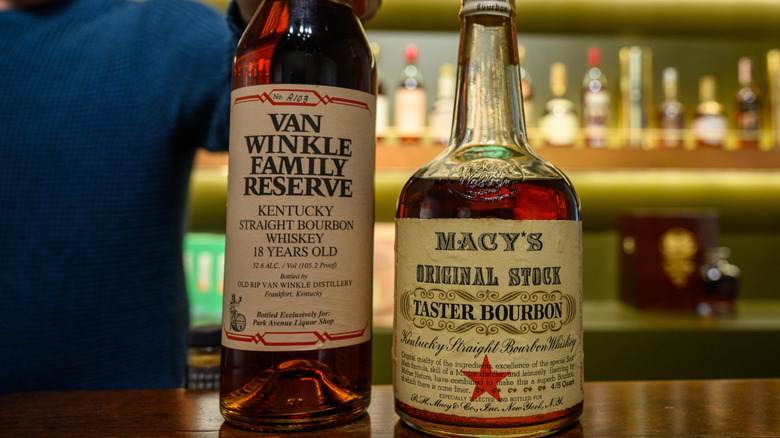
One of the mistakes people make with bourbon is not checking the label carefully. It can tell you a lot about a bottle of bourbon, so when it apparently lacks transparency, that can be cause for concern. If it seems like the producer is intentionally leaving out the facts or lying by omission, you could consider that a bad sign.
"Does the label tell you the age, proof, distillery, state of distillation, or whether it was bottled-in-bond?" Whitney Rye asks. "Those details do not automatically make a bourbon great, but they do show that the producer is giving you useful information." Chris Tunstall advises to "look beyond marketing buzzwords and pay attention to the actual information on the label." He points to factors like age statements, proof, and whether it's bottled-in-bond, single barrel, or straight bourbon, noting that these "tell you something meaningful about how the whiskey was produced."
Even if you don't understand what all of these things add up to yet, even noting that they're there, displayed clearly on the bottle, shows that the producer isn't trying to hide anything. Transparency on the label is a good sign in itself and shows some degree of care in communicating to customers what the spirit inside is like.
Aim to taste bourbon where you can

Aekachai Lungmin/Getty Images
If you're not sure how to pick a bourbon that you enjoy, the best piece of advice is to try it where possible. This might not always be easy, since stores don't always offer samples and more and more people opt to buy online. But, while you're still learning about bourbon, it's one of the most reliable ways to gather more information. After all, you can read about how something might taste, but that's very different from actually experiencing it.
"One of my favorite ways to learn is to taste a few different bourbons side-by-side," says Chris Tunstall. "That's often the fastest way to understand the differences in mash bill, proof, age, and style." By tasting, you can figure out what these differences mean in real terms, and therefore it will be easier to pick bourbon just from the descriptions on the bottle next time.
Jennifer Brian notes that bars are a good place to sample new bourbons. "Order something different each time and see where you land," she suggests. Better yet, if you have a dedicated tasting room where you live, this is often an opportunity to try a wider range of bourbons. Good liquor stores also often have bottles open and available for tasting, though you probably won't be able to ask for just anything from their selection.
Pay attention to flavor notes
Karandaev/Getty Images
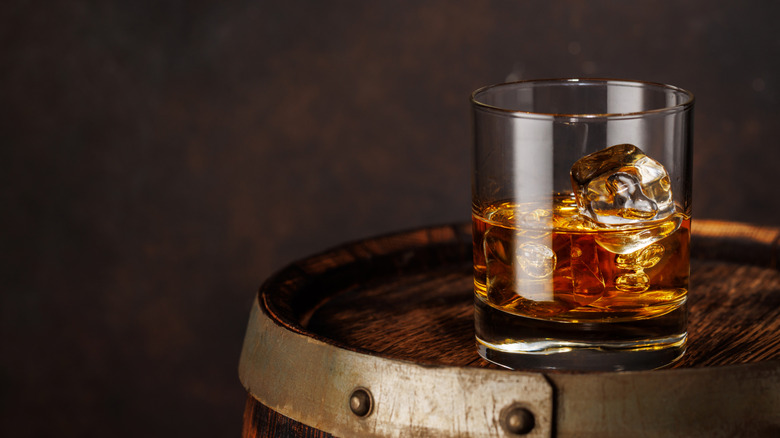
You shouldn't ignore the flavor notes of bourbon. You might learn these from tasting notes on the bottle or on shelf labels in some stores. It's also possible to predict what kinds of notes you might get from certain variables. Once you understand the flavor notes you enjoy, it's easier to find a bottle you love.
Tasting notes are usually divided into categories like sweet, spicy, floral, baking spice, wood, and grain. Sweet notes include caramel, vanilla, marzipan, chocolate, and honey. Floral flavors include rose and honeysuckle, while baking spice includes cinnamon and nutmeg. Spicy notes are more of a heat than a distinct taste. Grain and wood flavors come from the mash bill and the barrel, respectively.
"Most of the flavor in bourbon comes from time spent in a charred oak barrel," says Chris Tunstall. "As bourbon ages, it tends to pick up more notes of vanilla, caramel, oak, baking spices, and sometimes dried fruit," he says. So, if you like these kinds of rich flavors, you should be looking for longer-aged bourbons. He also says that the proof of a bourbon can intensify the flavor notes. "You'll often get more intensity from the vanilla, spice, caramel, and oak notes" in a high-proof bourbon, he explains.
Learn what you like
Ignatiev/Getty Images
One of the biggest takeaways if you want to know how to choose bourbon, is that it's about learning what you like, rather than an objective good or bad. Of course, there are some cheap bottles that are made for profit, with little care or attention put into the process. But, even if you find a bourbon that's technically good, aged beautifully, and made with love, you still might hate it. So, you need to understand your preferences.
"Start by paying attention to what you like instead of what everyone else says you should like," Whitney Rye advises. "Bourbon can get intimidating because people love to talk about rare bottles, big proofs, and long age statements, but the best place to begin is with your own palate." She advises trying a few different varieties side-by-side, such as wheated, high rye, single barrel, or bottled-in-bond, paying attention to what you enjoy about them. "Do you like soft and sweet? Bold and spicy? Rich and oaky? Higher proof? Lower proof?" Asking yourself these questions will help you work out your preferences.
Learning what brands you like can also help you going forward. "I also tell people to pay attention to distilleries or producers they already trust," says Rye. "If you love one bottle from a certain brand, look at what else they make and why you like it." And, if you aren't sure where to start with producers, find out which ones have good reputations. "Distilleries that consistently make great whiskey tend to earn that reputation over time," explains Chris Tunstall.

 English
 Arabic
 French
 Spanish
 Portuguese
 Deutsch
 Turkish
 Dutch
Dutch
 Italiano
 Russian
 Portuguese (Brazil)
 Greek
Greek