


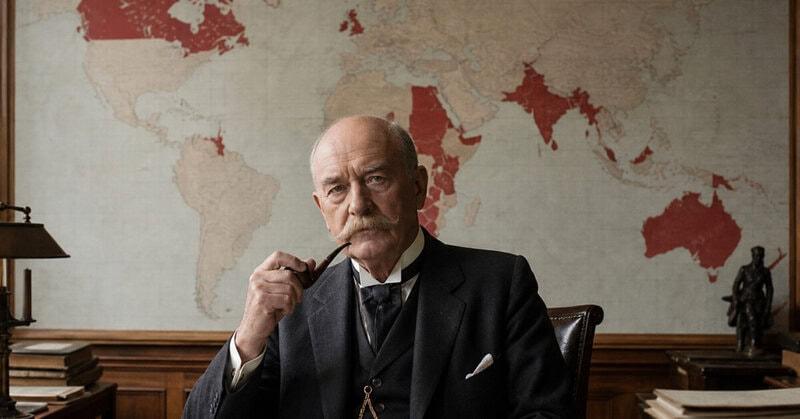
At its height, the British Empire was less a single nation’s achievement than a centuries-long improvisation—built on trade routes and warships, on missionary zeal and cold commercial calculation, on the ambitions of monarchs and the hunger of merchants. The nine facts below reveal how that extraordinary edifice rose to cover a quarter of the earth, what it cost the people who lived under it, and why it came apart so swiftly once the winds shifted.
1. The Staggering Scale: One Quarter of All Earth’s Land

Picture a map of the world in 1922, splashed with imperial red across every continent—and you begin to grasp what no map quite captures: the British Empire covered roughly 24 percent of all the land on earth, a territorial reach no empire before or since has matched. From Caribbean sugar islands baking in tropical heat to the sun-scorched vastness of the Australian outback, from the frozen shores of Canada to the hill stations of India, the footprint was genuinely planetary in scale.
That figure demands context. The Roman Empire at its height covered around 5 million square kilometres. The British Empire at its peak stretched to approximately 35 million. No single ruler in history had ever held dominion over so much of the globe’s geography at one time—not merely a great power, but a phenomenon that permanently reshaped the physical, political, and linguistic contours of the modern world. Many of the borders, legal systems, and languages it imposed remain in place a century after its peak.
2. 458 Million People Under One Crown

Behind that red-splashed map were human beings—roughly 458 million of them in 1922, representing about one in every five people alive on the planet. Hindu merchants navigating the crowded ghats of Calcutta, Zulu farmers working the hills of Natal, Māori chiefs deliberating in New Zealand’s North Island, Egyptian cotton growers working fields beside the Nile: all of them, in the eyes of London, subjects of the same distant crown.
What makes that figure almost dizzying is the contrast it presents. Britain’s own home population stood at around 40 million, meaning a relatively small island nation was attempting to administer a human patchwork of hundreds of languages, dozens of religions, and vastly different political traditions spread across every time zone on earth. The administrative machinery required was enormous—and the coercive force needed to sustain it was greater still. For those who prospered under it, the empire was an engine of opportunity; for the hundreds of millions who did not, it was a system of extraction enforced at gunpoint. Learn more about the scale and structure of the empire at Britannica.
3. Nearly Four Centuries from First Voyage to Final Flag

Empires rise and fall, but few linger long enough to watch entire rival civilisations come and go. The British Empire did exactly that, stretching close to 400 years from its formative sixteenth-century expeditions all the way to the handover of Hong Kong to China in 1997—a lifespan that carried it from the age of sail through the age of steam, through two world wars, and into the jet age without ever quite ceasing to exist.
Along the way it both created and outlasted the Spanish, Dutch, and French empires that had once been its fiercest competitors. That longevity was never inevitable; it was the product of constant adaptation, reinvention, and, often, ruthless opportunism. It also meant that the empire’s effects compounded across generations in ways that a shorter-lived empire never could. Understanding that four-century arc is essential to understanding why the empire’s eventual decline felt, to those living through it, less like an ending than a long, slow exhale—and why its consequences are still being reckoned with today.
4. The Sixteenth-Century Spark That Lit an Imperial Fuse

The story has a precise, swashbuckling beginning. In the 1580s and 1590s, privateers like Francis Drake were plundering Spanish treasure fleets with Queen Elizabeth I’s quiet blessing, and England was beginning to imagine itself as something more than a small, damp island on Europe’s northern fringe. The founding of the East India Company in 1600 crystallised that ambition into institutional form: a royal charter granting merchants the right to pursue profit across Asia, backed by the authority of the crown.
That mercantile origin distinguishes Britain’s empire from the purely military conquests of earlier great powers. Trade and profit were woven into its DNA from the very first charter—which matters, because it meant the empire’s driving logic was always economic as much as political. The Company that began by selling spices would, within a century and a half, command its own armies and govern tens of millions of people in South Asia. Profit-seeking and territorial control proved to be inseparable companions from almost the very beginning, a fusion that shaped everything that followed.
5. A Patchwork of Control: Colonies, Dominions, Protectorates, and Mandates

To call the British Empire a single entity is to flatten a reality that was endlessly, deliberately varied. It was in truth a mosaic of legal arrangements: crown colonies governed directly from Whitehall; self-governing dominions like Canada, Australia, and New Zealand that ran their own domestic affairs but pledged loyalty to the crown; protectorates where local rulers nominally remained on their thrones while real power drained away to British residents; and post-World War I mandates over former German and Ottoman territories assigned by the League of Nations. This flexibility was a feature, not a bug—it allowed Britain to expand rapidly without always bearing the crushing administrative cost of direct rule.
The variety also meant that the word “empire” carried entirely different meanings depending on where you stood within it. A settler farmer in New Zealand, voting in local elections and raising children under English law, inhabited a fundamentally different imperial world than a subject in Nigeria, governed by a distant colonial officer with little recourse and fewer rights. The BBC Bitesize overview of the British Empire captures this diversity clearly for those approaching the subject for the first time. Recognising that the empire was not one uniform experience but many radically different ones is the starting point for understanding its full human weight.
6. The Americas: Where It All Began—and Where Britain First Lost

Britain’s earliest sustained colonial foothold was driven into the soil of North America in 1607, when a ragged band of settlers established Jamestown, Virginia, on a marshy peninsula beside a tidal river. Over the following century and a half, thirteen colonies took root along the eastern seaboard, becoming some of the empire’s most populous and economically dynamic possessions. Then, in 1776, they declared themselves free—and the American Revolution delivered the single largest territorial loss the empire would ever suffer in a single blow.
The shock was enormous, and the strategic rethinking it forced was far-reaching. Rather than precipitating collapse, the loss of the Americas acted almost like a redirected current, driving British ambition with renewed urgency toward Asia, Africa, and the Pacific. Australia was claimed as a British territory within a decade of American independence; India moved from Company to Crown rule within the same broad era. The empire’s capacity to absorb catastrophe and pivot was never more dramatically demonstrated: what looked like a mortal wound turned out to be the trigger for a second, even grander phase of expansion.
7. Africa Carved Up in a Single Generation

Before 1880, Britain’s presence in Africa was mostly a matter of coastal trading posts and naval stations—modest footholds rather than deep territorial control. Then, in barely thirty years, everything changed. By 1914, Britain governed Egypt, Sudan, Nigeria, Kenya, South Africa, Rhodesia, and a sweep of other territories amounting to roughly a third of an entire continent. The engine of this transformation was the Scramble for Africa, formalised at the 1884-85 Berlin Conference, where European powers gathered around maps and drew borders with rulers, largely indifferent to the ethnic, cultural, and political realities of the people who lived there.
Britain’s African expansion was driven by a restless mixture of motives: strategic anxiety about French and German rivals gaining footholds, economic appetite for minerals, agricultural land, and new markets, and an era’s missionary ideology that dressed conquest in the language of civilisation and Christian duty. The consequences were profound and lasting. Peoples who shared culture and kinship were divided by lines on a map; peoples with centuries of conflict were enclosed within the same artificial borders and told to form a nation. Those lines, drawn in Berlin with such casual confidence, still shape the political geography—and fuel many of the conflicts—of Africa today.
8. World War I Paradox: The Empire Reached Its Largest Just as It Began to Crack

There is a deep irony written into the year 1922. It was the moment of maximum territorial extent—Britain absorbing former German colonies in Africa and former Ottoman lands in the Middle East as League of Nations mandates—and yet it was also the moment when the empire’s internal contradictions had never been more exposed. The war that created those mandates had consumed over a million soldiers drawn from the dominions and colonies: Australians and New Zealanders cut down at Gallipoli, Indians enduring the mud and gas of the Western Front, Canadians earning hard-won glory at Vimy Ridge, West Africans and East Africans fighting in campaigns few at home ever heard of.
Those men had fought, in the rhetoric of the age, for freedom and self-determination. When they returned home—or when their families mourned those who did not—the gap between that rhetoric and imperial reality became impossible to ignore. Nationalist movements that had been stirring before 1914 emerged from the war years with new moral authority and new organisational strength. The demands for greater autonomy that followed were not ingratitude; they were the logical conclusion of what the empire itself had asked its subjects to die for. The seeds of decolonisation were planted, with bitter precision, at the very moment the empire stood at its widest.
9. The Sun Set Fastest After World War II

Britain entered the Second World War as the world’s foremost imperial power and emerged from it victorious, celebrated—and effectively bankrupt. The war effort had drained the treasury, shredded the Royal Navy’s global reach, and left the country dependent on American loans to keep the lights on at home. The fall of Singapore to Japan in 1942 had already shattered the myth of British invincibility across Asia in a single afternoon. The economic engine that had sustained empire for centuries had stalled, and without it, the vast administrative machinery of colonial rule became an unaffordable luxury almost overnight.
India and Pakistan won independence in 1947, accompanied by a partition that cost an estimated one to two million lives and displaced up to fourteen million people—one of the largest forced migrations in human history. Through the single decade of the 1960s, seventeen British territories in Africa and the Caribbean became sovereign nations. What centuries of exploration, conquest, diplomacy, and raw coercion had assembled was largely dismantled in roughly thirty years—one of the fastest imperial collapses in recorded history. The last formal moment came in 1997, when the Union Jack was lowered over Hong Kong. The National Geographic Kids overview of the British Empire offers a clear entry point for those tracing this full arc from expansion to dissolution.
From a Tudor privateer’s raid on a Spanish galleon to the lowering of a flag over Hong Kong, the British Empire traced an arc that no single telling can fully capture. It was a story of audacious ambition and extraordinary ingenuity, but also of systematic exploitation, enforced labour, and catastrophic human cost. Its physical footprint has largely gone; its consequences—in borders, languages, institutions, inequalities, and unresolved historical grievances—remain woven into the fabric of the twenty-first century world.

 Arabic
 French
 Spanish
 Portuguese
 Deutsch
 Turkish
 Dutch
Dutch
 Italiano
 Russian
 Romaian
 Portuguese (Brazil)
 Greek
Greek