


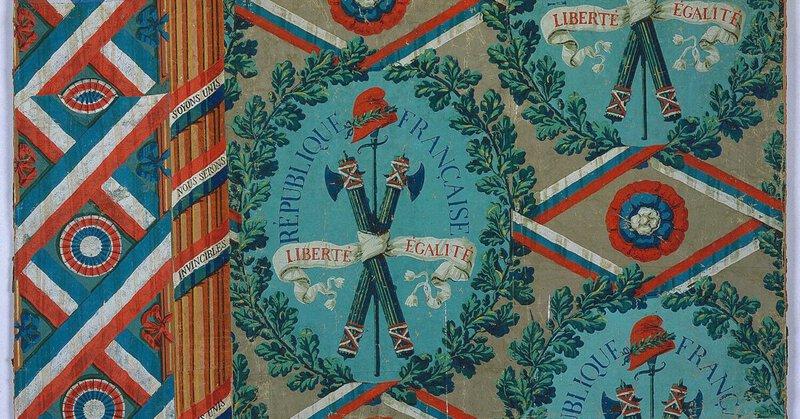
In the summer of 1789, the streets of Paris rang with fragments of a phrase that would eventually define a nation — yet no French government would bother to write it into law for another 169 years. Three words, a revolutionary war cry, a painted slogan on crumbling building façades, a whisper kept alive through empire and monarchy and occupation: Liberté, Égalité, Fraternité had to earn its place in the French constitution the hard way.
Born in Chaos: The Revolutionary Crucible of 1789-1795

To understand why the motto took so long to become official, it helps to understand how it arrived in the first place — not through a single dramatic proclamation, but through the slow accumulation of revolutionary energy. The Enlightenment had spent decades loading the intellectual atmosphere with exactly this kind of vocabulary. Rousseau had theorized the social contract. Montesquieu had dissected the separation of powers and the conditions of liberty. The Declaration of the Rights of Man and of the Citizen, adopted in August 1789, drew on that philosophical tradition so thoroughly that words like liberté and égalité felt not just desirable but self-evident.
The phrase coalesced organically from this environment. Maximilien Robespierre used a version of the tripartite formula in a 1790 speech to the National Assembly, linking liberty, equality, and fraternity as the essential virtues of the new republic — one of the earliest recorded public deployments of the three words in combination. That it came from Robespierre, who would later preside over the Terror before being guillotined by the very revolutionary machinery he had helped build, lends the motto’s origin a particular historical weight.
By 1793, the phrase was appearing on banners, in revolutionary pamphlets, and painted directly onto the façades of Parisian buildings. But no single decree, no constitutional article, no proclamation made it official. It was a three-part formulation designed to feel complete and inevitable, each word a load-bearing pillar that could not stand without the others. Liberty without equality collapses into privilege. Equality without fraternity becomes cold enforcement. Fraternity without liberty is mere conformity. The formula worked because it was philosophically interlocking — which is precisely why governments that disliked what it implied found it so difficult to kill.
The Phrase That Kept Getting Suppressed

After the Terror burned itself out and Napoleon Bonaparte strode into the vacuum, the motto was quietly shelved. Empire has little use for fraternity. Napoleon preferred eagles and laurel wreaths, symbols of martial glory rather than civic solidarity. The revolutionary slogan was not banned outright so much as rendered atmospherically inappropriate — an embarrassing reminder of a chaos the new order had supposedly resolved.
The Restoration that followed Napoleon’s defeat was, if anything, even more hostile to the phrase’s spirit. Between 1814 and 1830, the Bourbon kings worked hard to distance themselves from anything that smelled of 1789. Fraternité in particular carried a dangerously egalitarian ring to royalist ears — brotherhood implies that a king and a cobbler share something fundamental, which is precisely the kind of idea monarchies are built to resist. The motto retreated into taverns and radical pamphlets, kept alive by people rather than institutions.
It flickered back into public view during the Revolution of 1848, when the short-lived Second Republic embraced it with enthusiasm, stamping it on coins and chiseling it into public buildings. It felt, briefly, like the motto had finally arrived. Then Napoleon III consolidated power, established the Second Empire, and the phrase retreated again. This became the pattern: Liberté, Égalité, Fraternité survived every attempt at suppression not because any institution protected it, but because it had rooted itself too deeply in the popular imagination to be fully extracted. You can scrub words off a wall. You cannot scrub them from a people’s sense of themselves.
The Third Republic: Everywhere but Enshrined

The Third Republic, which stretched from 1870 to 1940, came closer than any previous government to formalizing the motto. It appeared on currency, on school buildings — those temples of secular republican education that the Third Republic constructed across France with almost missionary zeal — and on official seals. The 1880 law establishing Bastille Day as a national holiday cemented revolutionary symbolism in the civic calendar, and the motto rode that wave into everyday French life. For most French citizens, it was the official motto. It felt like law because it was everywhere.
But it was not law. No constitutional text of the Third Republic actually codified Liberté, Égalité, Fraternité as the nation’s official motto. It remained what historians sometimes call a powerful convention — real enough to shape behavior and identity, but fragile enough to be overwritten when the right catastrophe arrived.
That catastrophe came in 1940. When Nazi Germany occupied France and Marshal Pétain’s Vichy regime seized power, one of its early symbolic acts was to replace the revolutionary motto with Travail, Famille, Patrie — Work, Family, Fatherland. The substitution was not just a political preference; it was a deliberate erasure, a signal that the republic and everything it stood for had been suspended. The ease with which the swap was made exposed something uncomfortable: after 150 years, the motto’s status was still precarious enough to be overwritten by a collaborationist government. Convention, however deep-rooted, is not the same as constitutional protection.
1946: A First Foothold — and 1958: Finally Official

Liberation came in 1944, and with it a reckoning about what France wanted to be. The Fourth Republic’s 1946 constitution marked a genuine landmark: for the first time, Liberté, Égalité, Fraternité appeared explicitly in a constitutional text. After 157 years, the phrase had crossed the threshold from convention to codified principle. And yet the Fourth Republic itself proved unstable, lurching through governmental crises before collapsing under the weight of the Algerian War in 1958.
Charles de Gaulle, the conservative military leader who had commanded the Free French and now returned to reshape the republic, oversaw the drafting of a new constitution. On October 4, 1958, the constitution of the Fifth Republic was ratified, and Article 2 enshrined Liberté, Égalité, Fraternité as France’s official national motto — the definitive legal answer to a question that had been hovering, unresolved, since the streets of Paris first rang with those words nearly 170 years earlier.
The irony is worth sitting with. De Gaulle was no radical. He was a Catholic, a general, a man of order and national grandeur — in many ways the temperamental opposite of the Jacobin firebrands who had first shouted these words in 1789. Yet it was de Gaulle who gave the revolutionary motto its permanent legal home. History, as it tends to do, had taken the long and improbable route to get there. As the motto’s broader history makes clear, the journey from street chant to constitutional article was never a straight line.
Beyond France: Haiti and the Motto’s Global Resonance

France is not the only nation that claims these three words. Haiti — whose 1804 revolution produced the first successful large-scale slave revolt in the modern era and the first Black republic in the world — also carries Liberté, Égalité, Fraternité as its national motto. The historical charge embedded in that shared phrase is almost too large to hold.
Haiti’s founders drew on the language of the French Revolution deliberately and pointedly. They took the philosophical vocabulary that France had used to justify its own liberation from monarchy and turned it against France itself — against a nation that had proclaimed universal liberty while maintaining one of the most brutal colonial slave economies in the Atlantic world. When Haitian revolutionaries invoked liberté and fraternité, they were not simply borrowing French ideals; they were calling France out on its own failure to live by them.
The literal translation — liberty, equality, fraternity — carries profoundly different emotional weight in Port-au-Prince than in Paris. In France, the words gesture toward a civic ideal, a secular republic’s founding promise to its citizens. In Haiti, they commemorate an act of world-historical defiance, a people seizing for themselves the rights that their oppressors had proclaimed universal and then systematically denied. The same three words, two nations, and perhaps the sharpest irony in the history of revolutionary slogans.
Why Three Words Still Refuse to Settle

Today, Liberté, Égalité, Fraternité appears on every French euro coin, on the façade of the Élysée Palace, and is invoked — sometimes reverently, sometimes combatively — in virtually every significant French political debate. Immigration, secularism, social solidarity, the rights of minorities: these arguments almost always circle back, eventually, to what the motto actually demands of a modern society.
Fraternité — brotherhood, solidarity — remains the most contested of the three. Liberty and equality, for all their complexity, at least have robust legal traditions built around them: courts can adjudicate violations, legislatures can set floors. Fraternity is harder to legislate. It asks something of people rather than of institutions: a willingness to recognize a shared humanity across lines of origin, religion, and class. In a diverse, fractious, and often anxious twenty-first-century France, that ask feels simultaneously more urgent and more difficult than it did in 1789.
French courts have nonetheless attempted to give fraternité legal content. In 2018, the Constitutional Council ruled that the principle of fraternity encompasses a constitutional freedom to aid others without legal penalty — a ruling prompted by the prosecution of a farmer who had helped migrants cross the border from Italy. Three words written into a constitution in 1958 reached forward sixty years to shape a judgment about humanitarian solidarity at a mountain pass. That is the kind of work a well-made motto can do.
The 169-year gap between the motto’s birth and its legal adoption is itself a kind of lesson. Official recognition matters — it sets floors and enshrines expectations — but it is not where the real power of a phrase lives. Liberté, Égalité, Fraternité survived the Terror, Napoleon, the Restoration, two Napoleonic empires, and a collaborationist regime not because any government protected it, but because ordinary people kept repeating it, painting it, printing it, and believing it even when doing so was dangerous. France didn’t simply hand the world this motto in 1789. The world kept it alive long enough for France to finally make it law in 1958.

 English
 Arabic
 French
 Spanish
 Portuguese
 Deutsch
 Turkish
 Dutch
Dutch
 Italiano
 Russian
 Portuguese (Brazil)
 Greek
Greek