


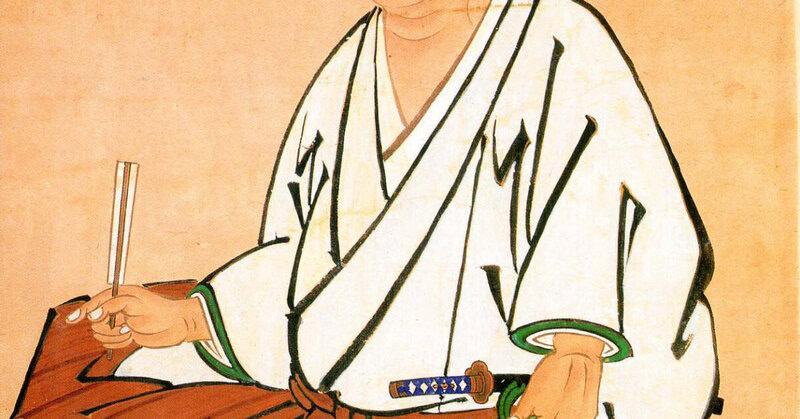
In the spring of 1645, an old man sat alone in a cave on the island of Kyushu, ink-stained fingers moving carefully across paper by torchlight. His body carried the accumulated damage of six decades of violence — scars, worn joints, the deep fatigue of a man who had outlived almost everyone foolish enough to stand across from him with a sword. He had two weeks left to live, and he spent them writing philosophy.
A Cave, a Document, and an Unlikely Immortality

The document Miyamoto Musashi completed in Reigando Cave became The Book of Five Rings — a text on strategy, timing, and the nature of mastery that has since been translated into dozens of languages and studied by military officers, business leaders, and martial artists across the world. The striking tension at the center of his story is this: the man history remembers as perhaps the greatest duelist who ever lived spent his final years not refining his killing technique but obsessing over how to think, how to adapt, and how to understand the shape of any contest before it begins.
The verified history of Miyamoto Musashi is already extraordinary. What makes it genuinely rare is that the documented facts are stranger and richer than the mythology Hollywood and pulp fiction borrowed from his name. The legend is cinematic. The real life is more interesting.
Born Into a Nation at War

Musashi was born around 1584, in either Mimasaka or Harima province — historians still disagree on both points, a fitting beginning for a man who would spend his life moving between fact and legend. Japan in the late sixteenth century was not a place of ceremony and settled order. It was a nation of competing lords where swordsmanship functioned less as an art form and more as survival infrastructure for anyone connected to the samurai class.
His father, Shinmen Munisai, was a martial artist of recognized ability, and Musashi absorbed the mechanics of combat before most boys had finished growing. The timing of his birth placed him directly at one of Japanese history’s great turning points. The Sengoku period — over a century of near-constant civil war — was giving way to the Tokugawa consolidation, and the long Edo peace that would run from 1603 to 1868 was just beginning to take shape. Musashi came of age exactly as open warfare gave way to enforced stability, trained for a world that was already changing around him. He would spend much of the rest of his life making sense of that gap.
Kyoto, 1604: The Year a Reputation Went National

At around twenty-one years old, Musashi arrived in Kyoto. This was Japan’s cultural capital, a city dense with established sword schools, masters with hard-won reputations, and swordsmen who had built careers on defeating challengers. Musashi was young, relatively unknown, and apparently unimpressed by any of that.
According to accounts of the period, he challenged and defeated multiple members of the Yoshioka school — one of Kyoto’s most prestigious martial families — in a sequence of confrontations that effectively destroyed the school’s reputation and made Musashi’s name known across Japan. The pattern those victories established would define the next decade of his life: he sought out respected masters and entrenched schools precisely because every meaningful win amplified his reputation exponentially. Defeating an unknown proved nothing. Defeating someone everyone already respected proved everything.
It is worth noting here what National Geographic observes about the historical record: not all details of Musashi’s life can be independently verified, and the line between documented man and mythologized hero blurs in places. But the verifiable core is remarkable enough on its own terms that embellishment was never strictly necessary.
An Undefeated Record: What That Distinction Actually Means

The distinction most people encounter first is the one hardest to fully absorb: Musashi is recorded as having fought duels across his career and lost none of them. In an era when duels frequently ended in death — not points, not submission, not a referee’s decision — this was not an athletic achievement. It was something closer to a sustained act of will repeated over decades against opponents who were often themselves elite.
Part of his edge was technical. Britannica notes that Musashi developed a unique style of double-sword fighting known as Niten Ichi-ryū, which involved wielding a long sword and a short sword simultaneously — a technique considered unorthodox and tactically reckless by the conventional schools of the period. Musashi disagreed with the conventional schools of the period, and his record suggests the disagreement was productive.
But technique alone does not explain his undefeated record. Accounts of his duels describe a man who treated the psychological contest as inseparable from the physical one. He would arrive late — sometimes significantly late — forcing his opponent to wait, to tighten, to lose the calm center that a skilled swordsman requires. The duel, in his thinking, began long before the swords came out. By the time he stopped seeking duels in his early thirties, he had concluded that further killing would teach him nothing new. That conclusion — and what he did with it — is where his story becomes genuinely strange.
The Ronin Who Refused to Stay Still

Musashi was a ronin, a masterless samurai, and he moved through his life accordingly. For years he practiced musha shugyō — the warrior’s pilgrimage, a tradition of deliberate wandering in search of challenge and self-refinement. He participated in significant battles of the Sengoku and early Edo periods, placing him inside the real military upheaval of his time rather than on its polished ceremonial edges. He was not a court swordsman performing demonstrations for patrons. He was in the actual fighting, watching how violence worked at scale and under pressure.
In parallel — and this is the part that tends to get lost in the action-hero version of his story — Musashi was developing as a painter, sculptor, and craftsman. His ink paintings survive and are held in Japanese museums today. They show a brushwork economy that mirrors his fighting philosophy precisely: nothing wasted, nothing decorative for its own sake, every mark doing specific work. National Geographic identifies this dual identity as central to understanding the real Musashi. He did not pick up a brush after he stopped fighting. He was always both things simultaneously — the warrior and the artist, each discipline informing the other in ways he would eventually spend his final years trying to articulate in writing.
The Book of Five Rings: Strategy Written in the Shadow of Death

Musashi began writing The Book of Five Rings — Go Rin No Sho in Japanese — in 1643, while living in Reigando Cave in Higo province. He was approximately fifty-nine years old and already seriously ill. The five sections that make up the text — Earth, Water, Fire, Wind, and Void — use swordsmanship as a lens to examine something much larger: timing, adaptability, the art of reading an opponent’s intentions before they are fully formed, and the nature of genuine mastery across any discipline.
Each section carries a distinct weight. Earth establishes the foundations of strategic thinking. Water describes the fluidity and formlessness a skilled practitioner must cultivate. Fire addresses the heat and urgency of direct conflict. Wind analyzes the weaknesses of other schools. Void — the shortest and most difficult section — reaches toward something close to philosophical emptiness: the state beyond technique, where action arises without deliberation. It is an unusual document for a swordsman to have written, and an unusual document for anyone to have written in a cave while dying.
The reach of the book eventually jumped far outside martial arts. Translated into dozens of languages and absorbed by military academies and business schools — particularly during the late twentieth century, when Japan’s postwar economic rise drew intense Western interest in Japanese strategic thinking — The Book of Five Rings became one of those rare texts that outlasts its original context entirely. Musashi’s preserved biography traces the arc from wandering ronin to reluctant philosopher, a transformation that feels improbable until you read the book and realize it was the logical destination of everything that came before it.
He died on June 13, 1645, in Higo province. The book was finished. The sword was finally still.
What the Fictionalized Version Gets Wrong — and Why It Matters
The fictionalized Musashi — most famously the version Eiji Yoshikawa constructed in his celebrated 1935 serialized novel — is satisfying in the way that clean myths are always satisfying. The hero arc is clear, the symbolism is legible, and the violence is given obvious moral weight. What the novel necessarily compresses is the stranger and more durable truth underneath it: that the greatest duelist in Japanese history became genuinely more interesting after he stopped dueling.
The Yoshikawa version also takes substantial liberties with the historical record — inventing characters, conflating events, and smoothing the rough edges of a life that was considerably more ambiguous than the novel suggests. Readers who encounter Musashi through fiction and then turn to the historical sources often find a man who is simultaneously more austere and more puzzling than the romantic hero they expected. That gap between myth and record is itself worth sitting with.
Musashi is not simply a record-holder. He is a case study in what happens when a person pursues a single discipline to its absolute outer limit and then faces the harder question of what that mastery actually means — what it was for, what it reveals about everything else, and whether it can be translated into something that outlasts the man himself. His answer, arrived at alone in a cave by torchlight, was philosophy. Introspection. Art. The slow, unglamorous work of turning a lifetime of violent precision into language someone else could use.
For anyone drawn to Miyamoto Musashi’s real history, the most durable samurai history has preserved turns out to offer something rarer than legend: a human being who was actually as strange, driven, and unresolved as the stories suggest — and whose real conclusions were more interesting than any sword fight ever could be.

 English
 Arabic
 French
 Spanish
 Portuguese
 Turkish
 Dutch
Dutch
 Italiano
 Russian
 Romaian
 Portuguese (Brazil)
 Greek
Greek