


Pimax Dream Air review - incredible VR headset visuals and feather light, but the price is a fright
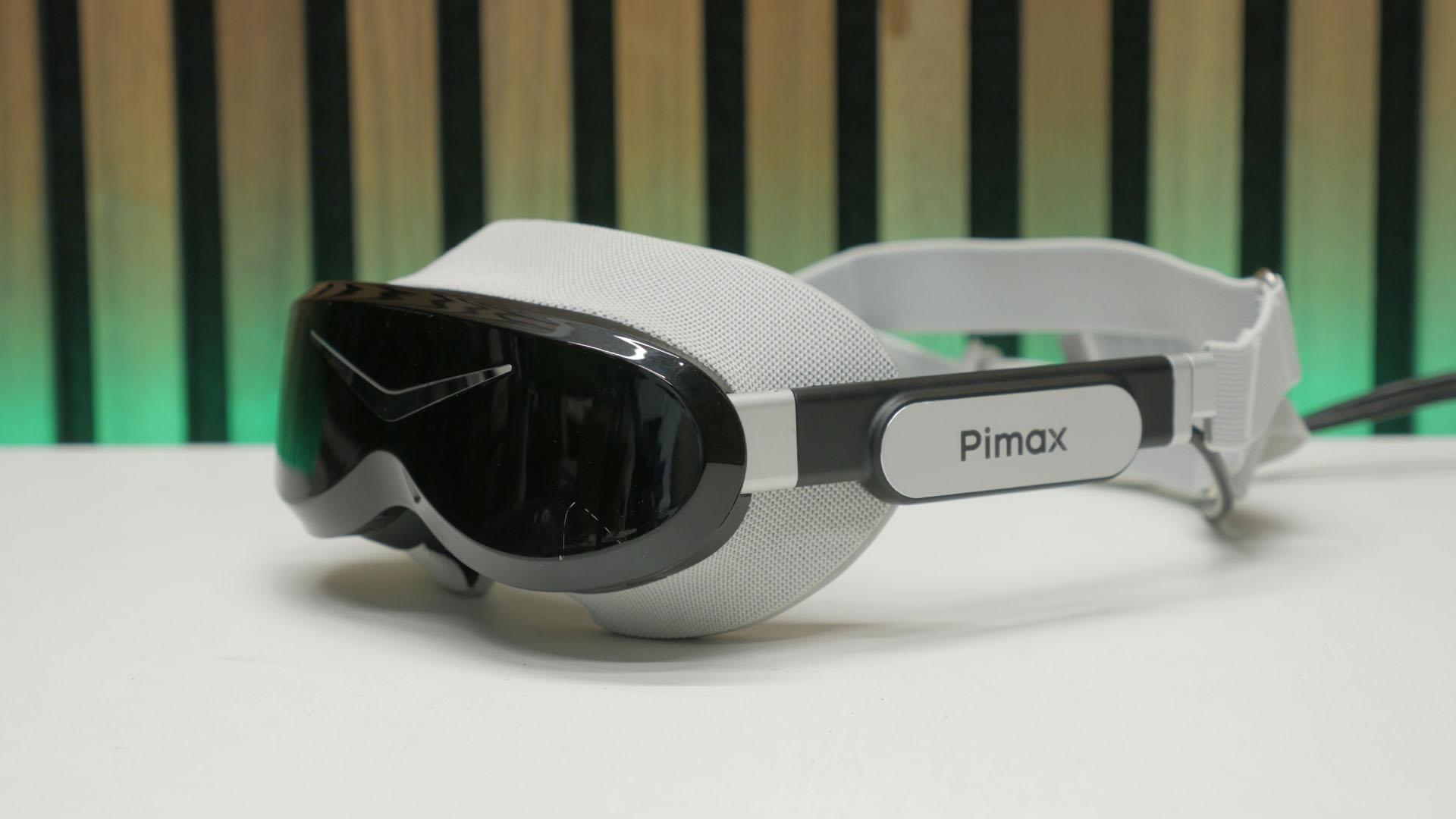
Pimax Dream Air review - incredible VR headset visuals and feather light, but the price is a fright
Verdict

If you're after the best overall VR headset image quality, the Pimax Dream Air delivers. Its twin 3,840 x 3,552 OLED panels are incredibly sharp and deliver all the contrast, deep blacks, and vividness you'd expect from OLED. The view through its optics is very finely dependent on the fit of the face foam, though, so there's a chance you might not get on with this headset, which is a shame considering its very high price.
Pros
- Incredibly sharp image
- Deep blacks, and vivid colors from OLED displays
- Lightweight design
- Decently comfortable
- Fully-featured so doesn't need any extra gear
Cons
- Lens view can feel a bit restricted
- Headset and cable get warm
- Very expensive
Up until the release of the Dream Air, Pimax has mostly been known for producing VR headsets that err on the side of "big and heavy." That can have its advantages optically, but not everyone wants to have a 2lbs weight hanging off their face when gaming. The Pimax Dream Air flips that trend around, stripping back its design so that it weighs well under 300g. Add in that it has incredibly high-resolution OLED displays as well, and you have a headset that is going to be high on many a VR gamer's wishlist.
All this weight-saving and image quality prowess doesn't come at all cheap, though, and there are some other caveats to note about this headset that mean it's not a nailed-on certainty to be the best VR headset for all. Read on below to see where Pimax' latest shines bright, and where it comes up a little dull.
Specs
| Pimax Dream Air specs | |
| Display | 3,840 x 3,552 per eye, pancake lenses |
| Max refresh rate | 90Hz |
| FoV | 110° |
| Weight | ~263g without cable, ~330g with 1m of hanging cable weight |
| Tracking | Four-camera SLAM or Steam VR base station tracking |
| In the box | Headset, cable, power supply |
| Connections | Single cable with DisplayPort, USB-C, and power |
The first thing to note about the Dream Air is that it's available in two versions. One includes four cameras on its front for inside-out/on-headset tracking (known as Simultaneous Localization and Mapping or SLAM) and comes with two included controllers that the headset itself will track. Meanwhile, the other version uses base stations/lighthouses for outside-in tracking. This version has no cameras on its front and ships on its own, with no controllers, requiring you to either already have existing SteamVR-compatible base stations and controllers or that you buy these with the headset.

For our review, Pimax sent us the base station version with one base station and a set of its Sword controllers, which was rather an unfortunate combination, as these controllers require at least two base stations to function. It's for this reason I'd immediately recommend most buyers opt for the SLAM version, unless you have an older outside-in VR headset with several base stations/lighthouses. If not, you'll be forced to buy quite a lot of extra gear to get up and running.
The main caveat to this advice is that, once set up, outside-in tracking tends to be more robust than inside-out tracking - i.e. it's much more accurate and less likely to lose the position of you or your controllers - but for racing/flight sim rigs and any other VR use where you're just down, such accuracy often isn't necessary. Meanwhile, for many simpler VR games, such accuracy is far from essential either - it's only really room-scale VR with complex VR controller inputs that should tempt you to get the non-SLAM version. That and the fact it is $250 cheaper.

These comparisons aside, the two Dream Airs are essentially identical and packed with some seriously high-end hardware.
The stars of the show are the ultra-high-resolution 3,840 x 3,552 displays used for each eye. These make this headset just fractionally less sharp than the Pimax Crystal Super, but they're otherwise right at the very top end of resolution compared to other headsets. The Meta Quest 3, for instance, is just 2,064 x 2,208 per eye, while the Bigscreen Beyond 2 (the Dream Air's main lightweight competitor) is 2,560 x 2,560 per eye and the upcoming Valve Steam Frame is 2,160 x 2,160 per eye.

What's more, these displays are OLED panels, rather than LCD. This means they boast incredible contrast and the ability to show true blacks, rather than the more washed-out grays that tend to be what you experience with LCDs. Also, because the panels are such high resolution, this headset effectively eliminates the screen door effect (where you can see the lines between rows and columns of pixels) with which some other lower resolution OLED VR headsets have struggled.
To make the most of these displays when packed into such a small headset, Pimax uses multi-layer pancake lenses with a concave element that allows this headset to provide "the widest field of view of any small-form factor headset." In numbers, its field of view (FoV) is 110°, which is only a tiny bit wider than the 106° of the Bigscreen Beyond 2.

Talking of the size of this headset, it really is tiny. The Crystal Light and Crystal Super both weigh nearly 1kg, but the Dream Air is just 170g for the headset alone, 263g with its strap, and only around 330g once you account for around one meter of the cable tugging on the headset.
This lightness is also reflected in the size of the unit, with it being far smaller than most VR headsets. The Bigscreen Beyond 2 is even lighter and smaller, by some measures, but the Dream Air is still absolutely tiny.
Features
As you might expect for such a small VR headset, the Dream Air isn't packed with extra features like the swappable optical engine of the Crystal Super. However, it is, as Pimax puts it, still a "full-feature" headset.
What does full-feature mean? Well, for a start, there's the fact that the headset does include speakers. These are integrated into the side straps, like those of many other VR headsets, but here they don't hang down in front of your ears but instead project down towards them. This means even less audio privacy, but keeps the overall design of the headset as sleek as possible.

A short length of cable also sprouts from the ends of these straps, joining together around 20cm behind the headset and stretching to a total of five meters. It's quite a thick cable - making it the most awkward part of using the headset - but does carry video, data, and power. It terminates about a foot from its end at a junction box, from which sprouts an HDMI cable and a USB cable, and into which you plug the cable from the included power adapter.
Adjustability is limited on this headset. The straps split into two sections, offering a degree of vertical grip adjustment, but otherwise there's not much in the way of adjustment. The facial interface foam is removable but is itself non-adjustable, and Pimax doesn't include any alternatives in the box. There's also no manual interpupillary distance (IPD) adjustment, but instead the headset has automatic eye-tracking-based IPD.

Optically, there are mounting points for prescription lenses, with Pimax providing some options for shipping lenses with the headset. Otherwise, there are plenty of third-party lens makers that can make a wide range of prescription lenses for many different headsets.
When it comes to gaming - as opposed to watching video - this headset includes foveated rendering support, which means the headset can feed back to the GPU that only the central portion of the image should be rendered at maximum quality. This can provide a big boost to performance when gaming, without compromising significantly on image quality.
Design and comfort
The Dream Air is an undeniably sleek-looking headset, and in fact the base station version I'm reviewing looks particularly striking, thanks to its lack of cameras. Crucially, this sleek look is matched by a decently comfortable wearing experience. This lightness of this headset means the straps and facial foam simply don't have to do as much to keep the headset in position while remaining comfortable.

However, while the Dream Air is reasonably comfortable, it's certainly not perfect. It can't, understandably, compete with the custom-made facial foam of the Bigscreen Beyond, and the foam here is also quite small and restrictive. In particular, if you wear glasses, you absolutely cannot use this headset with them on. You will need custom optics to fit inside the headset. Custom lenses are a good choice for any headset, but many other headsets at least make wearing glasses an option.
The adjustability of the headbands is limited too. There's no elasticity to them, so you can't just slide the headset on and tweak the gripping force. Instead, you have to loosen the straps, position the headset, then tighten them. Once adjusted to your head size, the headset can then be slipped on and off without having to loosen the straps again.

If you have long or thick hair, this headset is reasonably accommodating. The space above the bands means you can wear long hair up in a bun, keeping it out of the way, and there's enough adjustment for thicker, curly hair, though you'll likely have to loosen the bands each time you don the headset, before tightening them again.
Performance
The Dream Air offers the best VR image quality you can experience right now. However, there are definitely some caveats.
On the positive side, those OLED panels with their ultra-high resolution deliver just the sort of eye-popping sharpness, contrast, and vividness you'd hope for, making images look more realistic and engrossing than any LCD headset. They're bright too.
The extra sharpness of the Crystal Super 57PPD is just about discernible, but for most gamers, the vividness and contrast of the OLED provided here is enough to make up the difference.
Fire up a high-end sim game like Assetto Corsa or Microsoft Flight Sim 2024, or simply watch a high-quality VR video, and the detail and lifelike quality of the image is totally absorbing. You can sometimes truly be in awe of what you're looking at. Cheaper VR headsets with resolutions under 2,000 x 2,000 pixels per eye or with basic LCD panels (i.e. not the multi-zone backlights of the Crystal Super) can offer an amazing initial VR experience, but the step up to what's on offer with a headset like this feels otherworldly.

However, optically, this headset is a bit of a challenge. I found the lenses to not really sit close enough to my eyes when using the default facial foam, despite it already being very slim. This made for a sensation of looking through a telescope or tube, with the round edges of the lenses quite visible.
The edges of the lenses when viewed in this way are also quite soft, such that if you look off-center, they lose sharpness. The image also slightly darkens around the edges. This means you need to fully move your head quite a lot to look around, as opposed to just being able to look around the view with your eyes.

Partially, these issues were solved by just really forcing the headset against my face, reducing the distance between my eyes and the lenses. This opened up the view, making for less of a sense of you looking down a tube, improving edge sharpness, and reducing the slightly fisheyed-look of the image. However, this wasn't at all comfortable, and with no other face foams to try, it left me having to resort to ordering alternatives, which are yet to arrive. I've ordered this one from Studioform, and I'll update this review when I've had a chance to try it.
Your experience may vary depending on your face shape and eye position - and to some extent, it might depend on the type of custom prescription lenses you use - but this headset generally felt like it was crying out for a custom facial foam like the Bigscreen Beyond.
In terms of audio, the tiny in-strap speakers work surprisingly well. They don't exactly provide the deepest bass and most engaging sound, and I'd definitely use a headset instead (a possibility that's afforded by the small footprint of this headset, and which isn't viable for Pimax's larger headsets, unless you opt for in-ear audio) for more cinematic games or longer sim gaming sessions.

As is the case with many VR headsets, the Dream Air does get hot, and so it uses two tiny fans to keep itself cool. These aren't too obtrusively loud - they're quieter than those on the Crystal Super - but equally they aren't the most effective at keeping this headset cool. It's warm to the touch within seconds of being turned on, and it stays fairly warm in use, though not enough to be uncomfortable on your face.
However, I did notice that the cable, and particularly the junction point where the cable splits to go to each side of the headset (on which, I prefer this arrangement to a single attachment point that pulls on one side of the headset, like on the Crystal Super and Crystal Light), gets surprisingly warm. You can feel it against your neck every now and then, and it's a little bit alarming that a section of the cable that's so far back from the headset can get so warm.

Headset tracking with the single base station worked well, despite the inability to use the supplied controllers. It's noticeable how much less likely a headset is to lose its place and drift when using a base station as opposed to SLAM tracking. I'd still recommend opting for the SLAM version if you don't already have base stations, but if you do have the base stations, the non-SLAM version is a sensible way to save $250 and ultimately get better tracking.
The Pimax Dream Air price is staggeringly high. The base station/non-SLAM version is $1,999, while the SLAM version with controllers is $2,299. That's $500 more than the Crystal Super QLED, although only $100 more than the micro-OLED 8K version (i.e. the same displays as the Dream Air).
What's more, the Dream Air is nearly double the price of the Bigscreen Beyond 2. That headset has lower resolution displays and has fewer features - it doesn't include speakers, for instance - but its price does include a custom-made face cushion, and it's quite a bit lighter than the Dream Air.
However, if you order now, you can get 2% off by buying via this link and using the code pcgamesn at checkout.
Verdict
The Pimax Dream Air is an incredible VR headset that delivers arguably the best image quality currently available in any headset. The sharpness, contrast, color vividness, and gaming performance are just fantastic, assuming your GPU is fast enough to render at such high resolutions.
Then there's the lightweight design and decent comfort of this headset. The Bigscreen Beyond's custom faceplates mean it still holds a lead on pure comfort, but the fact that the Dream Air is a complete headset, with speakers, microphones, and the option of SLAM tracking is going to be a tempting combination for anyone who doesn't want to have to use any extra gear.
However, the optical characteristics of this headset are likely to be divisive. The fact that your eyes sitting just a few millimeters too far back - as happened naturally in my use - can create such a narrowly-focused and looking-through-a-tube type of effect, and produce a slightly fish-eyed view, wasn't what I'd call satisfactory for a $2,000 headset. Out of the box, I simply much preferred the more forgiving view afforded by the Crystal Light, for instance.
Your experience and tolerance for these aspects might vary, though, and I'll report back when I've tried some different face foams - to see how these affect the lens placement.
Otherwise, the big stumbling block here is the price. This is a cutting-edge headset that is understandably only for those seeking the best, but considering you can get decently close to this sharpness - and still far more sharpness than most entry-level headsets - with the $800 Crystal Light, you'll have to know that you're absolutely after the best and that you're prepared to pay whatever it takes to consider this headset.

 English
 Arabic
 French
 Spanish
 Portuguese
 Deutsch
 Turkish
 Dutch
Dutch
 Italiano
 Russian
 Romaian
 Greek
Greek