


The nose is gone. The paint has flaked away. And for nearly two centuries, the world has been arguing about the face that remains — the Great Sphinx of Giza, carved directly from the living rock of the plateau, staring east into the sunrise with an expression that has outlasted every empire that tried to claim it.
A Question Shaped by Politics as Much as Evidence

Stand before the Sphinx on a January morning, when the desert light is low and golden, and the question arrives unbidden: what did the people who built this actually look like? It is the simplest question in Egyptology, and somehow the most contested. For centuries, the answer has been sculpted less by archaeology than by the anxieties and ambitions of whoever was doing the asking. Scholars have projected empires of the imagination onto those eroded limestone features — turning ancient Egyptians into proto-Europeans, into sub-Saharan Africans, into a vaguely exotic backdrop for Hollywood adventure.
The Sphinx’s missing nose and faded pigment are not just casualties of time and vandalism. They are a metaphor for how thoroughly the true appearance of ancient Egypt has been obscured — sometimes deliberately, sometimes through the innocent distortions of artistic convention, and sometimes through the slow violence of being misunderstood across generations. What follows is a journey through the science, the art, and the arguments — from painted tomb walls to DNA sequencing laboratories — tracing why this question refuses to stay settled, and why the real answer is stranger and more magnificent than any simplified myth.
A Civilization Born at the Crossroads of Continents

Ancient Egypt was a cradle of civilization concentrated along the lower reaches of the Nile River in the eastern corner of North Africa — a narrow green corridor threading through desert, positioned at the meeting point of three worlds. To the south lay the deep African interior and the powerful kingdom of Nubia. To the northeast stretched the Levant, Mesopotamia, and eventually Persia. To the north, across the Mediterranean, lay the Aegean civilizations that would eventually produce Greece and Rome.
Geography made diversity inevitable. The Nile Valley was not just a river; it was a migration highway. For tens of thousands of years before the first pharaoh raised a crook and flail, populations moved up and down that corridor, settling, mixing, trading, and warring. By the time the Old Kingdom began raising pyramids around 2700 BCE, the people living along the Nile were already the product of millennia of movement and intermixing. This is a foundational fact that popular retellings consistently obscure: “ancient Egyptians” is not a monolithic ethnic category but a label covering a civilization that endured for more than three thousand years, absorbing Nubian administrators, Libyan pharaohs, Persian conquerors, Greek intellectuals, and Roman colonizers along the way.
That diversity was not an anomaly or a weakness. It may have been the very engine of the civilization’s creativity — the crossroads quality that made Egypt a place where ideas, techniques, and bloodlines converged and produced something unprecedented. Grasping this from the outset is essential to understanding why questions of appearance are so genuinely complex, and why any single, clean answer should immediately invite suspicion.
What the Egyptians Painted — and What They Left Out
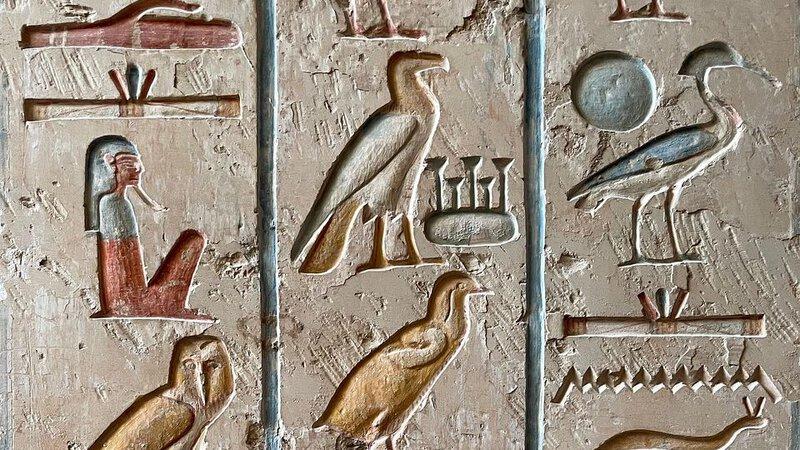
The tomb paintings of ancient Egypt are among the most vivid images humanity has ever produced. Walk through the Valley of the Kings and you encounter figures so boldly drawn, so assured in their color and line, that they feel almost contemporary. But those images follow strict conventions that complicate their use as evidence for actual appearance.
By established artistic canon, men were painted in reddish-brown tones — symbolizing their outdoor, active lives — while women appeared in pale ochre or cream, reflecting ideals of indoor refinement. This was a social code rendered in pigment, not a faithful record of complexion. Egyptian artists were perfectly capable of depicting ethnic difference when they chose to: Nubian figures appear in distinctly darker tones in many reliefs, while Libyan and Levantine peoples are rendered in lighter shades with different hairstyles and dress. The Egyptians were clearly aware that populations looked different from one another. They simply chose, in their own portraiture, to follow convention over documentary realism.
For something closer to genuine faces, historians turn to the Fayum mummy portraits — encaustic paintings on wood panels placed over mummies during the Roman period, roughly the 1st through 3rd centuries CE. These are startling. Painted in hot wax with a directness that anticipates modern portraiture, they show people who feel achingly real: a young man with wavy dark hair and heavy-lidded brown eyes; a woman with olive skin and gold earrings; a boy with tight curls and a watchful gaze. The range of features across the surviving portraits is genuinely wide — broad noses alongside narrow ones, darker brown skin alongside lighter tones, African and Mediterranean characteristics sometimes appearing to blend in a single face.
They are the closest thing we have to photographs from antiquity, and they confirm, almost incidentally, what geography always suggested: this was a diverse population. Still, caution is warranted. The Fayum portraits represent the affluent, they were created under Roman cultural influence, and their pigments have shifted over two millennia. Striking as they are, ancient Egyptian images always require the interpreter’s careful eye. You can explore how this visual culture developed through Smarthistory’s overview of the world of ancient Egypt.
The 19th-Century Argument That Warped Everything

In the early 19th century, as European scholars began systematically excavating and cataloguing Egypt’s monuments, they faced an uncomfortable paradox. Here was one of history’s most sophisticated civilizations — and it was African. The era’s dominant racial ideology, dressed in the language of science, insisted that Africans were incapable of such achievement. The solution, which became known as the Hamitic hypothesis, was to invent a race of light-skinned, quasi-Caucasian conquerors who had supposedly descended from the north or east to build what darker Africans allegedly could not.
This claim was not evidence-based. It was ideology masquerading as scholarship, and it shaped Egyptology for generations, influencing museum displays, textbooks, and eventually Hollywood casting, which for most of the 20th century populated its Egyptian epics with white European and American stars.
The counter-reaction was equally charged. Mid-20th-century scholars, most influentially the Senegalese historian and scientist Cheikh Anta Diop, argued powerfully that ancient Egyptians were Black Africans in the full cultural and ancestral sense — and that their legacy had been systematically whitewashed by European colonialism. Diop’s challenge to Eurocentric Egyptology was necessary and important, galvanizing for African and African-diaspora scholars reclaiming a history that had been taken from them. But his argument for a straightforwardly and uniformly Black Egyptian civilization also simplified a genuinely complex picture.
Both camps were fighting, in significant part, with the weapons of modern identity politics rather than purely ancient evidence. The tug-of-war between them is exactly why rigorous ancient DNA research became so urgently needed — and why its results, when they finally arrived, proved both illuminating and immediately controversial.
What the Ancient DNA Actually Says

In 2017, a landmark study published in Nature Communications successfully sequenced ancient Egyptian genomes from mummies excavated at Abusir el-Meleq, a site in Middle Egypt, with samples spanning roughly 1300 BCE to 400 CE. It was the first large-scale genomic analysis of ancient Egyptians, and the results generated headlines worldwide.
Those mummies showed their closest genetic affinities with ancient Near Eastern and Levantine populations — people ancestral to modern inhabitants of the eastern Mediterranean. Sub-Saharan African ancestry in the samples was relatively low, though detectable, and appeared to increase in more recent periods. For those who had expected the data to settle the argument cleanly in either direction, the results were unsatisfying in the best possible way: the picture was complicated.
Scientists attached significant caveats that received less media attention than the headline findings. Abusir el-Meleq represents one site in Lower, or northern, Egypt — the part of the country geographically closest to the Levant. Mummies, moreover, skew toward the elite and the formally embalmed, not ordinary agricultural workers or southern frontier communities. The genetic profile of Upper Egypt, the Nubian border zones, or the earliest dynasties almost certainly differed. Subsequent research on broader African population genetics has suggested that sub-Saharan ancestry in ancient Egyptian populations was likely higher than the 2017 study indicated and grew more pronounced over time as trade and population movement with interior Africa intensified.
The science is still actively developing. Each newly sequenced genome adds resolution to a portrait that is not yet finished. What the research confirms beyond reasonable doubt is that ancient Egypt’s population was not genetically uniform, and that characterizing it in simple racial terms distorts rather than clarifies.
Reconstructing Real Faces: From CT Scans to Forensic Art

While geneticists work with molecules, a parallel field is working with bone. Modern forensic facial reconstruction begins with CT scans of preserved mummy skulls, which generate precise three-dimensional bone models. Scientists then apply statistical data about muscle depth and soft tissue thickness for relevant population groups, before forensic artists add skin texture, likely hair color, and eyes.
The results have repeatedly surprised people conditioned by decades of cinematic Egypt. A 2021 reconstruction of Ramesses II — one of history’s most famous pharaohs, who ruled for roughly six decades in the 13th century BCE — produced a man with tan-olive skin, a prominent hooked nose, and reddish hair, a color confirmed by microscopic analysis of his mummy, which survives in Cairo. He looked neither like a Hollywood hero nor like a convenient symbol for either side of the race debate. He looked like a specific, individual person — which was precisely the point.
Reconstructions of other mummies, both royal women and commoners, reinforce the same finding: the faces are not uniform. Broad features appear beside narrow ones; darker and lighter complexions coexist across different individuals and different eras. When you examine these reconstructions side by side, the answer to “what did ancient Egyptians look like” becomes wonderfully, humanly varied. They looked like a population at a crossroads, because that is exactly what they were.
Why the Question Still Matters
Circle back to the Sphinx. It was sculpted from the living rock of the Giza plateau by a workforce of thousands — not slaves, as was long assumed, but paid laborers whose bakeries, breweries, and medical records archaeologists have uncovered nearby. Ordinary people, with ordinary faces, who built the most recognizable monument on earth and then vanished into history so completely that we are only now, with CT scanners and genome sequencers, beginning to glimpse them.
The question of ancient Egyptian appearance is really a question about who gets to claim history — and about how much we are willing to let evidence complicate our preferred stories. The honest answer, supported by geography, art, genetics, and osteology, is that ancient Egyptians were a diverse population at the crossroads of continents, varying by era, by region, by class, and by the endless human tendency to move, mix, and change. That answer belongs to no single modern group and diminishes none. It is more remarkable than any simplified myth, because it is true.
Each new analytical tool — ancient DNA sequencing, isotope analysis that traces where individuals grew up by the minerals deposited in their teeth, facial reconstruction algorithms trained on ever-larger datasets — adds pixels to a portrait that will never be entirely complete. That incompleteness is not a failure of science. It is an honest accounting of what it means to look across three thousand years and try to see a face. As more mummies are sequenced and more skulls rendered into recognizable features, the ancient Egyptians are slowly becoming something more valuable than symbols to be won or lost in culture wars. They are becoming real people — varied, mortal, and recognizable — which is far more interesting than any plaster myth.

 English
 Arabic
 French
 Spanish
 Portuguese
 Deutsch
 Turkish
 Dutch
Dutch
 Italiano
 Romaian
 Portuguese (Brazil)
 Greek
Greek