


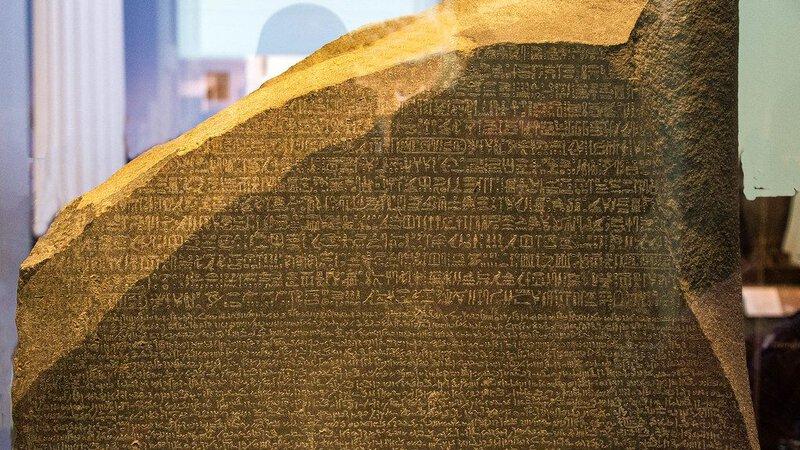
For nearly fourteen centuries, the vivid picture-writing carved across Egyptian temple walls and papyrus scrolls was pure mystery — a gorgeous, maddening silence. Today, those same hieroglyphs have become one of the most replicated visual languages on the internet, remixed into clipart, vectors, and classroom handouts by the tens of thousands. But not all ancient Egypt clipart libraries are built alike. Here is how the major sources actually compare — by size, credibility, format, and intended audience.
Vecteezy’s Large-Scale Egyptian Vector Library

Vecteezy’s Ancient Egyptian vector collection is one of the largest freely accessible pools of Egyptian-themed digital assets available online, offering over 34,869 royalty-free vectors, icons, clipart graphics, and decorative backgrounds. A designer can move from a solitary ankh outline to a fully rendered pyramid panorama without spending a dollar or negotiating a licensing agreement.
That scale reflects how thoroughly Egyptian visual motifs have saturated digital design culture — from mobile game interfaces to wellness brand logos — generating demand that no finite editorial collection could satisfy alone. The breadth of the library is itself a cultural data point about how the ancient world gets consumed in the present one. For designers who need variety and speed, it is a practical first stop.
The University of South Florida’s Academically Vetted Illustration Gallery
Volume is one kind of value; provenance is another. The Ancient Egypt gallery at ClipArt ETC, operated by the University of South Florida’s Educational Technology Clearinghouse, contains 179 illustrations and carries something almost no other clipart source can claim: institutional credibility. The collection spans Egyptian civilization from its ancient origins through the Roman era, organized into four distinct sub-galleries that allow for navigable, purposeful browsing rather than keyword-lottery searching.
That academic oversight matters more than it might first appear. When a teacher or textbook designer pulls an image of an Old Kingdom funerary scene or a Late Period deity, the USF imprimatur provides a degree of historical confidence that a generic stock site cannot match. In an environment saturated with algorithmically generated content, a public university standing behind a curated set of illustrations is a meaningful act of editorial responsibility.
Shutterstock’s Mixed-Format Egyptian Clipart Collection

Shutterstock’s Ancient Egypt clipart collection offers a technically varied pool of 945 royalty-free images that includes HD stock photography, flat illustrations, and scalable vectors all within the same searchable library. That format diversity makes it one of the more versatile options among major commercial platforms, serving users whose needs range from print-ready classroom illustrations to assets built for digital and interactive environments.
The mix of formats also quietly documents how demand for Egyptian imagery has evolved — from static, print-oriented clipart toward assets designed for animated content, digital presentations, and multimedia projects. The ancient world is, it turns out, always being re-rendered for the latest medium.
Teachers Pay Teachers’ Classroom-First Egyptian Clipart

Most stock libraries are built for designers and then tolerated by educators. Teachers Pay Teachers’ free Ancient Egypt clipart offerings invert that logic. The over 100 Egyptian-themed images available there are designed from the start for classroom contexts — sized for PowerPoint slides, formatted for printed worksheets, and pre-licensed with school reproduction rights already factored in. That last detail removes a legal headache teachers routinely encounter when pulling images from generic stock sites for classroom materials.
The result functions less like a stock library and more like a pedagogical toolkit, one that treats ancient Egyptian visual culture as ready-made teaching infrastructure. When a third-grade teacher needs a cartoon scarab beetle she can legally print on thirty worksheets, she is not well served by a library calibrated for professional designers — she needs assets built with her specific legal and practical constraints in mind.
Classroom Clipart’s Category System Mapping Egypt’s Iconographic World
Organization is its own form of argument. Classroom Clipart’s Ancient Egypt collection arranges its holdings into named subject categories — people, pharaohs, landmarks, gods, pyramids, hieroglyphs, and temples — a taxonomy that doubles as an unofficial index of which Egyptian subjects Western popular culture has decided are most visually iconic. Every folder in that category system represents a collective editorial decision, shaped across decades of school curricula and popular media, about what “Ancient Egypt” means as a visual idea.
For educators building thematic curriculum units, the structure is practically invaluable — every major topic in a standard ancient Egypt syllabus has a dedicated visual folder. But the category list is also worth reading as cultural evidence. It is, in effect, a shortlist of the civilization’s most legible symbols, curated not by Egyptologists but by the accumulated choices of teachers, designers, and students reaching for the same images again and again.
The Recurring Icons That Define Ancient Egypt Clipart

Survey every major platform — free or premium, academic or commercial — and the same subject categories surface with striking consistency: pharaohs, mummies, pyramids, gods, hieroglyphs, papyrus, and temples. That regularity suggests not coincidence but canon, a stable visual shorthand for an entire civilization shaped less by the full breadth of Egyptology and more by a century of Hollywood films, school textbook covers, and museum gift shop merchandise. A culture spanning roughly three thousand years has been compressed, in clipart form, into a handful of recurring nouns.
Historians are quick to note what that compression omits: the sprawling trade networks that connected Egypt to Nubia, the Levant, and the Aegean; the intricate rhythms of agricultural life along the Nile flood plain; the ordinary domestic world of the vast majority of people who were neither pharaohs nor priests. None of those stories have clipart folders. The canon is as revealing for its silences as for its symbols — a reminder that every archive, even a free-download vector library, encodes a point of view about which parts of the past are worth picturing.
Choosing the Right Ancient Egypt Clipart Source
The practical question is not which library is largest but which is right for the job at hand. For classroom educators who need legally clear, pedagogically formatted images, the Teachers Pay Teachers free offerings and the USF ClipArt ETC gallery are the most purposeful choices. For designers who need volume and variety without licensing friction, Vecteezy’s collection provides the broadest range. For users who need format flexibility across print and digital contexts, Shutterstock’s mixed-format library earns consideration. And for educators who want a structured, topic-organized browsing experience, Classroom Clipart’s category system removes much of the guesswork.
What all these sources share is a common cultural inheritance: the same monuments, deities, and symbols that fascinated Greek travelers in antiquity, animated Champollion’s decipherment of the Rosetta Stone in 1822, and stocked museum gift shops throughout the twentieth century. Ancient Egypt clipart is, in the end, the latest format in a very long chain of visual transmission — one that shows no sign of stopping.

 Arabic
 French
 Spanish
 Portuguese
 Deutsch
 Turkish
 Dutch
Dutch
 Italiano
 Russian
 Romaian
 Portuguese (Brazil)
 Greek
Greek