


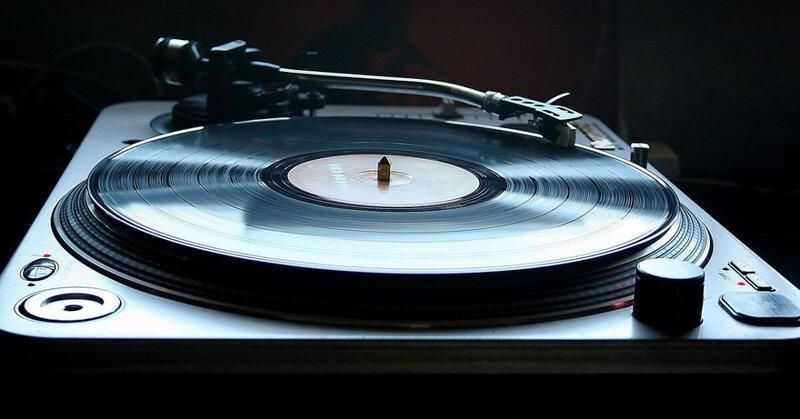
On Valentine’s Day 1970, a man named David Mancuso strung up balloons, filled punch bowls with fruit juice, and invited a few hundred Black, Latino, and gay New Yorkers to dance until sunrise in his Broadway loft — and in doing so, lit the fuse on one of the most consequential and most misrepresented revolutions in American musical history.
The Night the Music Started: A Loft in Manhattan, 1970

There was no liquor license at The Loft. No velvet rope, no celebrity photographers, no industry executives hunting for the next trend. What there was: a pair of Klipschorn speakers that sent bass frequencies through the floorboards and into the soles of your feet, a punch bowl filled with fruit juice, and a room full of people who had spent the previous decade being told, in a hundred explicit and implicit ways, that they did not belong in public space. They danced anyway. They danced magnificently.
That party — private, invitation-only, radically welcoming — was the first spark of what the world would eventually call disco. The history of disco, properly told, begins exactly there: not at Studio 54, not with John Travolta in a white suit, not with the Bee Gees. It begins in a loft in lower Manhattan, with communities for whom dancing together was not mere entertainment but something closer to a political act. That story has been systematically softened, whitewashed, and reassigned in the decades since. Reclaiming it requires going back before the mirror ball ever started spinning.
Before the Mirror Ball: Where Disco Actually Came From

To understand where disco originated, you have to understand what New York City looked like in the years just after Stonewall. The late 1960s and early 1970s were years of urban austerity, fiscal collapse, and police harassment, with the Vietnam War grinding through the conscience of a generation. For Black Americans, for Latinos, for gay men and lesbians, the mainstream city offered precious few rooms that truly welcomed them. So they built their own.
According to Britannica, disco originated in deejay-based settings — underground dance venues including house parties, loft parties, and bathhouses in New York City, frequented primarily by African Americans and Latinos, with significant overlap with LGBTQ+ communities. These were not the glittery spaces that later captured the mainstream imagination. They were unglamorous, often legally precarious, and powered by something that money could not easily replicate: genuine communal need.
The musical DNA running through those early rooms was unmistakable. Gospel’s emotional urgency, Motown’s pop precision, Curtis Mayfield’s Chicago soul — its tenderness and its fury inseparable — and the relentless rhythmic engine of James Brown’s funk all fed into what was taking shape on those floors. Then there was Philadelphia International Records, where producers Kenny Gamble and Leon Huff were constructing lush orchestral arrangements over locked, danceable grooves, building the sonic architecture that DJs would soon learn to deploy with precision.
And it was the DJs who were the true architects of what disco would become. Francis Grasso, working at The Sanctuary — a former church on West 43rd Street converted into a gay club — pioneered the techniques of slip-cueing and beat-matching years before anyone had attached a genre name to the music he was playing. He understood that the transition between records was itself a creative act. Nicky Siano at The Gallery pushed further still, treating his sets as emotional narratives with peaks, valleys, and carefully engineered moments of release. These men were not jukebox operators. They were composers whose instrument was a room full of people.
For the communities who filled those rooms, disco encouraged people to enjoy the world and each other instead of focusing on fear. That framing matters. Disco has often been dismissed as escapism — frequently by people who never had much to escape. For a gay Black man in 1971 New York, or a Latina woman navigating a city that barely acknowledged her existence, the dance floor was not a retreat from reality. It was a reality of their own making: safer, more joyful, and more honest than almost anywhere else the city offered.
The Sound Takes Shape: Sylvester, Gloria Gaynor, and the Architecture of a Genre

By the mid-1970s, the music born in those underground rooms had developed a distinct sonic identity. The four-on-the-floor kick drum — every beat struck with metronomic insistence — locked with syncopated hi-hat patterns and bass lines that seemed to breathe in time with the dancers. Strings swept in lush curtains above the rhythm section. The whole architecture was engineered for the body in motion, a machine designed to make standing still feel like a failure of imagination.
At the center of this sound were Black artists whose contributions have never been adequately credited in mainstream histories. Sylvester — a queer Black man who performed with full, unapologetic authenticity at a moment when the music industry preferred its artists closeted and its Black performers deferential — brought a falsetto of devastating power to the genre. Gloria Gaynor’s recording of “Never Can Say Goodbye” in 1974 is widely cited as one of the first true disco singles, demonstrating what the genre could achieve when its rhythmic logic was applied with full commitment. Donna Summer and producer Giorgio Moroder pushed further still, rewiring the relationship between sexuality and synthesizer technology in ways that were genuinely radical for their moment.
The geography of disco’s formation stretched beyond New York. Philadelphia’s studios were pumping orchestral soul into the bloodstream of the genre. In Chicago, a club called the Warehouse was incubating what would later become house music — disco’s direct descendant — under the residency of DJ Frankie Knuckles. The Carnegie Hall African American Music Timeline traces this lineage carefully, documenting how the genre moved through Black radio and Black community spaces long before white audiences registered its existence.
This matters because it establishes something the mainstream narrative consistently obscures: disco’s Black and gay origins were not incidental to the genre. They were foundational. The dance floor was community infrastructure — where chosen families assembled, where people rendered invisible by the dominant culture looked at one another and recognized something worth celebrating.
Mainstreaming: When Saturday Night Fever Changed Everything

In 1977, a film called Saturday Night Fever introduced a version of “disco” to the American mainstream. It starred John Travolta as Tony Manero, a white working-class Italian-American from Brooklyn whose talent on the dance floor offered a way out of his circumstances. The Bee Gees contributed a soundtrack of genuine commercial brilliance. The film was a phenomenon. It was also a fundamental act of reframing.
The underground rooms where disco had been born — the loft parties, the bathhouses, the gay clubs — were rendered as background texture in this new telling. The genre’s white heterosexual protagonists moved to the foreground. This was not merely an accident of storytelling. It reflected which stories American mass culture knew how to tell, and which audiences it understood itself to be addressing. By 1978, disco accounted for a remarkable share of Billboard chart hits, every major record label had assembled a disco division, and Studio 54’s velvet-rope celebrity spectacle had become the image the genre projected to the world — a long distance from David Mancuso’s punch bowls and Klipschorns.
The response from the originating communities was genuinely ambivalent. Some Black and gay artists welcomed the visibility and the commercial opportunity. Others watched with a recognition that had deep roots in American music history: this was the familiar pattern. Rock and roll had been built by Black artists and handed to Elvis Presley. Now disco was being built by Black and queer artists and assigned a new, whiter public face. The credit was being redistributed in real time, and everyone paying attention could see it happening.
Disco Demolition Night: The Backlash and What It Really Meant

On July 12, 1979, a Chicago radio DJ named Steve Dahl organized a promotion at Comiskey Park. Fans who brought disco records to a White Sox doubleheader were admitted at a reduced price; between games, the collected records were blown up on the field. The crowd stormed the diamond, causing enough damage that the White Sox had to forfeit the second game. Disco Demolition Night has since been treated as a quirky sports footnote, a moment of kitschy excess that happened to coincide with the end of a decade.
That reading is far too comfortable. Cultural historians have documented what the broader “Disco Sucks” movement represented: a reaction by predominantly white rock audiences to a genre that was openly, unmistakably coded as Black and gay. The venom in that movement — the genuine anger, the pleasure taken in destruction — tracked closely with broader anxieties about what the 1970s had changed. The civil rights movement had shifted public law. The gay rights movement, galvanized by Stonewall, had begun shifting public culture. Disco was the sound of those shifts on the dance floor, and a significant segment of America responded not with curiosity but with fury.
The industry’s response was swift and severe. Radio stations flipped formats within months. Record labels shuttered their disco divisions. Artists who had built careers in the genre found themselves suddenly unemployable. The consequences fell hardest on the people who had built the music — Black artists, queer artists, the producers and performers whose work had generated the commercial wave the industry was now retreating from in a panic.
The community, however, could not be demolished. It could only be driven underground again. In Chicago, house music emerged from the ruins of disco, carrying the four-on-the-floor pulse into a new decade. In New York, garage music developed at clubs like the Paradise Garage under DJ Larry Levan. The lineage ran unbroken, even when the mainstream refused to acknowledge it.
The Legacy Hidden in Plain Sight

Every major genre of contemporary dance music — house, techno, garage, and wide territories of commercial pop — descends directly from the music made in those underground New York rooms in the early 1970s. The people who gathered at The Loft in 1970 are the ancestors of a global industry. That debt is rarely paid in full, but it is occasionally named explicitly: Beyoncé’s Renaissance album in 2022 was a deliberate, credited homage to Black queer dance culture, tracing the same lineage that runs from Sylvester through house music and forward into the present.
Nile Rodgers of Chic — whose guitar work defined a particular texture of late-1970s disco — has spent decades describing the genre’s rhythmic and harmonic architecture as foundational to virtually everything that followed it. PBS’s history of disco documents this inheritance carefully, tracing the genre’s influence forward through decades of popular music that rarely bothered to look back and acknowledge its origins.
Scholars, journalists, and documentary filmmakers have spent years doing the work of historical reconstruction — restoring names, mapping the true geography of disco’s development, and pushing back against a mainstream narrative that consistently prefers its cultural histories tidy, white, and straight. That work is ongoing and necessary. It is also, increasingly, finding the audience it deserves.
Why the True Story of Disco Matters Now
In an era of renewed anxiety about who belongs in public space, the culture that produced disco looks less like nostalgia and more like a case study in resilience and creative self-determination. The dance floor that David Mancuso created — where Black, Latino, gay, and straight bodies shared the same room, the same music, the same physical experience of a bass line moving through the floor — was not a utopia. It was a practice. A demonstration that such a room was possible, that the joy was real, that the community could hold even when the world outside was actively hostile.
Understanding that history fully — including the appropriation, the backlash, the industry purge, and the underground survival — gives us a framework for recognizing the same patterns when they recur. Streaming platforms that strip songwriting credit from metadata. Genre labels that quietly reassign origins. The way “mainstream” still functions, in practice, as a synonym for white and straight and safe for general consumption. The patterns are old. The music is a record of them, for anyone willing to listen carefully enough.
The four-on-the-floor beat that Mancuso’s Klipschorns sent through that Broadway loft is still the heartbeat beneath the world’s dance floors. It is still doing what it was designed to do — making people feel, briefly and bodily, that they are not afraid, that the room belongs to them, that joy is a form of resistance. The next time you hear a DJ drop a beat that makes a room surrender, know whose hands built that room. Know whose voices filled it first. Know whose story, told in full, has been waiting all along to be heard.

 English
 Arabic
 French
 Spanish
 Portuguese
 Turkish
 Dutch
Dutch
 Italiano
 Russian
 Romaian
 Portuguese (Brazil)
 Greek
Greek