


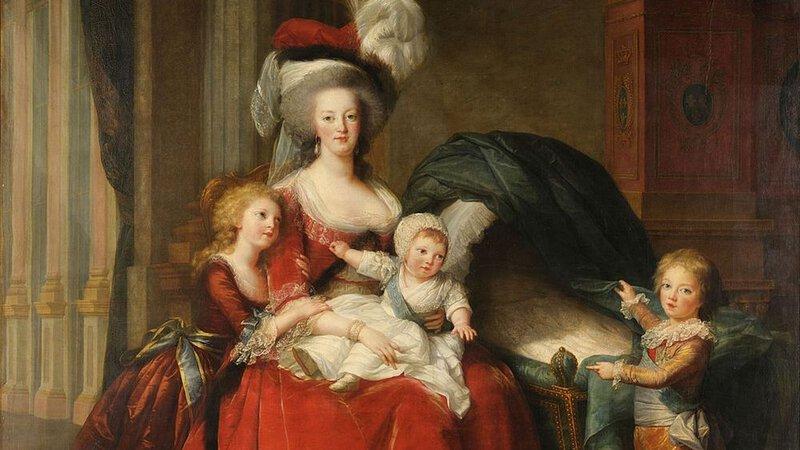
Somewhere in the early hours of a Tuesday morning in 2024, a TikTok comment thread exploded around an AI-generated image of a politician in a powdered wig, captioned “Let them eat cake” — half a million likes before most of the country had poured its first coffee. The French Revolution, a decade of catastrophic upheaval that ended more than two centuries ago, was trending again. It almost always is.
This piece is about why that keeps happening, what the memes get genuinely right, what they reliably distort, and why the distortions matter beyond mere historical pedantry.
The Quote That Never Was — and Why It Won’t Die

Start with the foundational myth. “Let them eat cake” is one of the most durable fabrications in popular history. Nearly every serious historian agrees that Marie Antoinette almost certainly never said it. The line appears in Jean-Jacques Rousseau’s Confessions, almost certainly written in the late 1760s — at which point the future queen of France was roughly nine years old and still living in Vienna. Rousseau attributed the remark vaguely to “a great princess,” and the identity of that princess, if she existed at all, remains unknown. The quote migrated to Marie Antoinette the way bad history always does: because it was too useful and too perfectly damning not to believe.
The myth has lost none of its political utility in the twenty-first century. In 2025, California Governor Gavin Newsom mocked Donald Trump using an AI-generated image depicting Trump as Marie Antoinette. The context sharpened the blade: Newsom was responding to a decision that appeared to protect Trump’s ballroom while pushing cuts elsewhere — the accompanying caption, “No health care for you,” completed the rhetorical guillotine drop. The image spread instantly, exactly because the 230-year-old shorthand did the heavy lifting that a thousand words of policy argument could not.
That is the central tension this article wants to hold. The French Revolution is endlessly meme-able precisely because it feels timeless — wealth gap, out-of-touch rulers, hungry people, dramatic consequences. But that same viral energy keeps distorting what actually happened, flattening a decade of complicated, bloody, world-changing history into a single image of a blade dropping on a neck. The memes are not nothing. They are also not enough. And the gap between those two things is where most of the interesting history lives.
What the Revolution Actually Was

France in 1789 was not simply a story of the rich versus the poor, though it was certainly that too. It was, more precisely, a fiscal catastrophe decades in the making. The French crown had effectively spent itself into bankruptcy, a significant portion of that debt accumulated from funding the American Revolutionary War — a historical irony that rarely makes it into meme captions. The tax structure that remained was grotesque in its unfairness: the nobility and clergy enjoyed sweeping exemptions while the burden fell almost entirely on peasants and the emerging professional middle class, who were increasingly literate, increasingly connected, and increasingly furious about it.
Three crises converged at the same moment. Financial collapse. A savage grain shortage in 1788 and into 1789 that pushed bread prices beyond what a laborer could earn in a working day. And an Enlightenment-fueled torrent of pamphlets, newspapers, and coffeehouse arguments insisting that this arrangement was not divine order — it was a political choice, made by people, and therefore reversible by people. That third crisis is the one the memes almost always omit, and it may be the most consequential of the three. Without the intellectual infrastructure of Enlightenment thought, the financial and food crises would likely have produced riots, not a Revolution.
The Revolution that followed lasted a full decade and moved through wildly different phases: a constitutional monarchy, then a republic, then the Reign of Terror, then a succession of unstable governments, and finally Napoleon Bonaparte’s coup in November 1799. The memes freeze-frame on the guillotine and imply the whole story was straightforward. The actual timeline was not. The storming of the Bastille on July 14, 1789, was more symbolic than militarily significant — only seven prisoners were inside when the crowd broke through. Louis XVI was executed on January 21, 1793. The Reign of Terror peaked between 1793 and 1794, producing roughly 17,000 official executions, with many more dying in prison or without any formal trial at all.
Marie Antoinette: Villain, Victim, or Both?

She was fourteen years old when she was transported from Vienna to Versailles, a diplomatic transaction dressed up as a royal marriage. Her spending was real and genuinely extravagant — the elaborate hairstyles, the gambling, the renovations at Petit Trianon — and she was slow to register the scale of France’s deteriorating mood. But historians consistently note that the royal household’s budget deficit, while politically toxic, was a rounding error relative to France’s total national debt. She became the primary scapegoat partly because targeting a foreign-born queen — an Austrian interloper, as her critics repeatedly framed her — was politically safer and emotionally more satisfying than explaining sovereign debt markets and grain speculation to an angry, hungry population.
The “cake” myth does real historical damage for exactly this reason. It compresses the entire Revolution into one aristocrat’s perceived callousness — one memorable, quotable, shareable moment of obliviousness — and allows the audience to skip the harder story of structural tax policy, war debt, crop failure, and the slow radicalization of Enlightenment ideas into revolutionary politics. That harder story is the one that actually explains why revolutions happen, and why they keep happening elsewhere.
Her trial in October 1793 included charges so obviously fabricated — among them accusations of sexual abuse of her own young son — that even some hardened Jacobin figures were reportedly uncomfortable with them. She was guillotined on October 16, 1793, at the age of thirty-seven. The Newsom-Trump image was emotionally effective and politically pointed. It also perpetuated the precise simplification that makes the real history harder to reach: the notion that the Revolution was fundamentally about one oblivious rich person rather than about structural failures that accumulated over generations.
Why the Internet Keeps Returning to the Guillotine

Meme culture gravitates toward images that compress complex injustice into a single visceral symbol, and a large blade dropping on a king’s neck is about as visceral as political imagery gets. The “eat the rich” internet tradition — from Reddit threads to protest signs to social media bios — draws a direct line from 1789 to present-day wealth inequality, and the historical weight gives those jokes a moral gravity they would not carry on their own. The guillotine is not just funny. It implies consequence. It implies that somewhere in history’s ledger, a reckoning actually arrived.
Quotes of disputed or fabricated origin thrive in this environment, and the Revolutionary era supplies an unusually rich inventory of them. Snopes has examined the famous line attributed to Napoleon — “Never interrupt your enemy while he’s making a mistake” — as one example of how the period generates attributed wisdom that circulates far beyond what the historical record supports. Napoleon, like Marie Antoinette, has become a projection screen onto which the internet places whatever it wants to say, then stamps with a bicorne hat for authority.
The danger is a self-reinforcing loop. The simplified version gets shared. It becomes the assumed baseline. Correcting it starts to feel pedantic — the annoying historian at the party rather than the useful one. And so the correction never quite catches up to the original error, which has already been shared another fifty thousand times.
Five Misconceptions the Memes Reliably Spread

- That starving peasants rose up and overthrew the king. The Revolution’s early leadership was dominated by lawyers, journalists, and middling landowners — the bourgeoisie. The sans-culottes, the street-level radical force who became the face of popular rage, were mostly urban artisans and tradespeople, not the rural farmers starving in the fields. The revolution was driven by people with enough education and enough economic frustration to understand precisely how they were being exploited.
- That the guillotine was an instrument of aristocratic cruelty. It was introduced as a humane, explicitly egalitarian reform. Dr. Joseph-Ignace Guillotin advocated for it on the grounds that it provided the same quick, clean death for aristocrat and commoner alike, replacing a grotesque patchwork of class-stratified execution methods. The revolutionaries built it as a statement about equality under the law. That foundational irony is lost almost entirely in the meme version.
- That the Revolution immediately produced liberty and democracy. What it produced in the short term was years of factional violence, the suspension of civil liberties, mass executions based on denunciation and rumor, and eventually a military dictatorship under a Corsican general who crowned himself emperor. Liberty and democratic governance did eventually emerge — but only after a very long, very bloody detour through authoritarianism.
- That the Revolution was essentially a French domestic event. Its core ideas — popular sovereignty, natural rights, secular government, the nation as the primary political unit — spread outward with extraordinary and lasting force. The Haitian Revolution, which produced the first free Black republic in the Western Hemisphere, was partly inspired by French Revolutionary ideals even as France attempted to suppress it. Latin American independence movements drew from the same intellectual tradition. The language of modern democratic governance worldwide still carries the watermark of 1789.
- That the Terror was an aberration imposed by extremists. The Reign of Terror grew organically from the Revolution’s own internal logic — the pressures of war with neighboring monarchies, economic crisis, and an increasingly paranoid political culture in which accusation functioned as proof. Understanding the Terror as a structural outcome rather than a hijacking is essential to understanding why subsequent revolutions have followed similar arcs.
What the Memes Actually Get Right

The core emotional truth embedded in every guillotine joke is historically accurate: extreme inequality, combined with state dysfunction and a crisis that strikes ordinary people’s food supply and livelihoods, produces explosive political rupture. That pattern is not uniquely French and not uniquely eighteenth-century. The memes correctly identify the shape of the thing, even when they are wrong about the details.
Using Marie Antoinette as a symbol of elite detachment resonates for reasons grounded in real history. Even if the quote is fabricated, the culture of conspicuous consumption at Versailles while France’s treasury collapsed and its people went hungry is extensively documented. The symbol is not baseless — it is simply attached to a line that was never spoken and a woman whose individual culpability has been substantially overstated relative to the systemic failures that actually caused the crisis.
There is also something genuinely fitting about the meme as a format for Revolutionary content. The French Revolution was waged partly through satirical pamphlets and caricatures — vicious, funny, deliberately exaggerated images of the queen and the court that circulated through Paris coffeehouses and were pasted to walls across the city. In 1789, they were called libelles. The medium has updated. The political impulse has not. When Newsom posted his AI Marie Antoinette, he was, consciously or not, operating in a tradition that the Revolution itself invented.
And when a meme about the guillotine makes someone curious enough to open a new tab and search for the real story, it has done something that a great many textbooks fail to do: it has made history feel urgent enough to pursue. That curiosity deserves to be met with accuracy — not simply corrected and dismissed.
How to Read the Revolution More Clearly
Start with the three threads — debt, drought, and ideas — and the rest of the timeline begins to make narrative sense. The storming of the Bastille was not a random riot. The execution of the king was not a spontaneous act of mob passion. The Terror was not simply the work of evil men seizing an opportunity. Each development followed from the previous one with a horrible internal logic, and understanding that logic is what separates history from a curated list of dramatic moments.
Use the “let them eat cake” attribution as a diagnostic tool. If a source — article, video, podcast, or textbook — repeats the quote as established fact without qualification, treat everything else in that source with heightened skepticism. It is a reliable early indicator of sloppy historical reasoning. Sources rigorous enough to flag the quote’s disputed origins tend to handle the rest of the material with proportionately more care.
Think of the Revolution not as a single event but as a process with distinct phases: constitutional reform, radicalization, terror, reaction, and authoritarian consolidation. Historians have observed that sequence echoing through subsequent revolutions — Russia in 1917, Iran in 1979, and others — with enough consistency to suggest it reflects a structural tendency of revolutionary politics rather than historical coincidence. The French case is the template. Understanding it correctly is not an academic exercise. It is a framework for reading contemporary political upheaval with greater clarity.
The memes are not going away, and there is no good reason they should. The guillotine joke, the powdered wig, the “let them eat cake” caption — these are the entry points now, the hooks that catch attention in a saturated information environment. The goal is not to make people stop sharing them. It is to make the joke the beginning of a conversation rather than the end of one — the first sentence of a story that is, in its full and complicated truth, far more interesting, far more relevant, and far more alarming than any caption could contain.

 English
 Arabic
 French
 Spanish
 Portuguese
 Deutsch
 Turkish
 Dutch
Dutch
 Russian
 Romaian
 Portuguese (Brazil)
 Greek
Greek