


Metal-Organic Framework Market Surges Toward US$ 494.96M by 2034
Advanced materials that solve tomorrow's biggest challenges are attracting serious investment today. The Metal-Organic Framework Market Size is projected to reach US$ 494.96 million by 2034 from US$ 167.04 million in 2025, registering a CAGR of 12.83% during the forecast period 2026–2034. This near tripling in value reflects the growing commercial maturity of MOFs across gas storage, carbon capture, wastewater treatment, and energy storage applications.
What Are Metal-Organic Frameworks?
Metal-organic frameworks, or MOFs, are a class of porous crystalline materials made by linking metal ions with organic molecules to form highly ordered three-dimensional structures. They have exceptionally high surface areas, often exceeding 7,000 square metres per gram. This makes them extraordinarily effective at storing, separating, and releasing gases, liquids, and energy carriers.
Request a Sample Copy of the Report: https://www.theinsightpartners.com/sample/TIPRE00020593
What Is Driving the Metal-Organic Framework Market?
The global push for clean energy is the most powerful driver of MOF demand. Hydrogen is emerging as a key fuel for decarbonising heavy transport and industrial processes. Storing hydrogen safely and efficiently at low pressure is one of the biggest technical challenges in the energy transition. MOFs offer a promising solution. Their porous structures can adsorb hydrogen at far greater densities than conventional high-pressure tanks, potentially enabling safer and more compact hydrogen storage systems. As hydrogen infrastructure investment grows, MOFs are moving from research labs into commercial energy applications.
Carbon capture is another major growth area. Governments and industries are under pressure to reduce carbon dioxide emissions rapidly. MOFs can selectively capture CO2 from flue gases with high efficiency and low energy cost. Several pilot projects are already testing MOF-based carbon capture systems at power plants and industrial facilities. As carbon pricing spreads and regulations tighten, the economic case for MOF-based capture becomes stronger. This is drawing investment from both energy companies and speciality chemical producers.
Wastewater treatment is a growing application that is often overlooked. MOFs can remove heavy metals, pharmaceutical residues, and other micropollutants from water far more efficiently than activated carbon. Municipal water authorities and industrial facilities dealing with complex effluent streams are exploring MOF-based filtration systems. As water quality regulations tighten worldwide and water scarcity worsens in many regions, the demand for high-performance water treatment materials will grow steadily.
Catalysis and energy storage add further breadth to MOF demand. MOFs can be used as catalysts or catalyst supports in chemical synthesis, offering precise control over reaction selectivity. In energy storage, MOF-derived carbon materials are showing promise as electrode materials for supercapacitors and next-generation batteries. Each of these applications represents a separate and growing demand channel for MOF producers.
Segmentation Overview
By Type: Zinc-based MOFs hold a significant share due to their versatility and ease of synthesis. Copper-based MOFs are widely used in gas adsorption and catalysis. Iron-based and aluminium-based MOFs are valued for their thermal stability and suitability for industrial-scale applications. Magnesium-based MOFs are gaining attention in gas storage, particularly for CO2 and hydrogen applications, due to their strong binding affinity for these gases.
By Application: Gas storage is currently the leading application, driven by hydrogen and natural gas storage research and early commercial deployment. Gas and liquid adsorption is a large and mature segment used in industrial separation processes. Wastewater treatment is a fast-growing application as environmental regulations drive demand for high-performance filtration materials. Energy storage and catalysis are emerging segments with strong long-term growth potential as MOF production scales and costs fall.
Key Market Players
- Atomis
- EnergyX
- Framergy X
- GS Alliance Co Ltd
- MOFgen Ltd
- NanoResearch Elements Inc
- NovoMOF AG
- ProfMOF
- Tarsis Technology
The MOF market remains relatively fragmented, with many players originating from university spin-offs and deep-tech startups. EnergyX is focused on lithium extraction and energy storage applications. NovoMOF and MOFgen specialise in custom MOF synthesis for industrial and research buyers. Atomis is targeting gas storage commercialisation in Japan, while Framergy X is advancing MOF solutions for natural gas applications in North America.
Sustainability and Innovation Trends
Sustainability sits at the very heart of the MOF market. Most of the key applications, including carbon capture, clean energy storage, and water purification, are directly tied to environmental goals. This alignment gives MOF producers a compelling story for investors, policymakers, and industrial buyers seeking green chemistry solutions.
Innovation is focused on solving the two biggest barriers to commercial adoption: cost and scalability. Synthesising MOFs at laboratory scale is well established, but producing them cheaply and consistently at industrial volumes remains a challenge. Companies such as NovoMOF and Framergy X are investing in continuous flow synthesis methods and low-cost feedstocks to bring down production costs. MOF composites, where MOF particles are embedded in polymer membranes or monoliths, are also being developed to make the materials easier to handle and integrate into existing industrial equipment.
Buy Premium Report: https://www.theinsightpartners.com/buy/TIPRE00020593
Regional Outlook
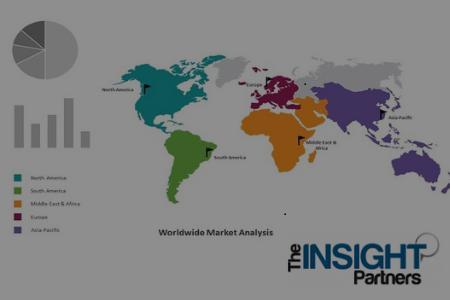
North America leads the global MOF market. The United States has a strong base of MOF research institutions, active government funding through the Department of Energy, and a growing number of commercial startups translating lab breakthroughs into products. Europe holds the second-largest share, with significant research activity in Germany, Switzerland, and the UK, and strong policy support for carbon capture and clean energy materials. Asia Pacific is the fastest-growing region. Japan, China, and South Korea are investing heavily in hydrogen infrastructure and advanced materials research, driving both production and application development for MOFs. South and Central America represent early-stage markets, with growth potential tied to future water treatment and energy storage projects.
Related Reports:
Advanced Functional Material for Low Carbon Applications Market
Activated Carbon Filters Market
About The Insight Partners
The Insight Partners is among the leading market research and consulting firms in the world. We take pride in delivering exclusive reports along with sophisticated strategic and tactical insights into the industry. Reports are generated through a combination of primary and secondary research, solely aimed at giving our clientele a knowledge-based insight into the market and domain. This is done to assist clients in making wiser business decisions. A holistic perspective in every study undertaken forms an integral part of our research methodology and makes the report unique and reliable.
Contact Us:
If you have any queries about this report or if you would like further information, please contact us:
Phone: +1-646-491-9876
E-mail: sales@theinsightpartners.com
Also Available in: Korean | German | Japanese | French | Chinese | Italian | Spanish

 English
 Arabic
 French
 Spanish
 Portuguese
 Deutsch
 Turkish
 Dutch
Dutch
 Italiano
 Russian
 Romaian
 Greek
Greek