


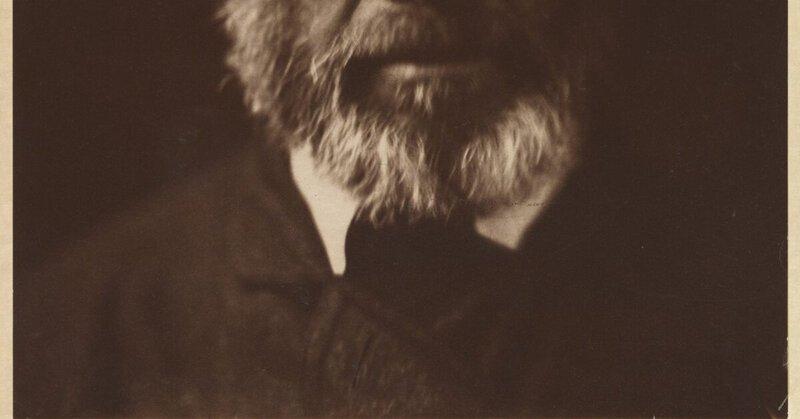
In the winter of 1835, Thomas Carlyle sat in his Chelsea study and stared at what remained of six months of gruelling work: nothing. A maid in John Stuart Mill’s household had mistaken the only manuscript of Volume One of his French Revolution for waste paper and fed it to the fire. The pages were ash. The book, if it was to exist at all, would have to be written again from the beginning.
The Night a Manuscript Burned — and a Masterpiece Was Reborn

The story of that burning is almost too perfectly symbolic. Here was a man trying to write about a revolution that had consumed itself in fire and blood, and the revolution of his own creative labour had been consumed in turn. Carlyle was financially precarious, emotionally wrecked, and furious in the way that only a man who believes absolutely in his own mission can be furious. Mill, mortified, offered money. Carlyle accepted enough to keep the household going and then did the thing that defines him as a writer: he started again.
What drove him back to the desk was not professional obligation but a conviction that had been hardening in him for years — that history must be felt in the gut before it can be understood in the mind. The dry chronicle style that dominated British historical writing of the early nineteenth century struck Carlyle as a form of dishonesty, a gentlemen’s agreement to drain the blood out of the past and present it as a sequence of manageable facts. He wanted something that roared. When The French Revolution: A History finally appeared in 1837, it did not merely record an event. It invented the emotional grammar through which the world would understand 1789 for the better part of a century.
Who Was Thomas Carlyle, and Why Did 1789 Consume Him?

Thomas Carlyle was born in 1795 in Ecclefechan, a small Scottish village, into a family of strict Calvinist austerity. His father was a stonemason who believed that honest work and moral seriousness were the only currencies that mattered. Carlyle absorbed both convictions completely, and they shaped everything he ever wrote. By the time he came to write the French Revolution, he was already known as an essayist of unusual force — a man who approached history not as an academic exercise but as moral theatre, a stage on which humanity enacted its virtues and its catastrophic failures for anyone willing to look clearly enough.
In October 1824, Carlyle travelled to France, walking streets that still bore the marks of revolution — the patched facades, the renamed squares, the living memory of men and women who had survived the Terror. He would later credit this trip as essential to giving the book its quality of lived-in immediacy. A history of the French Revolution written entirely from London libraries would have smelled of paper. Carlyle wanted his to smell of gunpowder and the Seine.
He sat down to write in 1834, and the choice of subject was itself a kind of provocation. The French Revolution remained, for British readers of the 1830s, a simultaneously fascinating and terrifying event — something that had happened just across the Channel within living memory, that had toppled a monarchy and unleashed a decade of organised slaughter, and that had ended, somehow, with a Corsican artillery officer ruling most of Europe. To write about it with sympathy for its energies, as Carlyle intended to do, was to court serious controversy. Carlyle’s ambitions as a writer had always exceeded polite literary convention, and the French Revolution was his largest canvas yet.
Inside the Book: A History Written Like an Epic Poem

The French Revolution: A History unfolds across three volumes — The Bastille, The Constitution, and The Guillotine — sweeping from the decaying court culture of Louis XVI’s reign to the streets of Paris under the Terror and the first distant silhouette of Napoleon on the horizon. In scope, it is a genuine epic. In technique, it is unlike anything that had previously been called a history book.
Carlyle writes almost entirely in the present tense. The effect is vertiginous, almost hallucinatory. You are not reading about the storming of the Bastille; you are inside the crowd as it surges forward, feeling the press of bodies and the particular quality of a summer afternoon in Paris turning suddenly and irreversibly violent. You are inside the Committee of Public Safety as decisions are made that will send thousands to the scaffold. You are in the tumbrel — the wooden cart — rattling over the cobblestones toward the guillotine. This is not a narrator looking back from a safe distance. Carlyle refuses that distance on principle.
Contemporary reviewers struggled to know what to do with the result. The book attracted intense and divided critical attention on publication, praised by some as one of the grand poems of its century and condemned by others for letting passion override scholarly precision. That debate has never quite resolved — and it is, in its own way, the most honest response the book could have provoked. A history this deliberately emotional was always going to make scholars uncomfortable. Its power comes precisely from what careful academic prose refuses to do.
It is worth being specific about what that power looks like on the page. Carlyle’s sentences accumulate and fragment simultaneously, mimicking the chaos they describe. Subordinate clauses pile up, then suddenly collapse into a short declarative statement that lands like a door slamming. The rhythm is not decorative; it is argumentative. The prose enacts its thesis — that history is not a smooth progression but a series of violent lurches driven by human passion, error and hunger — at the level of the sentence itself.
The Ideas That Made the Book Dangerous and Enduring

At the heart of Carlyle’s argument is a claim that would have been equally uncomfortable to conservatives and progressives of his era. The Revolution, he insists, was not a political accident, not the consequence of bad luck or wicked individuals. It was an inevitable volcanic eruption — what happens when a society’s foundational lies become too heavy to sustain. The French aristocracy had not merely been unjust; it had been hollow, performing the rituals of authority without possessing any of its moral substance. The Revolution was, in this reading, a reckoning rather than a crime. The criminal was the old order that had made it necessary.
And yet Carlyle refuses to romanticise what followed. His account of the Terror is harrowing precisely because he never lets ideological justifications obscure the individual human beings being fed into the machine. He mourns the world that rotted from within, while refusing to pretend that what replaced it was clean or heroic. This moral ambivalence — holding the full complexity of the event in both hands simultaneously — is what lifts the book above polemic and into something closer to tragedy.
Embryonic in the text, too, is what would later be called Carlyle’s Great Man theory of history. Figures like Mirabeau crackle with a kind of world-historical energy in these pages; they are not products of their circumstances but forces that bend circumstances to their will. Napoleon hovers at the book’s edge as both resolution and warning. These ideas would harden in Carlyle’s later work into positions far more troubling — a celebration of authority and strength that modern readers rightly find difficult — but in 1837 they expressed something that felt urgently true to his audience and that raised genuine questions about the relationship between individual agency and historical forces that scholars still argue over today.
That audience was reading with one eye on their own streets. Chartism was gathering force in Britain. The question of what happened when the poor ran out of patience with the powerful was not a historical abstraction — it was the news. Carlyle’s French Revolution could be read as a warning, or as a prophecy, or as a field manual, depending on where you stood. It was almost certainly the most politically charged work of narrative history published in nineteenth-century Britain.
How the Book Changed Literature, Politics and History-Writing

The most famous debt belongs to Charles Dickens. He kept a copy of Carlyle’s French Revolution on his desk throughout the writing of A Tale of Two Cities and was explicit that it served as his primary source — not just for facts but for the emotional register of the thing, the texture of revolutionary Paris as a place of overwhelming human intensity. Carlyle’s prose rhythms echo in Dickens’s novel at the level of the sentence, the paragraph and the chapter. It is one of the most direct and consequential lines of literary inheritance in nineteenth-century English writing.
Beyond Dickens, the book’s influence on Victorian political thought was pervasive and contentious. Radicals, conservatives and liberals all quarried it for ammunition, finding what they needed in its ambivalence and its force. It was one of the most argued-over texts of the second half of the nineteenth century, precisely because it refused to deliver a simple verdict on the most divisive political event in modern European history.
Its longevity as a physical object is also telling. A 1902 London edition — catalogued under the subject heading ‘France — History — Revolution, 1789-1799’ — confirms that the book was still being reprinted and actively read sixty-five years after first publication. That is not the lifespan of a curiosity. That is the lifespan of a text that has become load-bearing.
More broadly, Carlyle essentially created the template for narrative history as a popular form. The tradition that runs from his pages through Barbara Tuchman’s The Guns of August to Simon Schama’s television histories owes something fundamental to the permission Carlyle granted — the permission to feel history as well as analyse it, to put the reader inside events rather than above them. Every popular historian working today is in some sense writing in a room that Carlyle built.
Reading Carlyle Today: Masterpiece, Problem Text, or Both?

Modern readers approaching the Carlyle French Revolution for the first time should do so with clear eyes about its author. Carlyle’s later writings — among them Latter-Day Pamphlets (1850) and his 1849 essay “Occasional Discourse on the Negro Question” — expressed views on race and authority that are genuinely indefensible, and those tendencies cast shadows backward, making it impossible to read even his finest early work in pure uncomplicated admiration. The discomfort is real and should not be argued away.
What remains genuinely valuable, and what no amount of critical distance can dissolve, is the immersive prose, the moral seriousness and the insistence that history is made by flesh-and-blood human beings operating under unbearable pressure. These are not incidental qualities. They are the core of what makes the book worth reading today as much as in 1837.
In the landscape of serious books on the French Revolution, Carlyle’s work sits alongside Simon Schama’s Citizens and the work of scholars like Peter McPhee and David Bell in a productive tension. It is not a reliable factual guide in the way that modern scholarly history attempts to be — Carlyle worked from a relatively limited range of sources by contemporary standards, and his interpretive framework is inseparable from his own ideological preoccupations. It is something different and, in its own terms, equally necessary: an irreplaceable portrait of how the Revolution felt to those swept up inside it, rendered by a writer who had walked the streets and convinced himself he could hear the echoes.
Reading Carlyle alongside more recent scholarly histories sharpens both. His passion makes the data human; the data keeps his passion honest. That is a productive exchange, and it is available to any reader willing to bring both texts to the table. The friction between them is where real understanding begins.
Why You Should Read It — and How to Start
If you have ever been gripped by a historical drama and wished the history books felt that alive, the Carlyle French Revolution is the text that proves they can. It does not ask you to bring prior expertise. It asks only that you bring attention and the willingness to be moved.
A practical entry point: begin with the opening pages of Volume One. The portrait of a dying ancien régime France — its exhausted rituals, its magnificent surfaces concealing structural ruin — reads like the opening chapter of a great novel. The sentences have momentum. The world they conjure is specific and strange and recognisable all at once. You do not need to know the names of the ministers of Louis XVI to feel what Carlyle is doing. He will show you what matters, and he will not let you look away.
If the archaic syntax slows you down at first, persist past the first twenty pages. Carlyle’s style is demanding in the way that Shakespeare’s is demanding — it requires an initial period of calibration, after which the strangeness stops feeling like an obstacle and starts feeling like the only possible idiom for the subject. Readers who push through that threshold consistently report that the book becomes difficult to put down.
Public domain editions are freely available through Project Gutenberg, making the full text accessible to anyone with curiosity and an afternoon. There is no financial barrier between you and one of the strangest and most powerful works of nineteenth-century literature.
A book that survived the literal fire of its own destruction, was rewritten from ash and memory, published in 1837, and was still being printed and read in 1902, has earned the right to be called — on its own turbulent, combustible, entirely fitting terms — indestructible.

 English
 Arabic
 French
 Spanish
 Portuguese
 Turkish
 Dutch
Dutch
 Italiano
 Russian
 Romaian
 Portuguese (Brazil)
 Greek
Greek