


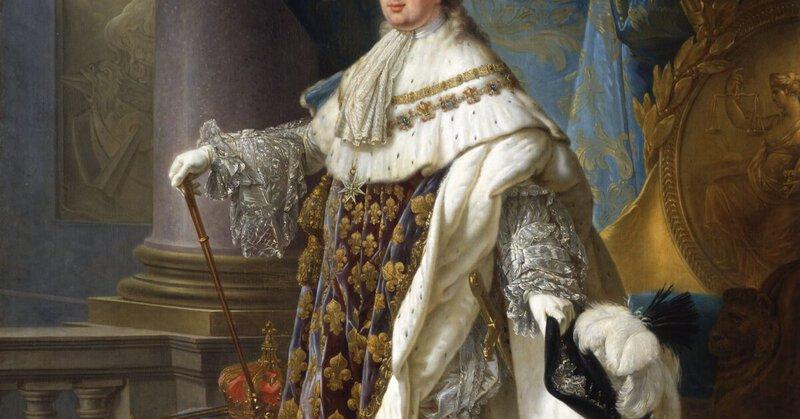
It began not with a philosopher’s pamphlet or a general’s battle cry, but with an empty treasury and a king who had run out of options. The French Revolution is one of history’s most dramatic upheavals — a decade-long convulsion of bankruptcy, bloodshed, brilliant ideas, and a world remade from the ground up. Understanding it properly means resisting the guillotine-and-mob shorthand and looking at the full, unsettling sweep of what actually happened.
A Banker’s Nightmare That Toppled a Monarchy

Before a single barricade was built, France was quietly drowning in debt. Decades of costly wars — including substantial financial support for the American Revolution — combined with chronic royal overspending had left the kingdom’s finances in ruins. The crisis was so acute and so humiliatingly concrete that King Louis XVI faced no grand ideological choice: he simply could not pay his bills.
His only recourse was to summon the Estates General, France’s long-dormant representative assembly, which had not gathered since 1614. It was a desperate administrative move, not a bold political gesture. But that summoning in 1789 cracked open a door the king could never close again — because once the people’s representatives assembled, they had questions that went far beyond the royal ledger. The fiscal emergency had accidentally handed ordinary people a platform they had been denied for 175 years.
A Decade of Upheaval, Not a Single Violent Moment

Ask most people to picture the French Revolution and they conjure one violent image: the guillotine, the mob, a severed aristocratic head held aloft. But the Revolution was not a moment — it was a decade. From 1789 to 1799, France lurched through constitutional experiments, radical terror, counter-revolution, and devastating foreign wars before finally collapsing into exhaustion and military dictatorship.
Some historians push the starting line back to 1787, counting two years of pre-revolutionary political crisis before the Estates General ever convened. By that measure, the upheaval ran for over a decade of grinding years, each phase more disorienting than the last. It was less a single explosion than a long, rolling earthquake that kept finding new fault lines to split open — and each new government it produced was eventually destroyed by the same forces that had created it.
1789: The Year History Accelerated

Even within that long decade, one year stands apart. In 1789, the Estates General convened in May, the Third Estate broke away to form the National Assembly in June, the Bastille fortress fell in July, and the old feudal order was formally abolished in August — all within a few breathless months. Contemporaries described feeling history accelerate beneath their feet, as if the normal pace of events had been discarded entirely.
That single year set the template for modern revolutions for the next two centuries. Activists from Haiti to Latin America to Eastern Europe would study 1789 the way military commanders study decisive battles, looking for the precise sequence by which an ancient regime can be dismantled almost overnight. As Britannica notes, the transformations of that year rippled outward across the entire Western world and permanently altered the political imagination of every nation that witnessed them.
Ideas as the Primary Weapon

Historians are deliberate about one crucial distinction: the French Revolution was not a military conflict, even though it eventually triggered a generation of devastating wars across Europe. It was, at its core, a period of social and political upheaval — a structural demolition of an order that had existed for centuries. Feudalism, the institutional power of the Catholic Church, and the divine right of kings were not defeated on a battlefield but dissolved by decree, argument, and the relentless pressure of popular will.
The pamphlets, the National Assembly debates, and the sweeping new legal codes did more lasting damage to the old order than any army could have. A soldier can occupy a city; an idea can dismantle the very concept of who owns it. That is what made the Revolution so deeply unsettling to every crowned head in Europe watching anxiously from across the border — and why they eventually went to war to try to extinguish it.
A Watershed That Rewrote the Rules for Every Nation That Followed

The French Revolution is universally regarded as a watershed moment in world history — not merely French history. It fundamentally altered how human societies think about sovereignty, citizenship, and rights. The Revolution’s Declaration of the Rights of Man and of the Citizen, adopted in August 1789, was a document so radical for its time that its core arguments still echo in international law today, with direct lines of influence running to the United Nations’ 1948 Universal Declaration of Human Rights.
Even the basic language of modern politics was born in those Assembly chambers. The terms “left” and “right” — so ubiquitous that we rarely question them — literally originated from the seating arrangements in the revolutionary National Assembly, where radicals sat to the left of the presiding officer and conservatives to the right. Every political conversation happening anywhere in the world today carries a trace of those revolutionary debates.
How France Gave the World Its Vocabulary of Radical Change

In French, the event is known simply as the Révolution française, and the word at its center underwent a transformation as dramatic as any the Revolution produced. Before 1789, “revolution” was largely an astronomical term, suggesting a celestial body completing its orbit — cyclical, predictable, returning to its starting point. It implied restoration, not rupture.
After 1789, the word meant something entirely different: violent, irreversible, forward-facing change with no possibility of return. France did not merely change its government; it gave the modern world its vocabulary of radical transformation. Every revolutionary movement that has invoked the word since — in Russia, China, Cuba, or elsewhere — has been borrowing a concept that Paris forged in those ten extraordinary years.
Social Changes That Outlasted Every Government the Revolution Built

One of the Revolution’s great ironies is that it destroyed every government it created. Constitutional monarchy, the First Republic, the radical Committee of Public Safety, the more moderate Directory — each collapsed in turn, discredited or violently overthrown. And yet the social transformations running beneath those unstable political structures proved astonishingly durable.
Feudal privileges were abolished, the Catholic Church was stripped of its vast landholdings, and millions of French peasants gained new legal standing that could not simply be legislated away when the political winds shifted. Even Napoleon Bonaparte, who would eventually crown himself Emperor, governed a France that was socially unrecognizable from the kingdom Louis XVI had ruled. He could restore titles and imperial pageantry, but he could not restore serfdom, Church estates, or aristocratic legal monopolies. The depth of those structural changes is difficult to overstate: they reached into the bedrock of French society and rearranged it permanently, regardless of who sat at the top.
Napoleon Bonaparte: The Man Who Ended the Revolution by Inheriting It

The Revolution’s formal end came not with a peace treaty or a triumphant proclamation, but with a coup. On 18 Brumaire — November 9, 1799 — General Napoleon Bonaparte seized power in a swift political maneuver and installed himself as First Consul of France. It was a fitting, if grim, conclusion: a revolution that had begun by abolishing one strongman ended by creating another.
Napoleon was shrewd enough to present himself not as the Revolution’s destroyer but as its consolidator, preserving its most significant legal reforms — above all, the Napoleonic Code, which codified revolutionary principles of legal equality and property rights — while methodically dismantling its republican ideals and concentrating power in his own hands. His seizure of power is the agreed endpoint of the revolutionary period, closing a decade that had begun with a desperate king’s call to a long-dormant parliament. The arc from the Estates General to 18 Brumaire remains one of history’s most complete and sobering accounts of how revolutions consume themselves — and why their consequences so often outlive every government they produce.
From a bankrupt treasury to a general’s coup, the French Revolution compressed a century’s worth of political theory into ten years of lived catastrophe and genuine, lasting progress. The world it built — with its language of rights, its left-right political spectrum, and its conviction that governments derive legitimacy from the people — is, for better and worse, still the one we inhabit today.

 English
 Arabic
 French
 Spanish
 Portuguese
 Deutsch
 Turkish
 Dutch
Dutch
 Italiano
 Romaian
 Portuguese (Brazil)
 Greek
Greek