


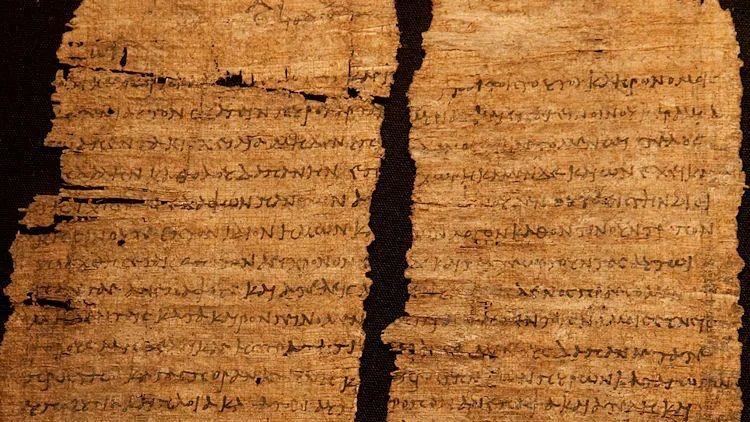
Somewhere along the Nile, more than three thousand years ago, a scribe pressed a sharpened reed into damp papyrus and recorded the name of his homeland — not with the word the Greeks would later coin, not with the label that would echo through centuries of foreign administration, but with two characters that carried the smell, almost literally, of wet earth: km.t. That word was Kemet. The story of why it was replaced, and by what, and what was quietly lost in the exchange, turns out to be one of the stranger and more revealing detours in the history of human civilization.
Where ‘Egypt’ Actually Comes From — and Why It Matters

The word Egypt feels ancient and authoritative, as though it has always belonged to the place it names. It has not. Trace it backward through time and the trail leads first to Latin — Aegyptus — and before that to ancient Greek — Aigyptos. Most scholars believe that Greek word was itself borrowed from an Egyptian phrase: Hwt-ka-Ptah, meaning roughly “the mansion of the soul of Ptah.” That phrase referred to Memphis, a single great city and religious center, not a label for an entire civilization stretching from the Mediterranean coast to the cataracts of the upper Nile. The Greeks encountered the name in one context, found it useful, and applied it to everything — the way calling all of North America “Virginia” might have worked had early English naming conventions gone unchallenged.
This kind of naming-by-outsiders was not unusual in the ancient world. Borders were porous, languages collided, and foreign administrators routinely repurposed the words they half-understood. What is unusual — and worth pausing on — is how rarely this process gets acknowledged in popular history. We inherit the label without questioning the labelers, and in doing so we subtly hand narrative authority over one of the world’s oldest civilizations to Greek and Roman administrators who arrived relatively late to a very long story. The people who built the pyramids, who developed one of history’s earliest writing systems, who mapped the stars and embalmed their dead with extraordinary precision, had already given their land a name. It was Kemet, and it meant something specific, deliberate, and rooted in the physical reality of the place itself.
Kemet: What the Black Land Actually Looked Like

To understand why ancient Egyptians called their country the Black Land, you have to stand at the edge of the Nile valley in late summer and watch what the river does. Every year, fed by seasonal rains far to the south in the Ethiopian highlands, the Nile swelled and overflowed its banks in a flood the Egyptians called the inundation. When the waters receded, they left behind a thin, dark deposit of mineral-rich silt across the valley floor — soil so fertile, so dramatically different in color from the pale limestone desert pressing in on either side, that it required no metaphor to describe it. It was simply, visibly, and unmistakably black.
The ancient Egyptian word kem meant black, and Kemet — the Black Land — was not poetry or symbol. It was a precise geographical description. This fertile strip was narrow, sometimes only a few miles wide, threading through an otherwise hostile landscape like a dark brushstroke on pale stone. Yet within that sliver, the Nile’s annual generosity made possible an agricultural surplus that supported millions of people, funded monumental construction on a scale the ancient world would not see again, and eventually made the region the breadbasket upon which Rome itself would come to depend. All of it rested on the black soil. To name the land after that soil was to name the source of everything.
There is something almost ecological about the choice — a civilization identifying itself not by a founding king, a conquering tribe, or a divine genealogy, but by the earth beneath its feet. Kemet was not what the Egyptians believed about themselves in the abstract. It was what they observed, every year, when the flood retreated and left behind the dark ground that made life possible.
The Red Land: Kemet’s Defining Opposite

A name gains its full meaning only against its opposite, and Kemet had one: Deshret, the Red Land. This was the desert — the pale, baked, ochre and rust-colored wasteland that pressed in from every direction, kept at bay only by the river’s reach. Where the black soil ended and the red sand began, there was no gradual transition, no ambiguous middle ground. The boundary was sharp enough to step across in a single stride.
For ancient Egyptians, this geographical fact became a cosmological framework. Kemet was the domain of order, life, and the gods who presided over civilization — Osiris, Horus, and the principles of Ma’at, the divine harmony that underpinned Egyptian law, art, and statecraft. Deshret was its inverse: the realm of chaos, danger, and Set, the god associated with storms, foreigners, and disruption. To cross from black soil to red sand was not simply to leave farmland for desert. It was to step from the ordered world into something older and more threatening. Egyptian burial practice, military planning, and legal geography all reflected this binary. The red-black boundary was among the most consequential lines in the Egyptian imagination.
What makes this remarkable, viewed across time, is what it implies about Egyptian identity. Here was a civilization that defined itself primarily through its relationship to its environment — not through ancestry alone, not through royal bloodline alone, not through shared religion in the abstract, but through the specific, recurring, sensory fact of dark earth beside pale sand. It is one of the earliest recorded examples of an ecological sense of nationhood, and it was encoded into the very name of the place.
Other Names Egyptians Used — and What They Reveal

Kemet was not the only name Egyptians gave themselves. Royal inscriptions and religious texts also used Ta-merit, sometimes translated as “the Beloved Land,” a name that carried an emotional rather than descriptive register — a country loved, cherished, held close. There was also Ta-wy, “the Two Lands,” which foregrounded Egypt’s defining political geography: the narrow, southward-running valley of Upper Egypt and the broad, fan-shaped delta of Lower Egypt, two landscapes so different in character that uniting them was treated as the foundational act of pharaonic legitimacy. Every pharaoh’s titulary referenced the Two Lands; ruling both was, by definition, ruling at all.
These names coexisted without contradiction, each illuminating a different facet of the same place. Kemet spoke of the land’s physical character. Ta-wy described its political structure. Ta-merit expressed an almost personal tenderness. Together they suggest a culture that understood itself in layered, context-sensitive terms — a richer and more textured self-conception than any single label, especially a foreign one, could capture. Placing Egypt back within its African context requires, in part, recovering exactly this complexity — understanding the civilization as its inhabitants understood it, in their own words, on their own terms.
Kemet in Modern Debate: History, Identity, and Reclamation

The word Kemet carries particular weight in contemporary discussions about African history and identity. For many scholars, writers, and communities across the African diaspora, using Kemet rather than Egypt is a deliberate act — a way of insisting on the civilization’s African context and pushing back against centuries of framing that subtly or explicitly distanced ancient Egyptian achievement from the broader African continent. The debate is genuine, sometimes heated, and draws on evidence from genetics, art history, linguistics, and archaeology, each of which illuminates the question of ancient Egyptian identity differently and, often, incompletely.
The ethnic and phenotypic identity of ancient Egyptians is a genuinely complex question, and the scholarly literature reflects that complexity honestly. Discussion about what Kemet meant and what it implies continues among researchers and enthusiasts alike. But one point within that wider debate is not seriously contested: the ancient Egyptians called their land Kemet — the Black Land — long before any Greek or Roman arrived to rename it. Whatever conclusions one draws about the people who lived there, restoring that name to the center of the conversation is not a modern invention or a political imposition. It is a matter of historical accuracy — of returning the self-description of a civilization to the front of its own story rather than burying it beneath a foreign label applied centuries later.
Why the Name You Use for a Place Is Never Just a Name

Names are not neutral. They encode perspective, power, and priority. Constantinople becomes Istanbul; Rhodesia becomes Zimbabwe; Bombay becomes Mumbai — and each change is a reassertion that the people who inhabit a place hold a prior claim to what it is called. The shift from Kemet to Egypt followed the same logic in reverse: an external name, applied by outsiders, gradually displaced an internal one until the internal one became obscure enough that most people today have never encountered it. The distortion is quiet, almost invisible, which is precisely what makes it worth examining.
Return, then, to the scribe on the Nile flood plain, pressing reed into papyrus. He would have found the word Egypt meaningless — a sound without referent. But Kemet told him exactly where he stood: on the black earth, between the red chaos, in the most productive and improbable sliver of land on the planet. That earth was his coordinate, his identity, his civilization’s founding material fact.
Every time we say “ancient Egypt,” we are speaking in the voice of Greek administrators who came late and named things as they understood them. Every time we say Kemet, we are — however briefly, however imperfectly — speaking in the voice of the people who built it. The Nile still floods each season. The soil along its banks is still dark after the water retreats, still the same mineral-rich earth those scribes walked across. The land kept its character even when its name was taken away. Perhaps it is not too late to give the name back.

 English
 Arabic
 French
 Spanish
 Portuguese
 Deutsch
 Turkish
 Dutch
Dutch
 Italiano
 Russian
 Romaian
 Portuguese (Brazil)