


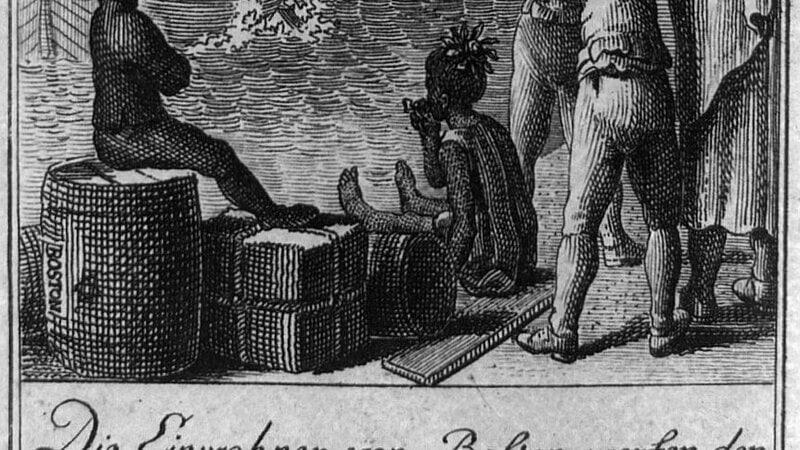
The torches guttered against a December wind off Boston Harbor, and for three hours on the night of December 16, 1773, the only sounds were the crack of wooden crates and the soft hiss of tea hitting salt water — 342 chests destroyed, not a word spoken, the silence itself a kind of declaration. One cold night on a wharf doesn’t make a revolution, but it can light the fuse. To understand how that fuse burned, you have to walk the chain of dates, one defiant heartbeat at a time.
Key American Revolution Dates at a Glance

- February 10, 1763 — Treaty of Paris ends the French and Indian War; Britain inherits a debt crisis and a restless continent
- March 22, 1765 — Stamp Act passed; first direct tax on the colonies sparks organized resistance
- March 5, 1770 — Boston Massacre; five colonists killed, the deaths weaponized as propaganda
- May 10, 1773 — Tea Act passed, triggering the Boston Tea Party on December 16, 1773
- September 5, 1774 — First Continental Congress convenes in Philadelphia
- April 19, 1775 — Battles of Lexington and Concord; the war begins
- July 4, 1776 — Declaration of Independence adopted
- October 17, 1777 — British surrender at Saratoga; France enters the war as an American ally
- September 3, 1783 — Treaty of Paris formally ends the war; U.S. sovereignty recognized
- June 21, 1788 — Constitution ratified, closing the revolutionary era with a functioning republic
The Slow Fuse: 1763-1765 — Britain Wins a War and Loses an Empire

It began, as so many catastrophes do, with a victory. On February 10, 1763, British negotiators signed the Treaty of Paris ending the French and Indian War, and in that moment of triumph they inherited a problem no one in London fully understood: a vast, restless continent populated by colonists who had spent a decade fighting alongside redcoats and had grown, in that crucible, into something distinctly their own. Britain was powerful, gloriously so — and completely broke. The war had been enormously expensive, and someone had to pay for the garrisons now stretched across a continent running from the Atlantic to the Mississippi.
Parliament’s answer was the Stamp Act of 1765, the first direct tax ever imposed on the American colonies — a levy on newspapers, legal documents, even playing cards. The colonists had never been consulted, held not a single seat in the chamber that passed it, and reacted with a fury that surprised nearly everyone in London. “No taxation without representation” wasn’t merely a slogan; it was a constitutional argument sharp enough to draw blood. The irony was exquisite and terrible: the very victory that made Britain a superpower had planted the seed of its most consequential loss.
Historians at the National Park Service designate 1763 to 1774 as the lead-in to open conflict — a decade of escalating insult, colonial outrage, and a British government that kept misreading the room. Each act of Parliament designed to assert control pushed the colonies one degree further toward the unthinkable. Parliament repealed the Stamp Act in 1766 under commercial pressure from British merchants, then immediately asserted its theoretical right to tax the colonies in any manner it chose through the Declaratory Act — a combination that satisfied nobody and resolved nothing.
Blood on King Street: March 5, 1770

By 1770, the argument had stopped being theoretical. On the night of March 5, a jeering crowd gathered around a small British garrison on King Street in Boston. Snowballs turned to rocks, taunts turned to panic — and then musket smoke rolled across the cobblestones and five colonists lay dead or dying. The Boston Massacre had a name within days, though the soldiers involved were eventually acquitted at trial, defended by John Adams, who believed in the rule of law even when it cost him politically.
What mattered as much as the event itself was how it was told. Paul Revere’s engraving of the scene — British soldiers standing in neat formation, firing coolly into a crowd of apparently innocent civilians — was propaganda of the highest order, and it traveled from print shop to tavern wall from Maine to Georgia. The dead had names. They had graves. They were martyrs now, and martyrs are more dangerous than arguments.
Still, 1770 was not yet the breaking point. Five more years of petition, negotiation, and failed compromise stretched ahead — which only makes what follows more dramatic. The grievances were real, the anger was real, but the colonies had not yet given up on the idea that Britain might listen.
Tea, Taxes, and the Point of No Return: 1773-1774

Parliament tried a different approach in 1773. The Tea Act, passed on May 10, was meant to rescue the floundering East India Company by allowing it to sell tea directly to the colonies at prices so low they undercut even smugglers. It sounded like a gift. Colonists read it as a trap — cheap tea with a tax still attached, designed to make them swallow the principle of taxation without representation along with their morning cup. They refused the cup entirely.
That December night on Boston Harbor wasn’t spontaneous. The Sons of Liberty, organized and deliberate, boarded three ships in the dead of night and worked in disciplined silence, splitting open 342 chests and pouring their contents into the harbor. It was an act so audacious, so precisely calculated, that it forced every colonist to choose a side. You were either appalled by the destruction of private property or thrilled by the defiance — no comfortable middle ground remained. Read more about the events of that night at the Boston Tea Party Ships & Museum.
Britain’s response, the Coercive Acts — which colonists immediately renamed the Intolerable Acts — was meant to isolate Massachusetts and make an example of Boston. Instead, it unified the other colonies against London. By September 5, 1774, delegates from twelve colonies had gathered in Philadelphia for the First Continental Congress. This was not yet a call for independence — it was a final, organized attempt at reconciliation, a petition from men who still hoped the king might hear them. Which makes what happened seven months later all the more inevitable in retrospect.
The Shot Heard Round the World: April 19, 1775

Before dawn on April 19, 1775, British regulars marching through the Massachusetts countryside toward the colonial arms depot at Concord encountered a ragged line of militiamen on the green at Lexington. Someone fired — no one has ever established who, or quite why — and in that single unplanned moment, the American Revolution stopped being a political argument and became a war.
By nightfall, the British had suffered 273 men killed, wounded, or missing on the day’s fighting at Lexington, Concord, and along the road back to Boston. The colonists, fighting from behind stone walls and tree lines, had demonstrated something that electrified the entire eastern seaboard: a citizen militia could bleed the most powerful professional army in the world. The battles of Lexington and Concord are the hinge of the entire story. Before April 19, 1775, revolution was possible. After it, revolution was probable — and the question shifted from whether to fight to whether to break entirely from Britain, a debate that would consume the next fourteen months.
July 4, 1776 — The Most Dangerous Document in the World

Philadelphia in the summer of 1776 was sweltering, fly-plagued, and frightened. The men gathered in the State House knew that the document they were debating could get every one of them hanged for treason if the war went wrong — and the war, at that moment, was going badly. Yet on July 4, 1776, they adopted the Declaration of Independence, a vote the Congress recorded as unanimous, transforming a military rebellion into something philosophically unprecedented.
The Declaration was not merely a list of grievances against a king, though it was that too. It was a philosophical earthquake — a formal assertion that self-evident truths about human equality justified overthrowing a government that violated them. The word “unanimous” deserves to be felt, not just read. Delegates from colonies with deep loyalist minorities signed anyway. Delegates who privately doubted that the war could be won signed anyway. They knew the document made the conflict irreversible, and they signed.
This is the detail that gets lost in the fireworks and the folklore: independence was declared in the middle of a war already being fought, not before it. As the full arc of the Revolution makes clear, the colonies were already bleeding when they finally named what they were bleeding for. The Declaration didn’t start the fighting — it gave the fighting its meaning.
Saratoga: The Date That Brought France into the War — October 17, 1777
No single battlefield event did more to determine the outcome of the Revolution than the British surrender at Saratoga on October 17, 1777. General John Burgoyne had marched south from Canada expecting to split New England from the rest of the colonies; instead, his army of roughly 6,000 men was surrounded and forced to lay down its arms — the largest British capitulation of the entire war to that point. The victory proved to skeptical European powers that the Continental Army could win in the field against professional troops.
France, which had been quietly supplying money and materiel to the Americans since 1776, formally recognized the United States and entered the war as an open ally in February 1778. French naval power would eventually tip the balance, most decisively at the siege of Yorktown in 1781. Saratoga is the date that made French intervention politically possible, and French intervention is the reason Yorktown happened. It belongs in any honest accounting of the Revolution’s key moments — and it is frequently omitted from popular timelines, which tend to leap from the Declaration straight to the peace treaty.
The Long Road to Peace: September 3, 1783, and What 1788 Finally Sealed
Six more years of war followed the Declaration — years of brutal winters at Valley Forge, of near-mutinies in the Continental Army, of grinding attrition that exhausted both sides. On September 3, 1783, British negotiators put their signatures on the Treaty of Paris, formally recognizing the United States of America as a sovereign nation and ceding British territorial claims all the way to the Mississippi River. The rebellion had not merely survived. It had won.
The broad chronology of the Revolution typically runs from 1763 to 1783 — exactly twenty years from the treaty that ended one war to the treaty that ended another, with an entire civilization transformed in between. But 1783 wasn’t quite the finish line. The thirteen states had won their independence without yet agreeing on how to govern themselves. The Articles of Confederation, in force since 1781, were proving inadequate; the federal government could not levy taxes, could not regulate commerce, and struggled to pay the soldiers who had won the war.
The Constitution, drafted in Philadelphia in 1787, was ratified on June 21, 1788, when New Hampshire became the ninth state to approve it, supplying the majority required for the document to take effect. The new government launched in 1789 with George Washington’s inauguration, closing the full span of the revolutionary era with something more durable than a surviving rebellion: a functioning republic built on the radical ideas that had seemed so dangerous thirteen years before.
The same harbor where tea hit the water in 1773 now flew a different flag. It hadn’t happened by fate or by accident. It had happened because of a chain of specific moments — February 10, 1763; March 5, 1770; December 16, 1773; April 19, 1775; July 4, 1776; October 17, 1777; September 3, 1783 — each one a choice made by real people in real fear and real courage, each one pulling the next link taut. The American Revolution was not inevitable. It was built, one defiant moment at a time, by people who looked at what their world was and decided, against considerable odds, to make it something else.

 English
 Arabic
 French
 Spanish
 Portuguese
 Deutsch
 Turkish
 Dutch
Dutch
 Italiano
 Romaian
 Portuguese (Brazil)
 Greek
Greek