


Nvidia GPUs can't stop finding new things to melt
Nvidia GPUs can't stop finding new things to melt
Ever since the launch of the RTX 4090, there has been a steady stream of reports of high-end Nvidia GPUs melting the power cables that connect to them. Nvidia initially tried to solve the issue with a slightly revised connector, but as the years have gone on, the issue has refused to fully go away, with several RTX 5090 and even some RTX 5080 cards also affected. Now, in the latest incident, it's once again an RTX 4090 that has caused issues, and this time it has melted a connector specifically designed to have "High Thermal Endurance" and reduce potential cable strain.
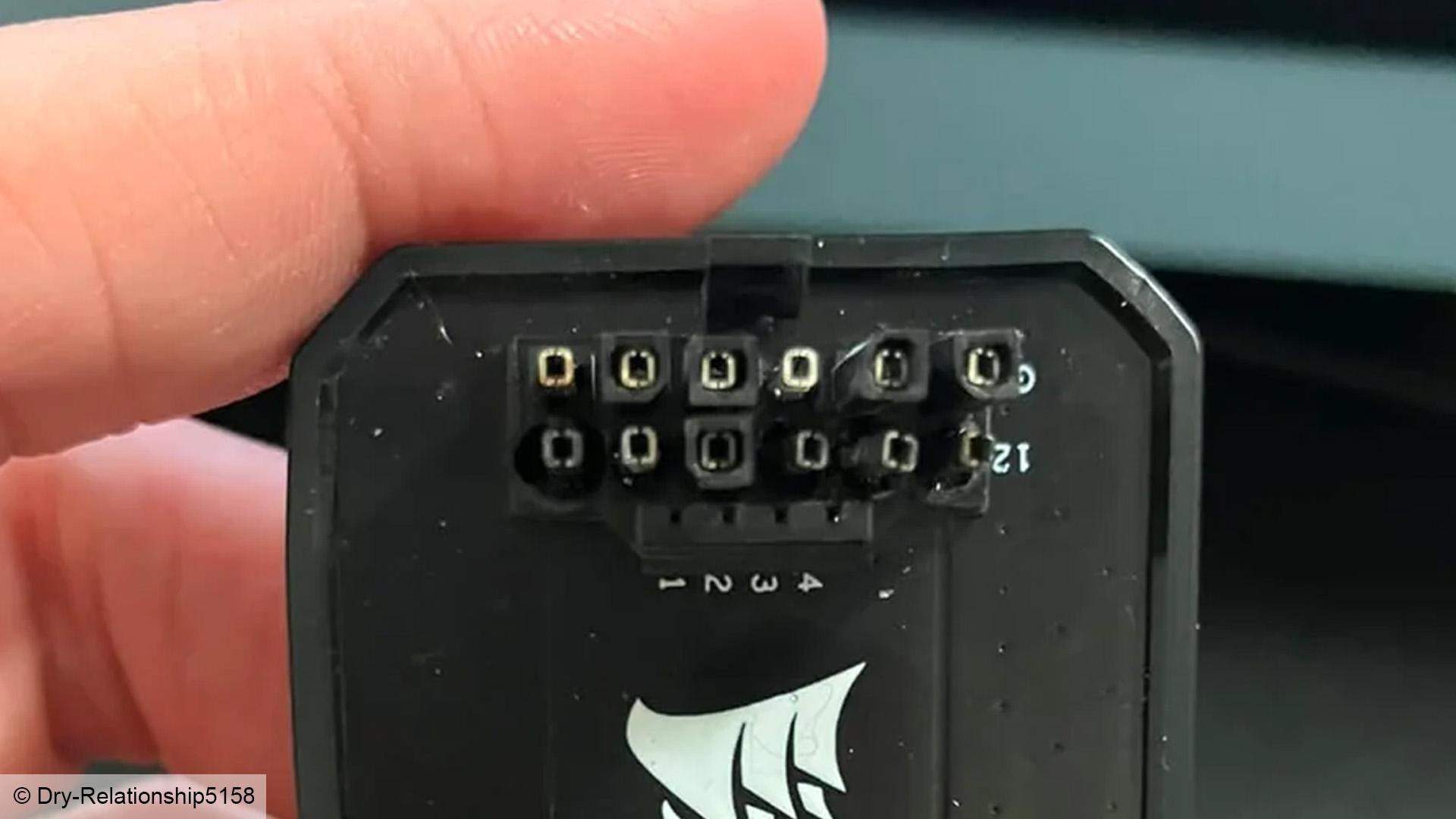
The connector in question is the Corsair PCIe 5.0 12V-2×6 GPU Power Bridge, which provides a 180° bend, designed to allow for a neat PC build that doesn't have an unsightly power cable sprouting from the top of the graphics card. Rated to withstand temperatures of up to 105°C, the connector is shown having melted while delivering power to what used to be the best graphics card in the world, the Nvidia RTX 4090.
The freshly melted connector has appeared on Reddit, where user 'Dry-Relationship5158' says that they went to use their PC when it "started completely freezing up and restarting the exact second I tried to launch a game."
"I pulled my graphics card out to see what was going on, and found a total nightmare. My Corsair GPU Power Bridge (the angled adapter for the power cable) completely melted along the top row of pins. Because it got so hot, it actually melted and deformed the plastic power plug on my RTX 4090 Founders Edition as well," they continued.

Pictures posted by Dry-Relationship5158 clearly show the connector with its socket side (where the power cable plugs in) having intact connections, but the plug side (that plugs into the graphics card) having melted and bent pins. Then, on the RTX 4090 Founders Edition graphics card, the power socket has also been melted.
They go on to say that they're already in communication with Corsair's customer support and that Nvidia has already started its RMA process for replacing the card, suggesting the user will be able to get a replacement or fix for the affected parts. Nonetheless, this is yet another example of what has been a surprisingly long-running issue, even if the true fraction of users affected is small - I've long been running an RTX 5080 without issue, for instance.
Nvidia designed the new 12VHPWR power connector standard in order to create a more compact, less cumbersome connector than the existing six/eight-pin PCIe connector standard. With high-end graphics cards hitting the point where they needed three of those older, larger connectors to hit the power requirements of the GPU, being able to swap these for a single connector had obvious upsides. However, both the first iteration and the revised 12V-2×6 connector have had issues with melting, and the fact that we haven't seen a wholesale switch to a more robust connection yet is surprising.

AMD hasn't been immune to the issue either. While its graphics card partners have mostly stuck to using the older power connector design, there have been some incidents of cards using the new connector and those connectors melting.
As to the cause of the melting - and in some cases even smoke and fire - it has largely been traced to an issue with the cables or connection points getting too hot due to an imbalance in the way power is being delivered through the multiple conductors in the cable. If, for some reason, power stops being evenly spread across the multiple connection points, it can lead to all the power going through just a few points, which can quickly lead to excessive heat build-up.
Multiple fixes have been suggested for the issue, such as ensuring cables are securely seated, that they aren't bent and putting strain on the connectors, and there are even cable replacements and adapters that attempt to track heat build-up in the cables, shutting off power if it gets too high. Currently, though, the only guarantee to avoid these issues appears to be either opting for a graphics card that doesn't use this connector, or choosing a GPU that doesn't have such high power draw.
Largely, the only cards affected by this issue so far have been the RTX 4090, RTX 5090, RTX 5080, and RX 9070 XT, as all these cards have very high power draw. Opt for a card below this level, and it should never be an issue. It will be interesting to see what power connector Nvidia opts for with its RTX 6000 series GPUs…

 English
 Arabic
 French
 Spanish
 Portuguese
 Deutsch
 Turkish
 Italiano
 Russian
 Romaian
 Portuguese (Brazil)
 Greek
Greek