


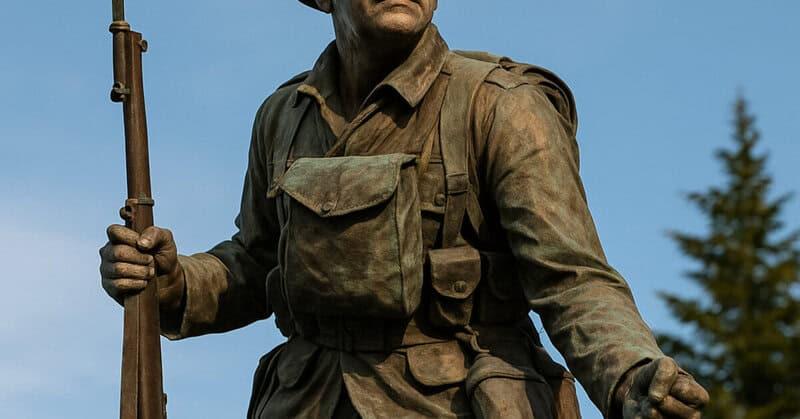
On August 4, 1914, a German cavalry officer wrote in his diary that the whole business would be finished by Christmas — the horses would be home, the glory would be shared, and Europe would return to its summer routines. He was wrong by four years, eleven million military deaths, and an entirely shattered world order. More than a century later, books remain our most intimate window into how that catastrophe unfolded — not just the maps and the maneuvers, but the particular weight of mud on a boot, the peculiar silence after a barrage, and the grief that outlasted the armistice by generations. The best World War I books don’t merely record what happened; they make you feel the miscalculation, the mud, and the mourning. The list below — spanning grand strategic histories, soldier memoirs, and polyphonic literary masterworks — offers an entry point for every kind of curious reader. Barbara Tuchman’s The Guns of August is the obvious place to start, but it is only the beginning of a long and rewarding road.
Where to Begin: The Essential One-Volume Histories

For readers who want the full shape of the war before they descend into any single trench, four one-volume histories stand above the rest, each with its own personality and purpose.
John Keegan’s The First World War is the gold standard. Keegan spent decades thinking about how wars are actually fought by actual human beings, and the result is a military history that never loses sight of the soldier behind the statistic. He moves from the Schlieffen Plan to the Somme to the final Hundred Days offensive with a scholar’s precision and a novelist’s eye for the telling detail. It appears on curated lists of the best World War I books for good reason. If you read only one book on the war, this is the one.
Michael Howard’s compact The First World War serves a different but equally valuable purpose. Endorsed on Five Books by historians and novelists alike, it offers the analytical intelligence of a master strategist distilled into a volume you can finish in a weekend. Howard never sacrifices insight for exhaustive detail; he wants you to understand why the war took the shape it did, not merely what happened on which date. For the reader who prefers a sharp argument over a comprehensive chronicle, Howard is essential.
Martin Gilbert’s The First World War: A Complete History occupies the opposite end of the spectrum. Available in its full, formidable edition, Gilbert’s book is the indispensable reference for readers who want every theater, every year, and every voice — from the Western Front to Gallipoli to Mesopotamia to East Africa. Gilbert weaves personal testimony into the operational narrative with extraordinary care, ensuring that no campaign becomes merely an abstraction.
Hew Strachan’s The First World War rounds out this foundational tier as the authoritative scholarly counterweight — rigorous, globally minded, and ideal for readers who have finished one of the introductory volumes and feel ready to test its assumptions against a more demanding analysis. Where most one-volume accounts center Europe, Strachan insists on the war’s genuinely planetary reach from the outset.
The Book That Defined How the World Remembers 1914: The Guns of August

Open Barbara Tuchman’s masterpiece and you are standing at the funeral of King Edward VII in May 1910, watching the monarchs of Europe ride together in a glittering cortège through the streets of London. Nine kings, dozens of princes, the last gathering of the old dynastic order — and not one of them aware, as Tuchman frames it, that they are being photographed at the edge of an abyss. It is one of the great opening gambits in historical writing, and what follows lives up to it entirely.
The Guns of August tracks the cascade of miscalculations, misread signals, and sheer institutional momentum that drove Europe from the assassination of Archduke Franz Ferdinand in late June 1914 to full-scale continental war by early August — a matter of weeks. Tuchman writes military history as suspense fiction, and the effect is genuinely breathtaking. You know how it ends, and you watch in something close to horror as every off-ramp is missed, every moderating voice is overruled, and every mobilization schedule locks the next one into place like the teeth of a gear.
The book ranks among the most widely read World War I titles on Goodreads and is cited among ten great books about World War I by the Broad Street Review. Its cultural reach extends far beyond the academy: President John F. Kennedy read it during the Cuban Missile Crisis and kept it close as a cautionary text about how great powers blunder into catastrophes they never intended. For Kennedy, the book was not history — it was a warning.
For any reader assembling a World War I reading list, The Guns of August is non-negotiable. Pair it with Keegan for the military architecture of what Tuchman’s July Crisis unleashed, and you will have a firm foundation for everything that follows.
From the Trenches: Memoirs and Personal Accounts

Grand strategy explains the shape of the war. Memoir explains what it felt like to be inside it. No reading list is complete without at least one book written from ground level.
Erich Maria Remarque’s All Quiet on the Western Front is, by almost any measure, the most widely read work of World War I fiction — and it earns its place at the top of Goodreads’ popular World War I reading lists through the sheer force of its moral honesty. The novel opens with a young German soldier named Paul Bäumer realizing, almost matter-of-factly, that the patriotic words his schoolmaster used to send him to the front mean nothing — less than nothing — now that the shells are falling. Remarque served on the Western Front himself, and the book carries that authority in every sentence. It is not comfortable reading, and it is not meant to be.
Siegfried Sassoon’s Memoirs of an Infantry Officer offers a different but complementary perspective: a decorated British officer who fought with genuine courage and then turned publicly against the war, his memoir moving between vivid battlefield reporting and the anguished moral reckoning that followed. Sassoon writes with a poet’s precision — he was also publishing his savage anti-war verse during these same years — and the combination of documentary detail and lyrical anger makes his account one of the most searching personal records to emerge from the conflict.
Penguin Random House’s recommended World War I reading list covers both the politics and the personal experiences of those involved — a structure that validates what any honest reader already suspects: you cannot understand this war from strategy alone. A practical reading tip: pair a memoir with a one-volume history. The personal terror and the strategic map illuminate each other in ways that neither achieves alone.
The Wide-Angle View: Books That Capture the Whole War

For readers who have finished one introductory volume and want to go wider and deeper, three books open the war outward in rewarding directions.
G. J. Meyer’s A World Undone: The Story of the Great War, 1914 to 1918 is the best narrative history for readers who want politics, diplomacy, and battlefield folded into a single propulsive read. Meyer alternates chapters of operational history with portrait-style sidebar chapters on key figures, allowing the reader to hold both the sweep of events and the particularity of individual decision-makers in mind at once. It reads like a very long, very well-sourced novel about the end of an era.
Hew Strachan’s The First World War, Volume I: To Arms, listed among Five Books’ expert recommendations, performs a vital scholarly correction: it demolishes the Eurocentric myth of the conflict by demonstrating, in granular detail, how the war engulfed Africa, Asia, and the Middle East from the very first weeks. The war was a world war in fact as well as name, and Strachan makes that undeniable.
David Fromkin’s A Peace to End All Peace extends the story geographically and chronologically, tracing how the war’s prosecution and its settlement remade the Middle East in ways whose consequences remain visible today. For readers who want to understand not only how the war was fought but what it created, Fromkin’s meticulous account of great-power decision-making in the region is essential reading.
The Underrated Gem: Peter Englund’s The Beauty and the Sorrow

Peter Englund made a radical structural choice when he conceived his account of the First World War: no generals, no strategy sessions, no diplomatic cables. Instead, nineteen ordinary people from nine countries — a nurse in Serbia, a teenager in East Africa, a young woman on the home front in Germany, a British officer on the Somme — their diaries and letters woven together into a single polyphonic narrative that runs from August 1914 to November 1918.
The result answers the question that pure military history cannot: what did the war actually feel like, from the inside, for people who had no access to maps or strategies or the large-scale shape of what was happening to them? The answer Englund assembles is staggering in its emotional reach. These nineteen voices, drawn from primary sources across multiple national archives, carry the weight of the entire conflict in miniature — and together they constitute a kind of collective biography of a generation consumed by events it did not choose and could not control.
The Beauty and the Sorrow works best as a companion read to Keegan or Tuchman — the macro and the micro in conversation, the strategic and the intimate correcting and deepening each other. For anyone who has found traditional military history too cold or too distant from the human experience it describes, this is the book that closes that gap. It deserves a place on any serious reading list beside the canonical titles.
How to Build Your World War I Reading List

A suggested sequence, drawn from the logic of Penguin Random House’s recommended reading structure: begin with Keegan or Howard for orientation — the shape of the war, its causes and its conduct. Add Tuchman for the political thriller of the July Crisis, the forty days that remade the world. Then turn to Remarque, Sassoon, or Englund for the human cost — the lives the strategy consumed. From there, Meyer, Strachan, Gilbert, or Fromkin can extend your understanding outward into global scope or backward into the pre-war world that made the catastrophe possible.
It is also worth remembering that the best World War I books disagree with each other, productively and sometimes sharply. Strachan’s global scope challenges Tuchman’s European focus. Keegan’s sympathy for the ordinary soldier sits in useful tension with the grand diplomatic narrative of The Guns of August. Sassoon’s furious moral witness complicates the detached operational language of any staff-college history. That friction — between scales, between perspectives, between the view from the general’s map room and the view from the trench — is not a flaw in the literature. It is part of the pleasure, and part of the truth.
In 1918, an Allied soldier scratched the words No future into the wall of a Belgian farmhouse. He meant it for himself, perhaps, or for his generation, or for the world as he had known it before August 1914. These books exist so that inscription is never the last word on what happened and why. The war ended more than a century ago, but its best accounts keep opening new doors into the experience of it — the grief and the miscalculation, yes, but also the resilience, the witness, and the stubborn human insistence on recording what was endured. Pick one and start there.

 English
 Arabic
 French
 Spanish
 Portuguese
 Deutsch
 Dutch
Dutch
 Italiano
 Russian
 Romaian
 Portuguese (Brazil)
 Greek
Greek