


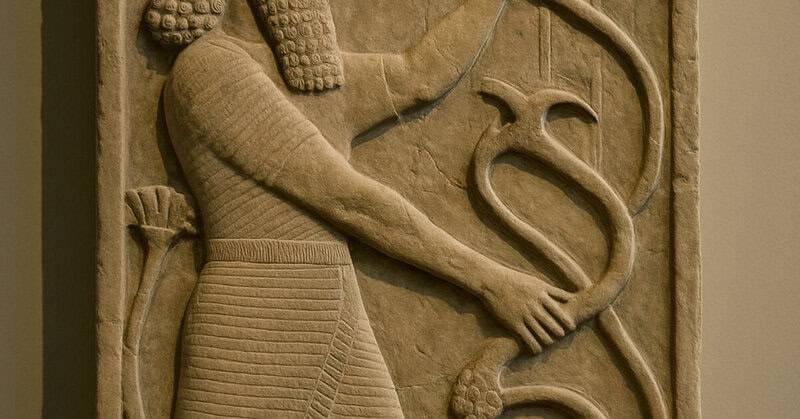
Before your morning alarm pulled you out of sleep, before you glanced at a clock, sent a message, or navigated a city street, the groundwork for all of it was quietly laid between two rivers in the ancient Middle East. Roughly 5,000 years ago, the people of Mesopotamia built the foundations of modern civilization — and the world has never stopped standing on them.
Where on Earth Is Mesopotamia — and Why Did It Matter?

Mesopotamia takes its name from the Greek phrase meaning “land between the rivers,” a description that tells you almost everything you need to know about why it mattered. Occupying what is largely modern-day Iraq, along with parts of Syria and Turkey, the region sat between the Tigris and Euphrates rivers — two powerful waterways that made the surrounding land extraordinarily fertile by the standards of the ancient world.
That fertility changed everything. When the land produces more food than the people farming it can eat, something remarkable happens: people are freed to do other things. Mesopotamia’s agricultural surplus gave rise to specialists — thinkers, builders, administrators, and engineers who could focus their energy on solving problems beyond the next harvest. The result was an explosion of innovation that the world had never seen before and would not forget.
According to the World History Encyclopedia’s overview of Mesopotamian inventions, landmark breakthroughs traceable directly to this region include writing, the wheel, the concept of measured time, cities, and the map. Each one reshaped human life in ways that still echo through the present day.
The Written Word: Humanity’s Greatest Leap Forward

Of all Mesopotamia’s contributions, writing may be the most profound. The earliest known script in human history, called cuneiform, was developed in Mesopotamia around 3200 BCE — thousands of years before the Greek alphabet took shape. To put that in perspective, cuneiform was already ancient history by the time the great Greek city-states were flourishing.
Its origins were practical to the point of being mundane. Scribes pressed wedge-shaped marks into soft clay tablets to keep track of grain supplies, livestock counts, and river conditions. Writing began, in other words, as a ledger. But necessity proved to be the mother of invention in the most expansive sense: what started as accounting quickly evolved into law, diplomacy, medicine, and literature.
The evidence for that evolution is extraordinary. The Epic of Gilgamesh, one of the oldest surviving works of literature in the world, was recorded in cuneiform. It is a story about friendship, loss, and the search for immortality — proof that Mesopotamians were not just meticulous record-keepers but deeply human storytellers grappling with the same questions people ask today. The transition from clay-tablet bookkeeping to epic poetry happened within the same writing system, a testament to how quickly a practical tool can become a vehicle for culture.
The Birth of Law: Writing Rules for Society

Writing enabled something else that proved just as consequential: codified law. The Code of Hammurabi, inscribed around 1754 BCE during the reign of Babylonian king Hammurabi, is one of the earliest and most complete written legal codes ever discovered. Carved onto a basalt stele nearly eight feet tall, it set out penalties and protections covering commerce, property, wages, and family life.
Its significance goes beyond the specific rules it contains. The Code established the idea that law should be written down, publicly displayed, and applied consistently — principles that underpin every modern legal system. Crucially, it also expressed the notion that a ruler’s legitimacy rested on delivering justice to the people, a concept that would echo through centuries of political philosophy. As Britannica’s history of Mesopotamia makes clear, this region was where the essential mechanics of organized civilization were first systematically worked out.
Cities, Ziggurats, and the Birth of Urban Life
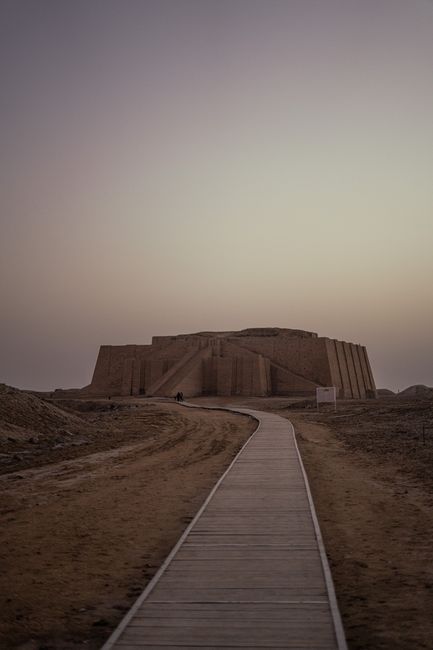
Mesopotamia didn’t just produce innovations in writing and law — it invented the city itself. Uruk, one of the region’s great urban centers, may have housed tens of thousands of people at its peak around 3000 BCE, making it one of the largest human settlements the world had ever seen. That scale of communal living required entirely new systems to function.
Dense, organized communities demand laws to resolve disputes, trade networks to distribute goods, shared infrastructure to manage resources, and central governance to hold it all together. Mesopotamia pioneered all of these, creating the administrative and legal architecture that every city on Earth still relies on in some form.
Rising above these early cities were ziggurats — massive stepped temple towers resembling pyramids that demonstrated a level of architectural and engineering sophistication remarkable for the era. But ziggurats were more than monuments to religious belief. They functioned as economic and administrative hubs, sitting at the literal and symbolic center of city life. Religion, commerce, and governance were deeply intertwined in Mesopotamian society, and the ziggurat held them together under one towering roof. You can explore how these structures fit into the broader sweep of ancient life through the Getty’s exhibition on Mesopotamian civilization.
The Wheel, the Map, and the Invention of Time

Three more Mesopotamian breakthroughs deserve close attention, because together they reveal just how systematically these ancient people were solving the problems of a complex, interconnected society.
- The wheel first appeared in Mesopotamia around 3500 BCE. Its earliest known use was not transportation but pottery — a spinning wheel that helped craftspeople shape clay vessels with speed and consistency. Only later did it evolve into the wheeled vehicle that would revolutionize trade, agriculture, and warfare across the ancient world. The gap between those two applications represents one of history’s great leaps of imagination.
- The map emerged as Mesopotamians began sketching out land plots and territories on clay tablets, primarily to settle ownership disputes and plan irrigation works. These early cartographic efforts represent some of the oldest known attempts to represent the physical world on a flat surface, transforming geography from something experienced into something that could be reasoned about and shared.
- Measured time was a Mesopotamian invention rooted in their base-60 numerical system — a mathematical framework that gave the world 60-minute hours, 60-second minutes, and 360-degree circles. Scholars believe the base-60 system was favored in part because 60 is divisible by so many numbers, making calculations more flexible. Every time someone checks a watch or plots a navigational bearing, they are using a system designed in ancient Mesopotamia.
These were not isolated discoveries. They were interconnected solutions to the interconnected problems that arise when large numbers of people live, trade, and govern themselves together — each innovation creating the conditions that made the next one necessary.
Masters of Water: How Irrigation Built an Empire

Farming in a flood-prone river valley sounds chaotic. Mesopotamians turned it into a science. Through sophisticated irrigation techniques — canals, levees, and carefully engineered water channels — they learned to direct river flow onto farmland with enough precision to produce reliable harvests in an otherwise unpredictable environment. Archaeological evidence suggests some of these canal systems stretched for dozens of miles.
Controlling water meant controlling food. Controlling food meant controlling population growth, labor, and ultimately political power. Irrigation was as much a tool of governance as it was of agriculture, and it reinforced the same centralized administrative systems that cities and their legal codes had made necessary. Scribes recorded water levels and harvest yields in cuneiform; engineers responded with new channels and barriers. In Mesopotamia, every innovation tended to call forth another, each one building on the last in a self-reinforcing cycle of problem-solving.
Mathematics, Medicine, and Astronomy: The Quieter Revolutions
Mesopotamia’s intellectual achievements extended well beyond the breakthroughs that tend to dominate the headlines. Babylonian mathematicians developed methods for solving quadratic equations more than a thousand years before Greek mathematicians addressed similar problems. They produced detailed astronomical records — tracking the movements of planets, predicting lunar eclipses, and identifying what we now call constellations — that later influenced Greek and Islamic astronomy alike.
Mesopotamian physicians compiled some of the earliest known medical texts, cataloguing symptoms, diagnoses, and treatments in cuneiform. While their medical practice intertwined observation with ritual, the very act of recording and systematizing medical knowledge represented a crucial step toward evidence-based medicine. These quieter revolutions in mathematics, astronomy, and medicine demonstrate that Mesopotamia was not simply a culture of grand engineering feats — it was a civilization engaged in sustained, disciplined intellectual inquiry across multiple fields simultaneously.
Why Mesopotamia’s Legacy Still Matters Today
Every time you glance at a clock, navigate a city block, read a written message, or consult a map, you are using tools that were born in ancient Mesopotamia. That is not a metaphor or an exaggeration — it is a direct line of inheritance running across five millennia of human history.
What makes Mesopotamia’s story so compelling is that none of it was inevitable. Their achievements were deliberate responses to real problems faced by growing, complex societies. Writing solved the problem of memory and record-keeping. The city solved the problem of organizing large groups of people. The wheel solved the problem of moving goods efficiently. Law solved the problem of resolving disputes without violence. Time-keeping solved the problem of coordinating human activity at scale.
Understanding Mesopotamia reframes the entire history of human progress. Civilization wasn’t a natural destination that humanity was always heading toward — it was invented, piece by piece, by curious and driven people working between two rivers in what is now Iraq. The full scope of Mesopotamian inventions and achievements makes clear just how much the modern world owes to those ancient innovators. The cradle of civilization earned that name honestly, and the world has been building on its foundations ever since.

 English
 Arabic
 French
 Spanish
 Portuguese
 Deutsch
 Turkish
 Dutch
Dutch
 Italiano
 Romaian
 Portuguese (Brazil)
 Greek
Greek