


Julien Viry/Getty Images
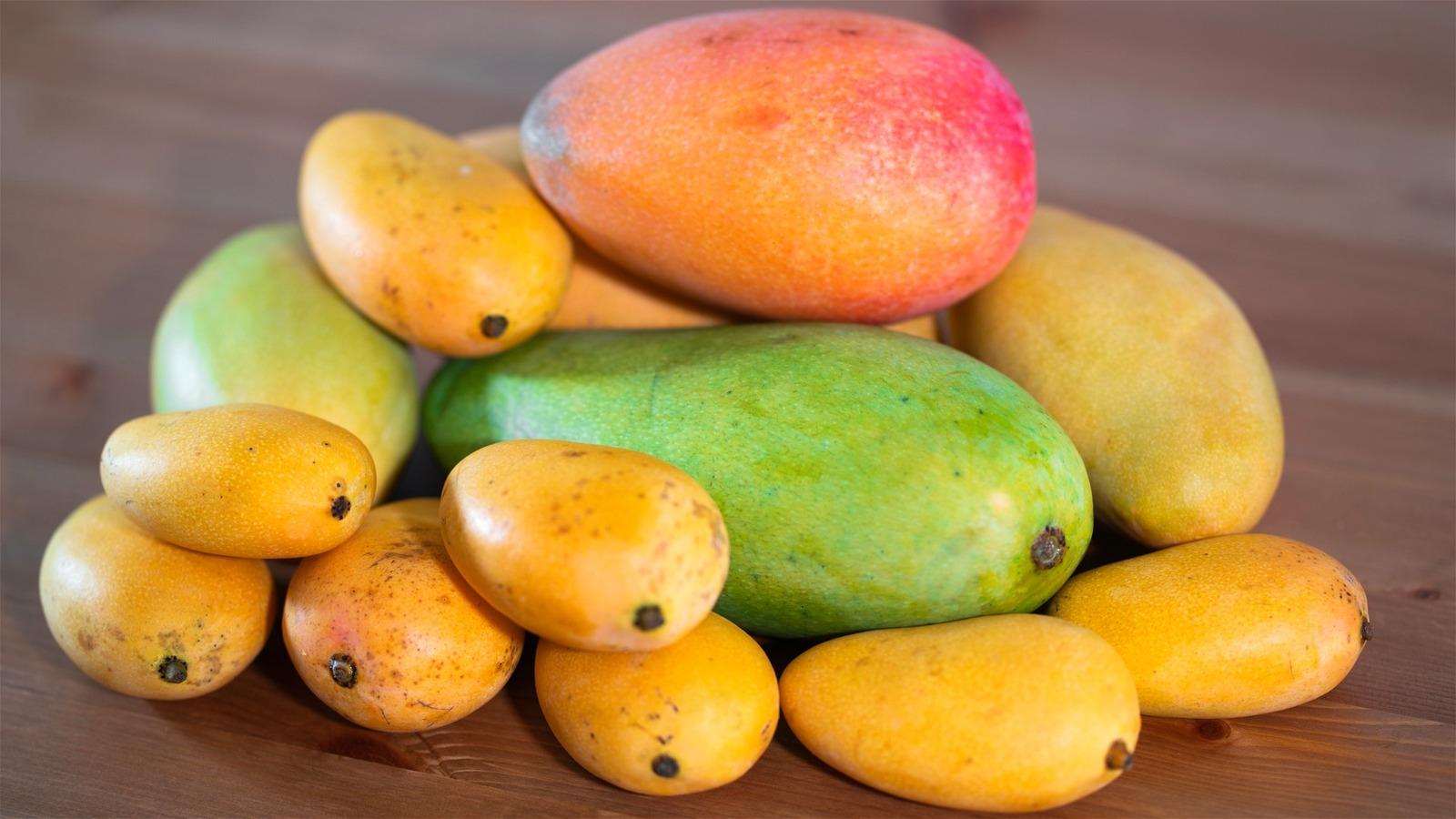
Mangoes can be a serious point of pride. If you ask people from India, Mexico, Pakistan, or the Philippines which nation grows the best of these intensely sugary fruits, odds are each would name their homeland. Determining which country is the mango capital of the world requires more objective data. Depending on how you look at it, the numbers tell us it could be India or Cambodia.
India would take the title if we went by sheer production capacity. According to data from World Population Review (WPR), the home of mango chutney produced more than 26 million metric tons of mangoes, mangosteens, and guavas in 2023. While the site doesn't provide data on mangoes alone — global tracking standards lump these three fruits together — it still gives us a good idea of how many mangoes each country may be growing. Interestingly enough, India only exports 1% of its mangoes despite these massive production numbers.
If we gauge the mango capital of the world by how much fruit gets to the rest of the globe, Cambodia comes out on top. Data reported by the World Integrated Trade Solution reveals that Cambodia exported the largest quantity of mangoes, guavas, and mangosteens among all countries in 2024, at nearly 530,000 metric tons. While export numbers for mangoes alone aren't available, Cambodia's Ministry of Commerce did report that the country shipped 245,000 metric tons of mangoes in the first ten months of 2025 (via Bernama), so it's safe to assume annual estimates are close to this figure or higher.
India has its own mango capitals
Rainbow_dazzle/Shutterstock
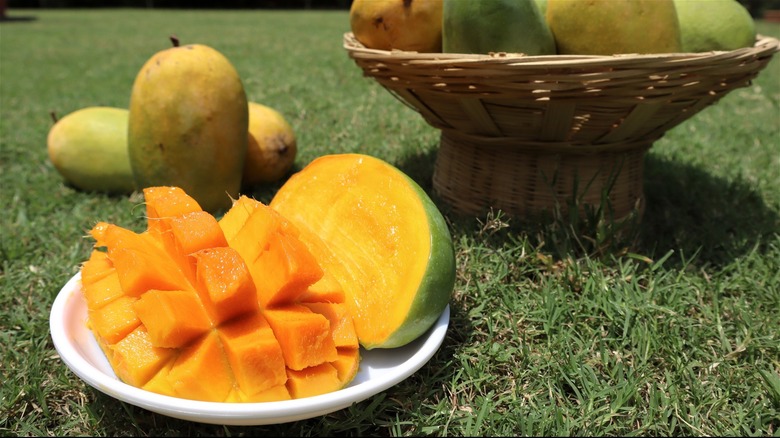
Given the tremendous amount of mangoes India produces, it stands to reason that the country has a couple of its own mango capitals. According to a report by the Ministry of Agriculture and Farmers Welfare, Uttar Pradesh is the country's top mango-growing region, producing an estimated 6.14 million metric tons in 2024 to 2025, equivalent to 26.95% of India's nationwide yield. To put that into perspective, if Uttar Pradesh were to become a separate country, it would rank second in mango production in the entire world. The current second-place grower, Indonesia, grew 4.1 million tons in 2023.
Uttar Pradesh is also home to Malihabad, a town some consider to be the mango capital of the world because of its rich history and massive harvests. The town, located in northern India, is also said to be the birthplace of the Dasheri mango, a cultivar prized for its sweetness. It's believed that the tree that first produced it still stands to this day. If you can find some, they would be fantastic in a traditional mango lassi.
As prolific as Uttar Pradesh is, it isn't known for growing India's globally beloved mango cultivar, the Alphonso. Known as the "king of mangoes", the Alphonso is grown most famously in the western state of Maharashtra, in the coastal city of Ratnagiri specifically. Climate change has seriously threatened Maharashtra's Alphonso supply, however, with losses of up to 90% projected in 2026, according to Reuters.
Cambodia's mango capital grows export-worthy fruit
Jhobo/Getty Images
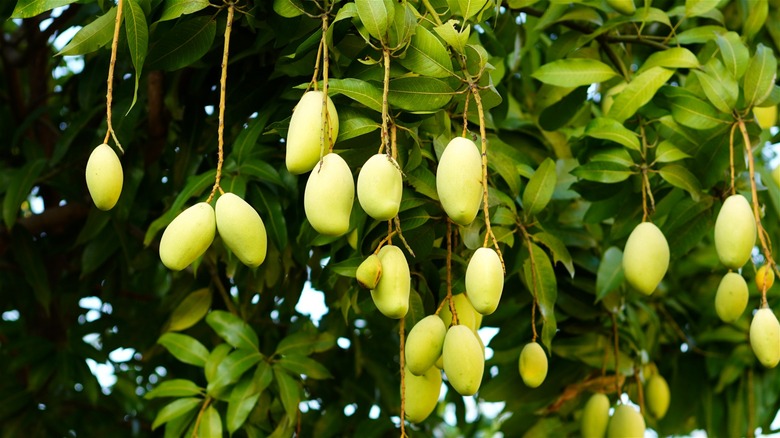
According to the United Nations' Food and Agriculture Organization (FAO), Cambodia's mango production capacity increased by 2,660% from 2016 to 2020, with total farm acreage growing from 5,000 to 138,000 hectares. A 2025 FAO report found that the number ballooned to 142,825 hectares in 2023, with a total yield of 2.2 million metric tons. This could explain why the export numbers indicated by WITS and the Ministry of Commerce heavily outweigh WPR's production estimates (66,500 metric tons in 2023). The explosive growth of Cambodia's mango trade may outpace international reporting, and even consumer demand — both signs of a developing industry. Around 60% of the country's yield is produced in the province of Kampong Speu, making it the prime candidate for Cambodia's mango capital.
Roughly 80% of Cambodian mangoes are the Keo Romeat variety. It can be grown year-round and be enjoyed ripe or unripe, so there's never really a bad time to import it. If you can get unripe ones, try making mango verde, a Central American mango snack that makes sour mangoes taste amazing.
A 2024 study published in the International Journal of Agriculture found that informal trade between Cambodian mango farmers and bordering countries accounts for as much as ten times the amount documented in official reports. As Cambodia continues to unlock its potential as an international mango capital, improvements are being made to the commercial side of production. Since at least 2025, FAO's One Country One Priority Product (OCOP) initiative has worked with Cambodia to strengthen its agricultural infrastructure and foster sustainable farming practices.

 Arabic
 French
 Spanish
 Portuguese
 Deutsch
 Turkish
 Dutch
Dutch
 Italiano
 Russian
 Romaian
 Portuguese (Brazil)
 Greek
Greek