


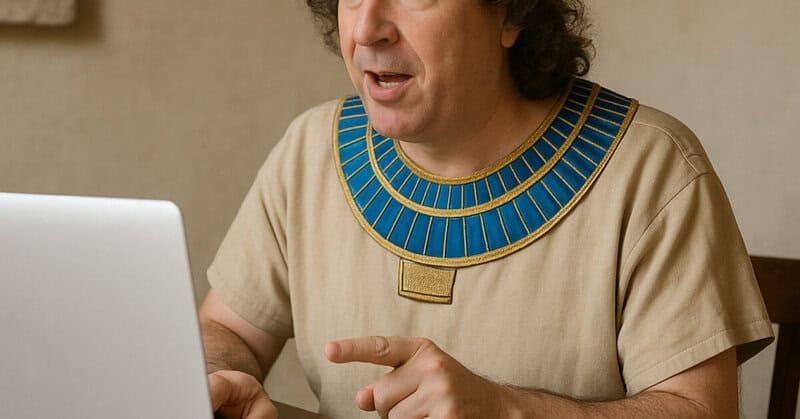
A kid opens a laptop, hits play on a YouTube video, and somewhere in the first minute, a name drops into the melody — Tutankhamun — and suddenly a boy who died more than three thousand years ago feels less like a footnote and more like someone worth knowing. That is the particular magic of Mr. Nicky’s Ancient Egypt song on YouTube, a few minutes of educational parody that has accumulated approximately 2.7 million views and, in doing so, introduced more people to the New Kingdom than many a museum exhibit ever will.
Who Is Mr. Nicky?

Mr. Nicky has been creating content since 2008, which in internet years makes him something close to ancient himself. When he uploaded his first videos, YouTube was still finding its identity — a place for shaky home footage and viral oddities, not yet a global classroom. He chose a different path almost immediately: educational parody songs, tight and tuneful, designed to compress vast stretches of human history into something a middle schooler could hum on the way to a test. His catalog reads like a syllabus for the ancient world — Ancient Mesopotamia, Ancient Egypt, Ancient Rome — tracing the arc of civilization from the first river cities onward, all set to borrowed melodies and loaded with content that teachers recognize as accurate.
What began as a YouTube operation has since migrated onto mainstream music platforms. Mr. Nicky is now listed as an artist on Apple Music, his tracks stream on Spotify, and his songs and lyrics are catalogued on Genius — a quiet but significant crossing of a threshold, from classroom supplement to something that sits alongside mainstream artists in the same streaming ecosystem. Over fifteen years of consistent, accurate output have earned him a degree of institutional trust that newer channels simply have not had time to accumulate.
There is a lineage worth acknowledging here. Using music to carry history forward is not an invention of the digital age — it is as old as the Egyptian oral tradition itself, as old as the Greek bards who performed the Iliad before anyone wrote it down. Mr. Nicky is doing it with a ring light and a comment section. The medium is new. The instinct is ancient.
Why 2.7 Million People Pressed Play

The Ancient Egypt song was uploaded approximately nine years ago, arriving at the moment when YouTube was cementing its identity as a homework resource for students worldwide. Teachers were beginning to trust it. Parents were relieved by it. Millions of students were quietly substituting its videos for textbook chapters they would never open. Into that ecosystem, Mr. Nicky dropped a song that name-checked Pharaoh Tutankhamun — and that single lyrical choice was a masterstroke of hook-writing, whether calculated or intuitive.
Tutankhamun is arguably history’s most famous teenager. He assumed the throne of Egypt around 1332 BCE, likely as a child of eight or nine, and died under circumstances still debated by scholars at roughly eighteen years old. For most of the centuries that followed, he was a minor footnote — a short-reigning king whose name had been deliberately omitted from some official records because of his father Akhenaten’s religious revolution. Then, in November 1922, the British archaeologist Howard Carter brushed sand from a sealed doorway in the Valley of the Kings and opened a tomb that was very nearly intact. What he found inside — gold shrines nested like Russian dolls, a solid gold death mask, chariots, thrones, jars of wine — gave the modern world its most vivid and immediate window into New Kingdom splendor. Tutankhamun became famous not for what he did in life, but for what he left behind in death.
That is precisely why his name works as a lyrical anchor. Drop it into a melody and listeners lean forward. They recognize it even if they cannot place the dates. The Ancient Egypt song’s continued accumulation of views nearly a decade after its upload suggests it has embedded itself in both school curricula and personal playlist queues — a rare double life for any piece of content, let alone a YouTube video about hieroglyphs and pharaohs.
Canopic Jars and a Feather on the Scales

If the Ancient Egypt song is Mr. Nicky’s crowd-pleasing entry point, then Egyptian Mythology is his more ambitious swing. Available on Spotify, the track takes the melody of Despacito (Remix) by Luis Fonsi and Daddy Yankee featuring Justin Bieber and repurposes its hypnotic rhythm to explain the afterlife beliefs of a civilization that crumbled two millennia ago. The conceptual audacity of the thing is easy to miss precisely because it works so smoothly.
The lyrics reference canopic jars, and it is worth pausing on what those actually were. When Egyptian embalmers prepared a body for mummification, they removed most of the major organs — lungs, liver, stomach, intestines — and stored them separately in four vessels made of alabaster or limestone. Each jar was stoppered with a lid carved in the likeness of one of the four sons of Horus: Hapy, with the head of a baboon, guarded the lungs; Imsety, human-headed, protected the liver; Duamutef, jackal-headed, watched over the stomach; and Qebehsenuef, falcon-headed, kept the intestines. The heart, however, stayed in the body. It would be needed.
That need is the quiet center of perhaps the song’s most resonant image: the weighing of the heart. In the Egyptian Book of the Dead, the jackal-headed god Anubis presides over a ceremony in which the heart of the deceased is placed on one side of a golden scale and the feather of Ma’at — goddess of truth, justice, and cosmic order — is placed on the other. A heart made light by a righteous life balances against the feather, and the soul passes onward to the eternal Field of Reeds. A heart made heavy by wrongdoing tips the scale, and the devouring beast Ammit — part lion, part hippopotamus, part crocodile — consumes it, erasing the soul from existence entirely.
Setting these concepts to the rhythm of a global pop hit is not a trivial act. It mirrors something the Egyptians themselves understood deeply: that story and music are the most durable containers for belief. The Book of the Dead was not a book in the modern sense — it was a collection of spells and hymns, sung and recited, carried into the tomb to protect the dead on their journey. You can explore listener discussion of the song’s accuracy in the Egyptian Mythology subreddit, where listeners have noted that the content behind the melody holds up — two qualities that rarely coexist so comfortably.
The History the Lyrics Are Standing On

Egyptian civilization lasted roughly three thousand years. That number is worth sitting with. From the unification of Upper and Lower Egypt under Narmer around 3100 BCE — when the first pharaoh brought the two kingdoms together and established the template for everything that followed — to the death of Cleopatra VII in 30 BCE, Egypt endured as a coherent culture through floods, famines, invasions, and the collapse of neighboring empires. The timeline is so vast that Cleopatra VII, the last active ruler of the Ptolemaic dynasty, lived closer in time to the Moon landing than to the construction of the Great Pyramid at Giza. History students find that fact difficult to believe the first time they encounter it. It has a way of reordering the mind.
The period Mr. Nicky’s songs draw from most heavily is the New Kingdom, roughly 1550 to 1070 BCE — the era of Tutankhamun, Ramesses II, Hatshepsut, and the Valley of the Kings. This was Egyptian imperial power at its apex: the civilization projecting military and cultural force as far as Nubia and the Levant, building temples that still stand, and refining the mummification practices and mythological frameworks the rest of the world would later find so endlessly compelling.
Mummification during this period was not simply a preservation technique. It was theology made physical. The body had to remain intact so that the ka — the vital life force — and the ba — something closer to the individual personality or soul — could return to it between their journeys into the afterlife. The canopic jars were not a practical convenience. They were a theological necessity, keeping the body’s constituent parts within reach for the resurrection the Egyptians were certain would come. These are the specific details that transform a catchy parody into something with genuine weight — and they are accurate. The Egyptian Mythology song via SafeShare has circulated in classroom settings precisely because teachers recognize that the content behind the melody holds up.
Why Earworms Are Older Than Egypt
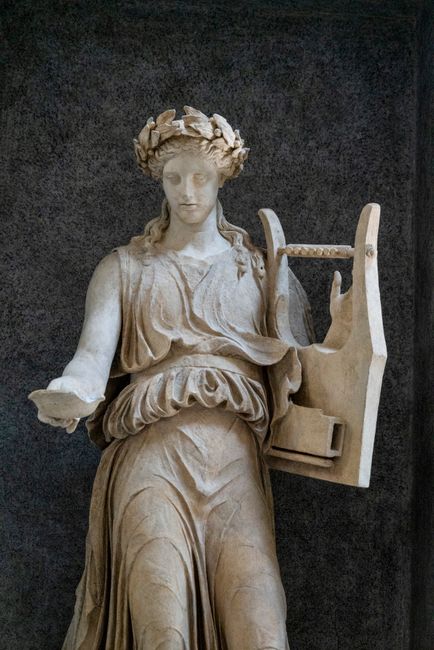
Cognitive science has long recognized what musicians and teachers have always known intuitively: melodic and rhythmic patterns create powerful retrieval cues in memory. That is why a person who struggles to recall a historical date can still sing every word of a song they heard once in childhood. The melody acts as a scaffold, and the lyrics — whatever they contain — hang from it with surprising durability. Mr. Nicky’s format exploits this mechanism with precision: borrow a familiar melody, load it with accurate content, keep it under four minutes, release it where students already are.
The choice of Despacito as the vehicle for Egyptian mythology is almost provocatively clever. The song’s rhythm is hypnotic and its hooks are among the deepest in recent pop history — millions of listeners already have its melodic structure living in their long-term memory. Attaching new content to that existing structure means the educational payload arrives on a vehicle that requires no fuel to start. Students who might resist a textbook chapter absorb the same information before they realize it is happening.
Every civilization finds its vessel for carrying history forward. The Egyptians carved hieroglyphs into temple walls and pressed them into papyrus. The Greeks encoded their history in epic poetry performed from memory for audiences who had never read a word of it. Medieval Europe illuminated manuscripts in monastic scriptoria. And now, a generation is receiving its first real impression of Tutankhamun, of canopic jars, of a golden scale balanced against a feather, through a YouTube video with 2.7 million views and a Spotify track set to the beat of a Latin pop remix.
The ancient Egyptians were, above almost everything else, obsessed with legacy — with leaving something behind that would outlast the body, outlast the dynasty, outlast the flood and the desert wind. They built in stone for exactly that reason. Mr. Nicky builds in melody, which may prove just as durable. Somewhere right now, a kid is closing a laptop, walking away from a screen, knowing what canopic jars are. They can picture a golden scale and a single white feather. History has found somewhere new to live, and it is not leaving quietly.

 English
 Arabic
 French
 Spanish
 Portuguese
 Turkish
 Dutch
Dutch
 Italiano
 Russian
 Romaian
 Portuguese (Brazil)
 Greek
Greek