


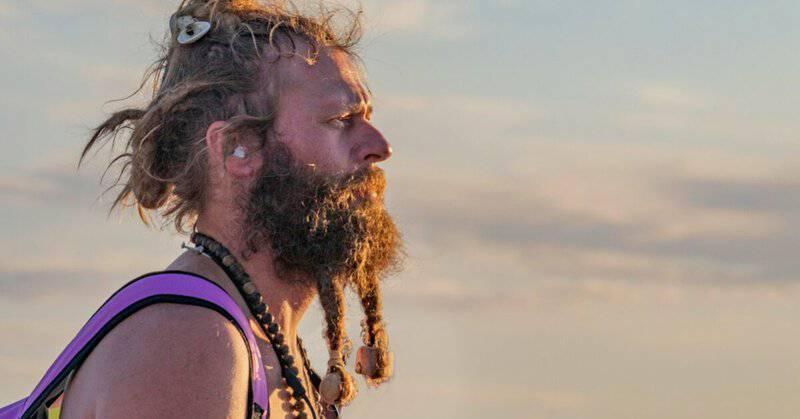
Steel helmets where jersey numbers usually sit. War paint where sponsor logos belong. When Norway’s national football squad posed for the most arresting team photograph of the 2026 World Cup cycle, they didn’t reach for the familiar toolkit of modern sport — they reached back eleven hundred years, to an age when Norwegians didn’t just compete on a world stage, they terrorized it.
The Photo That Started a History Lesson

British photographer David Yarrow has built a career on images that stop a room. When he turned his lens on Norway’s squad ahead of their appearance at the 2026 FIFA World Cup, the result was something between a cinematic epic and a cultural declaration. Furs, shields, iron, and the cold stare of men who play football for a living but chose, for one extraordinary session, to dress as the people who built their nation from violence and salt water. Erling Haaland and his teammates suited up in full Viking battle attire, and the images spread across the internet with a speed that would have baffled the warriors they were channeling.
The choice wasn’t random, and it wasn’t purely aesthetic. It tapped into something Norwegians carry in their cultural bones — the memory of an age when Norse warriors didn’t just arrive in foreign lands, they remade them. The making of that image was a deliberate cultural statement, not a marketing accident, and it raises a question the photograph poses with considerable force: who were the Vikings, how did they forge Norway into a nation, and why does that identity still grip a country a thousand years after the longships were beached for good?
Before Norway Was Norway: A Land of Rival Chieftains

Stand on the Norwegian coast around 800 CE and what you see is not a country. You see a fractured, spectacular geography — fjords cutting deep into granite mountains, islands clustered along a coastline that stretches longer than almost any in Europe — and scattered across it, dozens of petty realms, each ruled by a jarl or petty king who held power through violence, loyalty-binding feasts, and the implied threat of the longship anchored in the harbor.
The word Norway itself tells the story. Norðvegr — the Northern Way — was originally the name for the coastal sea route running along that wild shore, not a political entity at all. Geography was identity before any king thought to make it a country. The land had no center, no capital, no shared administration. It had warriors, weather, and water.
What turned those warriors outward was a combination of pressures historians have long identified: population pressing against the limits of arable land, inheritance customs that left younger sons with weapons but no land to farm, and a shipbuilding technology so advanced that the open ocean stopped being a barrier and became a highway. The Norse clinker-built longship — overlapping planks creating a hull both flexible and fearsomely seaworthy — was the enabling invention of an entire era. When you can beach a warship on any shore and row it up any river, the known world suddenly has very few safe edges.
Historians broadly date the Viking Age from the raid on the monastery at Lindisfarne in 793 CE — a lightning strike that announced to a shocked Christian Europe that something dangerous had awakened in the north — to the Battle of Stamford Bridge in 1066 CE, when a Norwegian king’s ambitions ended on an English field. Norway’s own internal unification drama would play out across nearly all of those 273 years, and it would be messier, bloodier, and more contingent than any clean national founding myth admits.
Harald Fairhair and the First Brutal Push Toward Unity

The sagas — those extraordinary Old Norse prose narratives that are part history, part legend, and entirely compelling — credit Norway’s first unification to one man: Harald Halvdansson, who entered history with a vow and a remarkable amount of hair. According to the sagas, Harald swore he would not cut his hair until he ruled all of Norway. The vow produced both a legendary mane and, around 872 CE, the Battle of Hafrsfjord, where he shattered the coalition of coastal kings who had gathered to stop him. Harald Fairhair — Hárfagri — had his title, and Norway had, for the first time, something resembling a single ruler.
What Harald built was not a modern nation-state. It was a personal empire, held together by his presence, his sons, and the sword. The moment Harald died, the kingdom began to fragment. His many sons immediately competed to inherit and divide what their father had stitched together.
The resistance Harald crushed had a remarkable side effect. Defeated chieftains who refused to submit didn’t simply disappear — they sailed west. Iceland was settled in large part by Norwegian aristocrats fleeing Harald’s consolidating power. The Faroe Islands filled with Norse settlers. Eventually Greenland beckoned, and ultimately Norse voyagers reached the shores of North America centuries before Columbus. Norway’s internal politics literally seeded the North Atlantic, scattering a diaspora across the ocean. Losing at home meant founding somewhere new.
This is the central tension of the entire period: the story of Viking Age Norway is the story of a country that kept almost unmaking itself every generation, requiring new strongmen to restitch it before the seams tore completely apart again.
The Raid Culture That Defined — and Funded — the Age

The word “Viking” has done enormous work in popular culture and taken considerable damage in the process. It conjures horned helmets — which Norse warriors did not actually wear in battle — and a culture defined entirely by violence. The reality was simultaneously more mundane and more fascinating. Most Norse people were farmers, craftspeople, and traders. The warrior class was real and formidable, but it represented a fraction of the population. The word víking, in its original Old Norse usage, described the act of going on a raiding or trading expedition — it was a verb’s ghost, a thing you did, not a permanent identity you carried.
But the raid economy was genuinely central to how Viking Age Norway operated. Raiding was a seasonal profession, a young man’s résumé-builder, and a geopolitical tool all at once. Silver, slaves, and reputation flowed back to Norway and fed the internal competition between chieftains. A lord who could not equip his warriors and reward his loyal men with plunder was a lord who would not stay a lord long. The longship made the whole system possible: shallow-drafted enough to beach on any open shore or navigate any river, fast enough under sail to outrun pursuit, the same basic vessel design let Norsemen found Normandy, trade in Constantinople, and raid monasteries in Ireland — all within the span of a few generations.
That maritime heritage has wound itself into Norwegian identity at every level. Viking FK, founded in Stavanger in 1899, took its name directly from this martial inheritance. The club has spent over a century competing in Norwegian football, winning 9 top-division titles — their most recent championship arriving in 2025 — and operating as an institutionalized reminder that the raiding spirit, repackaged as sporting competition, never quite left the country’s bloodstream.
Conversion, Cross, and the Kingdom’s Second Birth

If Harald Fairhair’s campaigns were Norway’s first violent push toward unity, the Christianization of the country between roughly 995 and 1030 CE was its second — and in the long run, the more durable one. It was not a peaceful spiritual awakening. It was a political project prosecuted with the same calculated determination as any military campaign, driven by two kings who understood that a shared religion was an administrative tool as much as a spiritual one.
Olaf Tryggvason arrived in Norway around 995 CE and proceeded to convert his kingdom through a combination of genuine missionary zeal and forceful coercion. He was killed in a naval battle in 1000 CE before his work was complete. Olaf Haraldsson — the man history would come to know as Saint Olaf — continued the project, but his reign generated fierce resistance from chieftains who saw Christian authority as a threat to their traditional power. In 1030 CE, at the Battle of Stiklestad, Olaf was killed by a coalition of Norwegian chieftains allied with the Danish king Cnut the Great.
What happened next is one of history’s more striking political ironies. Olaf’s death, combined with the rapid growth of his cult and his eventual canonization as Norway’s patron saint, paradoxically accelerated the very unification his enemies had been trying to prevent. A shared saint gave Norway a shared identity that transcended regional loyalties — something no living king had managed to achieve through force alone. The cross and the crown fused, and the church’s Latin administrative infrastructure gave Norwegian rulers the bureaucratic machinery to govern territory rather than simply occupy it.
It took not just conquest but conversion, not just warriors but saints, to make a nation out of a coastline.
The Legacy Buried in the Modern Norwegian Psyche

By the time the Viking Age formally closes at Stamford Bridge in 1066 — Norwegian king Harald Hardrada dead on an English field, his great invasion broken in an afternoon — Norway has been repeatedly unified and repeatedly fragmented. The country is about to enter a long period of Danish dominance that will last centuries. And yet the Viking identity survived as cultural bedrock precisely because it predated that subjugation. You cannot colonize a memory.
When the 19th-century Norwegian independence movement began building toward the 1905 separation from Sweden, it consciously drew on Norse history and imagery. The sagas became political documents. Runestones were studied with new urgency. The argument being made, in art and literature and political speech alike, was that Norwegians were a distinct, ancient people with a sovereign destiny that predated any union with any neighbor. The Viking Age was not just heritage — it was evidence.
That legacy lives today in architecture, in the word fjord borrowed into a dozen languages, in place names scattered from Normandy to Newfoundland, and — unexpectedly, powerfully — in a group of footballers choosing to face David Yarrow’s camera wearing helmets and holding shields. It was a continuation of a very old Norwegian habit: reaching back to the raiding centuries whenever the country wants to announce itself to the wider world.
What the Viking Myth Actually Gets Right
Return to the image one last time. Norway’s footballers in battle dress, heading to a World Cup stage they are appearing at for the first time in recent history, choosing the most ancient available version of Norwegian identity as their calling card. It is theatrical. It is also historically coherent in a way that repays thought.
The Viking Age genuinely transformed Norway from feuding coastal clans into the embryo of a recognizable nation, and that compressed drama — spanning roughly 793 to 1066 CE — is legitimately one of history’s great state-formation stories. It required extraordinary violence, repeated failure, religious revolution, and the slow accumulation of shared identity across generations that had every reason to keep fighting each other. The epic imagery it keeps generating reflects something real about the scale of what was achieved, and the cost at which it came.
These were people who operated at the absolute edge of their world’s known limits — navigating by stars across open ocean, founding settlements in foreign lands, leaving their mark in languages and place names from the British Isles to the Black Sea. The country they eventually became has never quite stopped drawing on that founding energy. When Haaland and his teammates pulled on those helmets for Yarrow’s lens, they were, knowingly or not, the latest chapter in a story that Harald Fairhair started on the waters of Hafrsfjord eleven hundred years ago. The arena has changed. The rivalries are now settled with goals rather than axes. But some impulses — the desire to announce yourself, to sail into the unknown and make it yours — run deeper than any era can contain.

 English
 Arabic
 French
 Spanish
 Portuguese
 Deutsch
 Turkish
 Italiano
 Russian
 Romaian
 Portuguese (Brazil)
 Greek
Greek