


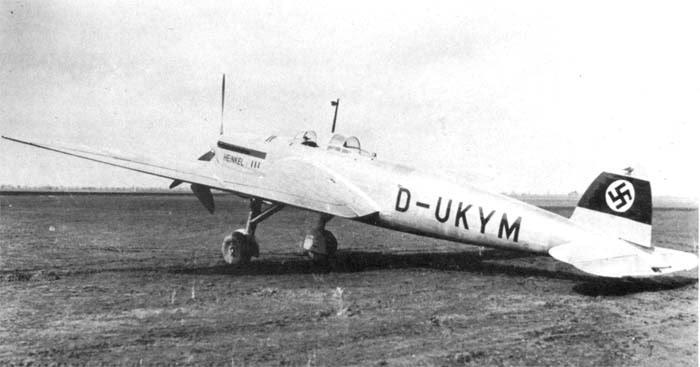
Before the first radio bulletin crackled to life, before any diplomat reached for a telephone, the bombs were already falling. At 4:40 in the morning on September 1, 1939, German Heinkel bombers banked low over the Polish town of Wieluń — a quiet market town with no significant military garrison — and began dropping their payloads in the pre-dawn dark. Within minutes, roughly 75 percent of the town was rubble. The residents of Wieluń had not yet heard the word “invasion.”
The Opening Wound: Why Wieluń Still Matters

What makes Wieluń so haunting, even now, is its ordinariness. It was not a fortress. It was not a strategic crossroads. It was simply the first place the machinery of World War II chose to announce itself — a quiet town that became history’s opening wound. What began there in those few terrible minutes would, over the course of six years, consume an estimated 70 to 85 million human lives across six continents and three oceans. Those numbers stretch beyond ordinary comprehension. Each figure represents a person who once had a name, a morning routine, a face someone loved.
By nightfall on September 1, Germany had crossed into Poland with a force of more than a million soldiers. By the end of six years, almost nothing on Earth would be the same.
The World on the Edge: Two Decades of Pressure Building

To understand how a single morning in a Polish market town ignited the deadliest conflict in human history, you have to feel the pressure that had been building for two decades. The Treaty of Versailles in 1919 ended the First World War, but it did so in a way that left Germany humiliated, stripped of territory, saddled with reparations it could not sustainably pay, and seething with resentment. Then the Great Depression arrived in 1929 and hollowed out economies across the industrialized world. Desperate people in desperate times find desperate politics reasonable. Adolf Hitler did not appear from nowhere; he rose through a broken system that millions of ordinary Germans had come to believe was beyond repair.
Across the world, a similar authoritarian logic was taking hold. In Italy, Benito Mussolini had spent more than a decade constructing a fascist state. In Japan, militarist factions had steered the government toward imperial expansion in Asia, seizing Manchuria in 1931 and launching a full-scale war against China in 1937 — a conflict that had already killed millions before Europe fired its first shot. By the late 1930s, two distinct coalitions were on a collision course: the Axis powers — principally Germany, Italy, and Japan — driven by visions of territorial domination and racial hierarchy, and what would become the Allies — Britain, France, the Soviet Union, the United States, and eventually more than fifty nations — united less by shared ideology than by the grim necessity of survival.
This was not, as it is sometimes misremembered, a European quarrel that accidentally spread. It was a planetary emergency, fought on land, sea, and air across nearly every corner of the globe. Borders, governments, and entire peoples were about to be erased, redrawn, or destroyed.
How the Fire Spread: From One Invaded Country to a World at War

Britain and France declared war on Germany on September 3, 1939 — two days after the invasion of Poland. For months, an eerie stillness settled over the Western Front, a period so quiet it earned the sardonic nickname the “Phoney War.” Then, in May 1940, Germany unleashed its Blitzkrieg — lightning war — on Western Europe. The Netherlands fell in five days. Belgium in eighteen. And then, shockingly, France — a country with one of the largest armies in the world — collapsed in six weeks. The speed of it stunned even German commanders.
The evacuation at Dunkirk in late May and early June of 1940 became one of the war’s defining episodes: more than 330,000 Allied soldiers rescued from the beaches of northern France by a fleet of naval vessels and civilian boats. It was a desperate retreat that Churchill somehow transformed, through sheer rhetorical force, into a symbol of defiant endurance. Britain now stood largely alone, enduring months of German bombing during the Blitz, its cities burning nightly, its civilians sheltering in Underground stations and cellars, refusing to negotiate.
The war kept metastasizing. On June 22, 1941, Germany violated its non-aggression pact with the Soviet Union and launched Operation Barbarossa — the largest land invasion in history, sending more than three million Axis troops into Soviet territory along a front stretching nearly 1,800 miles. The Eastern Front would become the war’s most lethal theater by a considerable margin. Then, on December 7, 1941, Japan’s attack on the U.S. naval base at Pearl Harbor in Hawaii brought the United States into the conflict and transformed the Pacific theater into full catastrophe. Now the war was everywhere at once — sailors dying in the freezing North Atlantic, soldiers locked in apocalyptic urban combat at Stalingrad, civilians starving through the 872-day siege of Leningrad, all simultaneously, all connected by the same catastrophic logic.
The Death Toll That Defies Imagination

Seventy to eighty-five million dead. Pause with that number for a moment. It is roughly the entire population of present-day Germany — every man, woman, and child — erased in six years through combat, famine, disease, and deliberate, industrialized murder. No prior conflict in human history had come close.
The deaths arrived in waves and categories that historians still work to fully document. Military casualties account for tens of millions, but the majority of those who died in World War II were civilians — killed by bombing raids, starvation, forced labor, reprisal massacres, and genocide. The Holocaust stands as the most systematically horrifying chapter: six million Jews murdered by Nazi Germany in a deliberate, bureaucratically organized campaign of extermination, alongside millions of others — Roma, disabled people, Soviet prisoners of war, political dissidents — killed in the same machinery of death.
The Soviet Union’s losses dwarf almost every other nation’s: approximately 27 million dead, a wound so catastrophic it shaped Russian psychology, politics, and foreign policy for generations afterward. China suffered an estimated 15 to 20 million deaths during the war years, a toll still underappreciated in Western accounts of the conflict. To re-anchor these abstractions in something specific: the siege of Leningrad alone — one city, surrounded and starved for 872 days — killed roughly one million civilians. That figure exceeds the entire American death toll across both World Wars combined, concentrated in a single city during a single siege.
Understanding the full human cost of World War II requires sitting with numbers like these long enough to feel their weight — not as data points, but as people.
A Genuinely Global War: Every Continent, Every Ocean

One of the most important things to understand about World War II — and one of the most frequently flattened in popular memory — is that it was genuinely, literally global. Not metaphorically global. It was fought across six continents and all three of the world’s major oceans.
There were campaigns in the forests of Burma and the jungles of Guadalcanal. The Battle of the Atlantic was an invisible, grinding war fought beneath the waves as German U-boats hunted Allied supply convoys, and Allied warships and aircraft hunted them in return — a campaign that lasted the entire duration of the war and claimed thousands of vessels. There were battles in East Africa, across the Aleutian Islands off Alaska, and along Arctic supply routes where Allied sailors endured some of the most punishing conditions imaginable to deliver war material to the Soviet Union.
And then there are the peoples whose sacrifice is too often absent from the standard narrative. Millions of Indians, Africans, and Southeast Asians were drawn into the war not by choices their own governments made, but by the decisions of colonial powers that occupied their homelands. More than two million Indian soldiers served under British command across North Africa, Italy, and Southeast Asia — the largest all-volunteer force in history. West African troops served in the French forces. These men fought and died in a war ostensibly about freedom and self-determination while their own nations remained under foreign rule. That bitter irony was not lost on them, and it planted seeds that would flower into the independence movements of the 1950s and 1960s, reshaping the political map of every inhabited continent.
The war’s physical destruction was equally planetary in scale. Warsaw was methodically obliterated — first during the 1939 invasion, then again after the 1944 uprising. Stalingrad was reduced to ash. Dresden was firebombed in February 1945, killing tens of thousands in a single night. And in August of that year, two atomic bombs fell on Hiroshima and Nagasaki, erasing those cities in instants and announcing to a stunned world that warfare had entered a new and permanent existential dimension. The technology developed and deployed during World War II changed not just how wars could be fought, but whether civilization itself could survive one.
Turning the Tide: The Campaigns That Decided the War

The war did not proceed in a straight line toward Allied victory. For much of 1941 and 1942, the Axis powers controlled enormous swaths of Europe, North Africa, and Asia, and the outcome was genuinely uncertain. Three campaigns proved decisive in turning the tide.
At Stalingrad, between August 1942 and February 1943, Soviet forces encircled and destroyed Germany’s Sixth Army in the bloodiest single battle in history — a confrontation that killed, wounded, or captured nearly 800,000 Axis troops and permanently shattered German offensive power on the Eastern Front. In North Africa, British and American forces pushed Axis armies out of the continent by May 1943, opening the route into southern Europe. And in the Pacific, the Battle of Midway in June 1942 — in which American naval forces, aided by broken Japanese codes, sank four Japanese fleet carriers — permanently shifted the naval balance of power in the Pacific. From that point forward, Japan was strategically on the defensive.
On June 6, 1944 — D-Day — Allied forces landed on the beaches of Normandy in the largest seaborne invasion in history, more than 150,000 troops crossing the English Channel in a single day. The liberation of Western Europe had begun. Less than a year later, on May 8, 1945, Germany surrendered unconditionally. Japan followed on September 2, 1945, after the atomic bombings of Hiroshima and Nagasaki and the Soviet Union’s declaration of war against Japan.
The World After: Borders Redrawn, Powers Reshuffled, Ideas Reborn
When the guns finally fell silent, what emerged from the rubble was a world reorganized at its foundations. Europe was divided by what Winston Churchill would famously call an Iron Curtain — the line between the Western democracies and the Soviet sphere of influence that would define global politics for the next four and a half decades. Two superpowers had replaced the old European order: the United States and the Soviet Union, whose wartime alliance almost immediately curdled into Cold War rivalry. Britain and France, exhausted and exposed, were visibly too diminished to maintain their global empires, even if they had not yet fully admitted it to themselves.
The war produced institutional consequences that still shape our world today. The United Nations was founded in 1945, an attempt to give nations a forum for resolving disputes before they metastasized into catastrophe. The Nuremberg trials — where surviving Nazi leaders were prosecuted for war crimes and crimes against humanity — established the revolutionary principle that those who hold power are not above accountability for atrocities. The Universal Declaration of Human Rights followed in 1948. These were new ideas, born from new horrors, trying to ensure the horrors would not repeat.
Decolonization accelerated dramatically in the war’s wake. Britain granted independence to India and Pakistan in 1947. France, the Netherlands, and Britain gradually — sometimes violently, sometimes peacefully — relinquished their colonial holdings across Asia and Africa. Within two decades of the war’s end, dozens of new nations existed that had not existed in 1939. Historians consistently describe World War II as the central transformative event of the twentieth century — the event that made the modern world.
Culturally and psychologically, the scars ran just as deep. The Holocaust forced a reckoning — incomplete and still ongoing — with what human beings are capable of when ideology, bureaucracy, and indifference converge at scale. Hiroshima and Nagasaki introduced an existential dread that has never fully lifted: the knowledge that nations now possessed weapons capable of ending civilization itself.
Why WWII Is Still the Architecture of Our Present
Nearly every major geopolitical reality of the world we currently inhabit traces a direct line back to 1939-1945. The U.S.-led Western alliance, codified in NATO in 1949. The existence of the state of Israel, founded in 1948 in the direct aftermath of the Holocaust. The borders of the modern Middle East, substantially shaped by post-war arrangements. The nuclear deterrence framework that has kept great powers from open warfare for eighty years — and which keeps the world balanced, uneasily, even now. Modern international humanitarian law, with its codified concepts of war crimes and crimes against humanity. The entire architecture of multilateral diplomacy.
From the first bomb falling on Wieluń at 4:40 in the morning on September 1, 1939, to the formal surrender signed aboard the USS Missouri in Tokyo Bay on September 2, 1945 — exactly 2,192 days — the war reshaped every continent’s politics, every ocean’s power balance, and every society’s understanding of what human beings are capable of doing to one another. The institutions, alliances, and laws that followed were not inevitable. They were chosen, deliberately, by people who had seen what the alternative looked like.
We live inside the world World War II made — its institutions, its traumas, its unresolved warnings. That small Polish town, leveled before most of the world knew a war had started, was the first sentence of a story whose consequences have not finished unfolding. An estimated 70 to 85 million people died so the world could be rebuilt. The least we owe them is knowing exactly what happened — and remaining serious about why it must never happen again.

 English
 Arabic
 French
 Portuguese
 Deutsch
 Turkish
 Dutch
Dutch
 Italiano
 Russian
 Romaian
 Portuguese (Brazil)
 Greek
Greek