


Cloud ERP Market Dynamics, Opportunities, and Revenue Forecast Through 2030
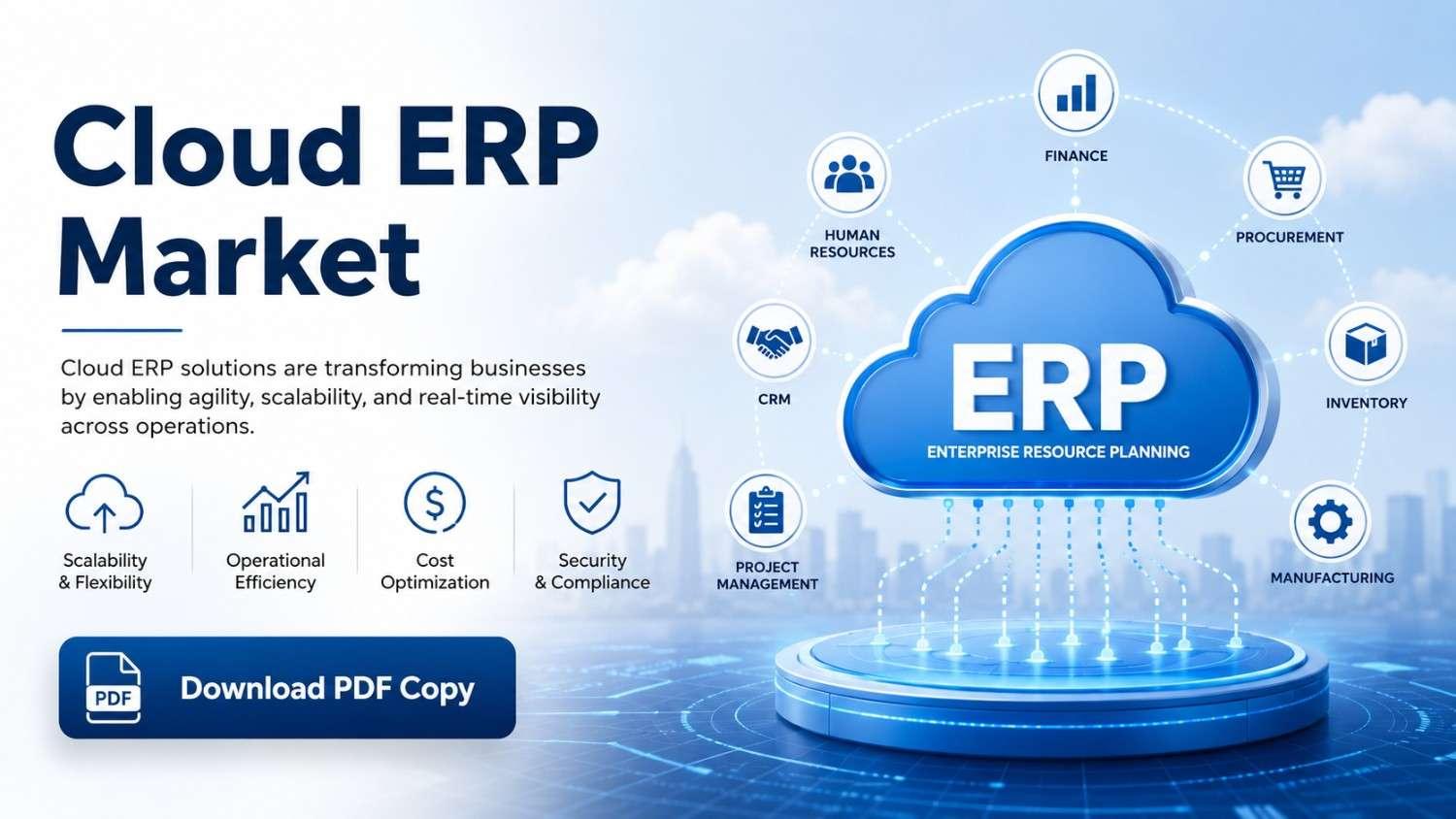
The Cloud ERP (Enterprise Resource Planning) market is poised for significant growth by 2030, driven by the increasing demand for integrated business management solutions among organizations of all sizes. As businesses continue to embrace digital transformation, the shift from traditional on-premises ERP systems to cloud-based solutions is becoming more pronounced. This shift not only enhances operational efficiency but also fosters flexibility, scalability, and real-time data access.
The cloud ERP market is expected to grow from US$ 27.59 billion in 2022 and is expected to reach US$ 108.17 billion by 2030; it is estimated to record a CAGR of 18.6% from 2022 to 2030.
Key Drivers
- Cost Efficiency: Cloud ERP solutions eliminate the need for extensive IT infrastructure and maintenance costs associated with on-premises systems. Organizations can benefit from a pay-as-you-go model, reducing upfront investments.
- Scalability and Flexibility: The ability to scale resources up or down based on business needs is a significant advantage of cloud ERP. Companies can easily adjust their ERP capabilities as they grow or face market fluctuations.
- Enhanced Collaboration: Cloud ERP systems facilitate seamless collaboration among different departments and teams, allowing for real-time data sharing and improved decision-making processes.
- Access to Real-Time Data: With cloud ERP, businesses can access critical data anytime, anywhere, which is essential for timely decision-making and agile responses to market changes.
- Integration Capabilities: The ability to integrate with other cloud applications and services enhances the functionality of cloud ERP systems, making them more appealing to businesses looking for comprehensive solutions.
Opportunities
The Cloud ERP market presents numerous opportunities for growth, particularly in the following areas:
- Emerging Markets: As businesses in developing regions increasingly adopt cloud technologies, there is significant potential for market expansion.
- Industry-Specific Solutions: Tailored cloud ERP solutions for specific industries, such as healthcare, manufacturing, and retail, can drive adoption and cater to unique business needs.
- Artificial Intelligence and Machine Learning: Integrating AI and ML capabilities into cloud ERP systems can enhance predictive analytics and automate routine tasks, providing a competitive edge.
Segmentation
The Cloud ERP market can be segmented based on deployment type, organization size, industry vertical, and region:
- Deployment Type: Public Cloud, Private Cloud, Hybrid Cloud
- Organization Size: Small and Medium Enterprises (SMEs), Large Enterprises
- Industry Vertical: Manufacturing, Retail, Healthcare, BFSI (Banking, Financial Services, and Insurance), IT and Telecom, Government, Others
- Region: North America, Europe, Asia-Pacific, Latin America, Middle East and Africa
Market Report Scope
This report provides a comprehensive analysis of the Cloud ERP market, focusing on market dynamics, key trends, competitive landscape, and future outlook. It encompasses a detailed examination of market drivers, challenges, and opportunities, along with insights into the regulatory landscape affecting the industry.
Market News and Recent Developments
Recent developments in the Cloud ERP market highlight the continuous innovation and competitive strategies employed by leading players:
- Acquisitions and Partnerships: Major companies are focusing on strategic acquisitions and partnerships to enhance their product offerings and expand their market reach.
- Product Launches: New cloud ERP solutions are being launched to meet the evolving needs of businesses, with a focus on user experience and advanced functionalities.
- Investment in R&D: Leading players are investing heavily in research and development to integrate cutting-edge technologies like AI, IoT, and blockchain into their cloud ERP solutions.
Competitive Landscape
The competitive landscape of the Cloud ERP market is characterized by the presence of several key players. Some of the top players include:
- SAP SE
- Oracle Corporation
- Microsoft Corporation
- Infor
- NetSuite (Oracle)
- Workday, Inc.
- Sage Group plc
- Unit4
- Epicor Software Corporation
- Acumatica
These companies are leveraging their technological expertise and market presence to capture a larger share of the Cloud ERP market.
Future Outlook
The Cloud ERP market is expected to witness substantial growth in the coming years, fueled by technological advancements and the increasing need for efficient business operations. As organizations continue to prioritize digital transformation, the demand for cloud-based solutions will rise, leading to enhanced competition and innovation in the market.
Frequently Asked Questions
What is Cloud ERP?
Cloud ERP refers to enterprise resource planning software that is hosted on the cloud, allowing businesses to access and manage their operations remotely. It facilitates real-time data sharing and enhances collaboration.
What are the benefits of using Cloud ERP?
The benefits of Cloud ERP include cost savings, scalability, flexibility, enhanced collaboration, real-time data access, and integration capabilities with other cloud applications.
Which industries are adopting Cloud ERP solutions?
Various industries, including manufacturing, retail, healthcare, BFSI, and IT, are adopting Cloud ERP solutions to streamline operations and improve efficiency.
The Insight Partners provides comprehensive syndicated and tailored market research services in the healthcare, technology, and industrial domains. Renowned for delivering strategic intelligence and practical insights, the firm empowers businesses to remain competitive in ever-evolving global markets.
• Email: sales@theinsightpartners.com
• Website: theinsightpartners.com
• Phone: +1-646-491-9876

 English
 Arabic
 Spanish
 Portuguese
 Deutsch
 Turkish
 Dutch
Dutch
 Italiano
 Russian
 Romaian
 Portuguese (Brazil)
 Greek
Greek