


On November 29, 1453 — just six months after Mehmed II’s cannons reduced Constantinople’s
walls to rubble — Pope Nicholas V issued a papal bull calling for a crusade. He wanted
troops, ships, and treasure from every Christian king in Europe. What he received was
polite silence, competing excuses, and a set of non-binding promises that dissolved within
months. Europe was not going to march east. And so the frontier fell to the men already
standing on it.
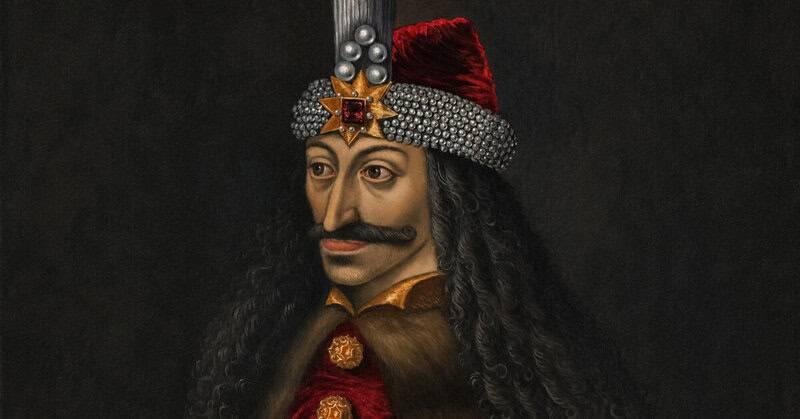
One of those men was a 25-year-old prince who had just seized the Wallachian throne for
the second time by personally killing his predecessor. His principality was smaller than
many European counties, perpetually squeezed between Ottoman vassalage demands to the south
and Hungarian political interference to the north. Vlad III had no standing alliance, no
reliable army, and no reason to believe help was coming. He was right on all three counts.
The Geography That Made Wallachia Expendable — and Indispensable
Wallachia occupied a narrow corridor between the Carpathian mountains and the Danube
river — the natural gateway from Ottoman-controlled Bulgaria into Transylvania and, from
there, into the Hungarian plain and Central Europe. Any Ottoman commander serious about
continental expansion had to either control Wallachia or neutralize it. For most of the
15th century, the Ottomans managed this through a system of tribute and vassal princes,
keeping Wallachia technically Christian but practically compliant.
Vlad’s predecessor had paid the tribute. His father had paid the tribute. Vlad, upon
seizing power in 1456, refused. He understood, with a clarity that Western courts chose
not to share, that tribute was not neutrality — it was slow annexation. Every year
Wallachia paid in gold and boys conscripted for the Ottoman janissary corps, it became
less a Christian principality and more an Ottoman administrative district. Refusing was
not bravado. It was the recognition that the alternative to fighting was disappearing.
The Crusade That Never Left Its Planning Documents
In 1459, Pope Pius II convened the Congress of Mantua specifically to organize a
coordinated Christian response to Ottoman expansion following the fall of Constantinople.
Every major European power sent representatives. The congress produced a detailed crusade
plan, assigned financial contributions, and set a departure date of 1464. Venice committed
ships. Hungary committed soldiers. France committed nothing but eventually sent a small
contingent. The crusade launched, technically, in 1464 — Pope Pius II personally boarded
a ship at Ancona to demonstrate his sincerity. He died at the dock before the fleet
assembled. The crusade collapsed with him.
Vlad had been fighting without this crusade for years by then, and its failure confirmed
what the silence after 1453 had already suggested. In 1461, when he finally broke openly
with the Ottoman Empire — massacring Ottoman officials who came to collect tribute and
launching raids south of the Danube that killed tens of thousands — he did so knowing that
the response would be Mehmed II’s full military weight. He had told the Hungarian king
Matthias Corvinus that an invasion was coming and asked for military support. Matthias took
the crusade money that had been raised on Vlad’s behalf and pocketed it. Then he waited.
The Moment Hungary Chose Its Own Interests Over Europe’s
When Mehmed II’s campaign reached Wallachia in June 1462, Vlad’s forces numbered perhaps
30,000 against an Ottoman force three times that size. He could not hold territory, so he
destroyed it — burning his own crops, poisoning his own water sources, ensuring the Ottomans
would find nothing to sustain an army. His night raid of June 17 targeted Mehmed personally,
a calculated attempt to decapitate the invasion before it established a foothold. It nearly
worked. The Sultan survived by margin rather than design.
By July, Mehmed had installed Radu — Vlad’s own brother, now a Muslim convert and Ottoman
client — as the new Wallachian prince. Vlad retreated north into Transylvania to seek
Hungarian support, and Matthias Corvinus promptly had him arrested on fabricated charges of
secret correspondence with the Ottomans. The man who had just single-handedly held the
Danube frontier spent the next twelve years in a comfortable but firm Hungarian imprisonment.
Europe had its buffer zone back under Ottoman management, and its most expensive defender
was safely out of the way.
What Fell When Wallachia Fell — and Kept Falling
The decades following Vlad’s capture traced the arc he had tried to prevent. Wallachia
became a reliable Ottoman client state. Bulgaria remained occupied. In 1521, Mehmed’s
successor Suleiman the Magnificent took Belgrade — the next fortress on the road north.
In 1526, at the Battle of Mohács, the Ottoman army shattered the Kingdom of Hungary and
killed its king. In 1529, Ottoman forces besieged Vienna itself, coming within a failed
siege and an early winter of making the Habsburgs into vassals.
None of this is Vlad’s fault for losing, or Europe’s for failing to support him — history
is not that clean. But the sequence is real, and the timeline is merciless. The frontier
Vlad held for six years with borrowed time and manufactured terror held better than any
alternative Europe managed to construct in his absence. The cruelty that history has not
forgiven him for was deployed, at its core, in service of a boundary that the rest of
Christendom was not willing to pay for in any other currency.
The tragedy of Vlad III is not that Europe produced a monster — it is that Europe
needed one, refused to help him, and then spent five centuries judging his methods from
behind the walls he died defending.

 English
 Arabic
 French
 Spanish
 Portuguese
 Deutsch
 Turkish
 Dutch
Dutch
 Italiano
 Russian
 Portuguese (Brazil)
 Greek
Greek