


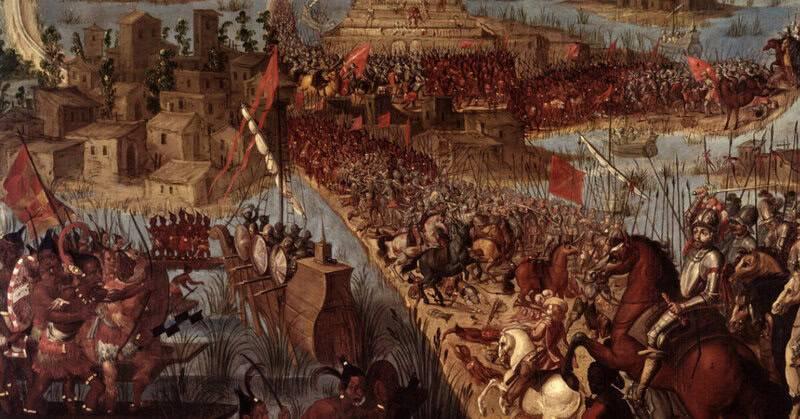
When Hernán Cortés and his soldiers marched into Tenochtitlán in November 1519, they catalogued
everything — gold shields, feathered cloaks, obsidian blades. What they fundamentally
misunderstood was which treasure the Aztecs considered sacred beyond all others. It was not gold.
It was chalchihuitl — jade — and its loss would wound the Aztec world more deeply than
any cannon.
The Stone the Sun God Wore on His Chest
Long before the Aztec Triple Alliance dominated central Mexico, jade had already spent two
thousand years accumulating spiritual weight. The Olmec civilization, flourishing along the Gulf
Coast between 1500 and 400 BCE, carved jade into masks, axes, and figurines with a precision that
still astonishes archaeologists. They sourced their stone from the Motagua River Valley in
present-day Guatemala — a journey of over a thousand kilometers through dense jungle and rival
territory. They made that journey anyway, because jade was not luxury. It was theology.
For the Aztecs who inherited this reverence, jade embodied tlāloc‘s rain, the
green-blue of water and maize, the color of life itself. The supreme ruler Moctezuma II wore a
jade labret — a lip plug — as one of the most visible symbols of his divine mandate. Jade beads
were placed in the mouths of the dead so the soul would have currency in the underworld. Gold,
the Aztecs said with a contempt that baffled the Spanish, was merely “the excrement of the gods.”
Jade was their marrow.
Tribute Ledgers Written in Green Stone
The Aztec empire ran on tribute, and jade sat at the summit of every tribute list. The
Codex Mendoza, compiled around 1541, records the obligations of conquered provinces in
precise detail: sacks of cacao, bales of cotton, loads of rubber. But the entries for jade
necklaces and jade beads carry a different character — they are listed sparingly, almost
reluctantly, as if the scribes understood that even writing the number down was an act of
reckoning. Some provinces delivered as few as four jade beads annually. Four beads were enough to
mark a relationship of total submission.
Wars were fought not merely for territory or sacrifice victims but for control of jade-bearing
trade routes. The city of Teotihuacán, which predated the Aztecs by centuries and may have
reached a population of 125,000 by 400 CE, maintained commercial outposts deep into the Maya
lowlands specifically to secure access to Guatemalan jade. Control of the Motagua Valley meant
control of the sacred, and control of the sacred meant legitimacy that no army could manufacture
on its own.
The Moment the World Changed Color
On August 13, 1521, Tenochtitlán fell. Cortés had expected vaults of gold. What he and his
men encountered in the months after the siege was a population whose grief seemed, to European
eyes, inexplicably disproportionate. The Spanish melted gold into ingots without ceremony. When
they encountered jade, they were largely indifferent — it was not a metal, it could not be
smelted, and it fetched little on European markets. They discarded pieces, used others as ballast,
gave some away as curiosities.
The Aztec survivors watched this happen and understood it as a form of desecration the
destruction of Toledo’s cathedral could not have equaled in Christian Europe. The jade was not
merely wealth — it was cosmological infrastructure. Without it, the rituals that maintained the
sun’s movement, the rains’ arrival, the cycle of the agricultural year, all became, in the
Aztec religious imagination, dangerously incomplete. The Spanish had not just conquered a city.
They had, in the eyes of the people who built it, interrupted the universe.
The Jade Mask That Slept for 1,500 Years
In 1952, Mexican archaeologist Alberto Ruz Lhuillier removed a sealed stone slab beneath the
Temple of the Inscriptions at Palenque and descended into a tomb untouched since roughly 683 CE.
Inside lay the Maya ruler K’inich Janaab’ Pakal, his face covered by a mosaic jade mask assembled
from 340 individual pieces. The mask was not decorative. Each piece had been selected and placed
with ritual intention, transforming a dead king’s face into the face of the maize god — jade as
resurrection technology, as the material bridge between a human life and divine continuity.
Pakal’s tomb confirmed what scholars had long theorized but never seen so completely: that for
the civilizations of Mesoamerica, jade was not a symbol of power. It was power, made
solid and green and holdable in the hand.
What the Green Stone Left Behind When the Empires Fell
The great jade-working traditions of Mesoamerica effectively ended with the Spanish colonial
system, which redirected tribute networks, severed trade routes, and replaced indigenous
cosmology with Catholicism at the edge of a sword. But the Motagua Valley still produces jade.
Contemporary Maya artisans in Guatemala have, since the 1970s, revived ancient carving techniques,
not as nostalgia but as deliberate cultural reclamation — reconnecting a living tradition to the
stone that once organized the world.
The conquistadors took the gold and left the jade behind, certain they understood which one
mattered. Five centuries later, it is the jade that archaeologists still follow to map the
political geography of a lost world.
Some stones carry weight that outlasts the hands that shaped them.

 English
 Arabic
 French
 Spanish
 Portuguese
 Deutsch
 Turkish
 Dutch
Dutch
 Italiano
 Russian
 Romaian
 Greek
Greek