


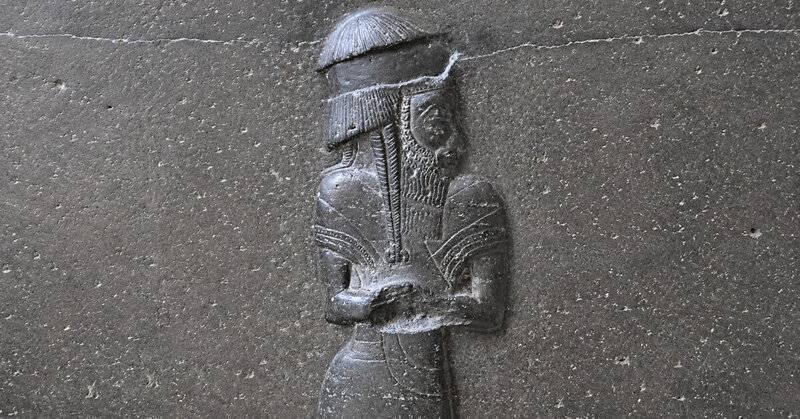
In the ancient Near East, a god was not a metaphor. A divine statue was the god — housed
in its temple, fed daily meals, bathed, dressed, and consulted on affairs of state. When an
enemy army carried that statue away, the theological implication was shattering: the god had
chosen to leave. The city it abandoned was not merely defeated. It was cosmically
forsaken. Shutruk-Nahhunte, king of Elam, understood this with precision — and in 1158 BCE,
he turned divine looting into a instrument of political warfare no sword could match.
The Theology That Made Statues Worth More Than Armies
Mesopotamian religious thought held that the fates of cities were written in the will of
their patron deities. When Sargon of Akkad rose to power in the 24th century BCE, his
propagandists did not claim he had simply won battles — they claimed the god Enlil had
chosen him, had handed him the four corners of the earth because of his righteousness.
When cities fell, lament literature — a sophisticated Mesopotamian literary genre — described
the event as divine departure: the goddess Inanna had flown from Uruk, Enlil had turned
his face from Nippur. Military defeat and divine abandonment were the same event,
described from two angles.
This theology created a strategic opportunity that a sufficiently sophisticated enemy could
exploit. If capturing a city’s divine statues meant that the gods had actively chosen the
captor over the former host, then the act of seizure carried legitimizing force. The king
who held Marduk’s statue held, by implication, Marduk’s endorsement. Shutruk-Nahhunte
had read the logic correctly.
The Raid That Emptied Babylon’s Sacred Skyline
The Elamite campaign of 1158 BCE struck a Babylonia already weakened by decades of
Kassite dynastic instability. Shutruk-Nahhunte moved through the Babylonian heartland
with a systematic thoroughness that went far beyond plunder. From the city of Sippar he
seized the Victory Stele of Naram-Sin. From Babylon itself, he took the stele of Hammurabi.
From Eshnunna he carried away a statue of the goddess of the city. Each seizure was
recorded — not hidden, not minimized, but announced — in inscriptions Shutruk-Nahhunte
added to the objects themselves, claiming them as dedications to Inshushinak, the great
god of Susa.
The psychological effect on the Babylonian population was compounded by what came next.
Shutruk-Nahhunte installed his son Kutir-Nahhunte as ruler over portions of Babylonia,
and the Kassite dynasty — which had governed Babylon for over four centuries — collapsed
within years of the raids. The Babylonian texts that survive from this period do not describe
Elamite military strength. They describe divine absence. The gods, the scribes wrote,
had covered their faces. The land wept. No distinction was drawn between Elamite soldiers
and divine will, because in the Babylonian worldview, no such distinction existed.
The God Who Was Held Hostage for 135 Years
Among the divine statues carried to Susa was a figure of Marduk, the chief god of Babylon —
the deity whose annual festival, the Akitu, renewed the king’s mandate to rule and whose
blessing was considered the theological prerequisite for legitimate Babylonian kingship.
Marduk’s statue remained in Elam for approximately 135 years. During that entire period,
Babylonian kings struggled to perform the full Akitu ritual, which required the physical
presence of the god’s statue. The absence was not ceremonial inconvenience. It was a
constitutional crisis, expressed in the language the ancient Near East used for
constitutional crises: theology.
When the Babylonian king Nebuchadnezzar I finally defeated the Elamites and recovered
Marduk’s statue around 1120 BCE, he commissioned a series of literary texts celebrating
the god’s return that became foundational documents in Babylonian religious literature.
The Marduk Prophecy, written in this period, cast the god’s absence and return as
a cosmic drama — a divine journey through foreign lands that ultimately ended in
triumphant homecoming. Shutruk-Nahhunte had, inadvertently, given Babylon’s theologians
the raw material for one of the ancient world’s most enduring religious narratives.
The Conqueror Who Wrote Himself Into Someone Else’s Monument
Perhaps the most audacious act of the 1158 campaign was what Shutruk-Nahhunte did to the
Law Code of Hammurabi. The stele’s upper register showed Hammurabi receiving the law from
the sun god Shamash — a scene of divine authorization that gave the entire legal text its
claim to cosmic legitimacy. Shutruk-Nahhunte had his own inscription added to the face of
the stele, partly erasing some of Hammurabi’s laws to make room. He was not defacing a
monument. He was inserting himself into a conversation between a king and a god, claiming
by proximity the same divine sanction the original inscription had established.
The erasure is still visible on the stele in the Louvre today — a rectangular patch of
smoothed stone where Elamite scribes ground away Babylonian law to make room for their
king’s name. It is one of the most tangible acts of political overwriting to survive
from the ancient world, and it survives precisely because the stele itself survived,
because Elam preserved what Babylon eventually lost.
The Victory That Planted the Seed of Elam’s Own Undoing
The 1158 campaign represented the apex of Elamite military and political power over
Mesopotamia — and also, in retrospect, its turning point. The humiliation of Babylon
created a wound in Babylonian national memory that did not heal. Nebuchadnezzar I’s
recovery of Marduk became the founding myth of a Babylonian resurgence that would, over
the following centuries, repeatedly contest Elamite power. The Assyrian king Ashurbanipal’s
sack of Susa in 647 BCE — the event that ancient and some modern sources treat as Elam’s
final destruction — was preceded by decades of Assyro-Babylonian pressure that
Shutruk-Nahhunte’s overreach had helped to generate.
Empires that wound their neighbors deeply enough create the energy for their own
eventual undoing. Shutruk-Nahhunte won the campaign of 1158 BCE completely. The
consequences of that victory outlasted his dynasty by five centuries.
The gods he carried home in triumph were already composing the story
of his kingdom’s end.

 Arabic
 French
 Spanish
 Portuguese
 Deutsch
 Turkish
 Dutch
Dutch
 Italiano
 Russian
 Romaian
 Portuguese (Brazil)
 Greek
Greek