


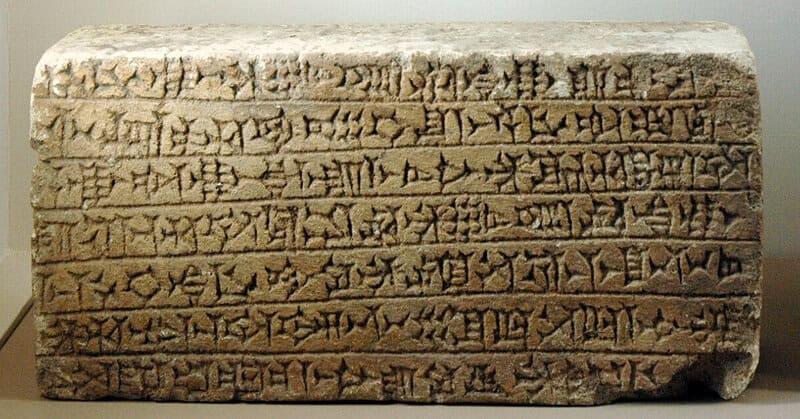
The cuneiform tablets from Susa record her name without ceremony, the way administrative
documents record things that require no explanation: Nahhunte-utu, daughter of the king,
sister of the king, acting in her own legal capacity, conducting business, issuing orders,
present in the governance of a state while the men around her fought and died on the
Mesopotamian plain. The Elamites did not consider this remarkable. That, in itself,
is remarkable.
The Succession Law That Made Women Indispensable to Power
Elamite kingship operated under principles that no other major ancient Near Eastern
civilization shared. In the sukkalmah period, roughly 2000 to 1500 BCE, the right
to rule passed not only through the paternal line but through the female line — specifically,
through the king’s sister. A man strengthened his claim to the Elamite throne not merely
by being the king’s son but by marrying the king’s sister, because she carried the royal
blood that legitimized succession in a way his own patrimony alone could not guarantee.
This meant that royal women were not peripheral to the succession. They were its
structural mechanism.
The practice, which scholars call levirate-adjacent succession, created a class
of royal women whose political value was measurable, documented, and contested. Tablets
from Susa show royal sisters named in treaties, referenced in diplomatic correspondence,
and treated as active participants in the political calculations of neighboring powers.
When Mesopotamian kings negotiated with Elam, they negotiated with an awareness that the
woman in the room might hold the line of succession in a way the man across the table
did not.
The Tablets That Prove She Was Running the Country
Nahhunte-utu appears in the Susa administrative archives during the late sukkalmah
period, roughly the 18th century BCE, as a figure of genuine institutional authority.
She receives goods, she issues authorizations, she is listed in contexts that in
Mesopotamian documents would be occupied exclusively by male officials. Her title
rubishak — a rank in the Elamite court hierarchy — appears alongside records
that place her in administrative rather than merely ceremonial functions. She was not
a queen consort whose name appeared on dedications. She was a political actor whose
decisions appeared in the accounting of a functioning state.
The broader picture from Elamite legal tablets reinforces the singularity of women’s
position in this society. Women in ancient Elam could own property independently of
their husbands, bring lawsuits in their own names, enter into commercial contracts,
and inherit on equal terms with male relatives in certain documented cases. None of this
was universal — the tablets show variation across periods and social classes — but the
pattern is consistent enough that scholars of ancient Near Eastern law treat Elamite
women’s legal status as categorically distinct from their Babylonian, Assyrian, or
Hittite contemporaries.
The Diplomatic Marriage That Moved the Border
Around 2850 BCE, in the earliest period of Elamite state formation, the ruler of Awan
concluded a treaty with the Sumerian king Naram-Sin of Akkad. The treaty was inscribed
in proto-Elamite and Akkadian and included provisions for intermarriage between the
royal houses. What the Akkadian side of the negotiation may not have fully grasped was
that the Elamite royal woman offered in marriage was not simply a diplomatic gift —
she was, under Elamite succession logic, a carrier of legitimacy who might, under
the right circumstances, transmit Elamite royal claims into the next generation of
a nominally Akkadian line.
This is not speculation about a single event. It is a structural feature of how Elamite
diplomacy operated across centuries. Neighboring powers who accepted Elamite princesses
without understanding the succession implications built Elamite legal claims into their
own dynastic fabric. The woman was the clause that the treaty did not spell out — and
Elamite legal culture was sophisticated enough to enforce it when the moment came.
Why the Historians Lost Her and the Archaeologists Found Her Again
The near-absence of Elamite women from popular history has two causes: the dominance
of Mesopotamian sources in the ancient Near Eastern canon, and the slower pace of Elamite
decipherment relative to Akkadian cuneiform. Mesopotamian texts, which form the bulk of
what ancient historians read, describe Elamite political life from the outside and from
an adversarial angle — Elamite women appear, when they appear at all, as prizes of war
or diplomatic tokens, stripped of the institutional context the Susa tablets would
provide. The tablets themselves spent decades partially unread, awaiting scholars who
combined Elamite linguistic expertise with legal history training. That combination
is rare.
The ongoing analysis of the Persepolis Fortification Tablets and the Susa administrative
archives, accelerated by digital imaging and collaborative international scholarship since
the early 2000s, has begun returning these women to the record with the specificity they
deserve. Names are accumulating. Functions are becoming legible. A political culture that
made space for women at its structural core is emerging from the clay with increasing clarity.
Three Thousand Years Later, the Tablets Are Still Talking
The Iran-Iraq War of the 1980s, fought largely across ancient Elamite territory in
Khuzestan province, damaged or destroyed sites whose excavation had barely begun.
The political conditions that have periodically restricted international archaeological
access to Iranian sites since 1979 have slowed the recovery of a record that was already
fragmented. What has been recovered — the Susa archives, the Chogha Zanbil complex,
the Persepolis tablets — represents a fraction of what the ground still holds. Every
season that excavation resumes, the picture deepens.
Nahhunte-utu is one name. The tablets suggest there were hundreds of others — women
who ran accounts, settled disputes, held land, and carried the bloodline that made kings
legitimate, in a civilization that saw nothing unusual about any of it.
Sometimes the most radical thing a civilization can do is treat its women
as a matter of administrative record.

 English
 Arabic
 French
 Spanish
 Portuguese
 Deutsch
 Turkish
 Dutch
Dutch
 Italiano
 Romaian
 Portuguese (Brazil)
 Greek
Greek