


Bhofack2/Getty Images
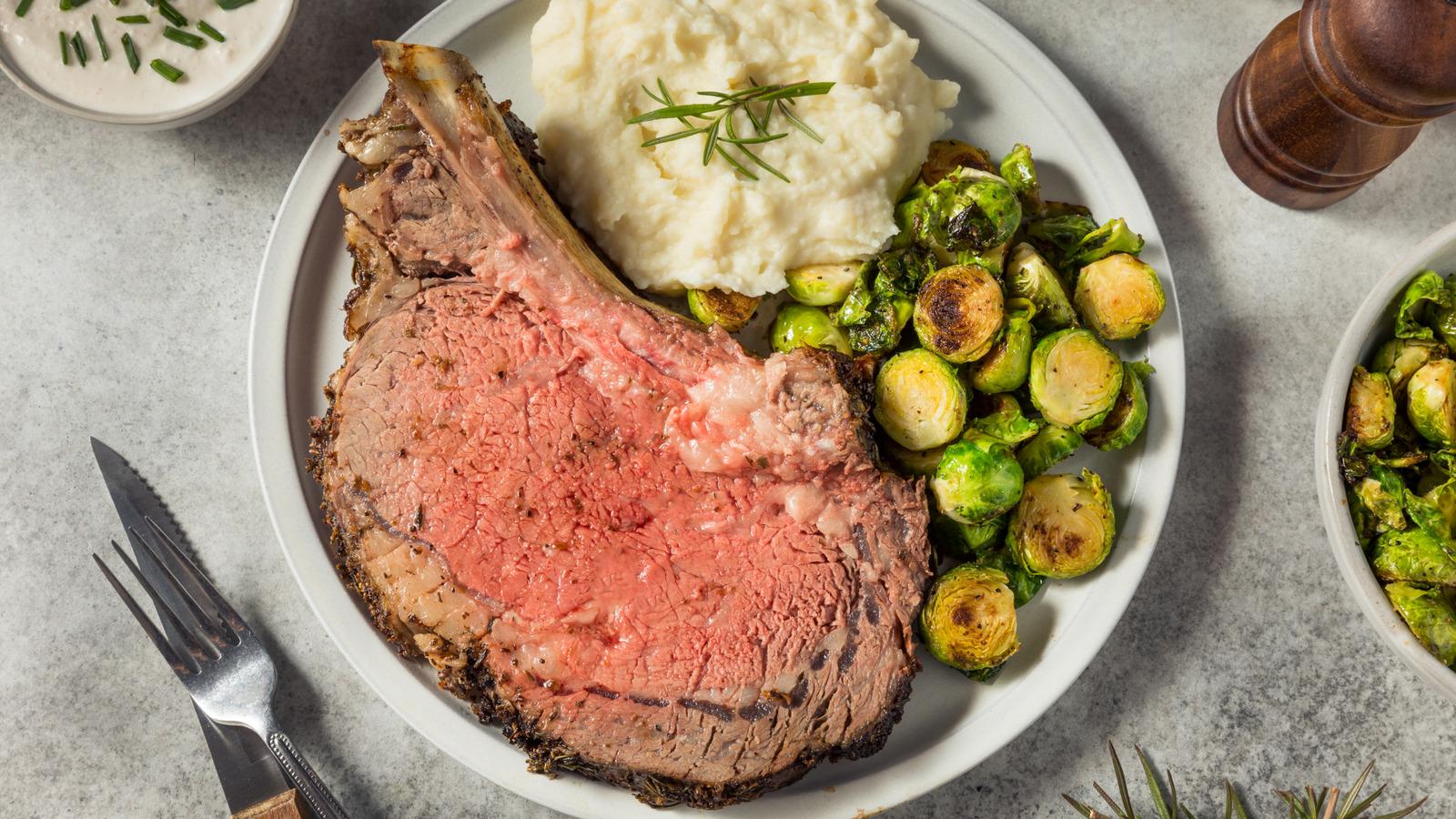
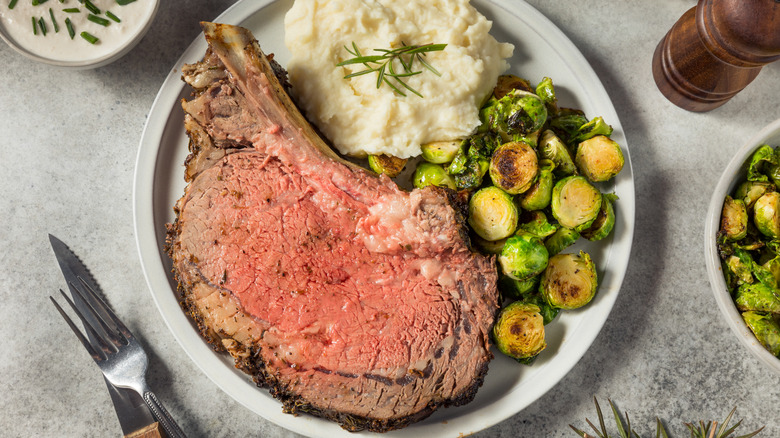
Prime rib often poses a challenge for home chefs, but the resulting juicy roast makes all the effort worth it. To help you find a quality hunk of beef at the grocery store, we sought out an expert's opinion. As an executive chef at Palladino's Steak & Seafood, Sam Hazen knows how to select the perfect beef for a prime rib feast. He provided a list of five characteristics to look for, and we're excited to share them with you.
First, a quick prime-rib primer: While this cut is often sold in individual steaks, we're talking about the full rib roast here. According to Hazen, beef grade, coloring, fat content, and weight are all vital factors to consider. These characteristics help you determine freshness, flavor, and tenderness, and they can also help with achieving optimal doneness. In addition to Hazen's expert tips, be sure to avoid common prime rib cooking mistakes, like not fully thawing the meat or cooking the beef at too high a temperature.
Look for USDA Prime beef
Tada Images/Shutterstock
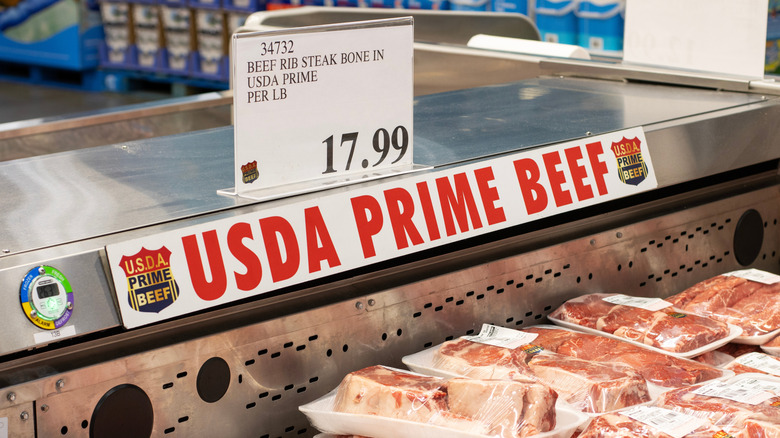
Sam Hazen told Mashed that beef grade should be a major consideration when shopping for prime rib. "Grocery shoppers should only purchase USDA Prime [beef] when buying a Prime Rib," the chef advised. "Otherwise the quality will be revealed and [the beef will] not be worth your time, effort or money." Chef Hazen is referring to the USDA's system of grading beef, which includes the Prime, Choice, and Select categories.
As the top selection, Prime beef exhibits lots of marbling, or intramuscular fat (more on that later). This enhances the meat's flavor and texture as the fat melts down. Next comes Choice beef, which isn't as well-marbled as Prime but still offers lots of quality. Select beef has the least amount of marbling and is the leanest of the grades. You can identify the grade by looking for the USDA shield on the packaging. Prime-grade beef may be best for prime rib, but finding it in stores isn't always easy. In terms of sales, just 2% to 5% of beef belongs to this category, as reported by WebstaurantStore. In this case, you may need to shop around or visit a specialty grocer.
Assess coloring for aging and freshness
Ascentxmedia/Getty Images
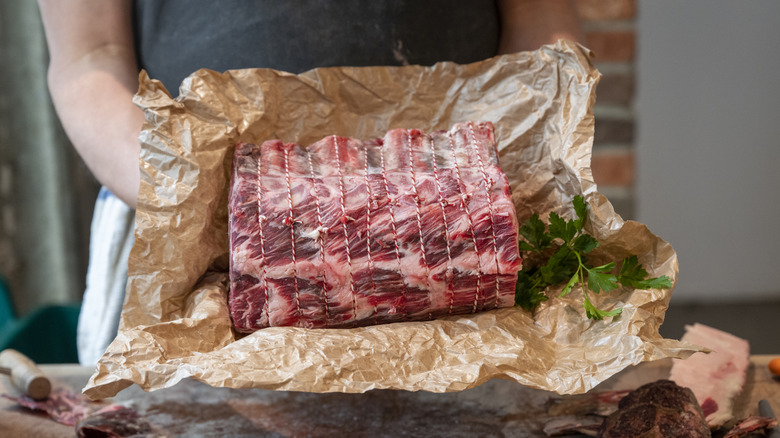
Now it's time to assess the color of the beef hunk you're eyeing. Sam Hazen recommends looking for prime rib exhibiting a "Deep red color," as the chef explains that this shade "Indicates proper aging and freshness, ensuring better flavor development." While important from a quality perspective, Hazen's tip also dispels a popular misconception about the color of raw beef. Truly fresh beef (as well as meat that's stored in an airtight package) will actually appear darker, sometimes even taking on a purplish hue.
Meat only becomes a vibrant red after it encounters oxygen, and it will eventually turn brown with prolonged air exposure. While brown beef is typically safe to eat, its lack of freshness will definitely derail the quality of your prime rib. It's also worth bringing dry-aged beef into the discussion, as this process affects both color and texture. Meat can be aged for 30 days or more, which gives it a much darker color than fresh cuts. Dry-aged beef also develops a more potent savory flavor as the meat breaks down. Prime rib is an excellent contender for dry-aging, but prepare yourself for the price, as these roasts can cost $40 a pound or more.
Choose beef with generous marbling
Andrei Iakhniuk/Getty Images
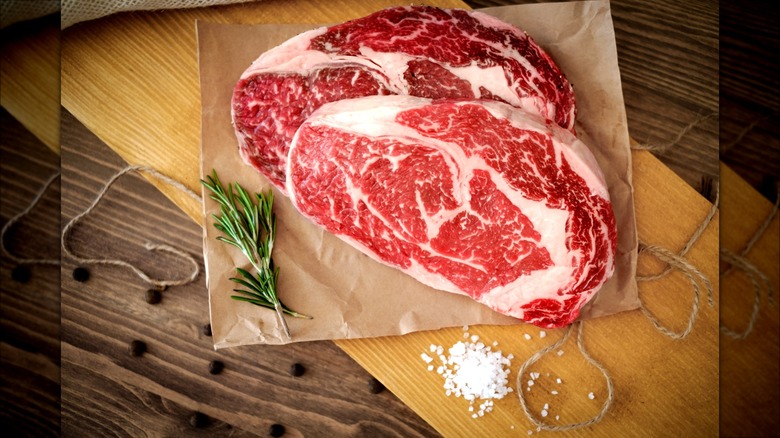
Like color and grade, Sam Hazen advises home chefs to keep an eye out for marbling when shopping for meat. Marbling (or intramuscular fat) refers to the pale streaks running through the muscle, not the fat situated between tissue — though that type of fat is also important to prime rib. Hazen explains, "[Intramuscular] fat melts during cooking, keeping the meat moist and tender throughout the long roasting time." That's precisely why marbling is crucial for high-quality meat.
We've already covered the marbling variations between different meat grades, but there can also be distinctions within top beef selections. Broadly speaking, the best cuts will have a uniform distribution of fine, thin lines of intramuscular fat, known as fine marbling. This type will break down nicely when exposed to heat, whereas medium or coarse marbling (meaning large or unevenly dispersed fat threads) will take longer to melt. This could prevent your prime rib from developing a tender texture and succulent flavor.
A healthy fat cap
Daisy San/Shutterstock
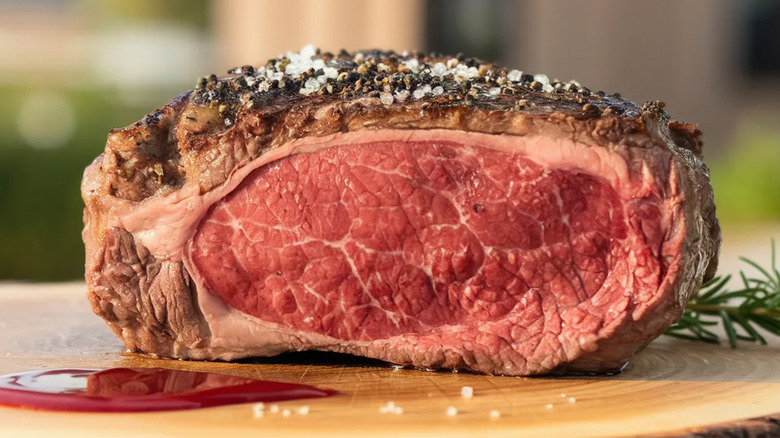
After finding a rib roast that's beautifully marbled, next consider what's on top. In addition to intramuscular fat, Sam Hazen encourages shoppers to select a roast with an intact "White creamy fat cap." This part of the prime rib is an example of intermuscular fat, which are the fatty layers found between muscle tissue. Chef Hazen told Mashed that this cap is crucial because it "Bastes the roast naturally as it renders, adding flavor and preventing dryness."
Fat caps don't have the same impact on flavor as intramuscular fat, but they do play an important role during the cooking process. A generous fat cap stops the surface of prime rib from overcooking in the oven, allowing time for the entire roast to become succulent and juicy. It can also add some texture to the dish, as the fat will become delectably crispy as it cooks away in the oven. To ensure that your prime rib recipe is extra flavorful, consider adding a dry rub. Dried and fresh herbs, smoked paprika, and salt are all common components of tasty prime rib dry rubs.
Make sure the roast is at least 14 pounds
Eder Paisan/Getty Images
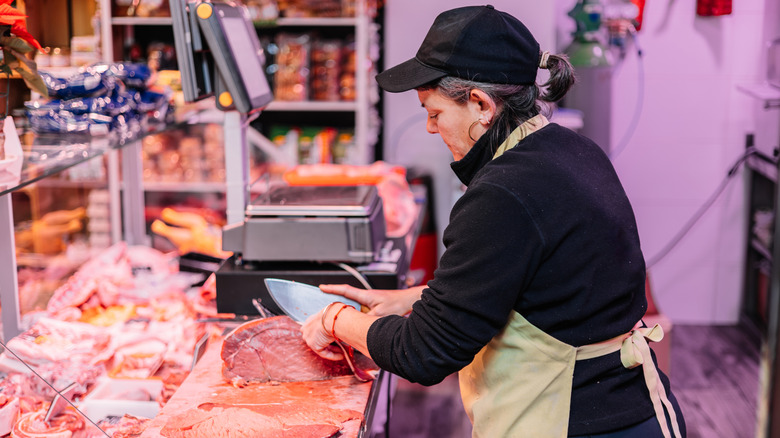
When it comes to the size of your roast, Sam Hazen encourages shoppers to go big. The chef says you want something "Large enough to benefit from low-and-slow cooking without overcooking the interior." In this case, he recommends a roast weighing between 14 and 16 pounds for the best results. Prime rib recipes vary quite a bit, but home chefs can expect a cooking time of about 13 to 20 minutes for every pound of beef.
Based on chef Hazen's weight guidance, a 16-pound roast would take approximately 3½ hours to complete, but it's better to rely on temperature when determining doneness. According to the USDA, beef roasts must reach an internal temperature of 145 degrees Fahrenheit and be allowed to rest for at least three minutes — resting ensures the meat is thoroughly cooked and encourages tenderness by letting juices recirculate. When it comes to the best oven temperature for prime rib, cooking the meat at 250 degrees Fahrenheit will promote optimal juiciness and prevent your feast from becoming hopelessly dry.

 Arabic
 French
 Spanish
 Portuguese
 Deutsch
 Turkish
 Dutch
Dutch
 Italiano
 Russian
 Romaian
 Portuguese (Brazil)
 Greek
Greek