


Secretlab Atlas review - a classy new take on the gaming chair
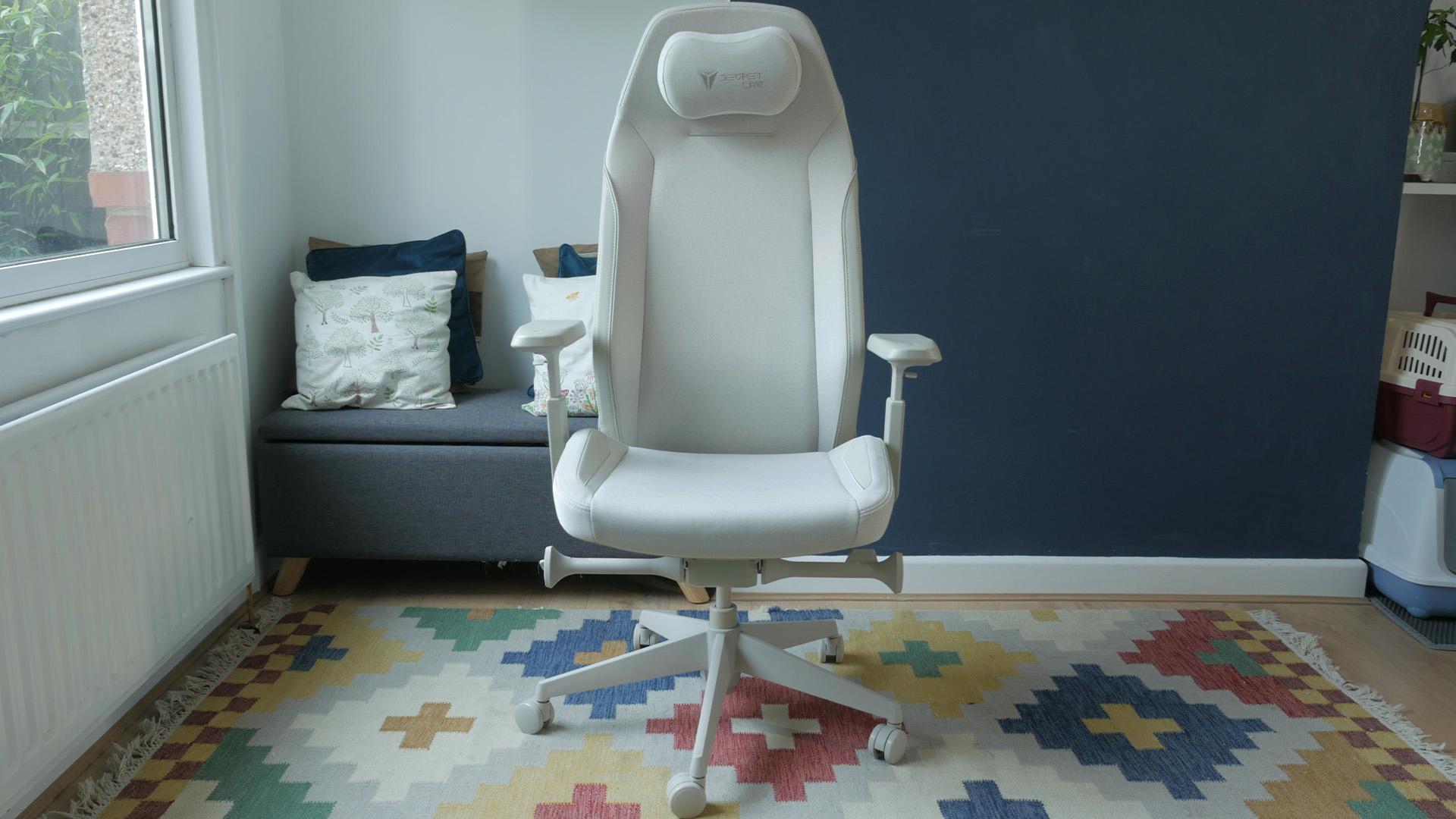
Secretlab Atlas review - a classy new take on the gaming chair
Verdict

The Secretlab Atlas may look and be quite simple compared to some highly adjustable office/gaming chairs. However, its simple approach hides a level of comfort with which most chairs can't compete. It's simply fantastic as an all day working chair that also looks fantastic and is built like a tank, though it's not a cheap option.
Pros
- Sleek styling suited to offices and gaming spaces
- Lighter than many gaming chairs
- Fantastic build quality
- Really comfortable
- Just enough adjustments that are easy to use
Cons
- Light fabrics will stain easily
- Not compatible with Titan Evo accessories
- Can only tilt to 120°
- Headrest pillow too thick
The world of gaming chairs has, for a long time, been dominated by bulky, garish options with car racing seat-inspired designs, and Secretlab has been no stranger to this. Its Titan Evo gaming chair is excellent and is available in some subtle color options, but it's a big chair with mostly quite bold design options. The new Secretlab Atlas, then - the company's first new chair design in four years - is something a little different.
The Atlas is Secretlab's first task-focused chair, as opposed to being explicitly a gaming chair. What does that actually mean? Well, as I explain in the FAQ of our best gaming chair guide, it's a bit of a gray area. But, essentially, gaming chairs tend to be focused on those features mentioned above, with a certain look, but also a versatility that means they can work well for laid back lounging, sitting up on while cross legged, or for taking a nap on - the Recliner Add-on for the Titan Evo transforms it into the ultimate napping gaming chair. Meanwhile, a task chair is more of a traditional office chair, with a stripped-back design and a focus on all-day, mostly upright sitting comfort, with occasional semi-reclined sitting. It's here that the Secretlab Atlas excels.
Specs
| Secretlab Atlas specs | |
| Assembly required | Yes |
| Height range | Regular: <178cm (<5'10"), Large:178-195cm (5'10"-6'5") |
| Weight range | Regular: <100kg (<220lbs), Large: <120kg (<265lbs) |
| Warranty | Three years |
| Upholstery options | Fabric or leatherette |
| Color options | Black, Pure White, Dune+ (reviewed), Pure Black, Cookies and Cream, Moon |
| Frame Construction | Steel and plastic |
| Adjustments | Seat/chair height; combined tilt/recline; seat depth; armrest height, rotation and depth, tilt tension, headrest cushion position |
| Extras | Included headrest cushion |
Assembly, design, and build quality
The Secretlab Atlas arrives in a single, large box that weighs in at around 35kg (77lbs). That's a lot to manhandle on your own, so a helper for assembly might be a good idea, but it's notably less heavy than the Secretlab Titan Evo, which is around 10kg heavier.

Assembly is very straightforward. Like most similar chairs, and unlike the far more complex Hbada X7, it comes in seven main parts, consisting of the five-legged base, five castors, the gas lift strut, the tilt mechanism for the seat base, the seat base itself, the seat back, and the two armrests. The castors simply press into the base legs, the gas lift drops into its center, the tilt mechanism sits on top of that, and then the seat base, back, and armrests all bolt together with identical Allen/hex head bolts.

A little tool kit is included that has an Allen key and a mini screwdriver, the latter of which wasn't actually needed for assembling this chair. The whole unboxing and assembly process took me under 20 minutes.
As for build quality, it's excellent. As I found in my Titan Evo review, Secretlab's first chair might have looked quite a lot like many other gaming chairs, but it was much better designed and built in a host of subtle ways. That attention to detail continues with the Atlas.

For a start, there's the fact that every single component on this chair is color-matched. Even the gas lift strut and all of the visible parts of the tilt mechanism match up. Not all versions of the chair have this - the entry level Atlas has black hardware, while the Atlas "with NanoFoam Composite" has this fully color-matched look - but on those that do, it looks fantastic.
Indeed, styling is at the forefront of the purpose of this chair. It's squarely aimed at those wanting a sleeker, slimmer, and altogether classier, more office-appropriate look than with the Titan Evo or most other gaming chairs. To this end, the back and base do away with the thick, car racing seat bolstered look and instead they have a relatively slim contoured shape.

The company hasn't gone the whole hog and made a short-backed office chair with an optional/separate headrest, though. It's still a mono-back design with a headrest cushion that magnetically attaches to it.
As for the color choice, this monochrome look is available in the sandy Dune color being reviewed here, along with white and black versions, in both faux leather and fabric. Meanwhile, the non-color-matched models have white and black and gray and black (cookies and cream) options again in leatherette or fabric.

The Dune color I'm using looks fantastic. It's an ideal balance of smart, light, and warming, making it ideal for a minimalist office space or a gaming space where RGB lighting and black everything aren't the only options. However, I never stopped feeling paranoid about making a mess of this thing. It's neither fully wipe-clean like a leatherette finish, nor does it have the dirt-hiding ability of a darker or more mottled color. And, sure enough, a mystery brown smudge somehow appeared on the headrest cushion after only a week's use. The fabric can be carefully washed, but grubbiness is a factor to bear in mind.
Elsewhere, the overall fit and finish is just top notch, with all the parts piecing together easily, with no sharp edges left exposed, and all the adjustable parts feeling very robustly built.
Features
This is quite a simple chair. In stark contrast to many task chairs that are packed with dozens of adjustable parts, Secretlab has stuck with just a handful of the essentials. So, you obviously get height adjustment, with this chair having a 10cm lower overall seat height than the Titan Evo, plus you can adjust the depth of the seat base.

Twist the left adjustment knob and you can slide the seat forward or back to suit your leg length, with the ideal position being to have just a 5cm gap between the back of your knees and the seat base, to minimize pressure on the underside of your legs.

The seat base and back can also tilt, with the two moving in tandem. The back can lock at angles of 100°, 107°, 113°, and 120°, with the base tilting at half that rate for each position. This is much less recline than with the Titan Evo. That chair can tilt almost flat - which is why it's so good for a nap - but the Atlas is only really meant for taking shorter breaks where you just want to adjust your posture for a moment.

Other than the headrest cushion, which can be positioned right at the top of the chair all the way down to just above the horizontal line in the centre of the seat back, the only other adjustment on this chair is its armrests. These raise up and down, and the pads can rotate in and out and slide forward and back.
Adjustability and comfort
Secretlab's hope with this chair is that its core design compensates for its lack of adjustability. The seat base cushioning, the seat back shape, the headrest pillow, and the armrest position should all just fall into place for most sitters.
To this end, the company offers the chair in two sizes. There's the large one I'm reviewing here, which is designed for those between 178-195cm (5'10"-6'5") tall and up to 120kg (265lbs) in weight, plus a regular one meant for those under 178cm (5'10") and under 100kg (220lbs).

For my 6'2″ frame and 95kg weight, the large chair does indeed fit me very well. There's enough seat length adjustment, enough headrest cushion range, and the armrests can be set to my preference too.
In fact, the armrests are one of the more standout triumphs of this chair, at least for me. I often remove the armrests from gaming and desk chairs completely, or at least drop them very low, as I find they either don't allow for the chair to be brought close enough to the desk for my liking without the armrest upright hitting the desk, or the pads sit too high once they are brought high enough to come up over the desk. With the Atlas, though, the armrest pads are slim enough and the armrest uprights far enough back that I can fully pull the chair in to my desk and get good arm support.

The other reason I often remove the armrests is that they get in the way when I'm playing guitar, and that's one test this chair doesn't excel at. They don't drop so low as to be completely out of the way (ideally below the tops of my thighs), and if you do remove them, there are unsightly mounting points left visible - the Titan Evo and several other gaming chairs have mounting points that are hidden under the chair.
Aside from this niche complaint, though, the armrests are great, although they are set quite wide on this large version of the chair. So, if like me, you're tall and slim, the lack of armrest width adjustment could catch you out.

Back to by far the biggest consideration for most sitters, though, the seat and back on this chair do feel very good. Secretlab told us that its tests have definitively shown that the much-coveted mesh cushions used by many office chairs actually don't provide as even support as foam, and that's something borne out in this chair.
The initial impression of the seat and back cushioning is that it's quite slim and firm, which might not initially feel as appealing as some chairs. However, for long-term sitting, this firm but even support is effective at reducing pressure points and the associated fidgeting and desire to shift sitting positions. In turn, this means less temptation to sit in ways that promote poor posture.
One factor to consider is that I'm testing the premium NanoFoam Composite version of this chair, which comes with an extra layer of memory foam-like padding on the seat and back cushions, along with the color-matched look mentioned earlier. This has a slightly softer initial feel than the standard version, but having previously tried the normal version, I can attest to its foam still offering a very similar firm but supportive feel.

Helping with this one-size-fits-all approach is that the curve of the back does offer decent support despite its lack of adjustability. Whether sitting upright or tilting back, it just works.
Less of a total hit is the headrest cushion. While its magnetic attachment and positioning work brilliantly, and it's a very soft and comfortable-feeling cushion, it sits just a bit far forward for my liking. If it were an inch shallower - it's nearly four inches deep - or the angle of the head support section of the seat back were a degree or two shallower (so that it sits an inch further back), it would be brilliant. As it is, I somewhat regularly ended up removing it.
Price
The Secretlab Atlas starts at a reasonable $499 for the standard version, rising to $699 for the premium NanoFoam Composite version with the fully color-matched components. That makes it a slightly tricky chair to judge for value, as the standard version feels like decent value for the quality you're getting. Meanwhile, the $699 option feels a touch expensive, considering the modest number of adjustments available on this chair.
Its price is particularly surprising given the Titan Evo starts at $579 (with its premium Nanogen options starting at $799), but that's a larger chair with more adjustments, swappable armrests, and optional add-ons like the recliner footrest. The Atlas certainly isn't bad value, but isn't a standout bargain.
Alternatives
Secretlab Titan Evo
The Secretlab Titan Evo is still our go-to gaming chair recommendation for most buyers as it nicely balances comfort, upgradability, and versatility, all while being available in a huge range of designs and sizes. The Atlas is a better choice for a home office space or a hybrid office/gaming space purely meant for at-desk gaming. However, the Titan Evo is better as a do-everything chair for lounging, napping, and console gaming, as well as at-desk use.
Read our full Secretlab Titan Evo review for more detail.
Fractal Refine
A more direct alternative to the Atlas is Fractal's Refine. This is a very similar style of chair, with a slim, simplistic style and a focus purely on at-desk comfort. It's available in mesh or fabric and includes a more curved seat base design, a non-removable but slideable headrest cushion, and adjustable lumbar support. It's a touch more expensive and is only available in one size - I found it right on the limit of being too small for me - but is a very decent alternative overall.
Read our full Fractal Refine review for more information.
Verdict
The Secretlab Atlas is a great addition to the company's chair lineup, offering a slimmed-down, more desk-focused design that's better suited to smart home offices and gaming spaces than the Titan Evo while providing excellent all-day sitting comfort.
It may look and indeed be quite simplistic compared to some highly adjustable office chairs, but its overall shape, build quality, and its handful of adjustments are enough to make it far more comfortable than many of these alternatives. With the option of two different sizes, this then provides enough variation for many buyers to find a chair that suits them.
Where it falls short of its larger, heftier sibling, though is in customization. You can't remove the arms without making the chair look weird, you can't add a footrest, and you can't swap the armrest pads. If the lumbar support isn't quite to your liking, you also don't have any means of adjusting it here.
This all means that the Atlas is undoubtedly one of the best office/task/gaming chair options around, and an easy recommendation, but if I'm being nitpicky, it's not quite a slam dunk when it comes to value, especially when it comes to the color-matched version I'm reviewing here.

 English
 Arabic
 French
 Spanish
 Portuguese
 Turkish
 Dutch
Dutch
 Italiano
 Russian
 Romaian
 Portuguese (Brazil)
 Greek
Greek