


Erman Gunes/Shutterstock
We may receive a commission on purchases made from links.
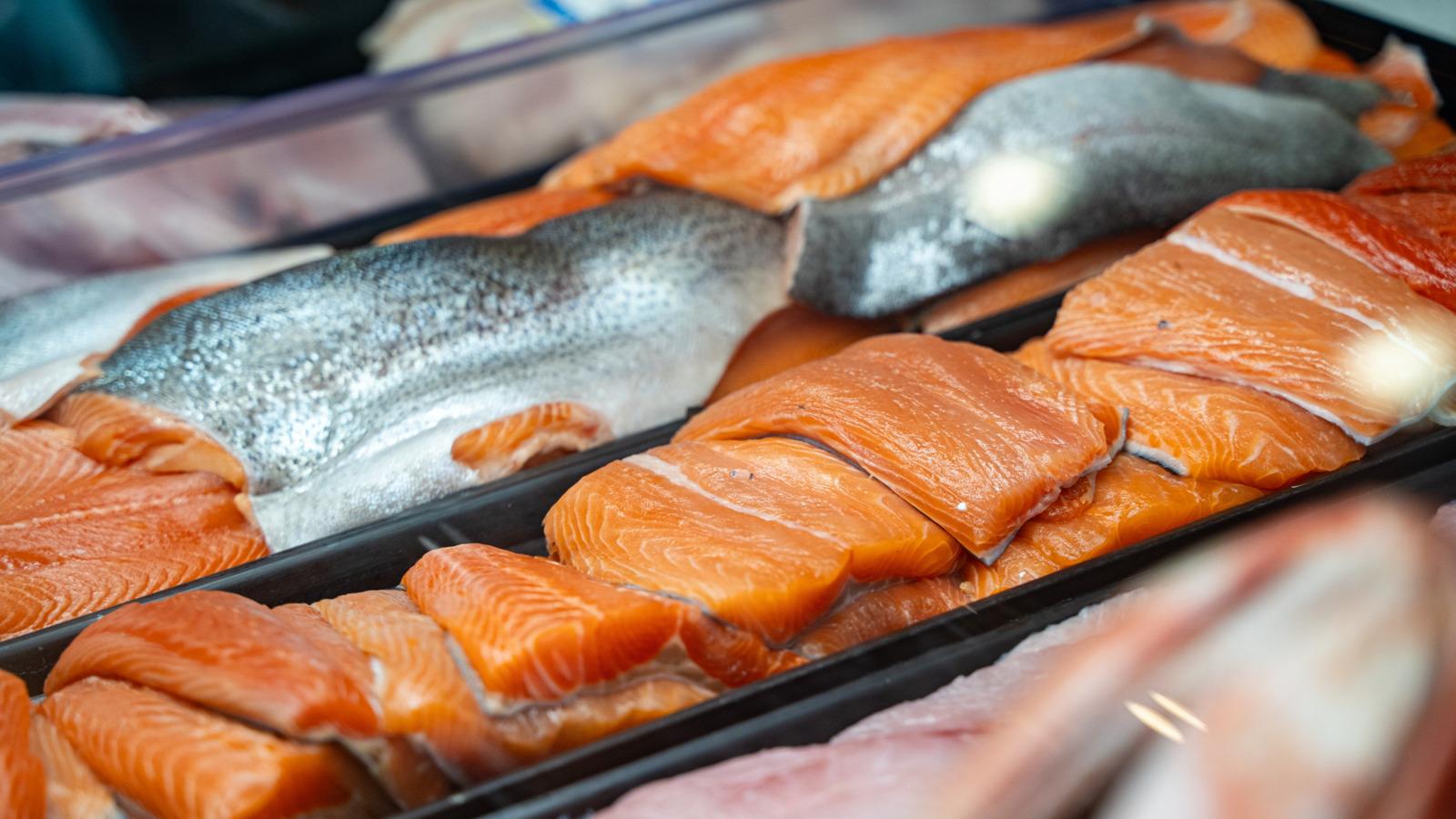
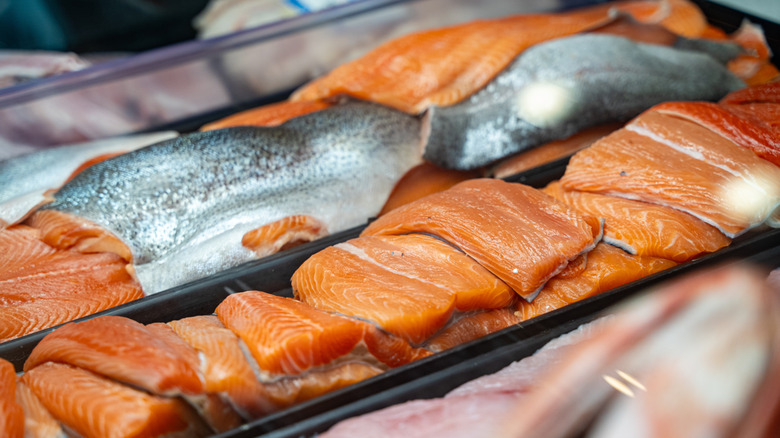
Whether from medical professionals, nutritional experts, or the media, many of us repeatedly hear the same message: Eat more fish. The American Heart Association recommends at least two servings of fish (and seafood) a week, but some experts estimate that the average American consumes only half that amount. Wild-caught seafood is often marketed as better for you than farm-raised, but what even is the difference?
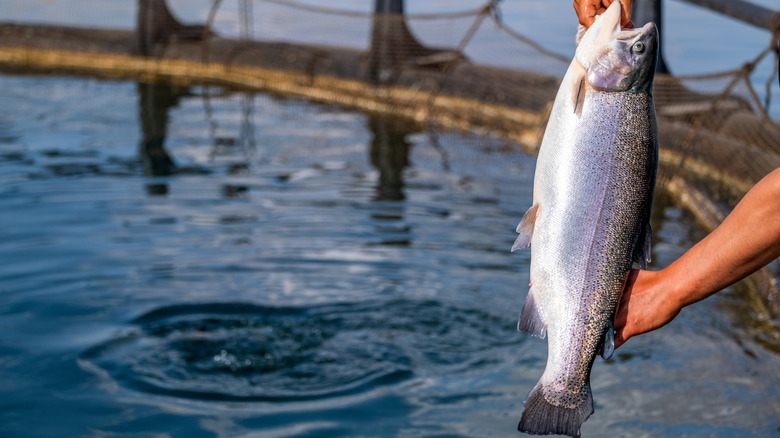
"Wild-caught" simply means that the fish and seafood were caught in natural environments like oceans, rivers, and lakes. "Farm-raised," on the other hand, means that farmers hatched and raised the fish and seafood in controlled environments, which may be large tanks on land or in net pens or fish cages in the aforementioned natural environments. While slight nutritional differences exist, one is not necessarily "better" than the other as a whole. Fish and seafood generally contain high levels of omega-3 fatty acids, vitamins D and B2, and minerals such as calcium and phosphorus.
No matter which type of seafood you choose, marine protein sources are crucial to feed the world's population. If we only relied on land sources of protein, from grazing ruminant animals to monocrop GMO legumes, it would further impact the already worsening climate crisis by disrupting biodiversity and increasing carbon and methane emissions. Do not believe the seafood myth that sustainable sources of seafood are difficult to find; they are likely available wherever you are, if you ask the right questions.
Farmed-raised fish feeds the world
demirbaslperen/Shutterstock
More than half of the world's fish and seafood supply is sourced from aquaculture farms. A major reason for this is that wild sources of fish and seafood simply cannot fill the demand of the planet's growing population. Farms also provide essential livelihoods to many communities around the world. Salmon is often the example of why we should avoid farm-raised fish and opt for wild-caught, especially with regard to antibiotic use. While it is true that many fish farmers, some of whom are unscrupulous, still use antibiotics on their farms, and the incidence of contaminants can be higher in farmed fish, countries like Norway are leading the way in reducing antibiotic use , showing that it's possible to responsibly increase yield while also raising healthy fish and seafood, fit for human consumption.
What about nutritional differences? According to Colorado State University's College of Health and Human Sciences, "farmed fish can be slightly higher in omega-3 fatty acids, presumably due to the farms' fortified feed." This, of course, varies significantly across different aquaculture practices and cannot be used as catch-all reasoning to choose farmed fish over wild fish, especially when the differences are only slight. Farmed fish definitely have lower levels of mercury overall in their favor, as it is large predatory fish that tend to have higher levels of it.
Wild-caught fish can be a sustainable choice
Yusia13/Shutterstock
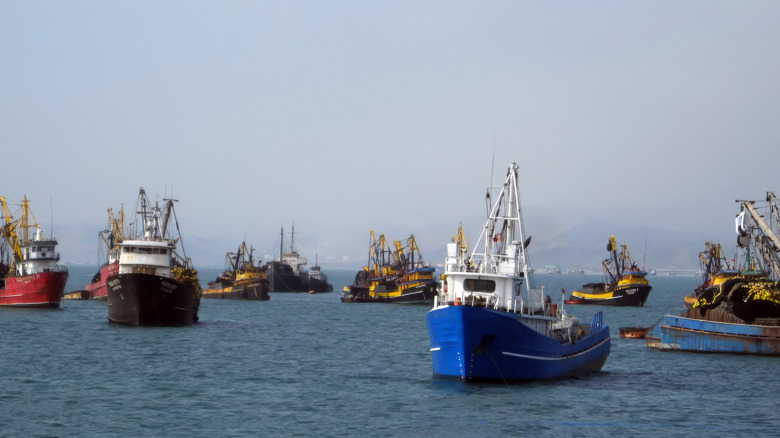
Wild-caught fish tend to have fewer contaminants in their system, along with more vibrantly colored muscle covered in less saturated fat. This is likely due to their all-natural diets of krill and smaller fish, plus their naturally larger feeding grounds. Unfortunately, overfishing in natural bodies of water is a serious and real issue, as the seafood industry can be pretty shady, whether wild or farmed. If fish populations disappear in the wild, the imbalance would be catastrophic to ecosystems worldwide.
We should eat what is available and affordable. With so many pros and cons either way, and only slight nutritional differences, eating fish and seafood is better for you than not. Talk to your local fishmongers and read the labels to find out where your fish comes from. If you live in a landlocked state, fresh wild-caught ocean fish can be expensive, though, of course, you could look to canned versions that advertise their products as line-caught in the wild, like Blue Harbor Fish Co. and Tonnino. And take advantage of Monterey Bay Aquarium's Seafood Watch, which lists information about specific species, including whether fish and seafood are sourced locally or internationally, are farm-raised or wild-caught. You can even narrow the search further to exclude those caught by trawl nets, which is one of the most environmentally destructive fish-catching methods.

 English
 French
 Spanish
 Portuguese
 Deutsch
 Turkish
 Dutch
Dutch
 Italiano
 Russian
 Romaian
 Portuguese (Brazil)
 Greek
Greek