


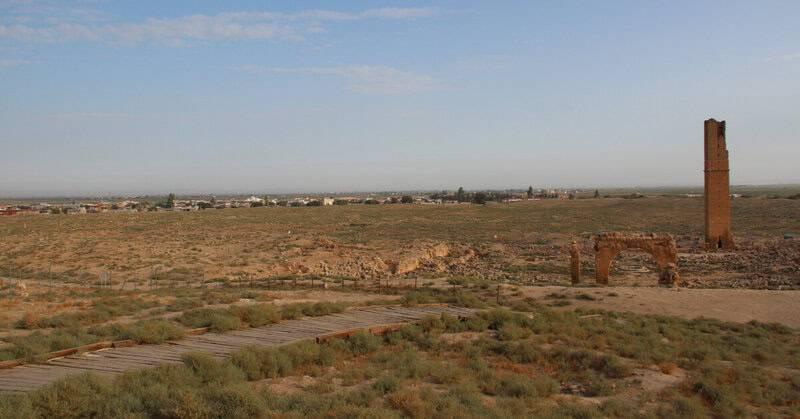
The ravens found the bodies first. Somewhere in the Syrian dust east of Carrhae, in June of 53 BC, roughly twenty thousand Roman soldiers lay dead — and Marcus Licinius Crassus, the wealthiest man in Rome, lay among them. His head would later be used as a theatrical prop at the Parthian royal court. This was not a skirmish. This was a humiliation that echoed for three centuries.
The Empire Rome Could Defeat but Never Subdue
The Parthian Empire stretched from the Euphrates River to the edge of the Indian subcontinent at its height — a territory that swallowed modern Iran, Iraq, and significant portions of Central Asia. Founded around 247 BC by Arsaces I of the Parni tribe, it rose from the ruins of Alexander the Great’s fractured empire and built something neither Greek nor Persian but distinctly, defiantly its own. At its core sat Ctesiphon, a capital city of labyrinthine grandeur on the Tigris River that made many Roman cities look provincial by comparison.
Parthia was a feudal empire, decentralized and fluid, held together not by Roman-style bureaucracy but by a network of powerful vassal lords who owed loyalty to the Arsacid dynasty. Roman writers dismissed it as chaotic. They were wrong. That flexibility — the ability to absorb pressure, retreat, and strike — would prove more durable than any wall Rome ever built.
Seven Legions Walked Into the Desert and Did Not Come Home
Crassus invaded Parthia in 53 BC not for strategic necessity but for glory. He was the third wheel of the First Triumvirate — Caesar had Gaul, Pompey had the sea, and Crassus had money. He wanted a war to match their legends. What he found instead was Surena, a Parthian general barely thirty years old, commanding a cavalry force that Roman military doctrine had no answer for.
At the Battle of Carrhae, Surena deployed the tactic that would define Parthian warfare for generations: the feigned retreat. His horse archers would charge, wheel, and fire backward at full gallop — what later historians called the “Parthian shot,” a phrase that survives in English to this day as a parting blow. When the Roman infantry tightened into the testudo formation, Surena simply waited them out in the heat. He had camel trains supplying his archers with arrows. The Romans had the sun. Crassus died attempting a negotiation. His eagles — the sacred standards of the legions — were carried back to Ctesiphon as trophies.
The loss of those standards haunted Rome for a generation. Augustus spent years in diplomatic negotiations to recover them in 20 BC, and he celebrated the return as if it were a military triumph. It wasn’t. It was an acknowledgment, written between every line of the propaganda, that Parthia was not a problem Rome could simply conquer.
The Silk Road Ran Through Their Living Room
What Parthia understood, and what Rome perpetually underestimated, was economic geography. The empire sat across the central arteries of the ancient Silk Road, controlling the movement of silk, spice, and luxury goods between China and the Mediterranean. Parthian merchants grew wealthy taxing and facilitating this trade. The empire’s cities — Seleucia, Ecbatana, Ctesiphon — were cosmopolitan entrepôts where Greek, Persian, Aramaic, and dozens of other languages were spoken in the same marketplace on the same afternoon.
Rome wanted direct access to Chinese silk and hated paying Parthian middlemen. That commercial rivalry, as much as military ambition, drove the persistent Roman desire to break Parthian power. It never happened. Even Trajan, who briefly seized Ctesiphon in 116 AD, could not hold it. The Parthians faded back into their vast territory and waited.
Five Centuries of Defiance, and Then Silence
The Parthian Empire lasted nearly five centuries — longer than the Western Roman Empire, longer than most political entities in human history. It fell not to Rome but to internal rebellion, when the Sasanian Persian dynasty overthrew the last Arsacid king, Artabanus IV, in 224 AD. The Sasanians were fiercer, more centralized, and equally determined to resist Rome. They built on Parthian foundations while erasing the Parthian name.
History, largely written by Rome and later filtered through Western scholarship, remembered Parthia as an obstacle rather than a civilization. The empire left no great literary tradition that survived intact, no monuments as legible as the Colosseum, no single founding myth as sticky as Rome’s. What it left was a 500-year record of holding the line against the ancient world’s greatest military power — and winning more often than it lost.
Every time someone delivers a cutting remark and walks away, they are, without knowing it, paying tribute to a Parthian cavalry archer who never missed.

 English
 Arabic
 French
 Spanish
 Portuguese
 Deutsch
 Turkish
 Dutch
Dutch
 Italiano
 Russian
 Romaian
 Greek
Greek