


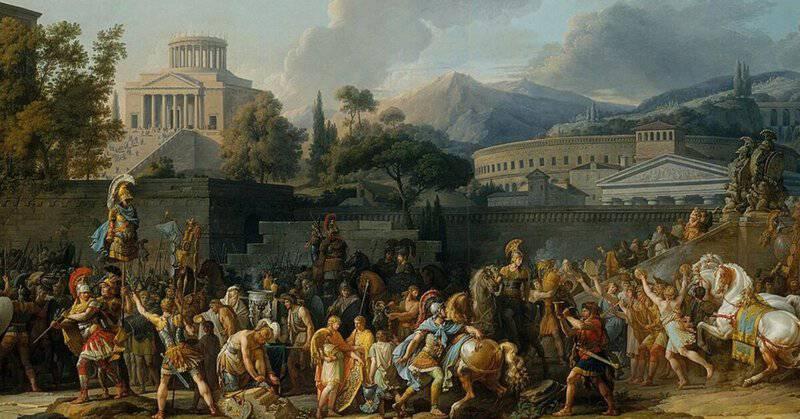
By dawn on August 2, 216 BC, approximately 86,000 Roman and allied soldiers were drawn up on a flat plain near the town of Cannae in Apulia. Facing them was a Carthaginian force roughly half their size. Before sunset, somewhere between 47,000 and 70,000 Romans would be dead — killed not in a rout but in a methodical encirclement so complete and so geometrically precise that military academies still study it today. Hannibal Barca had done the impossible. But he had not done it alone.
Rome had helped him.
The Constitution That Created a Fatal Fracture
The Roman Republic ran on annual magistracies deliberately designed to prevent any single man from accumulating too much power. Two consuls, elected each year, shared the supreme authority of the state — civil, religious, and military. In peacetime, this worked reasonably well. In the field against a military genius operating on interior lines, it was a mechanism for catastrophe. When both consuls were present with an army, they typically alternated command on a daily basis. The system assumed that whatever one consul decided on his day, the other would not immediately reverse on the next.
At Cannae, it assumed wrong. Lucius Aemilius Paullus was a cautious aristocrat, a veteran commander who understood that Hannibal’s greatest strength was precisely the pitched open-field battle that his Numidian cavalry and veteran African infantry were built to dominate. He argued for delay, for attrition, for keeping the army on broken ground where Carthaginian horsemen could not wheel. Gaius Terentius Varro was everything Paullus was not — a populist politician, politically aggressive, strategically reckless, commanding on the day of battle with something to prove to the Senate that had doubted him.
The Envelopment That Became a Word
Varro chose to fight on the open plain. He massed his infantry deeper than usual, compressing the formation to create overwhelming pressure at the center, expecting a straightforward push. Hannibal had anticipated exactly this. He positioned his weakest troops — Gallic and Spanish infantry — at the center of his line, bowing them forward in a convex bulge toward the Romans. On the flanks, he placed his finest African veterans and his devastating Numidian and Iberian cavalry.
When the Roman infantry drove forward and hit the center, it began to give. Deliberately. Hannibal’s center retreated, drawing the Romans inward, compressing them further, packing them so tightly that men lost the room to raise their sword arms. Meanwhile the Carthaginian cavalry destroyed Varro’s horsemen on both flanks and swung inward behind the Roman mass. The convex Carthaginian center had become concave, wrapping around the Roman infantry on three sides. The African veterans closed the fourth. Rome’s army did not lose — it was geometrically sealed and butchered where it stood.
Paullus died in the killing field. Varro escaped with a remnant and was — in a gesture of extraordinary Roman institutional dignity — formally thanked by the Senate for not despairing of the Republic. He lived for years afterward. History has not been so generous.
The Senator Who Kept Rome From Suing for Peace
What followed Cannae was perhaps more remarkable than the battle itself. Hannibal’s general Maharbal urged immediate pursuit, famously telling his commander: “You know how to win a victory, Hannibal — you do not know how to use one.” The delay that puzzled Maharbal was the delay that saved Rome. Within hours of the defeat, the Senate convened. One proposal was made to send envoys to Hannibal to negotiate. The senior senator Quintus Fabius Maximus — the same cautious commander whose delaying strategy Varro had been sent to replace — walked to the door of the chamber and refused to let the envoy leave. There would be no negotiation. Rome would reconstitute its legions and continue.
The city mobilized slaves, freed them, armed them, and put them in the field. It stripped temples of votive weapons. It lowered the property qualification for military service. It did everything the Republican system was theoretically incapable of doing quickly — and it did it in weeks. The same constitution that had fractured command at Cannae proved, in crisis, capable of extraordinary collective resilience.
Cannae Became the Word for Every Encirclement That Followed
The tactical template Hannibal built on that August plain became a military obsession that persisted for two millennia. Alfred von Schlieffen, designing Germany’s World War I invasion plan at the turn of the twentieth century, called his concept the Kesselschlacht — the cauldron battle — and cited Cannae explicitly. Norman Schwarzkopf’s left-hook maneuver in the 1991 Gulf War was described by analysts in the same vocabulary. The word “encirclement” in Western military thought has Cannae embedded in its etymology.
But the deeper legacy is Roman, not Carthaginian. The Republic absorbed Cannae — the worst single-day military defeat in ancient history — and kept functioning. It replaced the lost legions, reformed its command structure, and pursued a strategy of attrition that eventually starved Hannibal of reinforcements until he was recalled to Carthage and defeated at Zama in 202 BC. The system that had helped cause the disaster proved more durable than the disaster itself.
Hannibal won the battle so completely that he made Rome indestructible — because the only way to survive what came after Cannae was to become a state that could not be broken by losing.

 English
 Arabic
 French
 Spanish
 Portuguese
 Deutsch
 Turkish
 Dutch
Dutch
 Italiano
 Romaian
 Portuguese (Brazil)
 Greek
Greek