


Joe Raedle/Getty Images
We may receive a commission on purchases made from links.
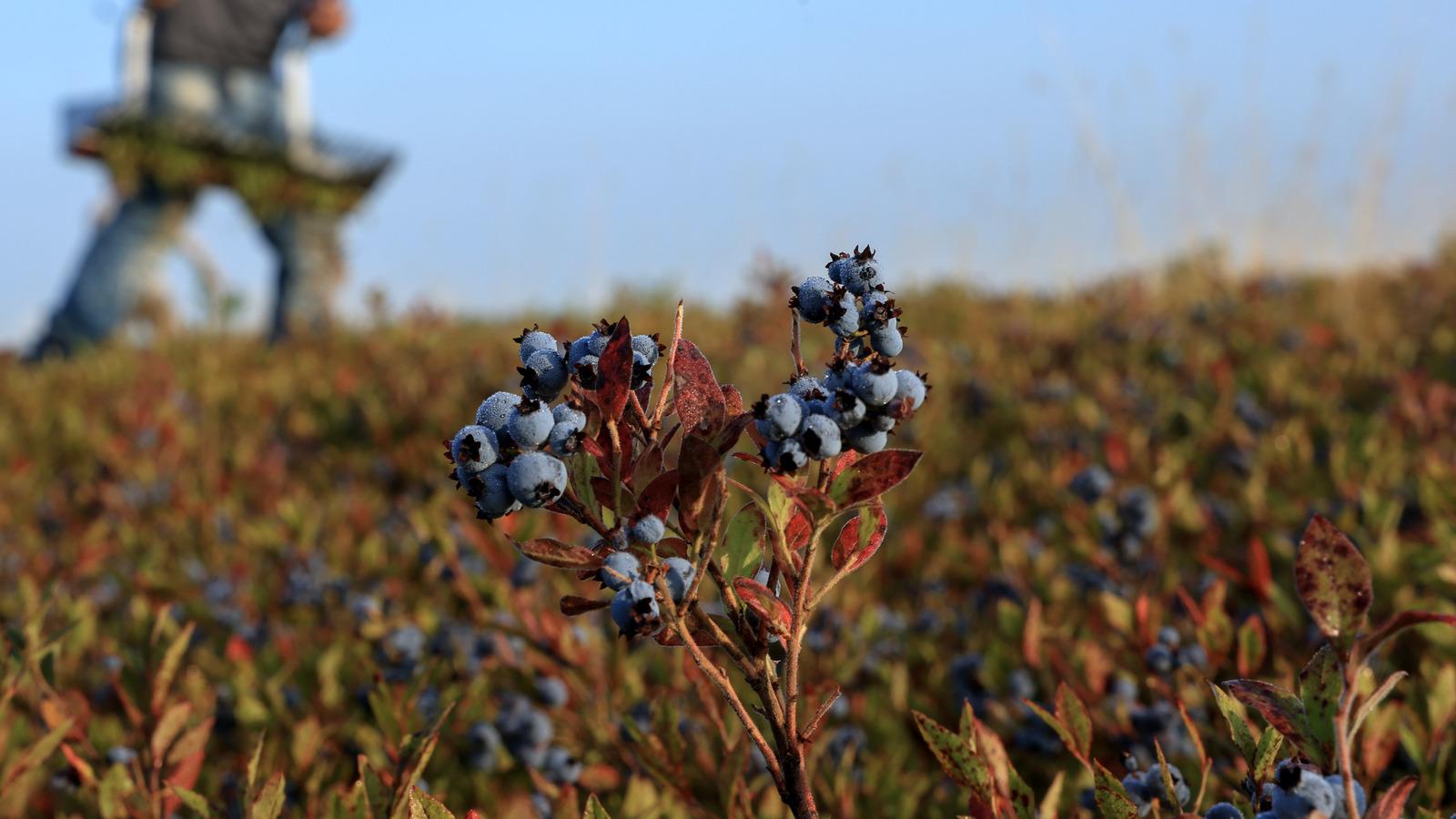
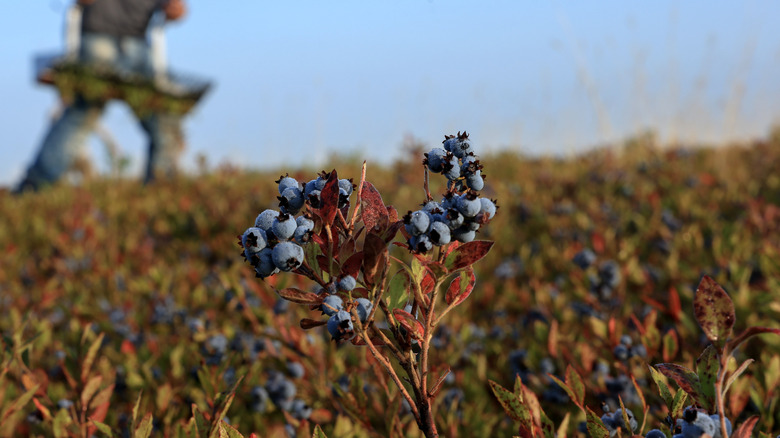
Tiny, antioxidant-rich wild (or lowbush) blueberries aren't simply smaller regular blueberries. They're actually a distinct type that is also native to North America. While farmers first started commercial blueberry cultivation of highbush varieties in New Jersey, the wild type remains more common in the colder climate to the north. The USDA says that over 95% of the crop grown in the United States comes from Maine.
Each year, growers harvest approximately 20,000 to 25,000 acres in the Pine Tree State. In 2025, growers in Maine harvested 19,500 acres of lowbush blueberries, yielding nearly 29,000 tons (via the USDA). The yield varies each year based on a variety of conditions, but Maine produces by far the most of this fruit of any state. The USDA doesn't report the number of individual berries harvested, but with the average wild blueberry weighing about 0.3 grams, 29,000 tons works out to roughly tens of billions of berries. That's a lot of blueberry pancakes.
The yield also varies because of the crop's unique two-year growing cycle. Typically, a grower harvests half a field each summer and prunes the remaining plants to stimulate growth for the following year's harvest. Because the bushes are kept low to the ground, these wild berries are called lowbush blueberries.
Wild blueberries thrive in cold climates and most are sold frozen
Joe Raedle/Getty Images
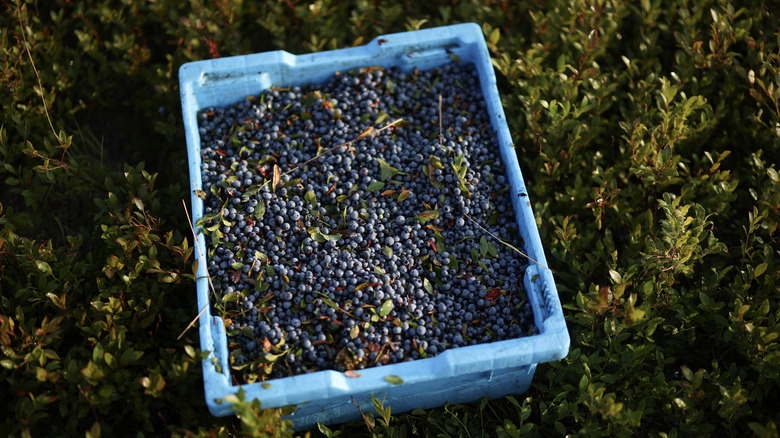
Wild blueberries are known for their high antioxidant content. According to Wild Blueberries of North America, colder growing conditions may encourage the berries to produce more anthocyanins, which contain antioxidant compounds that can help plants respond to environmental stress. Cultivated blueberries generally grow under different conditions and tend to contain lower levels of these compounds.
Most consumers encounter lowbush blueberries frozen rather than fresh. The tiny blue fruit comes from fields called barrens. Wyman's, a popular berry grower in Milbridge, Maine, manages more than 10,000 acres of barrens in Maine and Canada. A fourth-generation family business, Wyman's is among the best known of the wild blueberry growers and harvesters, selling frozen wild blueberries in national grocery and big box stores and online, including on Amazon.
Wyman's isn't alone. In fact, the University of Maine Cooperative Extension reports that 99% of wild blueberries harvested in the state are frozen right away and shipped, rather than being sold fresh. The university also reported that only one grower cooperative in the state packages fresh lowbush blueberries for sale, meaning that it's rare to see them sold that way, especially outside of the state.

 English
 Arabic
 French
 Spanish
 Portuguese
 Turkish
 Dutch
Dutch
 Italiano
 Russian
 Romaian
 Portuguese (Brazil)
 Greek
Greek