


Rubber Vulcanization Market Gains Momentum Across Industrial Applications
Without vulcanization, the rubber in a tyre would soften in summer heat and crack in winter cold, rendering it useless within months. The Rubber Vulcanization Market is projected to grow from US$ 13.94 Billion in 2025 to US$ 20.8 Billion by 2034, registering a CAGR of 5.12% during the forecast period 2026–2034. That robust expansion reflects the irreplaceable role vulcanization chemistry plays in transforming raw elastomers into the durable, high-performance rubber components that modern automotive, industrial, and healthcare applications demand.
What Is Rubber Vulcanization?
Rubber vulcanization is a chemical process in which rubber polymer chains are crosslinked using vulcanizing agents, most commonly sulfur-based systems, to create a three-dimensional network that dramatically improves tensile strength, elasticity, abrasion resistance, and thermal stability. The process typically involves vulcanizing agents, accelerators to control cure rate and efficiency, and activators such as zinc oxide and stearic acid that optimise the crosslink network. The result is a material with mechanical and chemical properties that bear little resemblance to the raw gum rubber from which it originates.
Request a Sample Copy of the Report: https://www.theinsightpartners.com/sample/TIPRE00005875
What Is Driving Demand for Rubber Vulcanization?
The automotive and transportation sector is the engine of rubber vulcanization demand, and the connection is direct. Tyres alone account for the largest share of global rubber consumption, and every tyre produced requires a precisely engineered vulcanization process to achieve the performance characteristics that safety and regulatory standards mandate. Beyond tyres, modern vehicles contain hundreds of rubber components including seals, hoses, belts, vibration dampers, and suspension bushings, all of which depend on vulcanization chemistry for their functional properties. Global vehicle production volumes, combined with the growing complexity of rubber compound specifications in electric vehicles where battery sealing and thermal management components introduce new performance requirements, are sustaining strong demand through the forecast period.
Industrial applications represent a substantial and diverse secondary demand pool. Conveyor belts in mining, agriculture, and logistics, rubber linings in chemical processing equipment, hydraulic hoses in heavy machinery, and anti-vibration mounts in industrial installations all rely on vulcanized rubber compounds formulated for specific service conditions. As global manufacturing output expands, particularly across Asia Pacific and South and Central America, demand for industrial rubber components and the vulcanization chemicals that enable them grows in parallel.
Consumer goods applications are broader than many appreciate. Footwear soles, sporting equipment, household gloves, and elastic components in apparel all involve vulcanized rubber, often with tightly controlled hardness and flexibility specifications that require precisely formulated accelerator and activator packages. The global growth of athletic and outdoor leisure markets is generating incremental demand for performance rubber compounds in this segment.
Healthcare is an increasingly technically demanding end-use sector. Medical gloves, catheters, seals for drug delivery devices, and surgical equipment components all require vulcanized rubber that meets biocompatibility standards and performs reliably across sterilization cycles. The post-pandemic scaling of medical glove manufacturing capacity, particularly across Malaysia and other Southeast Asian producers, has added meaningful volume to healthcare-driven vulcanization chemical demand. Nitrosamine-free accelerator systems, developed in response to European regulatory scrutiny of certain thiuram and dithiocarbamate accelerators in medical applications, are a key area of active product development.
Rubber Vulcanization Market Segmentation Overview
By Type: Vulcanizing Agents, primarily sulfur and sulfur donors, form the crosslink bonds that give vulcanized rubber its structural integrity. Accelerators control the speed and efficiency of the vulcanization reaction, enabling precise processing at industrial scale while optimising the crosslink density and network structure of the final compound. Activators, principally zinc oxide and fatty acids, activate the accelerator system and are present in virtually every commercial rubber formulation. Others include peroxide-based vulcanizing systems used for speciality elastomers such as EPDM and silicone rubber where sulfur chemistry is unsuitable.
By End-Use Industry: Automotive and Transportation, Industrial, Consumer Goods, Healthcare, and Others.
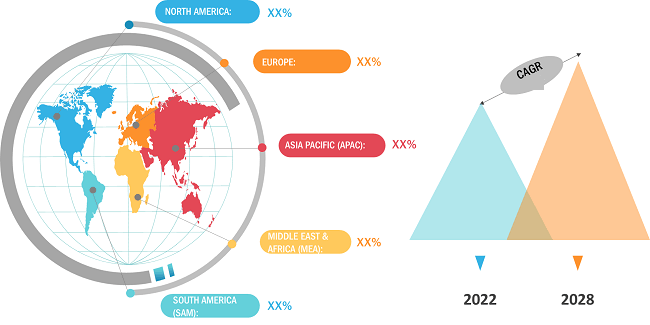
By Geography: North America, Europe, Asia Pacific, and South and Central America.
Key Market Players
- Arkema SA
- BASF SE
- Duslo, A.S.
- Eastman Chemical Company
- King Industries, Inc.
- Kumho Petrochemical
- Lanxess
- Shandong Stair Chemical and Technology Co., Ltd.
- Sumitomo Chemical Co., Ltd.
- Willing New Materials Technology Co.
The competitive landscape spans European specialty chemical leaders including Arkema, BASF, and Lanxess, which hold strong positions in accelerator and vulcanizing agent supply to global tyre and automotive rubber manufacturers. Kumho Petrochemical and Sumitomo Chemical anchor the Asian competitive field with integrated rubber and chemicals operations. Shandong Stair Chemical and Willing New Materials represent China's growing domestic production capability, increasingly competitive on cost across standard accelerator grades.
Sustainability and Innovation Trends
Sustainability pressures are reshaping rubber vulcanization chemistry at a structural level. The European Chemicals Agency's scrutiny of certain thiuram, dithiocarbamate, and sulfenamide accelerators for potential nitrosamine formation has prompted significant reformulation activity across the industry, particularly for medical and food-contact rubber applications. Bio-based vulcanizing agents and accelerators derived from renewable feedstocks are in active development, with several producers advancing pilot-scale programmes. Silica-reinforced tyre compounds, which require modified vulcanization systems compared to carbon black-filled formulations, are gaining market share as tyre manufacturers pursue lower rolling resistance and improved wet grip performance in response to EU tyre labelling regulations. Peroxide vulcanization systems are also seeing expanded specification in EV-related sealing and thermal management components where sulfur-free, low-compression-set rubber performance is a design requirement.
Buy Premium Report: https://www.theinsightpartners.com/buy/TIPRE00005875
Regional Outlook
Asia Pacific dominates the rubber vulcanization market by a considerable margin, driven by China's position as the world's largest tyre producer and rubber goods manufacturer. China alone accounts for a substantial share of global accelerator and vulcanizing agent consumption, supported by a dense network of domestic chemical producers and an enormous automotive manufacturing base. India is a fast-growing secondary market, with expanding tyre production, industrial rubber manufacturing, and medical glove production all contributing to rising demand. Southeast Asia, particularly Malaysia and Thailand, contributes through both rubber goods manufacturing and natural rubber processing.
Europe maintains a technologically sophisticated market, characterised by stringent regulatory oversight of rubber chemical safety and strong demand from premium automotive OEM supply chains in Germany, France, and Italy. North American demand is anchored by the United States tyre and automotive components sector, with active specification of high-performance accelerator systems in speciality industrial and healthcare applications.
South and Central America offers growth potential anchored by Brazil's domestic automotive and agricultural equipment manufacturing base, where vulcanized rubber hoses, seals, and tyre components are consumed in significant volumes tied to the region's agribusiness and vehicle production industries.
Related Reports:
Thermoplastic Vulcanizate (TPV) Market
About The Insight Partners
The Insight Partners is among the leading market research and consulting firms in the world. We take pride in delivering exclusive reports along with sophisticated strategic and tactical insights into the industry. Reports are generated through a combination of primary and secondary research, solely aimed at giving our clientele a knowledge-based insight into the market and domain. This is done to assist clients in making wiser business decisions. A holistic perspective in every study undertaken forms an integral part of our research methodology and makes the report unique and reliable.
Contact Us:
If you have any queries about this report or if you would like further information, please contact us:
Phone: +1-646-491-9876
E-mail: sales@theinsightpartners.com
Also Available in: Korean | German | Japanese | French | Chinese | Italian | Spanish

 English
 Arabic
 French
 Spanish
 Portuguese
 Deutsch
 Turkish
 Dutch
Dutch
 Italiano
 Romaian
 Portuguese (Brazil)
 Greek
Greek