


Anton Vierietin/Getty Images
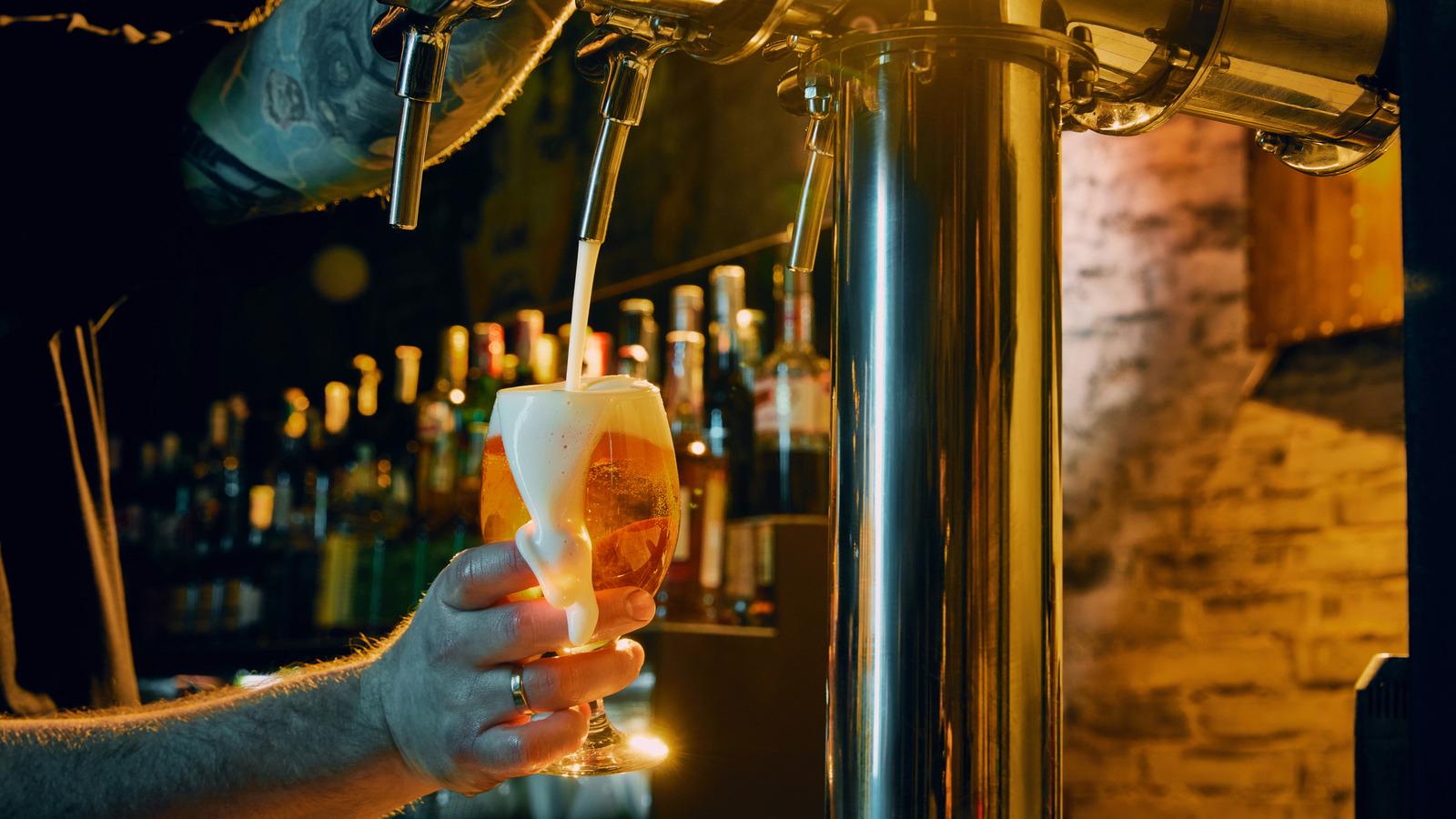
Beer taps are the signature of a brewery, often highlighting the space's personality and some of the most prized items on the menu. A nice, clean, and colorful tap can entice patrons to linger and strike up a conversation with the bartender, or perhaps order a new drink they've never tried before. But just as a beer tap can act as its own built-in marketing tool, it can also reveal brewery red flags. For starters, dirty tap lines can ruin a beer's flavor and make you think twice about ordering a draft on your next visit.
Careful study of a beer tap (and knowing what to look out for) can save customers everything from selection apprehension to serious health risks. Whether you're a novice just beginning to learn the ins and outs of beer drinking, or a certified zythophile planning a trip with friends to hit must-visit breweries across the country, it pays to know what to look out for. We've rounded up three important things to discern when brewery-touring. (And the last one is a doozy, so don't skip the cautionary tale.)
Too many taps could lead to choice anxiety for customers
Freedom 1992/Shutterstock
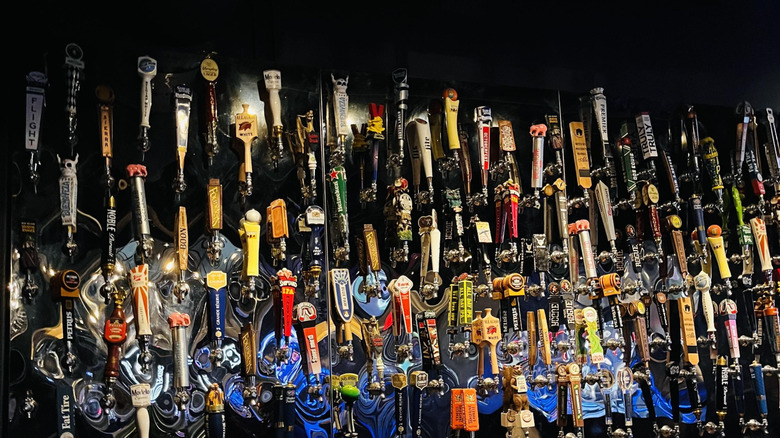
A growing trend among breweries and taprooms is to offer a variety, as many as several dozen drafts from which patrons can choose. Raleigh Beer Garden in Raleigh, North Carolina, holds the Guinness World Record for having 369 beer choices on tap from 203 breweries. But while some customers are in awe of a big selection, not everyone is thrilled by the idea. Too many taps could not only pose a tougher task to keep the bar clean, but also lead to hesitation and confusion for customers deciding what to order.
"If you give people too many choices, they almost get overwhelmed and then fall back to what they're used to," explained Matt Storm, the owner of two Seattle restaurants with craft beer on tap, speaking with Seattle Met. "Whereas if you don't give them too many choices, maybe they take a leap of faith on something they're unfamiliar with."
A group of Redditors at r/CraftBeer polled each other, with the highest number agreeing that 10 to 11 taps are sufficient for a taproom or restaurant. "Choice fatigue is real," one group member said. One commenter added that a smaller selection helps maintain clean lines, noting, "beer needs to be fresh and this week's pilsner shouldn't taste like last week's kettle sour."
You should ask for another pour if the bartender dips the faucet
Zamrznuti tonovi/Shutterstock
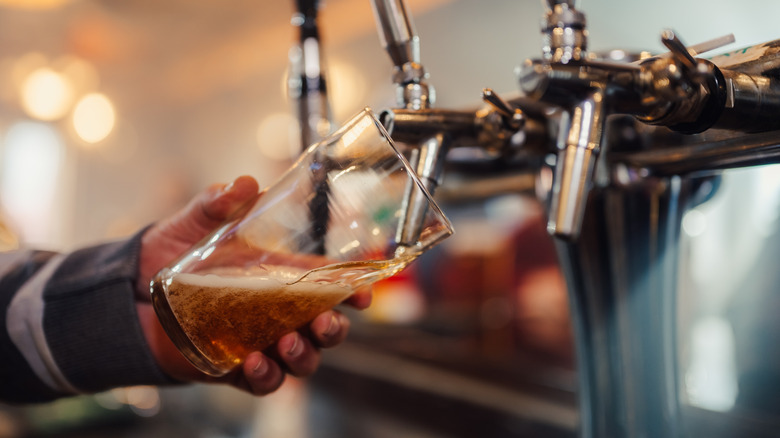
Sometimes aspiring bartenders learn to pour beer at a 45-degree angle, so it trickles down slowly to the bottom of the glass. While this can be an effective strategy for bottle transfer , you may want to leave the brewery if the bartender pours a draft beer this way, because dipping the faucet into the cup, and potentially into the beer itself, could lead to bacterial contamination . Microbes, which are present in beer (and an important part of the fermenting process), can spoil it if they're exposed to open air for too long.
A simple tip to avoid contamination is to watch the bartender to ensure the nozzle stays above the beer glass. If the nozzle dips in — and especially if it grazes the glass or the beer — ask for another pour. Many restaurants and breweries train employees to soak beer tap nozzles overnight in solutions such as soda water; however, if the soda water is from a post-mix or beverage machine, the popular cleaning technique can actually spread contamination. Edward Theakston, a contributor to Star Pubs, recommends soaking the nozzles in a glass filled with hot water to melt off sticky substances. Shake it to further free debris and pour out. Repeat the process before rinsing with cold water.
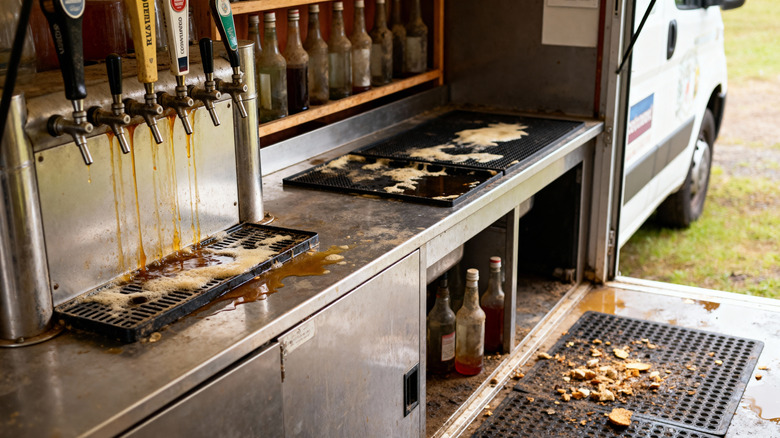
Visible grime and residual beer scream possible health hazards
Snide12/Shutterstock
After a busy night of fast-paced service, cleaning the bar tap is a labor of love. Visible grime, residue, and excess beer are all signs that the tap lines need proper cleaning, so if you notice any of these — and especially if you smell an odor — take heed when ordering. While tap lines should be cleaned every two weeks, at a minimum, the outer-facing components (such as faucets and drip trays) should be cleaned and sanitized every night. Beer that spills over and is not properly cleaned can even attract slugs, due to the sugars.
A cautionary tale comes from a Reddit user at r/TalesFromYourServer. The poster, a restaurant worker, said that a patron took a sip of his cherrywood beer and noticed something floating in it. "It was a f***ing gelatinous moldy beer slug, 2 inches long, that came out of the tap and wasn't discovered until he got down to the last sip," the horrified poster recounted. One commenter , who identified themselves as a "professional draught beer technician" with 15 years of experience, advised the thread that "a beer slug is only formed after about multiple (think six plus) months of neglect." He went on to say that "little white floaties of loose bacteria" appear as earlier, pre-slug warning signs, and pleaded: "Please, for the love of God, get your lines cleaned."

 Arabic
 French
 Spanish
 Portuguese
 Deutsch
 Turkish
 Dutch
Dutch
 Italiano
 Russian
 Romaian
 Portuguese (Brazil)
 Greek
Greek