


Goskova Tatiana/Shutterstock
Choosing a bottle of wine can be fairly intimidating if you're a beginner, well before you even open the bottle. Not only is there so much to learn about it, but a lot of wines can also be pretty costly. If you're just starting out, the anxiety of accidentally buying a low-quality bottle of wine at the grocery store can be very real.
There are, however, a few things on the bottle itself that can clue you in on whether or not a wine might be well-made — and it's not just the price tag. The glass the bottle is made from, clarity of the liquid, and label all have indicators of quality. With a few tips on what to look for, they can be fairly useful in picking out a good bottle of wine.
Keep in mind, however, following these tips won't guarantee you'll enjoy the wine itself. Taste is subjective, after all, and one person's fave might be another's "avoid at all costs." But these details highly correlate with good quality wine and are observable without ever taking the bottle out of the store. This is meant to help you reduce the risks involved when exploring the world of wine, so you don't end up splurging on substandard booze.
Choose wine bottles with thicker and darker glass
il21/Shutterstock
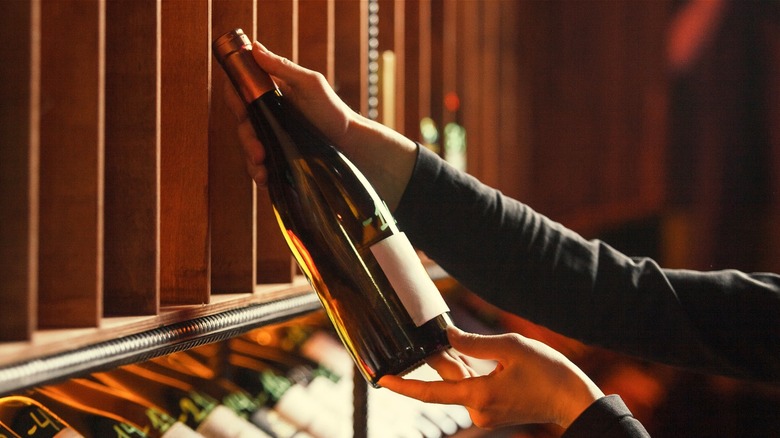
Before even looking at the label, pick up the bottle and get a feel for the glass. If it feels weighty or you get a sense it's fairly thick, it may be a sign you're holding wine from a winemaker that cares about preserving its quality. Whether or not it actually tells you the wine is high quality is a matter of debate, but science supports the idea that larger, thicker vessels like magnum bottles (versus standard) can have a significant impact on quality.
Thick glass bottles tend to insulate wine better, leaving it less prone to changes. Temperature fluctuations can transform a wine's flavor, causing it to oxidize faster and develop some off-putting layers in the overall profile. Since you can't always guarantee wine was stored in temperature-controlled environments during shipment or at the store, having a little extra protection from thicker glass doesn't hurt.
Light can similarly affect wine's quality — sometimes even causing it to smell like boiled cabbage — so choose bottles on the darker end. Shades of green and amber do a good job of protecting wine from the light wavelengths that can ruin it, with amber being the most effective. This doesn't mean you should avoid clear bottles altogether, however. Some wines are meant to be drunk shortly after you buy them, so temperature fluctuations and light damage during storage aren't as much of an issue.
Pay close attention to a wine's clarity
Fcafotodigital/Getty Images
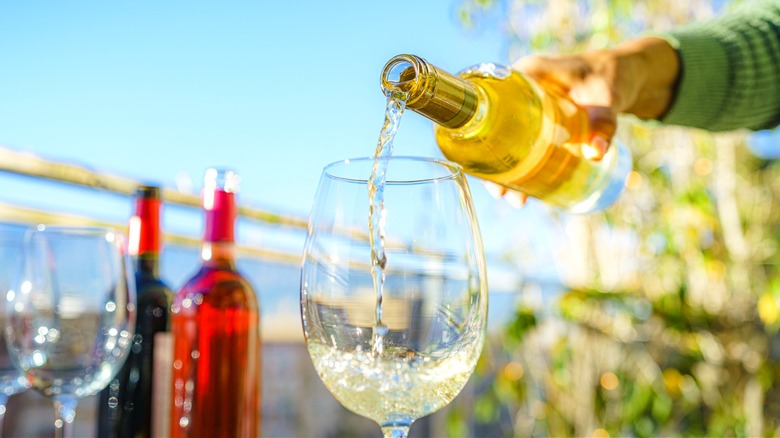
Another common indicator of quality wine is clarity. Winemakers filter out leftover solids, like skins and stems, as well as sediment like soil, from the raw grape juice before fermenting it into wine. These bits can degrade as the wine ages, introducing some funky and altogether unpleasant flavors to the resulting beverage. A clarified wine minimizes the odds of this happening, so make sure you only pick wines with good clarity.
To do this while shopping, try holding the wine bottle against the light. While some bottles might be nearly opaque, you should still be able to get an idea of the wine's clarity. Keep an eye out for haze, which can sometimes be an indicator of whether it's gone bad, or tiny particles floating in the liquid. You want a wine that is free from either of these.
There are, of course, some exceptions to this guideline. Recent years have seen natural wines grow in popularity, and these are often produced with minimal intervention during the winemaking process. This means winemakers may opt out of clarifying the wine, so cloudiness may actually be part of the appeal. For beginners, however, it's better to start with conventionally made wines since there are a lot more options available. So clarity should still be a major consideration.
Terroir information on a wine label is always a plus
Every wine bottle will have the winemaker's name and country of origin on the label, and the more specific it is, the higher its quality tends to be. Higher quality wine won't just indicate what country it's from; the label will specify what region or village it was made in. For instance, Château L'Évangile, one of the rarest wines you can buy at Costco, specifies it's from the Pomerol subregion of Bordeaux, France.
These details tell you something about what the wine's terroir means or the environmental conditions influencing its unique characteristics. Everything from soil quality to climate can affect grapes that make wine and some winemakers actually list these details on the label. While the taste and experience of a wine's terroir can be very subjective, having this information on the label indicates the producer cares about you knowing what you're getting. It's not hiding anything about quality, which tells you the winemaker is confident about its product.
A handful of other terms can also give you a little extra insight on the terroir. A "Grand Cru" from Bordeaux, for example, comes from grapes grown in the region's very best vineyards. Many high-quality wines will also say "estate bottled" on its labels; this means wines were produced and bottled in the same geographical location. Estate-bottled wines are implied to be made with greater quality oversight, since there aren't any third-party bottlers potentially mishandling them.
Certifications and awards matter for wine
Some bottles of wine have seals with letters like AOC, DOC, or DOCa printed on them. These are certifications issued by quality standards organizations in the regions these wines are made in — it's how you know a Rioja was actually produced following strict guidelines that govern Rioja wines, for example. In many cases, these certifications also let you know which wines are of a higher quality than others, since wines are also often classified according to tiers.
For French wines, look for AOC or AOP certifications to ensure premium quality. The highest quality Italian wines have DOCG or DOC certification. Look for DOCa, DO, or VP in Spanish wines, and Prädikatswein or Qualitätswein in German wines. Other wine-producing countries will have its own sets of certifications, so it's generally a good rule to look for similar seals.
Another thing to look for are awards logos on the labels. Many wines proudly display its wins on the bottle, and some award-winning wines can even be bought for cheap. With seasoned experts doing all the judging for these awards, odds are every winner is high quality. It goes without saying the more prestigious the competition, the greater the chances of an award-winner being of the very best quality. Keep an eye out for winners of global awards like the International Wine & Spirit Competition and Decanter World Wine Awards.
Look for complexity and finish in the tasting notes
Karelnoppe/Getty Images
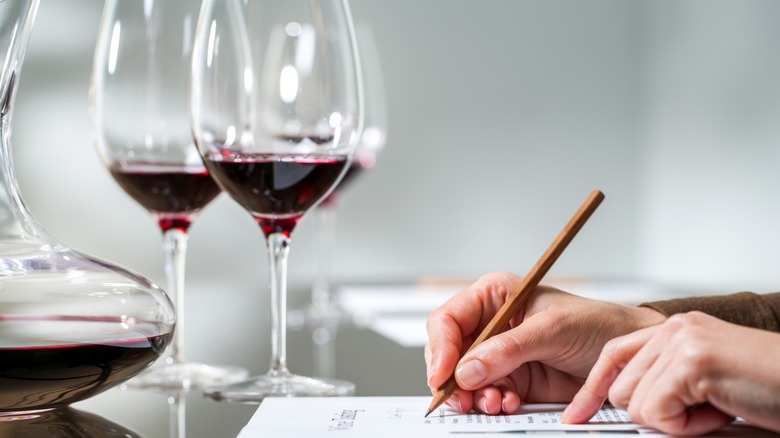
Some wines have tasting notes on the label, offering a description of how they smell, taste, and feel in your mouth. Many words in these notes, like astringency and body, indicate quality in the same way crunchy tells you if peanut butter is good — it doesn't. Appreciation of these characteristics is entirely up to personal preference, and even juicy wine sounds delicious but can be loaded with different meanings to different people. That said, two terms do correlate fairly highly with quality, and I'd recommend beginners look for complexity and finish on the label or in reviews.
Complexity refers to a wine having multiple layers of flavors and aromas that develop over time. Higher quality wines are usually more complex, creating a more dynamic experience for the drinker. If a wine label doesn't explicitly state the word complex, check if the tasting notes mention flavors that seemingly contrast with each other — like berries, coffee, black pepper, and cedar, for instance. These usually indicate a balanced, complex palette.
High-quality wines also tend to have a long or lingering finish, meaning flavors and aromas of the wine stay in the mouth for some time, allowing more complexity to shine through. Some of these layers may only be apparent as the finish plays out, so the longer the finish, the more notes you'll be able to enjoy.

 English
 French
 Spanish
 Portuguese
 Deutsch
 Turkish
 Dutch
Dutch
 Italiano
 Russian
 Romaian
 Portuguese (Brazil)
 Greek
Greek