


Telecom Infrastructure Growth Boosting FTTx Pipes Market Demand
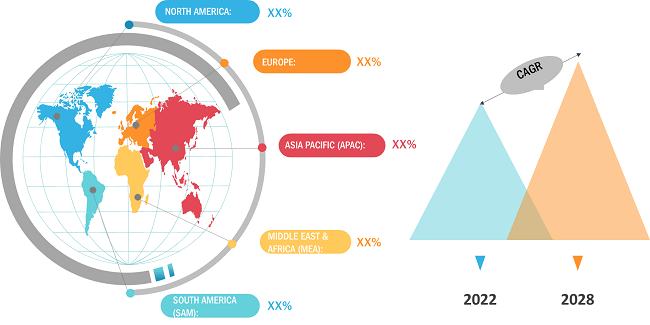
Fibre-to-the-x infrastructure is no longer a luxury reserved for dense urban centres it is fast becoming the baseline expectation for reliable digital connectivity worldwide. The FTTx Pipes Market is expected to grow from US$ 10.9 Billion in 2025 to US$ 18.89 Billion by 2034, registering a CAGR of 6.30% from 2026 to 2034. That momentum is being driven by a convergence of government broadband mandates, 5G rollout requirements, and surging demand for high-speed internet access across both emerging and developed economies.
What Are FTTx Pipes?
FTTx pipes are protective conduits, primarily made from thermoplastic materials, used to house and route fibre-optic cables in telecommunications and data network infrastructure. They serve as the physical backbone of fibre deployments, shielding cables from mechanical damage, moisture, and environmental stress across underground, aerial, and building installations.
Request a Sample Copy of the Report: https://www.theinsightpartners.com/sample/TIPRE00009049
What Is Driving Demand for FTTx Pipes Across Global Markets?
Government-led broadband expansion programmes are arguably the most powerful demand engine in this market. The United States' BEAD Programme, the EU's Gigabit Infrastructure Act, and similar national broadband strategies across India, Japan, and Australia are collectively channelling hundreds of billions of dollars into fibre network construction. Every kilometre of fibre laid requires protected conduit, and at scale, that translates directly into sustained procurement of FTTx pipes across all material types and configurations. This is not just a deployment wave; it is a generational infrastructure upgrade with years of runway remaining.
The 5G transition is adding another powerful pull. Mobile operators deploying 5G networks require dense fibre backhaul connections to support base stations, and those connections run through micro ducts and standard conduit systems in urban environments. As cities densify their small cell networks to meet data capacity demands, the volume of conduit required per square kilometre rises sharply. What makes this particularly significant is that 5G rollout is occurring simultaneously across multiple regions, creating a broad and sustained demand cycle rather than a concentrated spike in any single geography.
Residential and commercial construction activity is reinforcing both trends. New building codes in a growing number of markets now mandate fibre-ready conduit installation during construction, making FTTx pipe integration a standard part of the building process rather than a retrofit consideration. Developers, contractors, and utility planners are specifying conduit systems upfront, which shortens the procurement cycle and increases predictability for manufacturers. Beyond new builds, urban redevelopment projects in Europe and Asia are retrofitting older buildings and streetscapes with fibre-ready pathways, adding further volume to an already active market.
The transport and power sectors are emerging as noteworthy secondary demand drivers. Rail operators are deploying fibre networks for signalling, communications, and passenger services along major corridors, while utility companies are using FTTx conduit systems to support smart grid communications infrastructure. These verticals complement the telecom-led demand cycle and are diversifying the customer base for conduit manufacturers in ways that reduce dependence on any single sector's capex cycle.
Segmentation Overview
By Material Type: HDPE dominates the market owing to its excellent flexibility, chemical resistance, and suitability for both trenchless and open-cut installation methods. MDPE offers a middle-ground combination of rigidity and ductility, while PVC remains widely used in building and infrastructure applications for its cost efficiency and ease of installation.
By Product Type: Standard ducts form the foundation of long-haul backbone deployments, handling large cable bundles across extended distances. Micro ducts are growing rapidly in urban environments where space is constrained and blown-fibre installation techniques are preferred. Pathways serve structured cabling applications within buildings and campus environments.
By Industry Vertical: Telecom commands the largest share by a significant margin, reflecting the scale of fibre network investment globally. Power and transport verticals are expanding their use of conduit systems for smart infrastructure, while building and infrastructure applications benefit from increasing regulatory requirements for fibre-ready construction.
By Application: Backbone applications anchor long-distance fibre routes between cities and data centres. Metropolitan networks address last-mile connectivity within urban areas, and mobile backhaul applications serve the growing density of 5G base station connections.
Key Market Players
- Afripipes
- Apollo Pipes
- Craley Group Limited
- Evopipes
- Furukawa Electric Co., Ltd.
- Gabo Systemtechnik GmbH
- GM Plast
- Himachal Futuristic Communications Limited
- KNET Co., Ltd.
- Orbia nt Group
Sustainability and Innovation Trends
Recycled and bio-based polyethylene is gaining traction as telecom operators and infrastructure contractors face pressure to reduce the carbon footprint of their supply chains. Several manufacturers are introducing conduit products with post-consumer recycled HDPE content, meeting both environmental targets and performance standards. On the engineering side, multi-way micro duct bundles and pre-connectorised conduit systems are reducing installation time and labour cost, accelerating network deployment without compromising cable protection. Trenchless installation techniques, which require purpose-designed conduit profiles, are also becoming the preferred method in urban settings where surface disruption must be minimised.
Buy Premium Report: https://www.theinsightpartners.com/buy/TIPRE00009049
Regional Outlook
Asia-Pacific leads global FTTx pipe consumption, underpinned by China's extensive fibre-to-the-home network, Japan's mature broadband infrastructure upgrade cycle, and India's accelerating rural connectivity push under the BharatNet programme. North America is entering a high-growth phase driven by federal broadband funding and carrier investment in fibre overbuilds in suburban and rural areas. Europe is advancing steadily, with the EU's connectivity targets for 2030 driving conduit procurement across both incumbent telcos and alternative network operators. The Middle East and Africa represent fast-emerging markets, with Gulf states investing in smart city fibre networks and sub-Saharan African governments prioritising digital infrastructure as a development priority.
Related Reports:
Electrical Insulation Materials Market
Fiber Reinforced Polymer (FRP) Panels and Sheets Market
About The Insight Partners
The Insight Partners is among the leading market research and consulting firms in the world. We take pride in delivering exclusive reports along with sophisticated strategic and tactical insights into the industry. Reports are generated through a combination of primary and secondary research, solely aimed at giving our clientele a knowledge-based insight into the market and domain. This is done to assist clients in making wiser business decisions. A holistic perspective in every study undertaken forms an integral part of our research methodology and makes the report unique and reliable.
Contact Us:
If you have any queries about this report or if you would like further information, please contact us:
Phone: +1-646-491-9876
E-mail: sales@theinsightpartners.com
Also Available in: Korean | German | Japanese | French | Chinese | Italian | Spanish

 English
 French
 Spanish
 Portuguese
 Deutsch
 Turkish
 Dutch
Dutch
 Italiano
 Russian
 Romaian
 Portuguese (Brazil)
 Greek
Greek