


Pimax Crystal Light review - an ideal VR headset for flight and racing sims
Pimax Crystal Light review - an ideal VR headset for flight and racing sims
Verdict

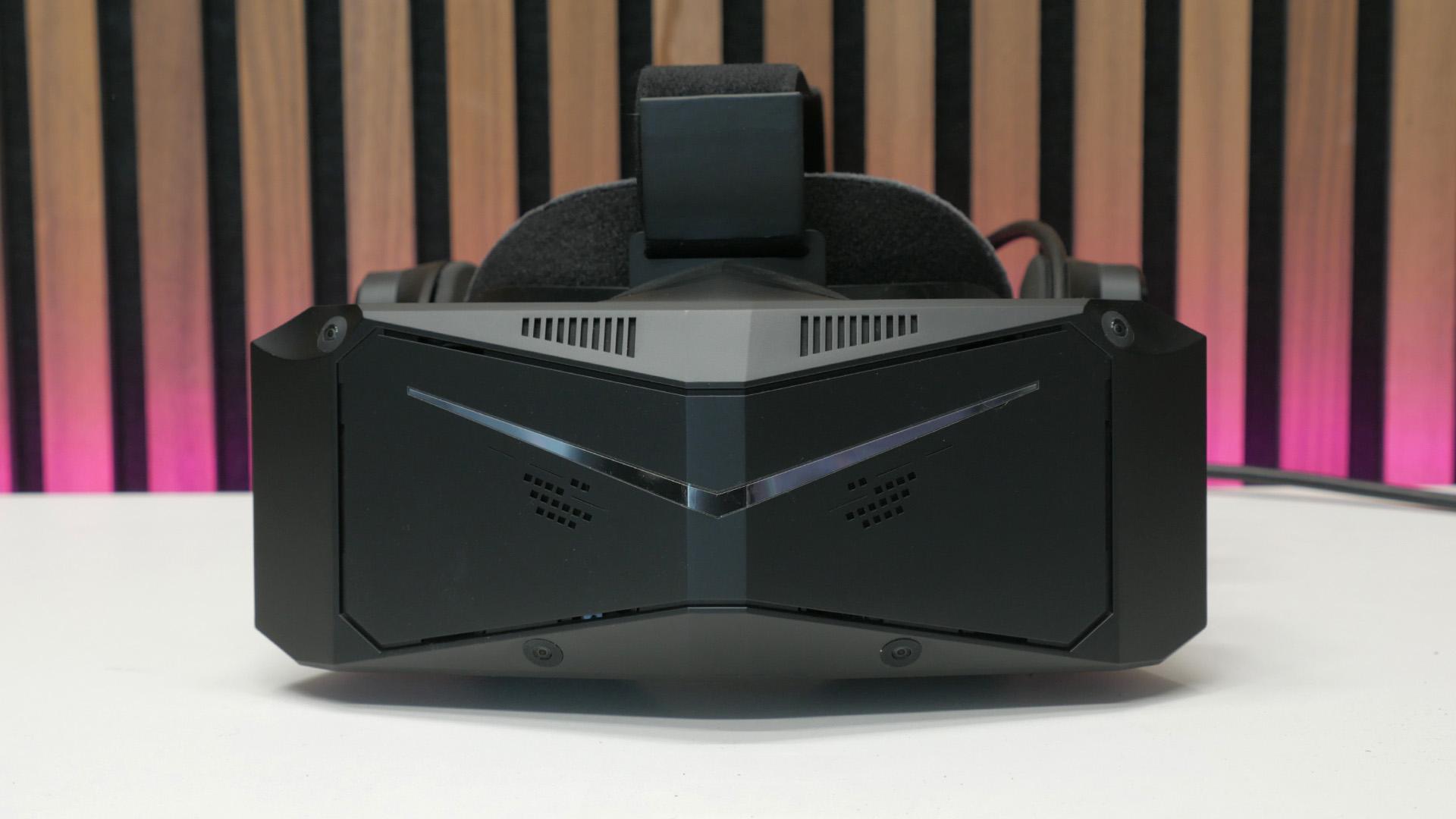
If you're looking for a visual upgrade to your Valve Index or other early generation VR headset, or you just generally just want a headset that prioritises image quality over standalone operation, the Crystal Light is a great option. It wipes the floor with older and entry-level headsets like the Meta Quest 3 when it comes to image quality, but yet doesn't come with the truly ludicrous $1,000+ price of top tier headsets. It is fairly big and heavy, but is still comfortable and fantastic for racing and flight sim setups.
Pros
- High-resolution image quality
- Decent FoV and great lenses
- Good sound quality
Cons
- Large and heavy
- Basic passthrough and tracking
- Requires high-end PC
With higher resolution displays than most older or entry-level VR headsets, the Pimax Crystal Light offers a big visual upgrade over the vast majority of options available at the moment. It's not at the cutting edge, but this is then reflected in a price that, while still quite high, is far more affordable than flagship headsets.
This balance of visual fidelity with relative affordability makes the Pimax Crystal Light the best VR headset for most pure PC gamers, and particularly for racing and flight sim gamers. Its lack of standalone operation - a PC is required - means it certainly isn't the most accessible, and it is quite large and heavy, but once adjusted, it's a comfortable headset with great visuals.
Specs
| Pimax Crystal Light | |
| Display | 2,880 x 2,880 per eye, aspheric |
| Max refresh rate | 120Hz |
| FoV | 105° |
| Weight | 815g without cable, ~1kg with 1m of hanging cable weight |
| Tracking | 6DoF inside-out tracking |
| In the box | Headset, cable, two controllers |
| Connections | Single cable with DisplayPort and USB-C |
The main feature of note for the Pimax Crystal Light is its high-resolution displays. Each eye gets 2,880 x 2,880 pixels, which is 40% higher than the Meta Quest 3 (2,064 x 2,208), and generally a big step up from similar standalone entry-level headsets, and older options, such as the Pico 4 (2,160 × 2,160), Oculus Rift 2 (1,834 x 1,920), and Valve Index (1,440 x 1,600).
Even premium options such as the Bigscreen Beyond 2 (2,560 x 2,560) can't quite compete. Pimax's own original Pimax Crystal headset (2,880 x 2,880) is among the few older headsets to hit such a high pixel count.

This lends the Pimax Crystal Light a visual fidelity that is only surpassed by the very most premium alternatives, such as the Pimax Crystal Super, Varjo XR-4 Focal Edition, and Apple Vision Pro. Crucially, while those headsets all cost well north of $1,500, the Crystal Light is just $899.
This puts the Pimax Crystal Light almost in a class of its own. You've either got standalone headsets like the Meta Quest and Pico that cost quite a lot less but have much lower image quality, or you've got much more expensive options that offer comparable quality or features but for far more money.
The displays in this headset aren't low-quality ones, either. They are quantum dot LED LCDs (QLED) panels with local dimming backlights, so while they can't compete with the contrast of OLED screens, they still deliver decent contrast and vivid colors, with high maximum brightness.

The number of dimming zones isn't as high as the Pimax Crystal Super's ~1,000 zones, but, at 576, it's still enough to ensure this headset doesn't have the more washed-out look of cheaper LCD headsets. With a maximum refresh rate of 120Hz, there are no concerns here about the smoothness of motion that can be achieved with this headset either.
For lenses, the Crystal Light uses conventional aspheric ones, which means they're relatively heavy compared to pancake lenses and fresnel lenses. However, they deliver an image that is more accessible and unforgiving, with none of the stepped edges of fresnel lenses or the optical oddities of pancake lenses.
As for the field of view (FoV) provided by those lenses, it's not overly wide for this size and class of headset. At 105° of horizontal FoV, it's on par with the Meta Quests and Picos of this world, but it doesn't provide a meaningful upgrade. Options such as the Pimax Crystal Super 50PPD or Ultrawide will get you a wider view.
Size is, in fact, a major consideration with this headset, as it's a beast. It's not far off 50% wider than the likes of the Pico 3, and similarly roughly 50% heavier, too. It tips the scales at 815g without its cable, which is technically just a bit lighter than the Crystal Super, but it's still right up there with the heaviest VR headsets around, especially when you factor in a few hundred extra grams of weight from its cable.

Speaking of cables, this isn't a standalone headset, so it doesn't work on its own using an internal battery. Instead, it ships with a five-meter-long cable that plugs into the left side of the headset and loops and curls back around the headband, where it can hang down over your back.
This cable terminates in a junction point that splits off into a USB plug, a DisplayPort plug, and a socket into which you plug the included power supply. The first two of these need to be plugged into your PC's motherboard and graphics card, respectively, while the power supply is also needed at all times.
Features
As we've already established, this headset is, in many ways, a back-to-basics option, so it's not chock full of extra features such as the automatic interpupillary distance (IPD) adjustment and swappable optical engines of the Crystal Super. However, there's still plenty to note.
For a start, in terms of the optical side of things, the headset has a removable eye cover section, which lets you access the lenses to clean them and add prescription lenses. Also removable is the facial foam, which attaches by hook and loop tape. You can buy an "Ice Silk" facial foam that has a softer foam and smoother finish, but it's smaller and less supportive, and I'd definitely recommend sticking with the included grey flocked foam instead.

Meanwhile, IPD adjustment is done manually via a wheel on the left side of the headset, just to the left of where the cable plugs in.
Along with its displays, the headset includes speakers that hang down from its headband to provide virtual surround sound without the need to wear a headset or earbuds. As with all such VR headset speakers, they do emit sound externally, so people nearby will be able to hear what you're doing. There's also a 3.5mm audio jack on the right rear of the headset, which means you can plug in your own earbuds directly to the headset.
Tracking is done via the now common inside-out method, using four cameras mounted on the headset to sense where you are. The cameras don't provide much passthrough clarity, but they're fine for just getting your bearings.

That's mainly it for the headset - it really is just about its displays, optics, and speakers - but you do also get two controllers in the box. These have the shape and layout that's now essentially standard for VR headsets, with a circular top section, two main function buttons (X&Y or A&B), menu/option buttons, and a thumbstick.
Design and comfort
Just like the Pimax Crystal before it, and the Pimax Crystal Super, the Pimax Light is a large, heavy headset. This means you'll have to carefully adjust the rear headband - that clamps around your head via a twisting knob - and top headband quite precisely to get the right balance of a secure fit without the front of the headset pushing down on your nose or the whole front squashing your face and glasses.
Crucially, though, where the Crystal Super can feel a little cramped and tricky to use - particularly if you wear glasses and have the Ice Silk facial foam - the Crystal Light is far more forgiving. There's plenty of room for glasses and, overall, it doesn't feel as constricting.

One point to note with this headset is that its headband isn't forgiving when it comes to anyone with long or thick hair that either ties it up in a knot or an afro, as the rear pad doesn't go back far enough to accommodate this. I had to undo my hair knot and wear my hair down or in a ponytail to wear this headset, which I don't have to do with the Pico 3, for instance.
Once set up and adjusted, though, the headset does remain comfortable. You have to make sure the cable is well routed, though, as having it dangle from the front really adds to the weight of the headset on your nose - clipping it to the clothes on your back, or ensuring it trails backwards from your racing/flight sim rig, is a necessity.

A final positive to note for this headset is that its optics are far more forgiving than those of the Crystal Super. That headset - at least in its 57PPD form - has a strange default focal distance that can feel odd at first, plus its automatic IPD adjustment is a bit peculiar. The Crystal Light, though, just immediately feels comfortable and familiar.
Performance
Jump from the likes of a Meta Quest 3, Pico 3, or Valve Index to the Pimax Crystal Light, and the step up in image quality is staggering. That's, of course, as you'd expect, given its much higher resolution displays, but be in no doubt that you absolutely feel every pixel of that upgrade.
Whether you're watching VR video or playing VR games, there's a huge step towards that sense of an image no longer feeling like you're staring at a screen, but that you're truly there experiencing it.

A key part of this is that the displays don't have any of the major annoyances of some others. There's no screendooring (being able to see the gaps between pixels), no dimness to the image, and no lack of contrast or vividness. Sure, it's not competing with OLEDs for the latter two, but the QLED displays and their local dimming do a good enough job to provide an image that's far more dynamic and lifelike than a basic LCD.
This visual upgrade is notable when set against the even higher quality you get with the Crystal Super 57PPD. That headset gets you even more contrast and punch thanks to its extra dimming zones, and its sharpness hits another level. However, the step up isn't quite as impactful as the one you get here when moving from a much lower-res headset.
It's analogous to moving from, say, a 1080p monitor to a 1440p one - the step up in pixel density and clarity is huge. Meanwhile, the Super is more like moving from a 1440p display to 4K. It's still a big leap, but you'll not necessarily feel it quite so dramatically all the time.
Other VR headsets do offer close to this upgrade, with the Bigscreen Beyond offering up a 2,560 x 2,560 resolution per eye, but it's a $1,000+ headset that comes with nothing but the display and no controllers, tracking base stations, speakers, etc.

This extra clarity makes itself felt most strongly in either video or triple-A games and high-end sim setups. Fire up Assetto Corsa or Microsoft Flight Sim 2024, and the sheer detail on offer is staggering. Again, you'll get more with the likes of the Crystal Super, but you'll have to spend far more than on this headset.
This detail can be experienced everywhere, but particularly comes to the fore when viewing your instrument cluster or when gazing off into the horizon. Also, if you've invested in a high-end asset pack, such as those from Orbx (like the unashamedly fun Jurassic World add-on, available here), the clarity provided by a headset like the Crystal Light really feels like you're making the most of them.
As for the controllers, these don't set any new records for functionality or feel, but absolutely do the job for dedicated VR games. The grips are quite short, and the thumbstick caps aren't particularly grippy, but I didn't find this overly disruptive.
The speakers, meanwhile, sound great and provide excellent surround sound. They also don't leak noise quite as badly as some other headsets, and the combination of being able to control volume via buttons on the headset and via your system volume means you can really fine-tune the volume. Some standalone headsets, in particular, have far less control, making it much more difficult to get precisely the level you want.

Like the Crystal Super, the Crystal Light needs internal fans to keep its screens and electronics cool, and this can be a bit distracting. However, it's a touch quieter than that headset, and it's only really a noticeable factor when using the headset with its speakers at low volumes - not when using earbuds.
Price
The Pimax Crystal Light price is just $899, which means it sits largely in a price niche of its own, being more expensive than entry-level headsets, but far more affordable than most other premium options. Crucially, with it offering such a big step up in image quality over those cheaper units, it more than justifies its extra cost.
Opt for a headset such as the Bigscreen Beyond, and you're getting similar image quality and FoV in a much, much lighter package for a somewhat similar price. However, it is still more expensive and a much more basic headset in other ways.
Verdict
The Pimax Crystal Light is easily the top VR headset I'd recommend for those wanting a significant visual upgrade for their PC gaming and VR video viewing, but who can't quite stretch to a $1,000+ option. It's certainly not a cheap upgrade, but it's far more affordable than more premium options and delivers truly fantastic image quality.
Its 2,880 x 2,880 resolution displays lend high-end VR gaming a clarity that's utterly absorbing, and their local dimming ensures they're bright and decently high contrast too, giving a lifelike, HDR-like quality to the image. Unlike some headset options, you also still get a complete package here, with inside-out tracking and included controllers, so no extra accessories are needed.
It's a big and heavy headset that will take some setting up and getting used to, but once sorted, it delivers a superb experience for a great price.

 English
 Arabic
 French
 Spanish
 Portuguese
 Deutsch
 Turkish
 Dutch
Dutch
 Italiano
 Romaian
 Portuguese (Brazil)
 Greek
Greek